My early morning reads today were:
First, political machinations in Bosnia and Herzegovina (BiH) as the Central Electoral Commission of the central administration of the state of BiH removed the mandate of President Dodik of the Republic of Srbska for failing to regard the rulings of the High Representative and the state-level Constitutional Court.
JOIN US ON TELEGRAM
Follow our coverage of the war on the @Kyivpost_official.
Dodik is contesting the ruling – threatening a referendum in RS, which will surely further strain the very unity of the state of BiH, which is a union of the separate Bosniak and Croatian Federation and the Republic of Srpska.
We also saw warnings from Serbian President Vucic to the effect that he is watching events in BiH with concern.
Question here whether this is just the usual two and through between RS and Dodik and the international community and the state level BiH entities, which we have seen over the past twenty years without really doing much to unravel the Dayton-imposed peace, or some different and more worrying tendencies are now in play.
Second, a Bloomberg story (Croatia’s Fascist Past Resurfaces with Far Right Rock Star) reporting on the newfound popularity of nationalist singer, Marko Percovic Thompson.
Marco Percovic is a veteran of the wars for Yugoslav succession, with his nom de guerre, “Thomson” deriving for his use then of a US Thompson submachine gun. He is currently drawing huge – 500,000, crowds with his music stirring nationalist sentiment around the 1990s wars but also Croatia’s own fascist past, fighting with Nazi Germany in WW2. The Bloomberg story highlights that the ruling HDZ in Croatia has put it own hard, tight nationalism under former leader Franjo Tudjman on the back burner for the past few decades, but there may now be signs of its revival.
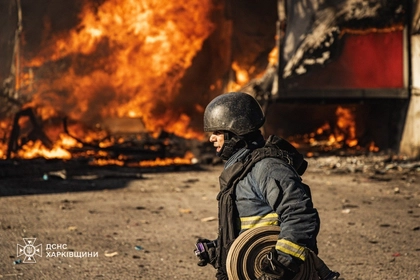
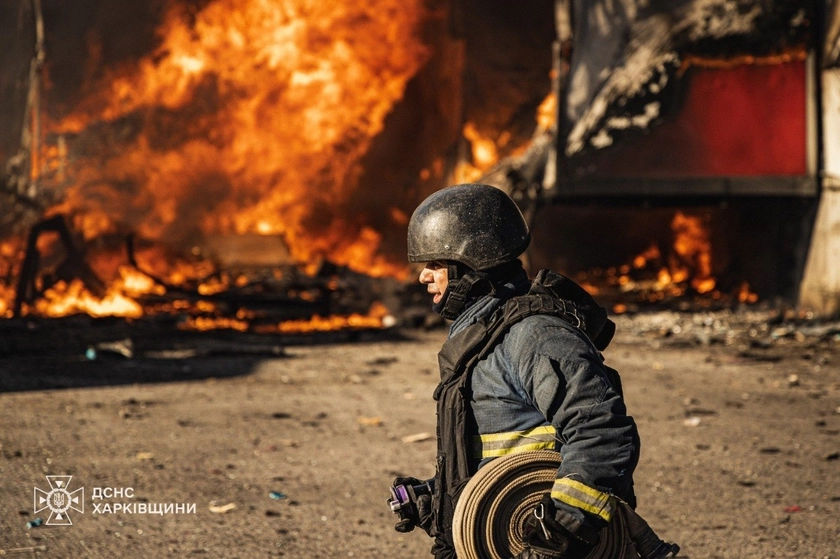
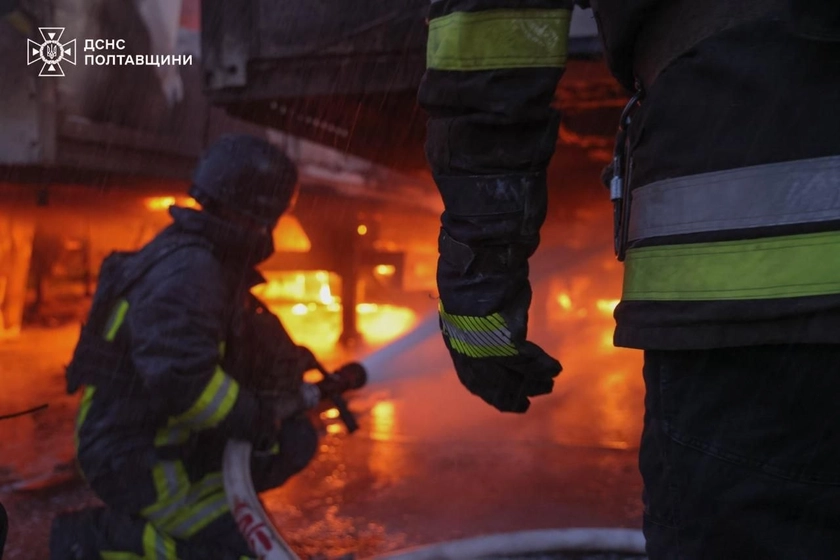
Russian Drone Strikes Target Civilians in Kharkiv, Zaporizhzhia, and Kherson
Third, the signing in ceremony of nationalist Polish President Karol Nawrocki in Poland and his appointing of a very nationalist leaning and anti-EU administration.
And all this comes after the initial success, albeit ultimate failure, of right politicians in Romania’s recent tortured and rerun presidential election, Orban and Fico’s similar hard right orientations in Hungary and Slovakia, and prospects of their being likely joined by their erstwhile kin, populist nationalist Andrej Babis, in the Czech Republic in elections later this year.
Notwithstanding that Orban is himself trailing in opinion polls in Hungary and might actually lose office in elections next April, the sense here is that Trump and the MAGA movement in the US is giving oxygen to nationalist and far right movements in Europe which, given the continent’s history of fascism (Hitler, Stalin, Franco, Mussolini, et al) including obviously the Holocaust, the Holodomor, Srebrenica, Bucha, ethnic conflict and cleansing and pogroms over centuries, is a real concern.
All this comes against a backdrop of the biggest, most consequential war in Europe, since the end of the Second World War, in Ukraine. That war has seen Russia tear up the post-Second World War settlement, the post-Soviet/Communist freeing of Europe from being subject to great power carve ups, and also breaks international law by invading Ukraine and illegally seizing territory. Russia has ridden roughshod, literally, through the territorial integrity of Europe, albeit it already did that, unchallenged after its invasions of Moldova and Georgia.
In an increasingly nationalist world, territory is up for grabs (you could add Israeli aspirations now to annex Gaza into this context), and the international guardrails appear to be being removed/weakened. Given historical conflicts, disputed territorial claims, the longer-term outlook for European peace and security is pretty grim.
Numerous potential flashpoints exist herein:
* the durability of BiH, amid calls by RS for independence
* the future of Kosovo, and strains therein with Serbia
* Hungarian claims to Zacarpathia in Ukraine
* Hungarian claims to territory in Romania, Serbia, et al
* Romanian claims to territory in Ukraine around the Danube delta
* Croatia - Serbia tensions
* Tensions still between North Macedonia and its neighbours, Greece and Bulgaria
* Tensions in/around over Kaliningrad
* Russian minorities in the Baltic states
* Transdniestr
* South Ossetia, Abkhazia between Russia and Georgia
* The elusive nature of peace between Azerbaijan and Armenia
And there are many others, and we can imagine populist nationalist leaders jumping on the bandwagon of projects like Greater Albania, Greater Serbia, Greater Romania, Greater Croatia, Greater Hungary.
Making European countries great again, unfortunately, can end in a zero-sum game as most countries can hark back to an era where their borders were much larger than they are today, but returning to their past “Great” eras will involve taking territory from others. That implies the prospect of future wars in Europe.
As a Brit, I have a track record of being a Eurosceptic – it’s kind of in our DNA. That said I voted Remain. I rather liked the free market aspects of the EU, but distrusted the one-size-fits-all all economic policy – the euro was a step too far in my view. And I worried about trying to impose a centralized political and economic administration on a continent that is very different in terms of its peoples’ history, cultures, social set-ups, et al. I thought ultimately that a centralizing mantra, or model, would actually produce rebellion and centrifugal forces breaking across the continent. That was my worry a decade or so back at least, and it’s kind of come to pass.
For me, the strength of the EU was in widening, not deepening the Union – a very British perspective. And the widening, I think, was the big ultimate success of the EU. Because what we saw with enlargement was that countries were forced to put past territorial claims against each other to one side in order to secure membership and the huge economic benefits that came with it.
The EU’s biggest win was that it actually helped anchor peace and stability in Europe for close to three quarters of a century and actually brought incredible prosperity to the European periphery.
EU enlargement helped Eastern Europe manage the difficult transition from Communism – I know – I was an economist working on Transition way back then. And countries like Poland, Romania, the Czech Republic, Slovenia, and Slovakia have seen their economies transformed beyond comprehension over the past 30 years since the Treaty of Copenhagen in 1994 green-lighted EU enlargement
East. The irony that nationalism is now popular with the young in Central and Eastern Europe, who have perhaps now little memory of just how bad things were in Poland, Hungary, the Czech Republic, etc al in the early 1990s. These countries were an economic and social wasteland after the collapse of communism. They are now
European economic tigers, with generally great balance sheets, strong banks, and great growth drivers, if vulnerabilities include weak demographics, as their young, so often now, migrate, seeing the grass to be greener overseas still.
But in these days of criticizing the EU, we should not forget that it delivered peace, security and prosperity for many over the last thirty-odd years. Deepening probably went too far and the EU failed, as many countries have in terms of delivering inclusive growth, particularly in old rustbelt regions of Western Europe – now the hotbed of support for the likes of Reform in the UK, the National Front in France, and the AfD in Germany.
I actually though, now worry, with weakening in support for the EU within, and with rising populism across Europe, whether that European enlargement anchor is weakening, if not dead in terms of European security.
Indeed, given the political mood in the EU, it is hard to see any further waves of EU enlargement. That means less reason for the likes of BiH, Serbia, Kosovo, North Macedonia, Turkey, Albania, et al to compromise on key issues of national interest and security, as the price of joining the EU. If there is no EU entry prospect, why concede anything? And from within the EU, I see populist politicians willing to use territorial claims as a way to rally votes at home – not helped by Trump and Putin showing the lead in Ukraine, Greenland, Panama, Canada, et al.
Net, I am really fearful here for the long-term peace and security of Europe. Perhaps the overdeepening of integration by Europe itself, the mismanagement of the relationship with Russia (appeasement and not seeing the threat early enough), globalization and the failure to deliver inclusive growth, and then the onset of Trump and MAGA, have now set in motion forces that will be difficult to moderate and calm.
We could be about to see thirty years of peace and security replaced by thirty years of war and insecurity.
Reprinted from the author’s tashecon blog. See the original here.
The views expressed in this opinion article are the author’s and not necessarily those of Kyiv Post.
You can also highlight the text and press Ctrl + Enter

Kremlin Signals Readiness for Talks on Ukraine