Ukrainian forces are counterattacking a dangerous Russian penetration of defenses in the operationally critical eastern Pokrovsk sector, but a dangerous 10-kilometer (6-mile) deep salient carved out into Ukrainian lines by infiltrating Russian infantry is far from eliminated, news reports and official statements on Friday, Aug. 15 said.
A Friday morning situation report published by Ukraine’s Army General Staff said battles were in progress along the length of the Russian penetration, and reported Russian troops had launched attacks along much of the length of the salient. The Kremlin main effort appeared to be aimed at the hamlet of Mayak, some 15 kilometers (9 miles) northeast of Pokrovsk, where Russian troops were trying to gain a foothold, the statement said.
In surprise attacks carried out by foot soldiers moving through gaps in Ukrainian lines, the Russian military over the weekend kicked off a wave of attacks along the narrow, 3-kilometer-wide (2-mile-wide) salient, many against Ukrainian rear area units normally held at a distance from the front line.
Ukrainian commanders appeared – at least initially – to have been caught flat-footed by the Russian assaults.
Since then, Ukrainian army spokesmen have announced the dispatch of reserve troops to the threatened sector. By mid-week, official Kyiv was calling the Russian offensive, though dangerous, less a major attack than a substantial raid by foot soldiers that Kyiv’s forces would contain and hunt down.
Hungary Blocks Ukraine, Moldova’s EU Membership Talks
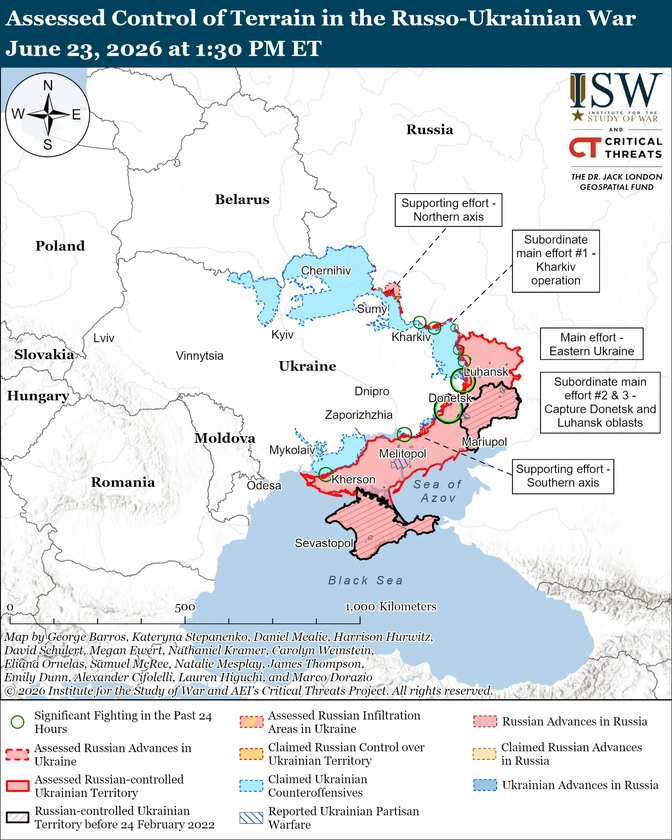
The industrial city of Pokrovsk has been a prime territorial objective for a Russian offensive that kicked off in early 2024 with the ultimate goal of conquering Ukraine’s Donetsk region. The Dobropillya penetration, if consolidated, would advance Russian operations aimed at cutting supply routes to Pokrovsk.
Speaking on a nationally televised news program on Thursday evening, Viktor Tregubov, spokesman for Ukraine’s Joint Forces Dnipro, the regional army headquarters heading up operations in the Pokrovsk sector, said Russian troop numbers in the salient were limited and that operations to mop up what he called isolated groups of Russian infantry were progressing at a satisfactory pace.
“When they crossed the first line of Ukrainian defenses... these were small groups of several people. Then they accumulated directly behind the first line, trying to unite into larger units…At present, we are talking about groups numbering dozens of people. This is not as big a breakthrough as it might seem, but (now) there are two large groups of several dozen soldiers each. This is certainly a problem, but it can and will be dealt with.”
News feeds from Ukrainian combat units deployed to contain Russian forces in the Dobropillya salient have partially confirmed the official Ukrainian army contention that Kremlin troops are thin on the ground and vulnerable to deliberate counterattacks.
A Wednesday statement from Ukraine’s 1st Corps National Guard “Azov,” an elite formation well-known in Ukraine for its bitter defense while surrounded in the city of Mariupol in 2022, said that its sub-units had launched counterattacks in the Pokrovsk sector, killing 151 Russian soldiers, wounding 70, and taking eight prisoners.
Frontline sources told Kyiv Post that at least two Azov battalions were engaged in containment operations around the Dobropillya salient. Ukrainian mainstream media widely confirmed the Azov Corps claim of successful counterattacks. By Friday, video recordings of six Russian prisoners of war stating they had been captured by Azov fighters in that sector had reached Ukrainian open source platforms.
Video published by Joint Forces Dnipro on Thursday, purporting to show a commanders’ meeting in an underground bunker in the Pokrovsk sector, showed Azov senior officer Denys Prokopenko discussing operations with other unit commanders reportedly deployed to the Pokrovsk/Dobropillya sector.
Other Ukrainian units with sub-elements reported in open sources to be committed to containing and reducing the Russian salient included 93rd Mechanized Infantry Brigade “Kholodny Yar,” 4th National Guard Brigade “Rubizh,” and 1st Assault Battalion “Da Vinci.” By Armed Forces of Ukraine (AFU) standards, all those units are considered well-trained and equipped, with solid combat records. According to Wednesday’s news reports, in actions early in the week, 93rd Brigade captured four prisoners.
Sergeant Vitaly P’ysetsky, a 93rd Brigade spokesman, in Wednesday comments to Radio Liberty, said that his unit had captured four Russian soldiers in counterattack operations in the vicinity of the Dobropillya salient, and that his brigade had encountered only dismounted groups of Russian infantry carrying only light weapons. He confirmed Russian forces had a “presence” along the length of the salient but insufficient to hold ground, but described the Russian units as “groups of soldiers…numbering in the dozens.”
“The forces that entered could not physically take this entire territory. There were simply not that many of them,” P’ysetsky said. “Wherever they went, they left on their own. They weren’t even kicked out of there, they just kept on walking to Dobropillya. This is how infiltration works. They infiltrate, they pass through the first line and they keep moving. But they don’t establish themselves throughout this entire (route).”
Andriy Otchenash, a spokesman for the Rubizh National Guard Brigade, in comments to the Espresso TV channel published on Friday said:
“The enemy really advanced there. No one will say that this did not happen…(But) the enemy has not gained a foothold in populated areas,” Otchenash said. “And the main task, of course, is to contain him and do everything possible to prevent him from advancing further.”
Ukrainian sources generally estimated the size of the Russian infiltrating force at 200-300 men, and reported the Russians had walked for two weeks from a base in the town of Selidovo in Russia-held territory, into and across Ukrainian lines in the Pokrovsk sector.
In sharp contrast to major Russian attacks throughout the course of the war, the Russian infiltration-style offensive towards Dobropillya has not been accompanied by waves of internet pro-Moscow content, typically pushing the message of an unstoppable Russian military and inevitable Ukrainian defeat.
The independent Russian analytical group The Bell, in a Friday editorial, said Russian forces used infiltration tactics not as a raid, but as a rational response to the Ukrainian strategy of holding frontline positions with a minimum of troops and covering no-man’s-land with drone swarms.
“It is possible to hold the ‘gray zone’ of the front with drones alone for some time, but…If there are too few troops, then a bare ‘wall of drones’ is a path to defeat. Small maneuverable groups of attackers can slip past defenders’ strong points…(and) then they can develop and consolidate their success. This is what has been happening in recent days northeast of Pokrovsk,” the editorial said in part.
Polish military researcher Artur Micek, in a Friday post on the “X” platform said: “Very bloody fighting continues for the Dorozhne railway depot. Here, the Russians are the attacking side. The attacks are being conducted with heavy support from Russian aircraft, which are pounding Ukrainians with glide bombs.”
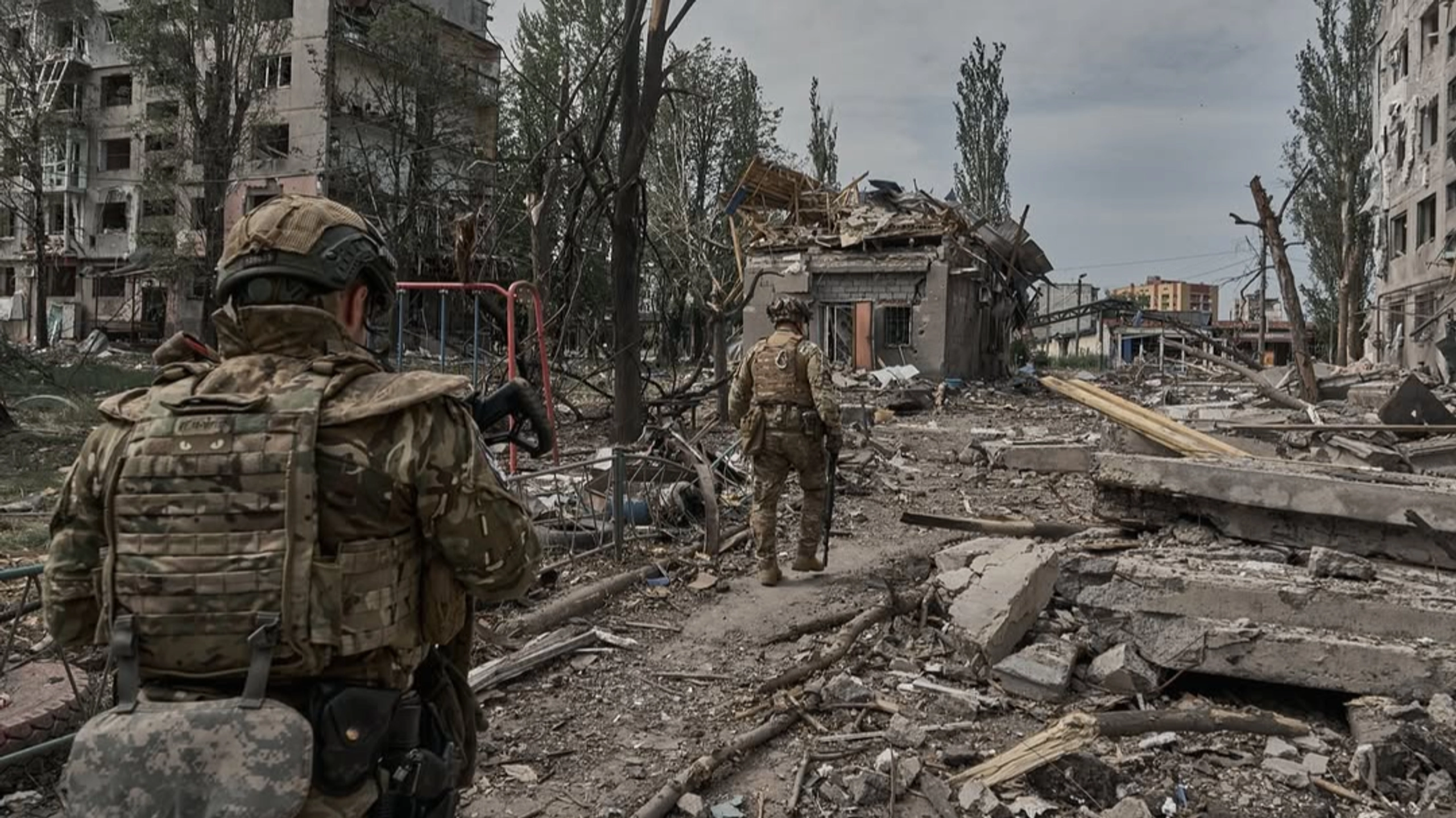
A Thursday field report by Ukraine’s independent Channel 5 television from Dobropillya showed empty streets, buildings damaged by probable artillery and shell strikes, but little sign of active combat. On Tuesday, local authorities ordered a civilian evacuation from more than a dozen villages in proximity to the Russian advance, but not all residents had obeyed the instruction the report showed.
You can also highlight the text and press Ctrl + Enter

Attack on Moscow Oil Refinery: Putin Under Pressure?