Fire Point, the maker of Ukraine’s new Flamingo cruise missile, said it is better than the US-made Tomahawk missile – and claimed it had already struck targets inside Russia.
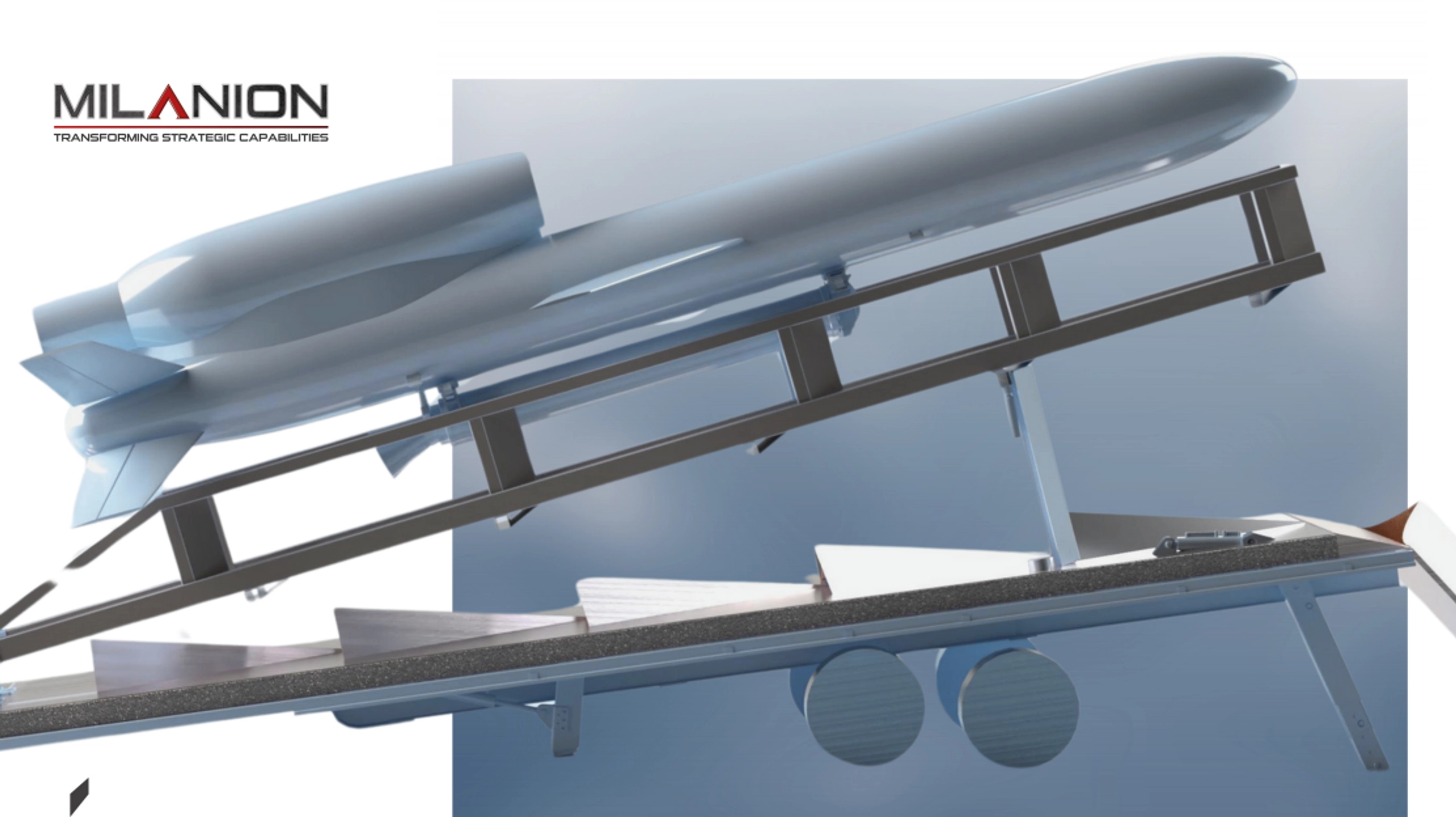
Initial reports suggest the missile is similar to the FP-5 system made by UK-based Milanion Group, with a 1,000-kilogram (2,204-pound) payload warhead and 3,000-kilometer (1,864 miles) range that enables it to hit deep into Russia, beyond the Ural Mountains and into the Asian parts of Russia.
JOIN US ON TELEGRAM
Follow our coverage of the war on the @Kyivpost_official.
But later, the company told local outlet ZN.ua that it comes equipped with a 1,150-kilogram (2,353-pound) warhead, while confirming that it has a range exceeding 3,000 kilometers.
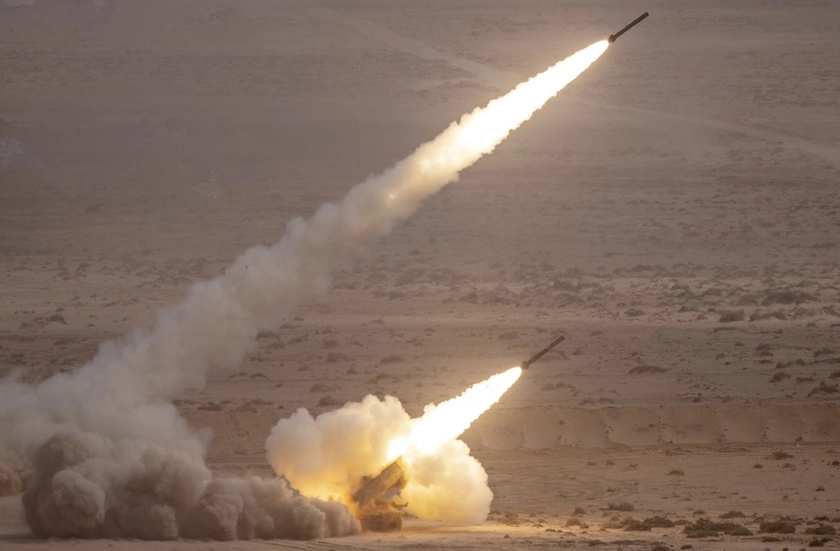
The company also provided the outlet with testing and combat footage – including those presumably showcasing its combat use on the front against targets inside Russia.
Footage obtained by the outlet showed the missile initially propelled by a rocket, with a jet engine taking over mid-flight.
The outlet said on Monday that the Flamingo underwent successful tests “a few months ago” and has gone into mass production.
The company said the missile was designed with an emphasis on range, warhead size, and the ability to deploy and launch quickly.
The FP-5, to which the Flamingo is similar, is ground-launched system and requires 20-40 minutes to prepare for launch, according to the FP-5 brochure – a metric corroborated by the company in a comment to state media Ukrinform.

Ukraine Secures Release of Seven Civilians from Russian Captivity
Better than Tomahawks?
The company also told Ukrinform that it is more advanced than the US-made Tomahawk missiles.
When asked if it could help Ukraine win the war without US assistance, the company’s representative told Ukrinform:
“I am sure that it will be able to, because Tomahawks, firstly, are outdated, secondly, they are much worse in terms of technical characteristics. They have absolutely everything worse than today’s Flamingos. Thirdly, they are, it seems, five times more expensive, without transportation and delivery means.”
More importantly, the person noted that Flamingo’s domestic production allows targeting to operate independently of US political decisions – a limitation Kyiv faced with earlier US missiles – on top of the small number Ukraine would receive if they arrive at all.
“We would definitely not receive more of them than the same HIMARS, so only our own production can provide us with such a quantity that would allow us to hit the occupier exactly where we need to and determine the targets ourselves, which is very important,” he added.
Tomahawk vs. Flamingo
Both the Tomahawk and Flamingo fall into the category of long-range (strategic) subsonic cruise missiles, with the Flamingo performing better on paper.
In terms of range, the Flamingo has a longer range compared to the Tomahawk’s stated range of 700–1,350 nautical miles (1,300–2,500 kilometers, or 805–1,554 miles), depending on the version.
In terms of speed, the top speed of the Flamingo also slightly exceeds that of the Tomahawk’s, at 950 kilometers per hour (590 miles per hour), compared to the latter’s 885 kilometers per hour (550 miles per hour).
But when it comes to launch platforms, the Tomahawk appears to be more versatile, with ground-based variants developed and deployed recently, in addition to the battle-tested naval-based variants launched from ships and submarines.
The size and weight of the Flamingo are also larger, which allows it to carry a heavier warhead as opposed to the 1,000-pound (454-kilogram) warheads used on Tomahawks.
The key difference between the two may lie in their navigation systems. Both use GPS receivers and an inertial navigation system (INS) – with GPS providing external location references and INS tracking physical movement midair to adjust the route – but the Tomahawk also features a Terrain Contour Matching System (TERCOM) that compares real-time images with onboard maps to verify its flight path.
The use of TERCOM would allow it to bypass GPS jamming and spoofing, a commonly employed tactic to throw drones and missiles off-course in Ukraine – but Fine Point, the Flamingo’s manufacturer, said it is immune to Russia’s electronic warfare (EW) jamming, presumably via the use of controlled reception pattern antenna (CRPA) found on the FP-5.
That said, indications suggest both Kyiv and Moscow are experimenting with drone and missile add-ons using principles similar to TERCOM, aiming to bypass the growing threat of EW systems.
Will the Flamingo outperform the battle-tested Tomahawk? We’ll find out soon enough.
You can also highlight the text and press Ctrl + Enter

Ukrainian Storm Shadow Hit Iskander-Linked Electronics Plant, Say Russian Sources