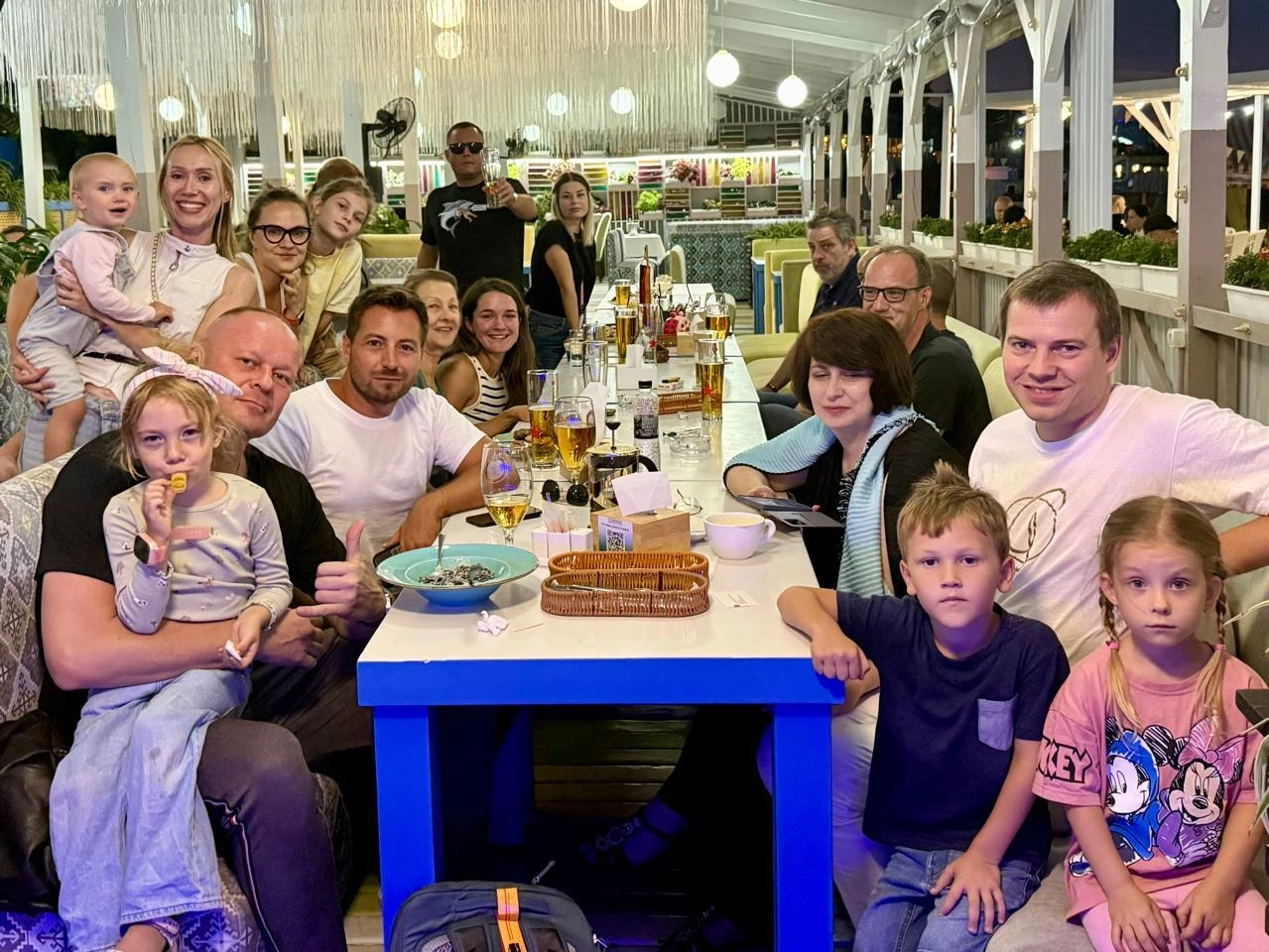
The foreign community living in Odesa might not be as numerous as that of Kyiv – which benefits from the presence of embassies, foreign businesses and many international organizations – but it is lively and makes its mark on the city’s life through social and cultural events.
The first striking feature is that it is an almost entirely male community. Many are men married to Ukrainian women, but even those who later separated often chose to remain in Odesa. Others are foreign executives or entrepreneurs, particularly in the digital sector and maritime shipping. The second feature is that they are predominantly Europeans. All these foreigners interpret the city in their own way, bringing with them elements of their national traditions.
At the start of Russia’s full-scale invasion, most expatriates quickly left Ukraine with their families, heading toward Moldova, whose border is just an hour’s drive from Odesa. Only a few of us stayed in the city, despite our embassies bombarding our phones with messages urging us to leave the country at war. The most determined to remain in the city from the first bombardment were a small group of Italians.
As for social life, the Palme d’Or (fittingly awarded in Cannes) goes to the French of Odesa, the largest and most welcoming community. The heirs of the Duke of Richelieu (a legendary French mayor of Odesa whose statue dominates the top of the Potemkin Steps) are well integrated into the local community and frequently organize social events.
‘Negotiations’ Are Traps – How Russia Tweaks Language to Deceive the West
“I’m originally from Paris, but the douceur de vivre in Odesa cannot be matched,” says Boris Rincourt, a Frenchman with a Ukrainian grandmother, who organizes French-style aperitifs where a glass of wine (French, though not exclusively) is almost mandatory. These happy hours have become much-anticipated events, drawing in other foreigners and many Ukrainians. Boris once ran the bar Le Petit Paris, a legendary meeting place for the French community, which later had to close. From then on, the aperitif became a roaming event around the city.
Another favorite French haunt is My Winebar, owned by winemaker Eduard Gorodetsky, who also happens to be the Honorary Consul of France. Quite a few Odesans speak French, thanks to a very active Alliance Française offering language courses and cultural programs. There is also public secondary school no. 10, which specializes in teaching French.
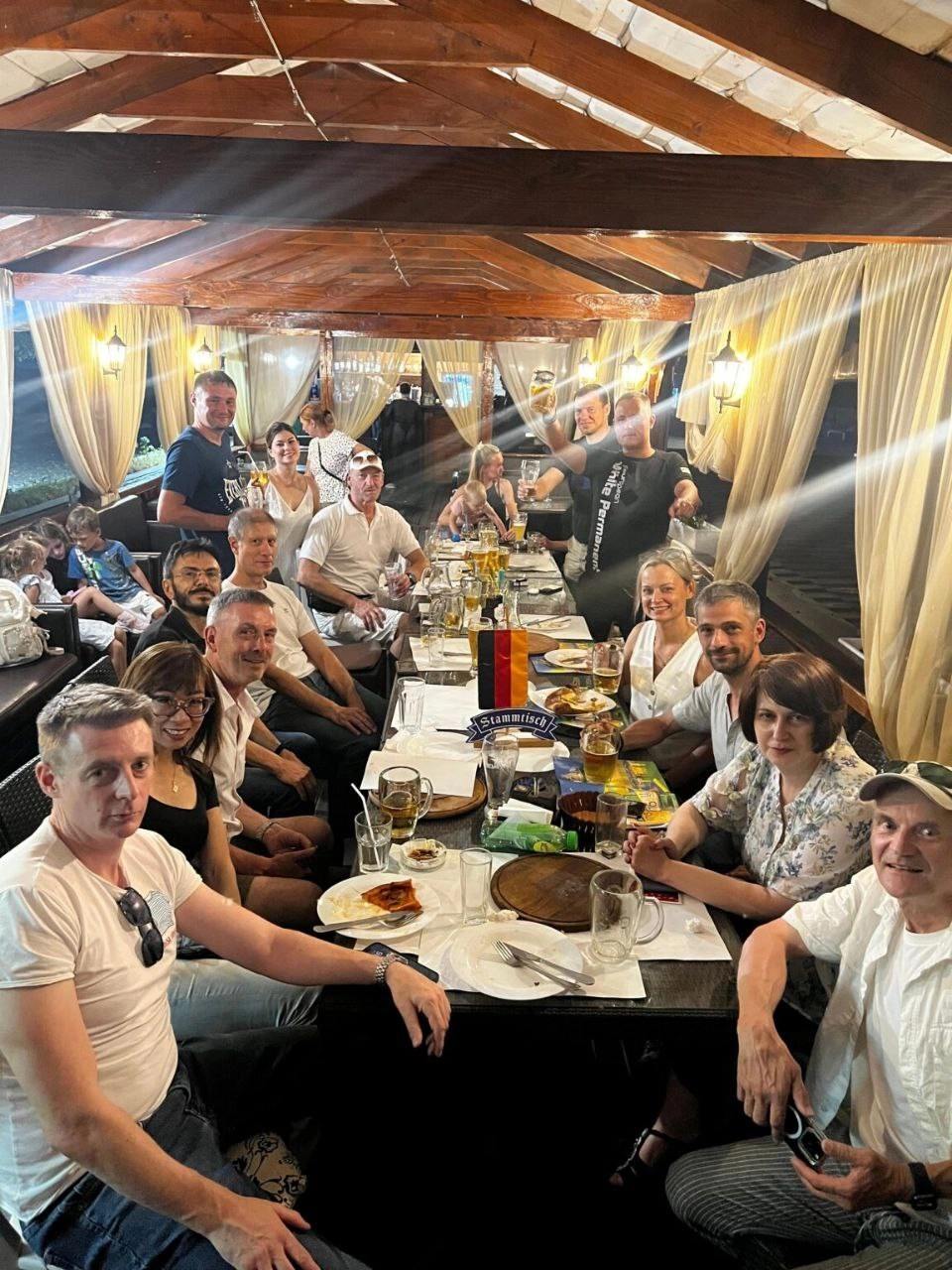
In second place come the Germans, many from Bavaria and Franconia, who created their official group, Deutscher Stammtisch Odessa. When Oktoberfest and Christmas come around, they organize their traditional celebrations in private courtyards, complete with beer, sausages (the best in town), potato salad and, where available, traditional costumes. Outside of those occasions, the group of Germans and Germanophiles meet in pubs over a few pints. “I first came here many years ago as a university student,” says Michael Loffler, a key figure in the German community. “This city fascinated me from the start, with its carefree and somewhat unruly lifestyle. Today I’m married to an Odesan and have two daughters.” German is not uncommon in the city, thanks to courses run by the Bavarian House.
The Italians are the third-largest community, but among them are some of Odesa’s longest-standing residents. Some arrived even before the collapse of the Soviet Union. They have witnessed the city’s extraordinary transformation and speak nostalgically of the “roaring” early 2000s, marked by the opening of the first bars and nightclubs and an enthusiasm for Western style. Pietro, who has lived there for 25 years, is jokingly called “the mayor.” A few days after the Russian invasion began, he fled with his entire family but returned after a few months. “I couldn’t wait to come back,” he said, “my life is here.” Their favorite gathering place is the Italian restaurant Antica Cantina, run by Odesa’s most prominent Italian chef, Roberto Armaroli, one of those who never left the city despite missile and drone attacks.
“The language of golden Italy / Rings merrily through the streets,” wrote Aleksandr Pushkin, referring to Odesa’s once significant Italian community. Although this is no longer the case, before the war there were many private Italian courses. Sadly, all the teachers have left for Europe, and Italy’s Ministry of Foreign Affairs no longer sends a language lecturer to Odesa’s Mechnikov University.
The Italian community has often felt forgotten by Italy, but in September 2023 the Honorary Consulate of Italy opened in the city – the first Italian diplomatic representation in Odesa since the Second World War.
It is not only Europeans. Americans are often encountered, though they do not form as tight-knit a community as the Europeans. They can be found at private gatherings or meetings of the English-Speaking Club. Their preferred spot for a pint is the Irish Pub on the central Derybasivska Street. Their cultural landmark is the American House, founded shortly before the invasion and still active with events and English courses.
Other expatriates working in Odesa include Danes, Finns, Greeks, Turks, and other English speakers – British, Canadian, Irish, Australian – who often meet at Corvin Pub in the historic center.
Occasionally, someone invites the whole foreign crowd to a group visit to the Fine Arts Museum, a photography exhibition or a performance at the Opera House, the most beautiful in Ukraine.
To complete the picture, Odesa has also seen the arrival of many foreigners working for humanitarian organizations, though they tend to lead separate lives and do not engage deeply with the city because of their temporary assignments. For foreign residents wishing to join local charity and cultural projects there is the Rotary Club Odessa International, where English is the official language.
Such is the lifestyle of the international community in Ukraine’s most liberal and open-minded city – whose population, before the Russian Revolution, was largely of foreign origin.
You can also highlight the text and press Ctrl + Enter

Russia Hit by 660-Drone Overnight Barrage Targeting Moscow, Crimea and Key Military Sites