When we discuss Ukraine’s recovery, one principle should be stated without hedging: Odesa matters. As Ukraine’s largest Black Sea city and the maritime heart of its export economy, Odesa will sit at the center of national reconstruction. Rebuilding it with modern logistics, resilient energy and world-class connectivity is not only Ukraine’s interest. It is Europe’s.
Yet here is the part rarely said aloud. A meaningful share of Odesa’s reconstruction will not begin in Odesa. It will begin some 300 kilometers to the southwest, in the Romanian cities of Constanța and Galați, where the cranes, the customs clearance and the project finance already exist inside the European Union. In practical terms, part of Ukraine’s recovery ecosystem will be built around Ukraine before it is fully built within it.
JOIN US ON TELEGRAM
Follow our coverage of the war on the @Kyivpost_official.
Geography is back, and it now has a price tag
Reconstruction is a physical business. The fifth Rapid Damage and Needs Assessment issued jointly in February 2026 by the government of Ukraine, the World Bank, the European Commission and the United Nations, put Ukraine’s recovery needs at almost $588 billion over the coming decade, nearly three times the country’s projected 2025 GDP. Transport needs alone rose by around a quarter compared with the previous assessment, the direct result of intensified Russian strikes on rail and ports through 2025.
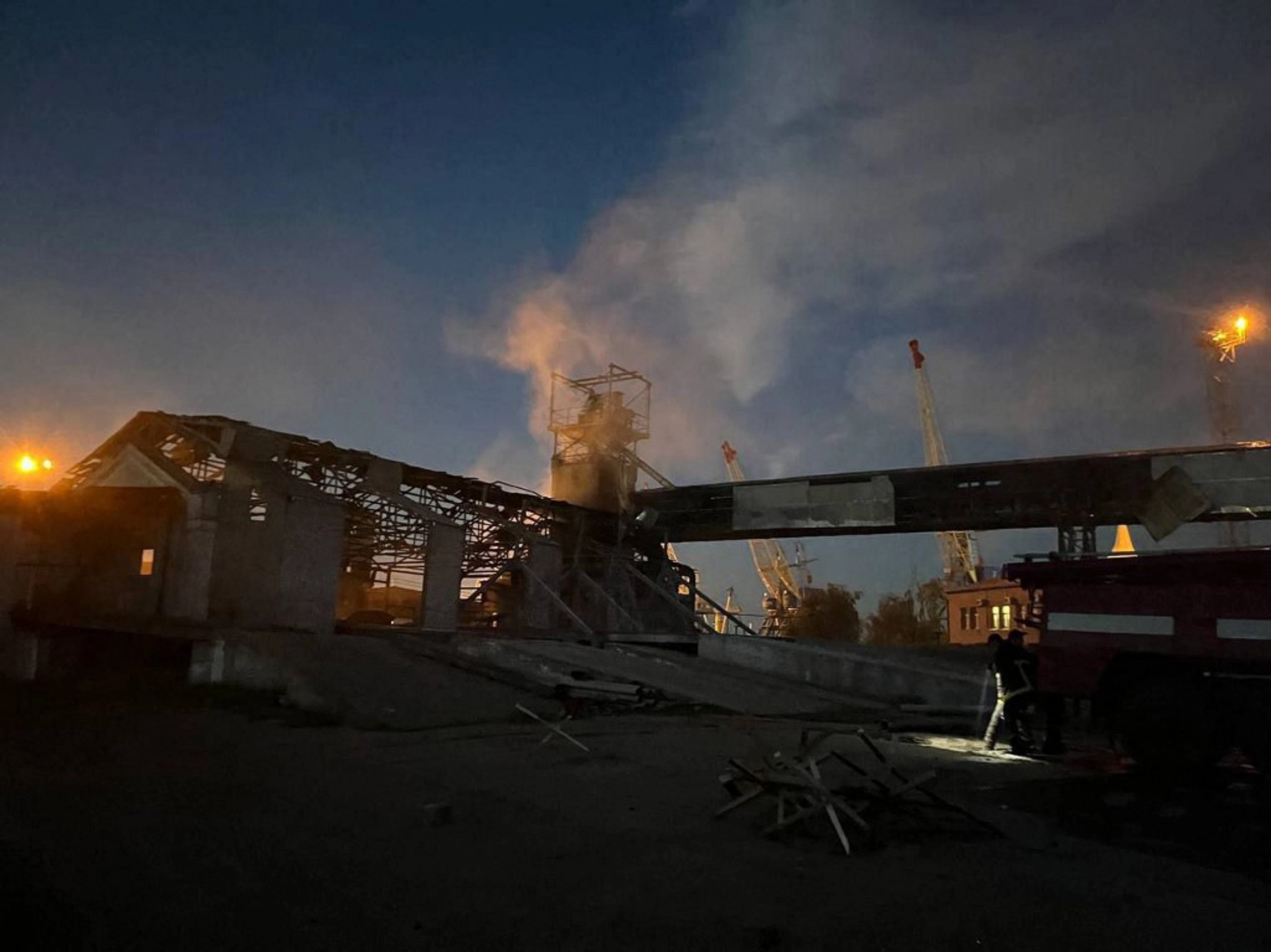
That is the strategic hinge most analyses miss. The corridor’s value does not rest on a calm sea. It rests on the opposite. Every time Russia targets Odesa’s port infrastructure, the case for redundant, EU-anchored staging capacity on the Lower Danube grows stronger. Resilience is not built in a single port. It is built in a network with more than one node, a logic Romania has been slow to articulate as policy and quick to apply as practice.

Ukraine’s Warning Britain Still Refuses to Heed
The Danube’s strategic comeback
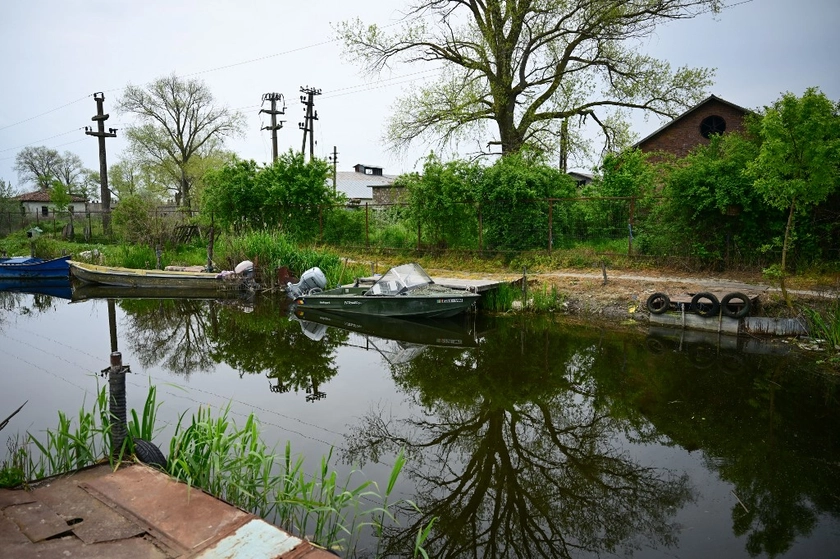
A quiet lesson of this war is the rediscovery of a river. When the blockade disrupted deep-sea routes, the Danube became one of Ukraine’s most dependable lifelines, and modest ports such as Ukraine’s Reni and Izmail were reclassified overnight as infrastructure of European significance. The economics explain why. For grain, steel, fertilizer and heavy equipment, precisely what reconstruction moves in volume, inland waterway transport remains among the cheapest and most resilient options available. A barge does the work of hundreds of trucks, and it does not depend on a single contested shipping lane.
Constanța: the EU’s gateway into the war economy
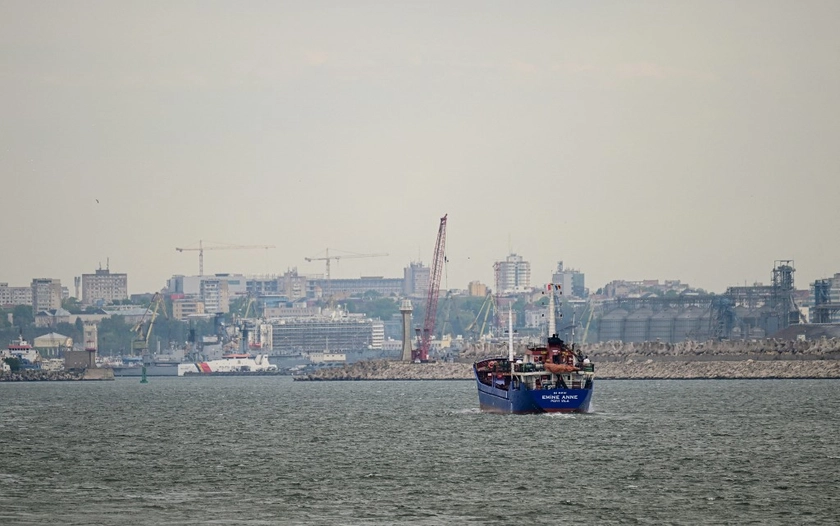
If Odesa is Ukraine’s maritime heart, Constanța has become its European gateway. Romania’s largest port handled a record 92 million tons of total cargo in 2023 against a stated capacity above 100 million tons, with Ukrainian grain transiting the port reaching 14 million tons that year, close to 40 percent of Constanța’s own record grain total of 36 million tons. At the height of the 2022-23 emergency, Romania at one point carried roughly 80 percent of Ukraine’s agricultural exports through its multimodal routes, a figure that my co-author Cristian Chiscop and I set out in detail in our framework paper on the Romania-Moldova-Ukraine triangle for the Friedrich-Ebert-Stiftung.
Honesty requires a caveat that strengthens the thesis rather than weakening it. Once Ukraine reopened its own maritime corridor in late 2023, grain transiting Constanța fell back. But what the wartime spike proved is durable: Constanța can absorb Ukrainian volumes at scale, inside EU customs, regulatory and financial frameworks, with links to sea, rail, road and river. For an international contractor, that is the difference between an idea and an address, a nearby base offering legal certainty and logistical depth.
Constanța is increasingly becoming that address, and the investment now arriving confirms it is being treated as one. In April 2026, AD Ports Group of Abu Dhabi signed a framework agreement with Constanța’s port administration to explore joint investment and development, explicitly tying the port into its Middle Corridor strategy linking China to Europe through Central Asia and the Caucasus. The Abu Dhabi agreement does not commit capital outright, but Romanian-language industry sources reported in June 2026 that the wider Constanța development pipeline, principally the expansion of the Port of Constanța Sud-Agigea and the connecting motorways, already totals more than €2 billion ($2.3 billion) in committed and planned investment, with the port works alone expected to close around 2030.
Taken together, the agreement and the financing already on the table are a clear signal of where global port operators and Romanian authorities alike expect the next decade of Black Sea trade to concentrate.
Galați: the gauge frontier
One node deserves far more attention than it gets, for a reason almost nobody outside the rail world discusses. Galați is a gauge frontier. Ukraine and Moldova run on the former Soviet broad gauge of 1,524 millimeters. The EU runs on standard gauge of 1,435 millimeters. Most cargo crossing that invisible line must be transshipped, a costly break in the chain. Galați is one of the rare points where both gauges meet the Danube directly.
In July 2022, Romania reopened the broad-gauge line connecting the Moldovan border post of Giurgiulești to the Port of Galați after 22 years out of service, letting freight trains routed via Moldova roll straight to the quay and discharge onto barges without a break-of-gauge transfer. From there, cargo continues on EU-gauge rail or floats down the Danube to the sea (through the Danube-Black Sea Canal). Few facilities on the continent can pivot between Soviet-gauge rail, EU-gauge rail, river barge and sea vessel in one yard. Galați also hosts Liberty Galați, Romania’s largest steelworks, on the Danube, and steel is among the most basic inputs required for recovery. A port that can receive cargo from the east, produce steel and dispatch it by river is an important connector. The logic was apparent even before the first invasion of Ukraine in 2014, when Chinese companies operating in Ukraine were diversifying logistics by moving product (mainly grain) also through the Galați New Port and onward to Constanța and the global maritime superhighway.
Moldova’s quiet entry
A 2026 transaction made the integration explicit. The European Bank for Reconstruction and Development sold its full stake in Danube Logistics, operator of Giurgiulești, Moldova’s only maritime-capable port and the route for over 70 percent of the country’s waterborne trade, to Romania’s state port company in Constanța. The deal, signed at the end of December 2025 and closed in April 2026, was valued at roughly $62 million, with at least a further $24-28 million committed to modernization. Giurgiulești now falls under the same administration as Constanța. Romania’s transport ministry framed the takeover as strategic infrastructure of regional and European significance, well placed to serve Ukraine’s future reconstruction.
What is emerging is no longer a loose cluster of ports. It is a vertically coordinated Lower Danube system spanning Romania, Moldova and Ukraine, the connectivity logic I argued for in my work with FES. The paper’s central argument was that Romania had relied for too long on point-management: useful improvisation in a crisis, such as the 2022 scramble that turned Constanța into Ukraine’s emergency grain outlet, but no substitute for a standing regional framework. The acquisition of Giurgiulești, alongside the broad-gauge line at Galați and the steady expansion of Constanța, is what that framework looks like once it stops being improvised.
The political architecture has caught up with the infrastructure. What began in 2022 as a ministerial-level consultation format between Romania, Moldova and Ukraine was upgraded in June 2025 to a first summit between the three heads of state in Odesa itself, and the format, now generally referred to as the Odesa Triangle, continued at foreign minister level into 2026, most recently on the margins of the Munich Security Conference. Energy security and regional connectivity sit on the agenda at every session. The triangle that gives this corridor its name is therefore not only a geographic description. It is also the name increasingly used for the diplomatic format that sits above it.
The pattern extends north as well as south. Romania’s newly approved €16.68 billion ($19 billion) financing package under the EU’s SAFE instrument, agreed in May 2026 and making Romania the second-largest beneficiary of the program after Poland, earmarks funds for dual-use transport infrastructure toward Moldova and Ukraine alongside its defense procurement programs. Combined with the long-discussed A8 motorway intended to link Odesa, Chișinău and Iași with Western Romania, the north of the country is positioning itself as a secondary corridor for reconstruction traffic towards Ukraine, complementing rather than competing with the Lower Danube triangle to the south.
Why investors should watch this triangle
Some corridors exist because governments decree them. Others exist because geography and necessity make them unavoidable. This one belongs to the second category. Black Sea access, Danube connectivity, a gauge frontier at Galați, EU customs and finance at Constanța, Moldovan integration at Giurgiulești, sovereign port investors now circling the Black Sea’s largest harbor, and a reconstruction bill approaching $588 billion together create a dynamic that will intensify, not fade.
This is why policymakers should treat the triangle as a single system, why financial institutions should prioritize the whole corridor rather than isolated assets, and why investors seeking durable exposure to Ukraine’s recovery should look here first.
Rebuilding Odesa will matter enormously. But building the Odesa-Constanța-Galați triangle, with the Lower Danube as its spine and the north of Romania as its hinterland, may prove equally transformative, not only for Ukraine’s recovery, but for the future economic geography of the entire Black Sea.
The views expressed in this opinion article are the author’s and not necessarily those of Kyiv Post.
You can also highlight the text and press Ctrl + Enter