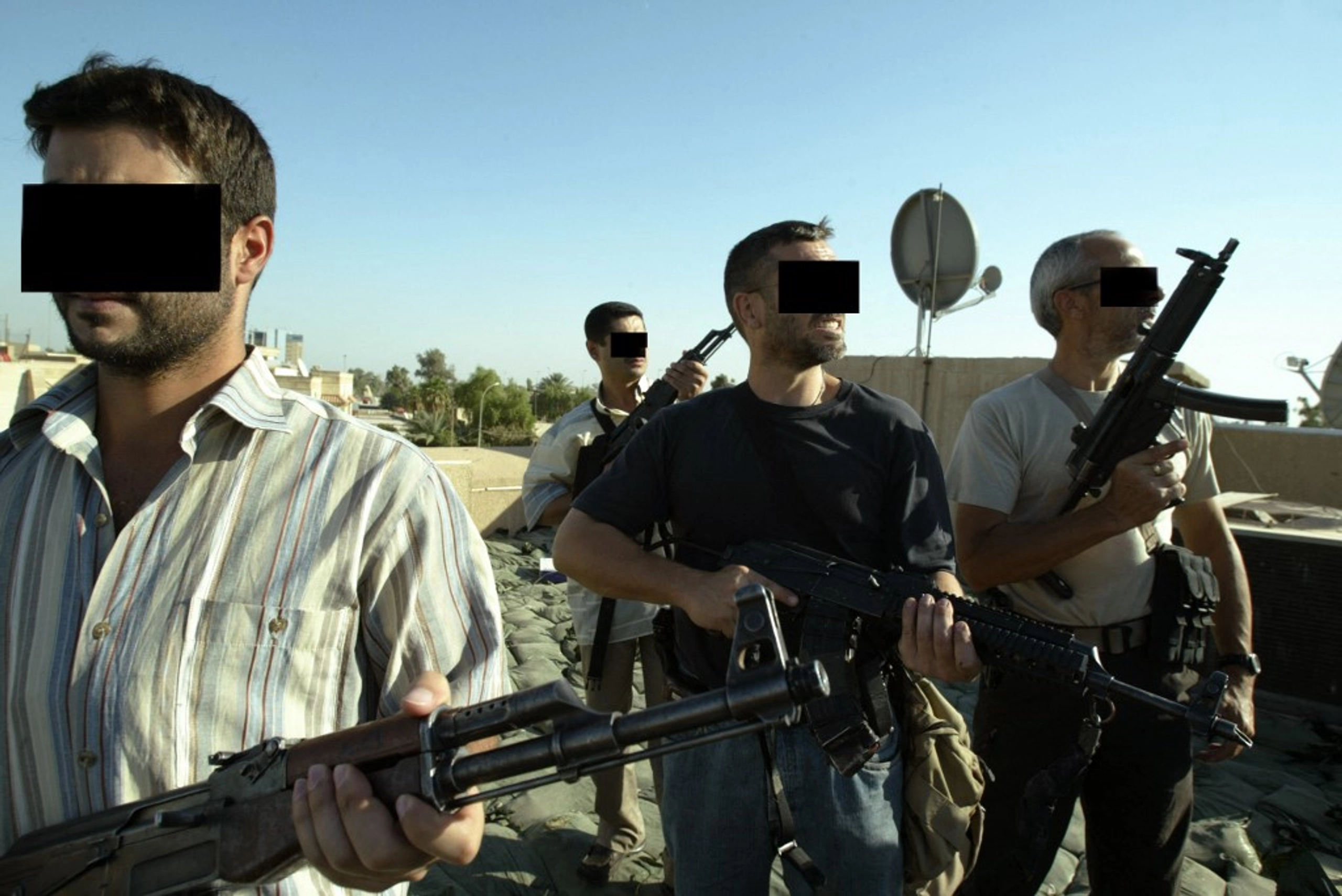
Donald Trump is in talks to deploy private American military firms to Ukraine as part of a potential peace settlement, according to The Telegraph.
Citing more than a dozen Western officials, The Telegraph writes that armed contractors from the US could help build fortifications to protect American interests while deterring Vladimir Putin from breaking a ceasefire.
JOIN US ON TELEGRAM
Follow our coverage of the war on the @Kyivpost_official.
The plan is reportedly being mulled alongside a range of other security measures related to air policing, training and Black Sea naval missions.
The Telegraph published an outline of several of these other measures being discussed between Washington, Kyiv and its European allies based on sources involved in the talks.
Officials said that the primary strategy for preventing a resumption of the war was helping to rebuild Ukraine’s Armed Forces, including European NATO allies re-arming and training soldiers.
Front-line fortifications and bases could be built by American private military contractors (PMCs) to deter Russian aggression due to the risk of US retaliation, officials told the outlet.
This would be similar to the role of American PMCs in Iraq and Afghanistan, where they were deployed to provide support and security functions.
It would also provide a useful workaround to Donald Trump’s pledge not to put US boots on the ground in Ukraine, while placating European powers who have been hoping that the White House will put its own skin in the game when it comes to peace plans.
Nawrocki Rejects Claim He Revoked Zelensky Honor for Political Gain
The Telegraph also doubled down on previous reports by Politico that European officials have floated the idea of a demilitarized buffer zone on Ukrainian territory which could be patrolled by international peacekeepers or observers.
It is unlikely that Kyiv would agree to the buffer zone proposal given that it would likely involve concessions of territory, which Volodymyr Zelensky has previously rejected, saying “Ukrainians will not give their land to the occupier.”
Officials told the paper that the option of a European-led force stationed deeper in Ukraine was also being considered, which dozens of countries have reportedly volunteered to join.
However, a previous pitch of 30,000 European troops has since been reduced because of concerns that the Kremlin will perceive it to be too much of a threat.
This force would likely only be deployed to Ukraine for up to a decade before Ukraine’s own military is judged to be capable of shouldering its defense alone with the help of training and re-armament.
European nations have also reportedly discussed introducing a no-fly zone which would allow Ukraine to reestablish commercial aviation routes, bringing investment flowing into the country.
Under further plans revealed to The Telegraph, Turkey could lead a naval mission in the Black Sea with the support of Bulgaria and Romania, which could secure Ukraine’s commercial shipping routes.
This mission would also help to demine and secure the waters, from which Russian military vessels are currently banned by Turkey.
European deployment could come in the form of military trainers in new bases in Western Ukraine, a plan that was reportedly rejected as escalatory earlier in the war by former US President Joe Biden.
European officials are hopeful that US logistical support, for example in the form of American heavy-lift aircraft assisting with moving equipment and troops towards Ukraine, will be acceptable to the White House.
Officials also reportedly said that any European deployment would require American intelligence, reconnaissance and surveillance (ISR) support as Europe lacks the satellite capabilities to accurately monitor ceasefire violations.
Europe has suggested that a US military commander could be used to oversee the deployments under the peace plan, since Europe lacks experience in co-ordinating major military systems.
The White House has already reportedly signed off on the involvement of US general Alexus Grynkewich, the NATO pro-Kyiv Supreme Allied Commander in Europe, for this role.
However, European officials expressed concerns about a lack of clarity from Washington on the level, and structure, of its support, The Telegraph said.
European governments are reportedly asking Trump to station fighter jets and missiles in Poland or Romania which could respond quickly in the event of hostilities by Russia, but there are concerns that the US President’s unpredictability could make such a promise short-lived.
Finally, European officials also told the paper that they felt that plans for security guarantees may be in vain, given their lack of confidence that Putin is willing to end the war.
The Russian President has repeatedly deferred direct peace negotiations with his Ukrainian counterpart and has escalated overnight attacks on Kyiv, hitting civilian residences and the EU delegation headquarters overnight on Aug. 28.
You can also highlight the text and press Ctrl + Enter