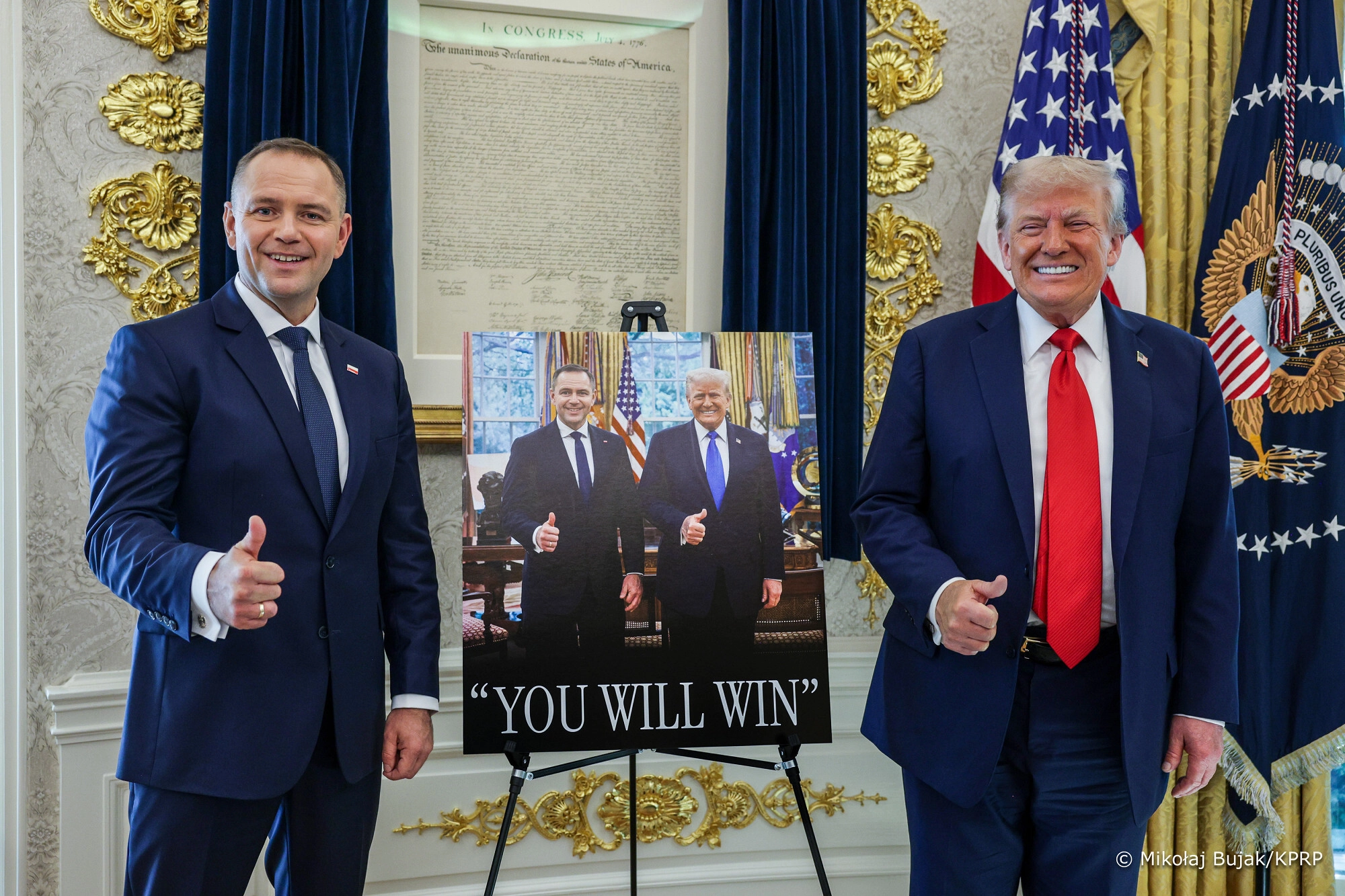
A common language, a remarkably warm reception – this is how Wednesday’s visit of Polish President Karol Nawrocki to Washington is being described.
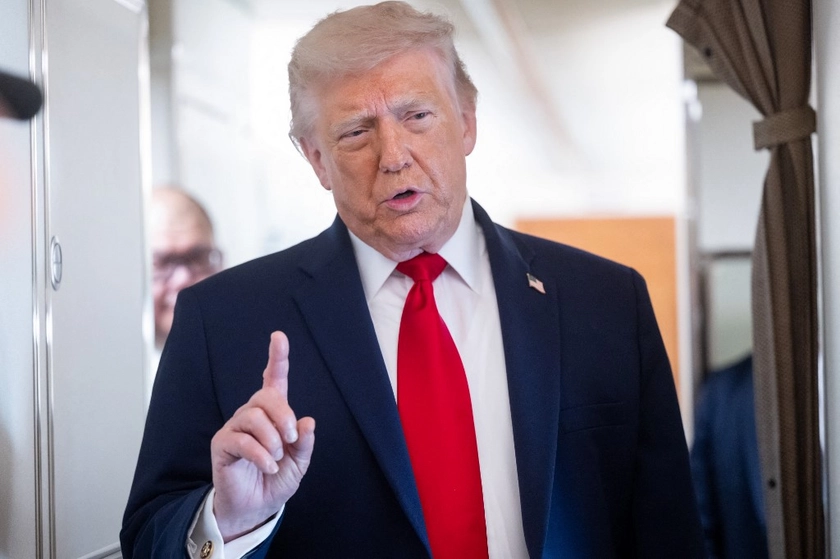
The meeting between Nawrocki and US President Donald Trump on Sept. 3 at Blair House, Washington DC, had both symbolic and strategic dimensions.
JOIN US ON TELEGRAM
Follow our coverage of the war on the @Kyivpost_official.
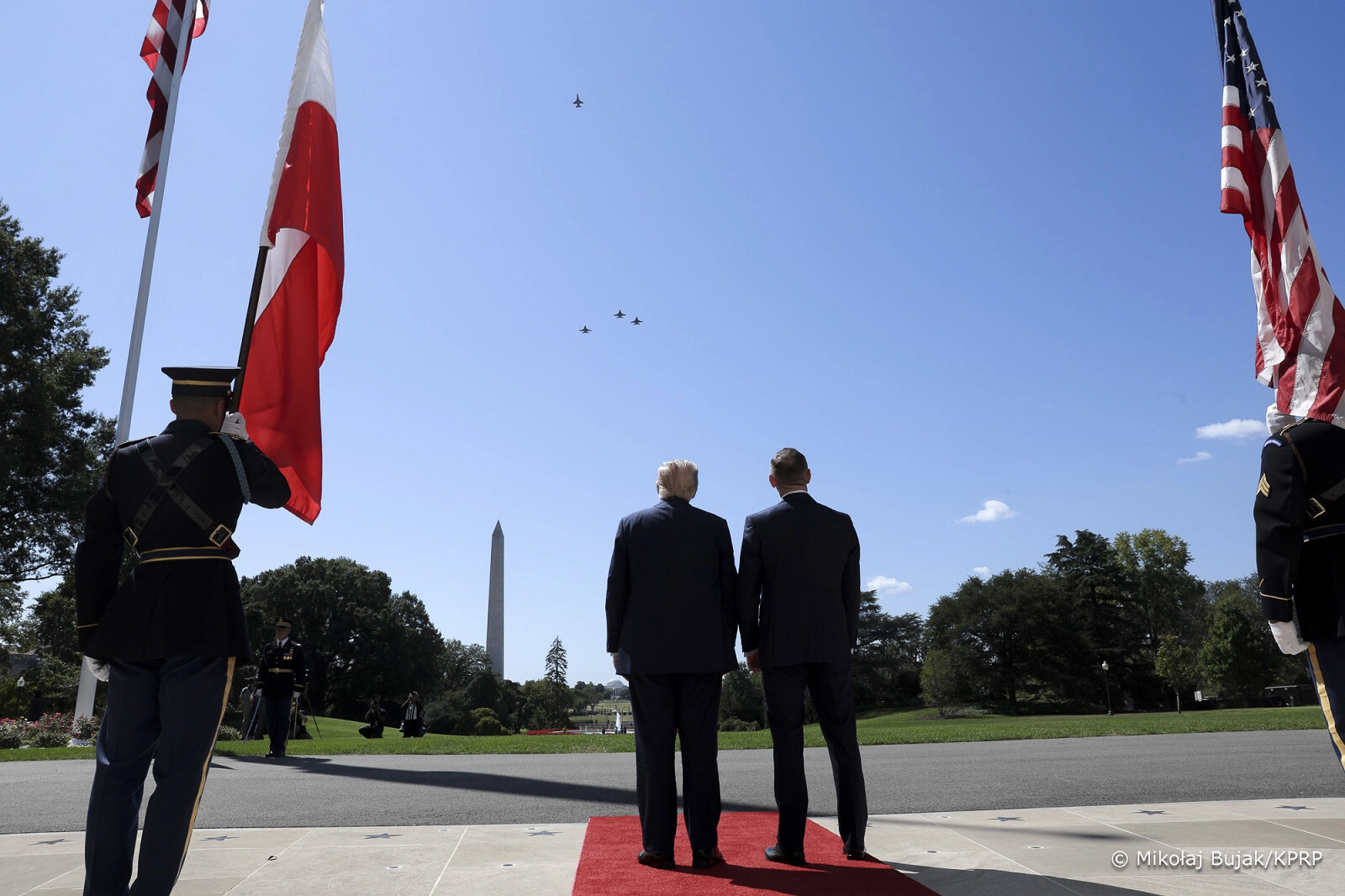
The visit was accompanied by a flyover of American F-35 and F-16 fighter jets, commemorating the Polish pilot Maciej “Slab” Krakowian, who died tragically in a plane crash. Donald Trump publicly addressed the tragedy, calling Poland a model ally and paying tribute to the fallen aviator. This was a significant gesture – highlighting the importance of relations between the two countries. The relationship with Poland was referred to as “special,” a designation previously reserved mainly for English-speaking countries.
“Nawrocki was received with greater honors than other European leaders, including Meloni,” says Filip Styczyński of the Center for Intermarium Studies, Institute of World Politics in Washington, DC. Undoubtedly, the Polish conservative president and his entourage enjoy the favor of the Republican establishment. The visit was coordinated in part by Adam Bielan and experienced diplomat Marcin Przydacz – both well-known in Republican circles.
What was discussed?
The meeting agenda was dominated by issues of security and energy. Trump publicly declared that he does not plan to reduce the US military presence in Poland – on the contrary, he announced the possibility of its expansion.
Trump Expresses Support for Direct Ukraine-Russia Talks Without US Mediation
“Poland is to serve as an energy hub for American LNG for Central and Eastern Europe. My contacts within the administration confirm that Poland is to become a key US partner for the next decade,” said Styczyński.
“This is a continuation of the strategic shift of the center of gravity from Berlin to Warsaw,” he added in an interview with Kyiv Post.
Trump’s remarks about increasing Warsaw’s importance should not come as a surprise. During his first term, he also praised the Three Seas Initiative, a framework for cooperation among Central and Eastern European states. As for the talks on the potential expansion of the U.S. presence, Kyiv Post reported on this in March.
The discussions also involve converting the currently rotational forces into a permanent presence – something that is commonly referred to in Polish public discourse as “Fort Trump.” This concept has also been positively referenced by Poland’s Deputy Prime Minister and Minister of National Defense, Władysław Kosiniak-Kamysz of the Polish People’s Party (PSL).
There is currently a marked internal conflict between the Polish government and the presidential palace. On foreign policy matters – particularly the war in Ukraine and national security – these usually opposing camps are playing on the same team (though that doesn’t mean there are no arguments within the team). Nonetheless, the Trump administration clearly prefers to engage with the president’s inner circle. Joint efforts focused on security cooperation are soon to begin, led by the US Secretary of Defense Pete Hegseth and Poland’s National Security Bureau chief Sławomir Cenckiewicz. This aligns with Nawrocki’s political strategy, which envisions expanding the powers of the presidency in Poland beyond their current limits.
What’s next?
President Nawrocki’s Wednesday visit to the US capital clearly demonstrates a very favorable political climate between him and Trump. One can conclude that the relationship is close, and the United States is interested in strong ties with Poland.
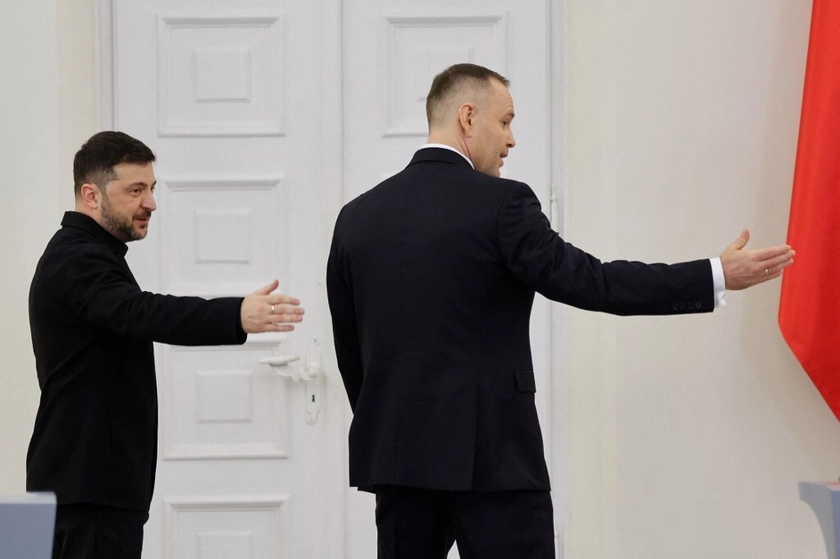
Deepening the Warsaw-Washington relationship could also bring tangible benefits to Ukraine. Despite the sharp rhetoric presented by Poland’s president, his support for Ukraine’s defense is unequivocal. Good relations between Zelensky and Nawrocki could translate into meaningful diplomatic support from Poland in Washington. According to Kyiv Post sources, Ukrainian diplomats are aware of this and are keen to maintain friendly relations with Warsaw.
President Nawrocki’s visit to Washington shows that Poland may be gaining prominence as a key partner of the United States in Europe. The coming months will reveal whether the declarations about increasing military presence and energy cooperation will translate into concrete actions. One thing is certain – the Polish-American relationship is entering a new, more intensive phase.
You can also highlight the text and press Ctrl + Enter