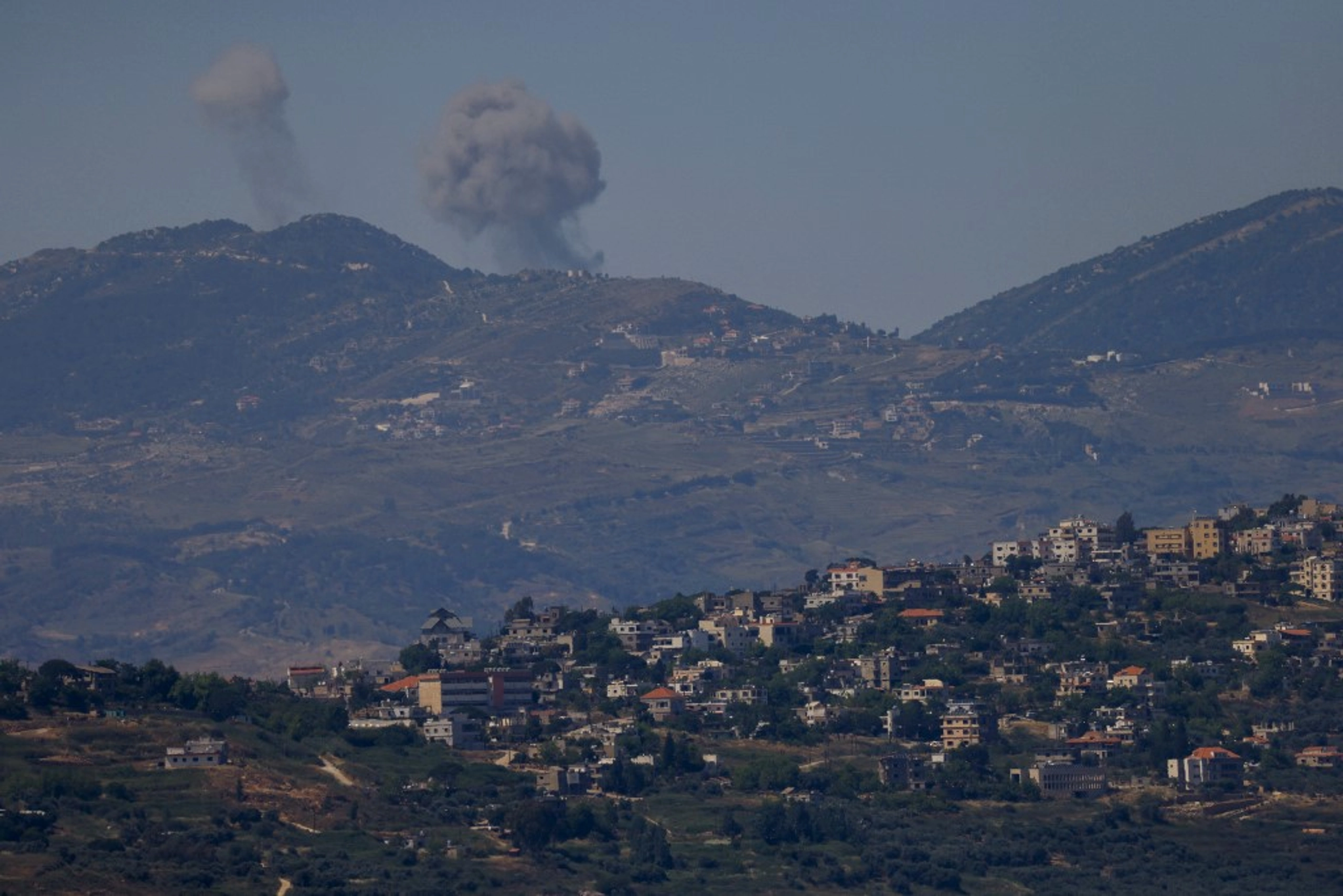
US military units operating in the Persian Gulf region engaged and defeated a coordinated wave of Iranian ballistic missiles and loitering munitions on Friday, June 5.
The extensive engagement was followed by US retaliatory strikes against military infrastructure inside Iran, marking a sharp increase in hostilities despite a formal ceasefire framework being discussed by Washington and Tehran.
JOIN US ON TELEGRAM
Follow our coverage of the war on the @Kyivpost_official.
Missile swarms target Kuwait and Bahrain
According to an official operational update released by US Central Command (CENTCOM) on X, the confrontation began when Iranian forces launched four one-way attack drones toward the strategic Strait of Hormuz. CENTCOM personnel intercepted all four unmanned assets, noting that the drones posed an immediate threat to international commercial shipping and regional maritime traffic.
Hours after the initial drone engagement, the Iranian military escalated the operation by firing seven ballistic missiles directed toward the territories of Kuwait and Bahrain. US defensive arrays engaged the incoming targets, with initial post-battle assessments indicating that six of the ballistic missiles were intercepted while the seventh failed to reach its intended destination.
CENTCOM confirmed that no American personnel were harmed during the multi-tier bombardment. Furthermore, US military officials explicitly rejected statements broadcast by Iranian state media outlets claiming that the strikes had successfully damaged the United States 5th Fleet headquarters located in Bahrain, labeling those claims as entirely false.

Infantry Up Close, More and Better Bombardment, Helping America ‘Win’
Retaliatory strikes on Iranian coastal radars
To neutralize the immediate threat of subsequent maritime ambushes, US forces executed targeted counter-strikes against tracking installations located along the Iranian coastline. The precision strikes hit active Iranian coastal surveillance radar sites located in the port town of Goruk and on Qeshm Island.
The targeted infrastructure is routinely utilized by the Islamic Revolutionary Guard Corps (IRGC) to track international commercial transport ships and coordinate drone interceptions. By disabling these specific radar installations, US military planners aimed to degrade Tehran’s situational awareness over the narrow shipping corridors of the Strait of Hormuz.
A stalled ceasefire amid parallel pressures
The Friday missile engagement is the latest in a sequence of military exchanges that have threatened regional stability. Previously, over the weekend of June 1, US fighter jets had targeted radar systems and drone command facilities within the same Goruk and Qeshm Island sectors following the downing of a US MQ-1 drone over international waters.
The IRGC had claimed those strikes were retaliation for an American attack on a telecommunications asset in Sirik, warning that future operations would prompt an expanded military response.
These repeated exchanges unfold against a backdrop of complex diplomatic maneuvers managed by US President Donald Trump. While American and Iranian diplomats remain engaged in discussions regarding a comprehensive agreement to limit Iran’s enriched uranium program and restore unhindered transit through the Strait of Hormuz, the White House has demanded more stringent commitments on Iran’s nuclear infrastructure before easing economic restrictions.
The latest defensive actions by CENTCOM demonstrate that Washington intends to maintain parallel military pressure to answer ongoing Iranian aggression while diplomatic channels remain deadlocked.
You can also highlight the text and press Ctrl + Enter

OPINION: The New Line Kyiv Quietly Built Into NATO