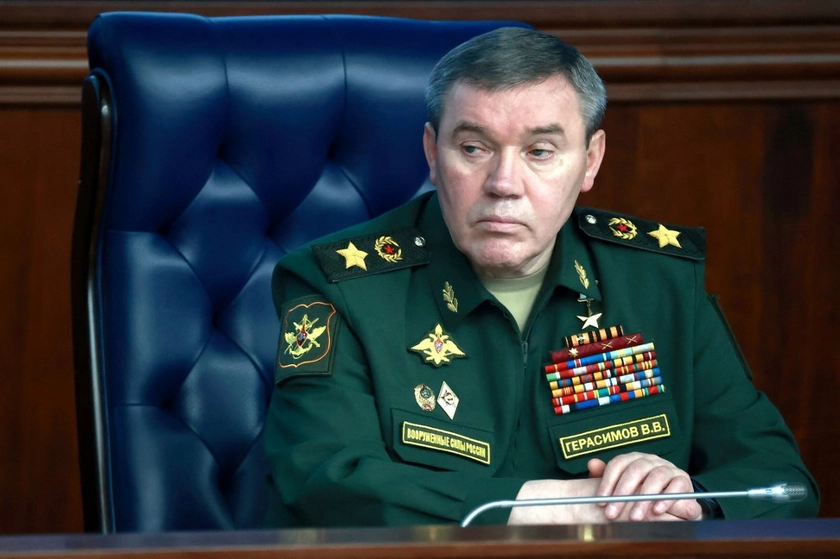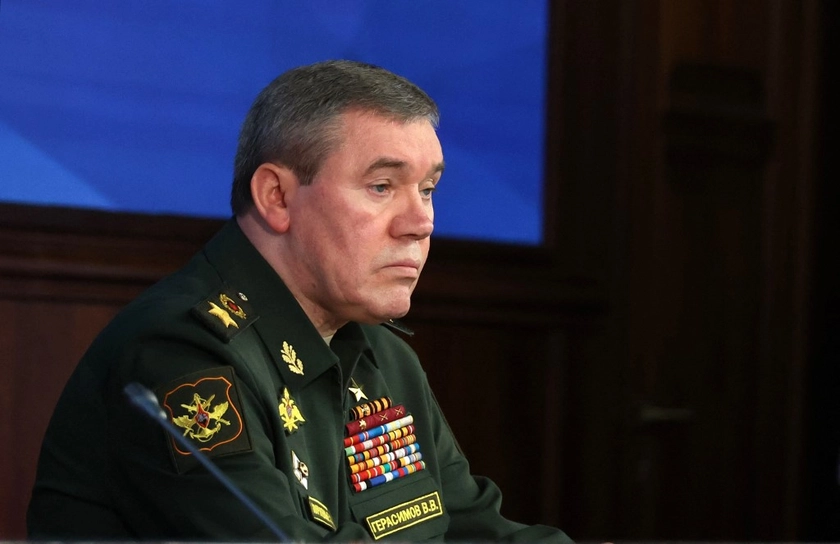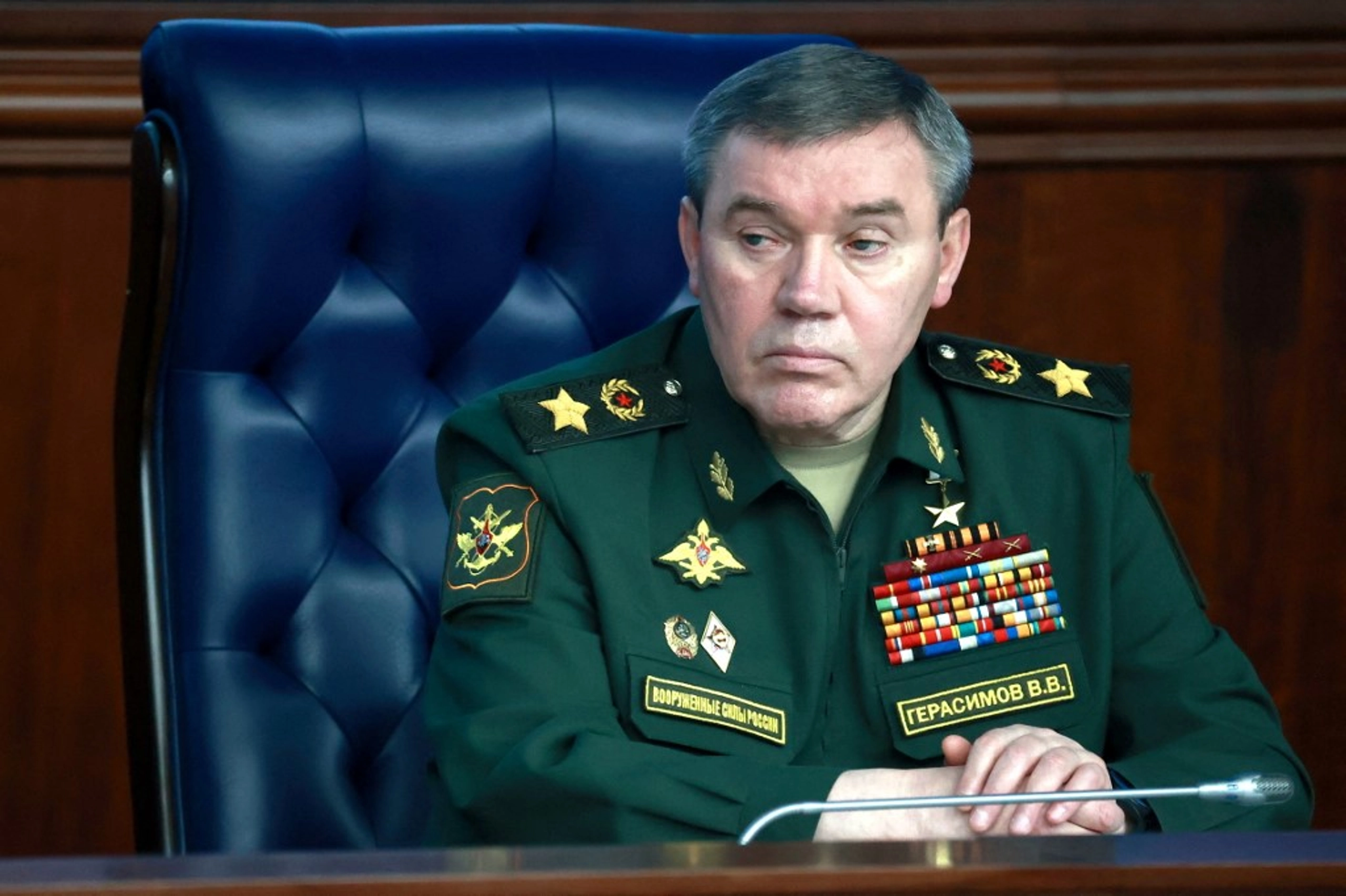
Russia’s top general, Valery Gerasimov, was absent from the final stages of the “Zapad-2025” military exercises visited by President Vladimir Putin on Tuesday because he was busy managing the war in Ukraine, the Kremlin spokesman said.
Putin made a surprise trip to the Nizhny Novgorod region to visit the joint military drills, held with Belarus on Tuesday, Russian state television reported.
JOIN US ON TELEGRAM
Follow our coverage of the war on the @Kyivpost_official.
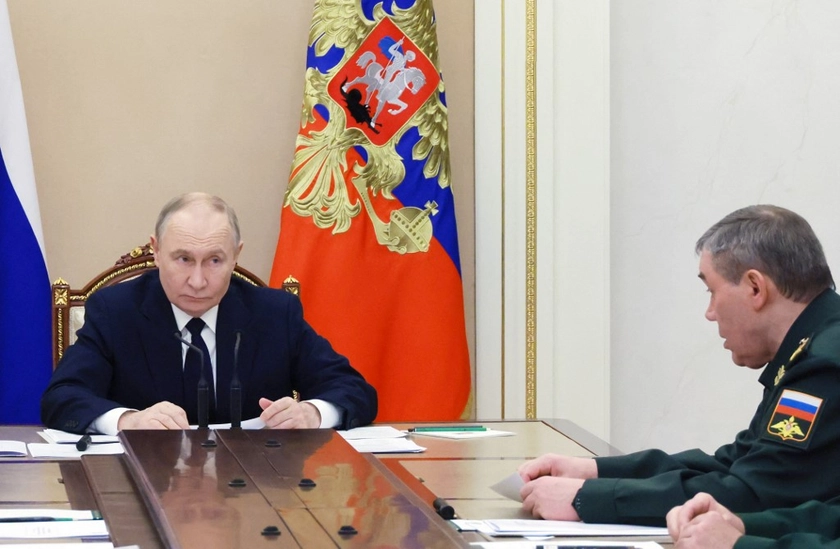
Donning military garb, Putin met with top military officials at the Mulino training ground, listened to briefings from Defense Minister Andrey Belousov and his deputy, and inspected military equipment including motorcycles, quad bikes, anti-drone weapons and radar systems. Gerasimov’s absence was, however, noticed.
“There is a special military operation underway, and overall coordination of this operation is, of course, carried out by the Chief of the General Staff,” Kremlin spokesman Dmitry Peskov told RIA Novosti.
Kremlin pool journalist Andrei Kolesnikov wrote that “everyone was looking for Gerasimov,” but that the General Staff was instead represented by Ground Forces commander Gen. Andrei Mordvichev.
After inspecting the drills and weapons displays, Putin reportedly held private talks – about ten minutes with Dyumin and even longer with Mordvichev.
“What those conversations were about is known only to the three of them. But maybe soon everyone else will find out,” Kolesnikov wrote.
Ukraine’s Russian Volunteer Corps Eliminates Kremlin Forces on Zaporizhzhia Front
Putin has rarely been seen in military fatigues since the full-scale invasion of Ukraine, despite his status as “Supreme Commander-in-Chief” of Russian forces.
Gerasimov, 70, has attended every “Zapad” exercise since the drills began in 2009. He has led the General Staff since 2012, overseeing Russia’s annexation of Crimea, the Syria campaign, and the 2022 full-scale invasion of Ukraine.
Since January 2023, he has also commanded the Joint Group of Forces fighting in Ukraine.
Despite reaching the age limit for his post, Gerasimov is expected to stay on. Two people close to the Defense Ministry told Vedomosti that Putin will sign a decree soon to extend his service.
Late last month, Gerasimov claimed “the strategic initiative is entirely with Russian troops,” calling for the creation of “buffer zones” in the regions of Kharkiv and Sumy and for continued “offensive actions” in all directions.
Gerasimov spoke in front of a map which military commentators said showed large areas of currently unoccupied parts of Ukraine enclosed within a thick black line. This included the entirety of the four regions of Donetsk, Luhansk, Zaporizhzhia and Kherson – partially annexed in 2014 and 2022 – along with the southern cities of Mykolaiv and Odesa.
On Tuesday, Sept. 16, Russia and Belarus wrapped up five days of war games codenamed Zapad-2025 where they rehearsed launching Russian tactical nuclear weapons in what Western officials condemned as an aggressive projection of military bravado.
NATO responded with alarm to the drills, with Poland closing its border with Belarus and deploying 40,000 soldiers to its borders as part of its own exercises, though the Kremlin dismissed Europe’s fears as “emotional overload.”
Belarusian leader Alexander Lukashenko shrugged off concern from surrounding countries on Tuesday, claiming “we are absolutely not planning to threaten anyone with this.”
In comments to Belta, Belarus’ Chief of the General Staff Pavel Muraveyko said that the Zapad drills had placed special emphasis on “the planning and consideration of the use of non-strategic nuclear weapons, as well as the evaluation and deployment of the Oreshnik mobile missile complex.”
The Oreshnik missile, which Putin has previously claimed is impossible to intercept, was first used against Ukraine in November 2024 and is expected to be permanently stationed in Belarus by later this year.
Russian state media has bragged that the Oreshnik could reach an air base in Poland within 11 minutes and the NATO headquarters in Brussels within 17.
On Sept. 15, it was reported that US military officers had made a surprise visit to observe Zapad-2025 alongside military-diplomatic missions from China, Iran, Turkey and Azerbaijan, among others.
You can also highlight the text and press Ctrl + Enter