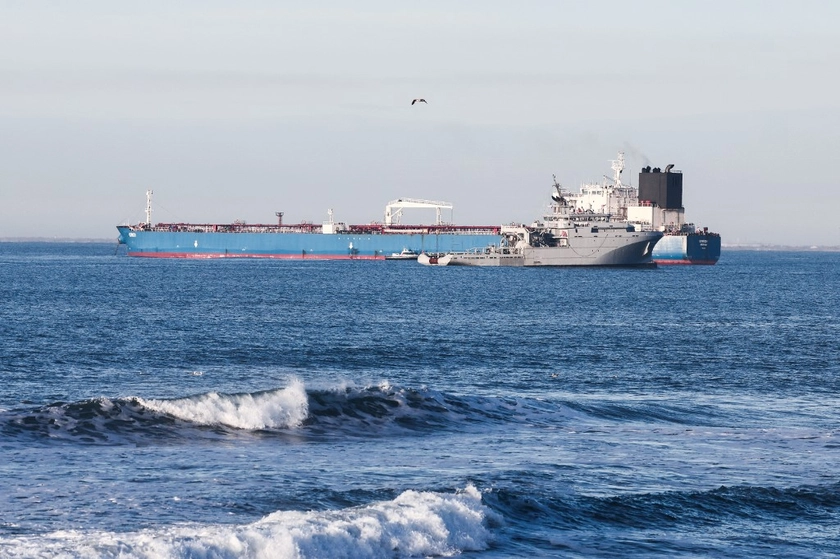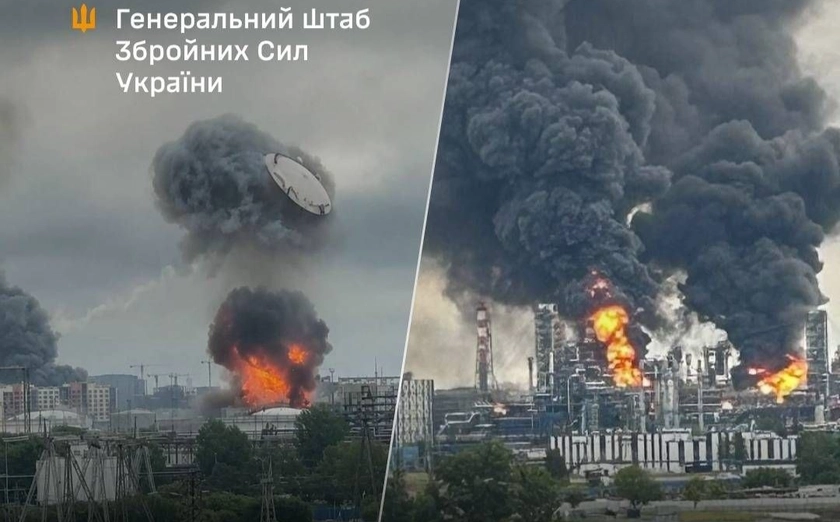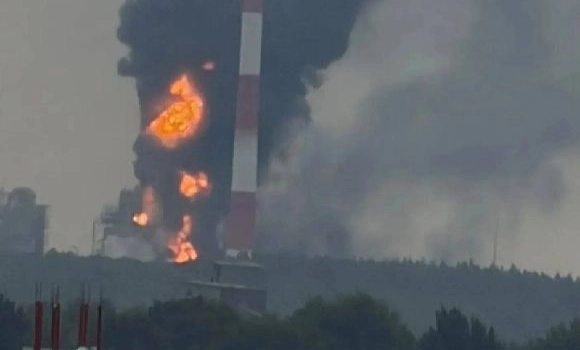
Drones from Ukraine’s Security Service (SBU) have once again struck the Gazprom Neftekhim Salavat refinery in Bashkortostan, one of Russia’s largest oil refining and petrochemical plants.
“SBU Special Operations Center ‘A’ drones flew to Bashkortostan for the second time in seven days and hit Gazprom Neftekhim Salavat,” an SBU source told Kyiv Post.
JOIN US ON TELEGRAM
Follow our coverage of the war on the @Kyivpost_official.
The refinery, which lies about 1,400 kilometers (900 miles) from Ukrainian territory, produces over 150 types of product, including gasoline, diesel, fuel oil, bitumen, and polyethylene.
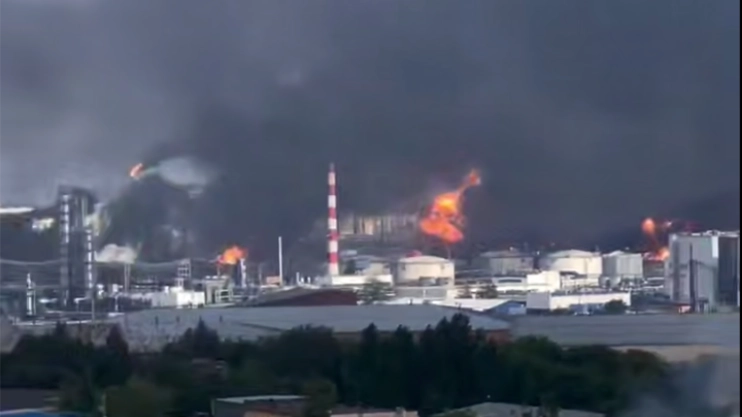
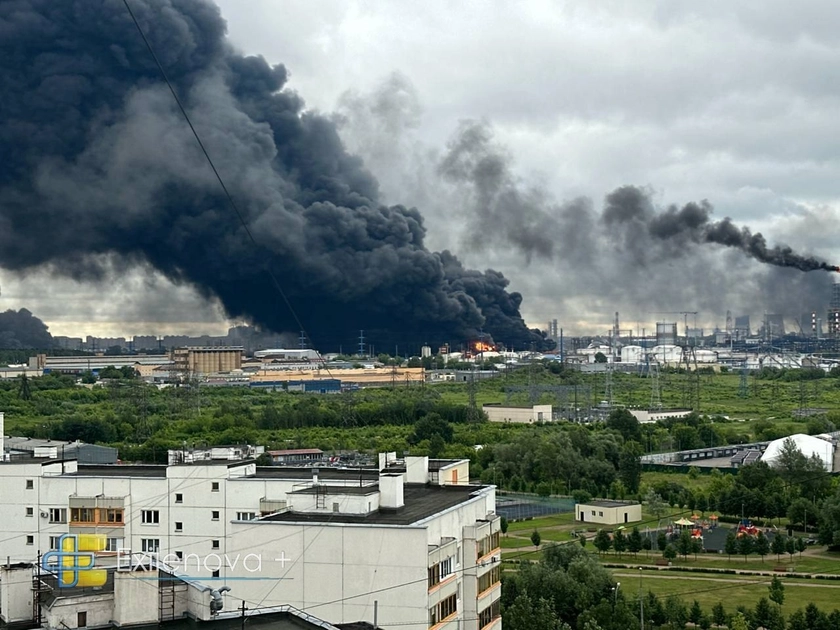
As a result of multiple drone strikes a fire broke out, sending a massive column of black smoke into the air.
Local authorities said they were assessing the damage, while photos and videos from the scene circulated on social media.
“The SBU continues to launch targeted deep strikes on facilities that finance the war against our state. The gas station country must finally realize that aggression against Ukraine is costing it dearly,” the source added.
Just last week, SBU drones targeted the refinery’s ELOU-AVT-4 unit – described as the “heart” of the facility – that processes crude oil into gasoline, diesel, kerosene, and fuel oil. That strike also triggered a massive fire. Regional authorities later confirmed the refinery had sustained damage.
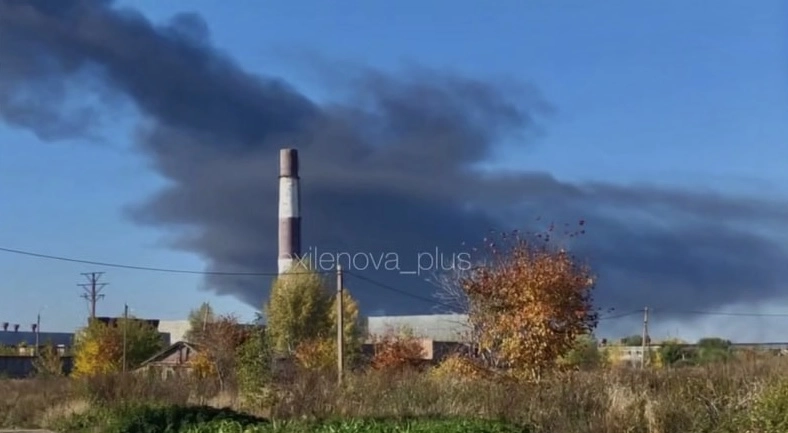
Meanwhile, Reuters reported that the Astrakhan gas processing plant has again suspended operations following another Ukrainian drone attack. According to three sources, a fire broke out on Sept. 22 at a condensate production facility with an annual capacity of three million tons.
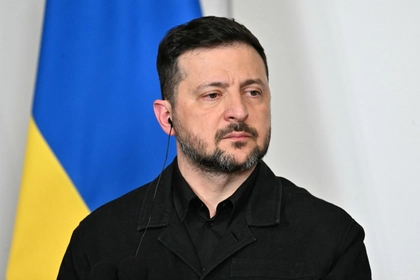
‘If Ukraine Burns, Moscow Will Burn’: Zelensky Links Moscow Strike to Lavra Attack
Astrakhan Regional Governor Igor Babushkin said drones targeted an industrial enterprise, without naming it, claiming that 13 Ukrainian drones were destroyed causing “local fires.”.
The Astrakhan facility – one of the world’s largest gas chemical complexes with 5,600 employees – produces gasoline, diesel fuel, technical sulfur, and other products.
In 2024, it processed 1.8 million tons of condensate, yielding 800,000 tons of gasoline, 600,000 tons of diesel, and 300,000 tons of fuel oil.
According to Reuters, the St. Petersburg Commodity Exchange suspended wholesale fuel sales from the Astrakhan plant on Monday. Analysts say the facility could remain offline for weeks or even months.
Russia’s fuel market is already under pressure. Analysts cited by Reuters note refinery output has fallen sharply – by nearly 20 percent on some days – while high borrowing costs prevent smaller gas stations from stockpiling fuel.
Although Russia still has a diesel surplus, gasoline output is only sufficient to meet domestic demand. Any sustained reduction in production could lead to shortages.
Some regions, including occupied Crimea and Russia’s Far East, have already reported large queues for fuel appearing since August, with popular grades such as AI-92 and AI-95 frequently unavailable.
Ukraine has intensified its campaign against Russian refineries and export terminals, aiming to cut Moscow’s export revenues, stir domestic discontent, and potentially push the Kremlin toward peace talks.
You can also highlight the text and press Ctrl + Enter