WASHINGTON, DC – As the US federal government grinds to a halt in a bitter partisan shutdown, the immediate effect on a key American ally, Ukraine, appears to be minimal.
US officials and Ukrainian observers say that while the crisis is an unwelcome distraction, critical military and diplomatic support for Kyiv hasn’t been interrupted – at least not yet.
JOIN US ON TELEGRAM
Follow our coverage of the war on the @Kyivpost_official.
The shutdown – a high-stakes political staring match with no clear end in sight – was triggered by a deadlock over domestic issues, primarily the extension of enhanced Affordable Care Act (ACA) subsidies.
Ukraine can’t afford Washington’s delay
Speaking to Kyiv Post on Wednesday, senior congressional staffers and a US administration official stressed that the current government shutdown should not impact Ukraine.
This was echoed by a delegation of Ukrainian military veterans and defense technology experts in Washington, who confirmed to Kyiv Post their scheduled meetings with US officials remain on track.
However, experts are sounding the alarm that a prolonged shutdown could quickly turn the “no impact” assessment into a serious problem for Kyiv.
“If this shutdown is short, it won’t have much impact. But if it goes on for a long time, it could start affecting shipments of military equipment to NATO for transfer to Ukraine,” said Yuriy Boyechko, CEO of the US-based humanitarian organization Hope for Ukraine.
Intent in Plain Sight: the Politics of a UN-Recognized Genocide
Boyechko warned that non-essential staff at the Pentagon and State Department are the ones who manage the Foreign Military Sales process, which funnels weapons through NATO to Ukraine.
“If the government shutdown lasts beyond a week or ten days, we might start seeing an impact on the ground in Ukraine, as the flow of military equipment slows down,” he told Kyiv Post.
He added that with “unprecedented intensity in Russian attacks on Ukraine,” the interruption could “undermine European security.”
Senate rejects funding bill as blame game intensifies
The path to ending the shutdown remains blocked in the Senate. On Wednesday evening, Democrats voted to block a House-passed stopgap funding bill that would have reopened the federal government until Nov. 21.
The measure failed to advance by a 55-45 margin, showing Republicans lack the 60 votes needed to move forward without Democratic support.
Senate Minority Leader Chuck Schumer (D-NY) declared the vote proved Republicans “don’t have the votes” and must negotiate on the expiring ACA subsidies and restrictions on the White House’s ability to unilaterally withhold congressionally approved funding.
Republicans, who control the White House and both chambers of Congress, continue to push back, insisting they will not negotiate on health care “while they’re holding the hostage of the federal government,” as Senate Majority Leader John Thune (R-SD) put it.
The intense standoff leaves plenty of uncertainty, with a freeze in federal paychecks, particularly for military service members whose next pay is due Oct. 15, looming as a major pressure point.
White House embraces shutdown to make cuts
The White House has embraced the shutdown not just as a political opportunity, but as a strategic one to advance its policy goals.
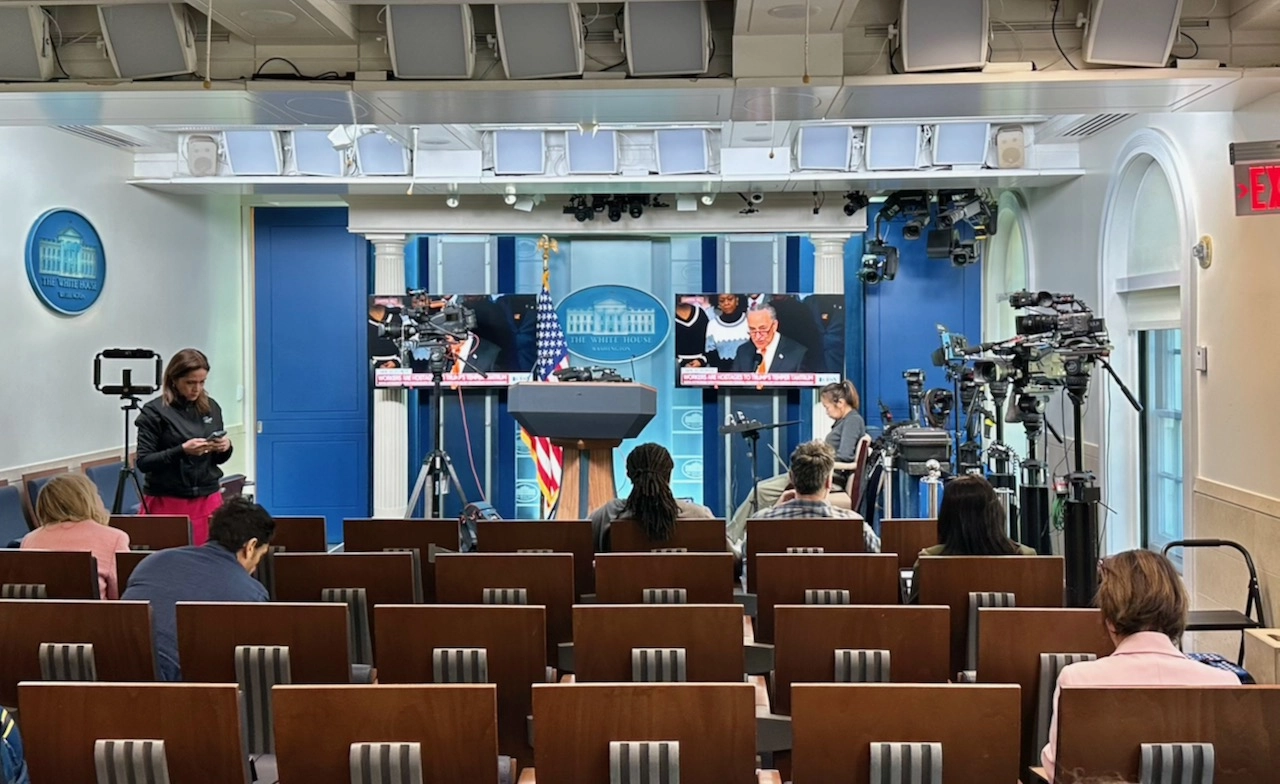
Vice President JD Vance appeared in the White House briefing room, firmly blaming the result on the “Chuck Schumer-AOC wing” of the Democratic Party and referring to the impasse as a “hostage taking tactic.”
Speaker Mike Johnson (R-LA) confirmed the ruling party’s strategy, stating on a radio show that the shutdown “does give an opportunity to eliminate bloated, unnecessary federal programs that we would like to vote down, but we never had the votes in the Senate to do. Now we have the moment.”
President Donald Trump and Office of Management and Budget (OMB) Director Russell Vought have signaled plans to use the shutdown to make “irreversible” cuts to federal programs and potentially facilitate mass layoffs of federal workers in the coming days.
For now, the possibility of long-term harm to Ukraine, a nation heavily reliant on the steady flow of American arms, hangs on the outcome of this domestic fight over US health care policy.
You can also highlight the text and press Ctrl + Enter

Putin’s Worst Nightmare