Getting the Tomahawks is one thing – using them is another.
On Wednesday, Defense Minister Denys Shmyhal hinted at a NATO press conference that a decision on the missiles could be announced by President Volodymyr Zelensky and US President Donald Trump on Friday if the long-sought deal by Kyiv comes to fruition.
JOIN US ON TELEGRAM
Follow our coverage of the war on the @Kyivpost_official.
Given that Ukraine is unlikely to receive them in a large enough quantity to make a real difference, with the proposed deal appearing largely symbolic – the practical question remains as to how Kyiv’s military would operate the missiles, given the launch platforms and guidance expertise required.
Overview of the Tomahawk missile
The Tomahawk is a long-range, subsonic cruise missile developed for deep precision strikes.
Range and speed vary by variant but are typically cited at roughly 1,600-2,400 kilometers (1,000-1,500 miles) at speeds of about 885 kph (550 mph, 0.72 Mach at sea level on a standard day). Tomahawks are nuclear-capable but can also employ 454-kilogram (1,000-pound) conventional high-explosive warheads.
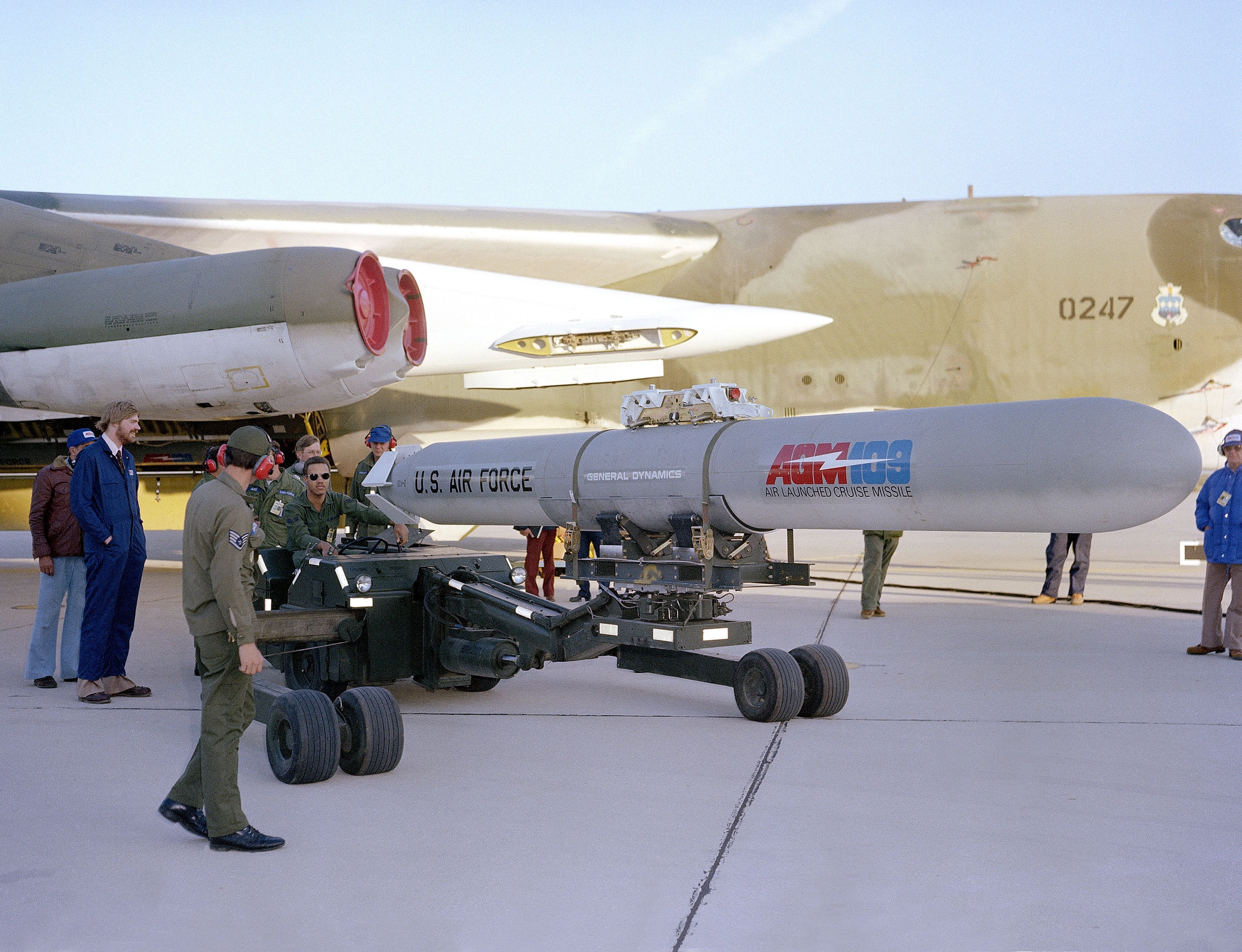
While an air-launched variant, known as the AGM-109, was explored during the Cold War, it never entered operation.
That left the naval-launched versions as the primary platform used in past conflicts – including the First Gulf War – until the recent introduction of ground-based variations following the US withdrawal from the Intermediate-Range Nuclear Forces (INF) treaty over Russian violations.
Intent in Plain Sight: the Politics of a UN-Recognized Genocide
Sea or ground-based launchers?
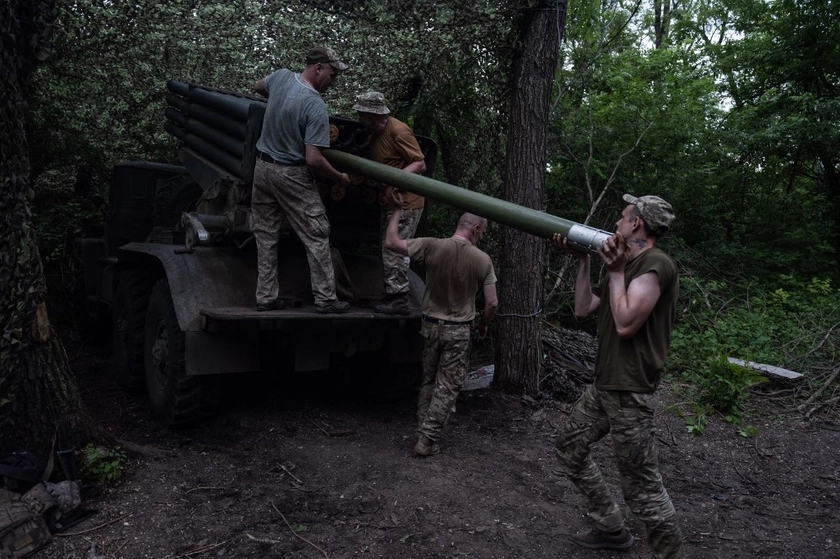
The first hurdle for Ukraine is determining how to launch the missile.
The Tomahawks, being primarily naval-based missiles throughout much of their life, are typically launched from ships and submarines.
Although Ukraine operates several unmanned surface vessels (USVs) capable of launching missiles adapted from other platforms, the loss of its larger naval assets following Russia’s 2014 annexation of Crimea means that the option of sea-based Tomahawk launches is highly unlikely.
But the US only has a handful of ground-based Tomahawk launchers, raising doubts about how many it could (or would) spare for Kyiv.
After withdrawing from the INF treaty in 2019, the US began adopting the Mark 41 naval launchers for ground use. By 2025, two Typhon batteries – each with four launchers – had been built for the US Army and deployed to the Pacific, while the Marine Corps received four to eight launchers for its now-defunct Long Range Fires (LRF) capability.
Since the US Marines technically abandoned the LRF, it is possible that whatever launchers they have could be transferred to Ukraine.
But assuming they cannot, there are some other potential options.
Defense firm Oshkosh said on Oct. 13 that it would soon unveil a ground-based mobile launcher for the Tomahawks it calls the Extreme Multi-Mission Autonomous Vehicle (X-MAV).
“The X-MAV will be displayed for the first time with four Tomahawk Land Attack Missiles,” its press release says.
While it is highly unlikely that the X-MAV will be sent to Ukraine before the US gets to test it, new systems entering service with Ukraine before their home country is not unheard of, as seen in the recent case with Germany’s Skyranger systems.
That would also align with Kyiv’s “test in Ukraine” initiative.
Less likely are the ground-based launchers scrapped by the US Air Force in the 1990s – a version known as the BGM-109G Gryphon operated for some time before the signing of the INF, after which all missiles were reported to have been decommissioned.
It is possible that some launchers from that era survived, but even if they did, restoring them to operational status would be a monumental task.
Navigation and targeting
Another key hurdle is navigation and targeting – which raises questions about how much sensitive guidance and intelligence the Pentagon would be willing to share with Kyiv to make the missile work.
The planning process can be summarized as follows: select the target, determine the optimal attack profile, plot the flight path, and load the mission data into the missile.
Unnamed US officials told the Financial Times (FT) recently that the Pentagon has provided full support at every stage of planning for Ukraine’s long-range strikes on Russian oil refineries, including route planning, altitude, timing, and mission details.
As such, it could be expected that the Pentagon would provide the necessary information for the Tomahawk strikes – though they likely require more complex data than those used by the drones due to the Tomahawk’s navigation methods.
Similar to Ukraine’s Flamingo missile, the Tomahawk also uses GPS receivers and an inertial navigation system (INS) – with GPS providing external location references and INS tracking physical movement midair to adjust the route.
But the Tomahawk also features a Terrain Contour Matching System (TERCOM) that compares real-time images and terrain data with onboard databases to verify its flight path, making it more accurate than its contemporaries.
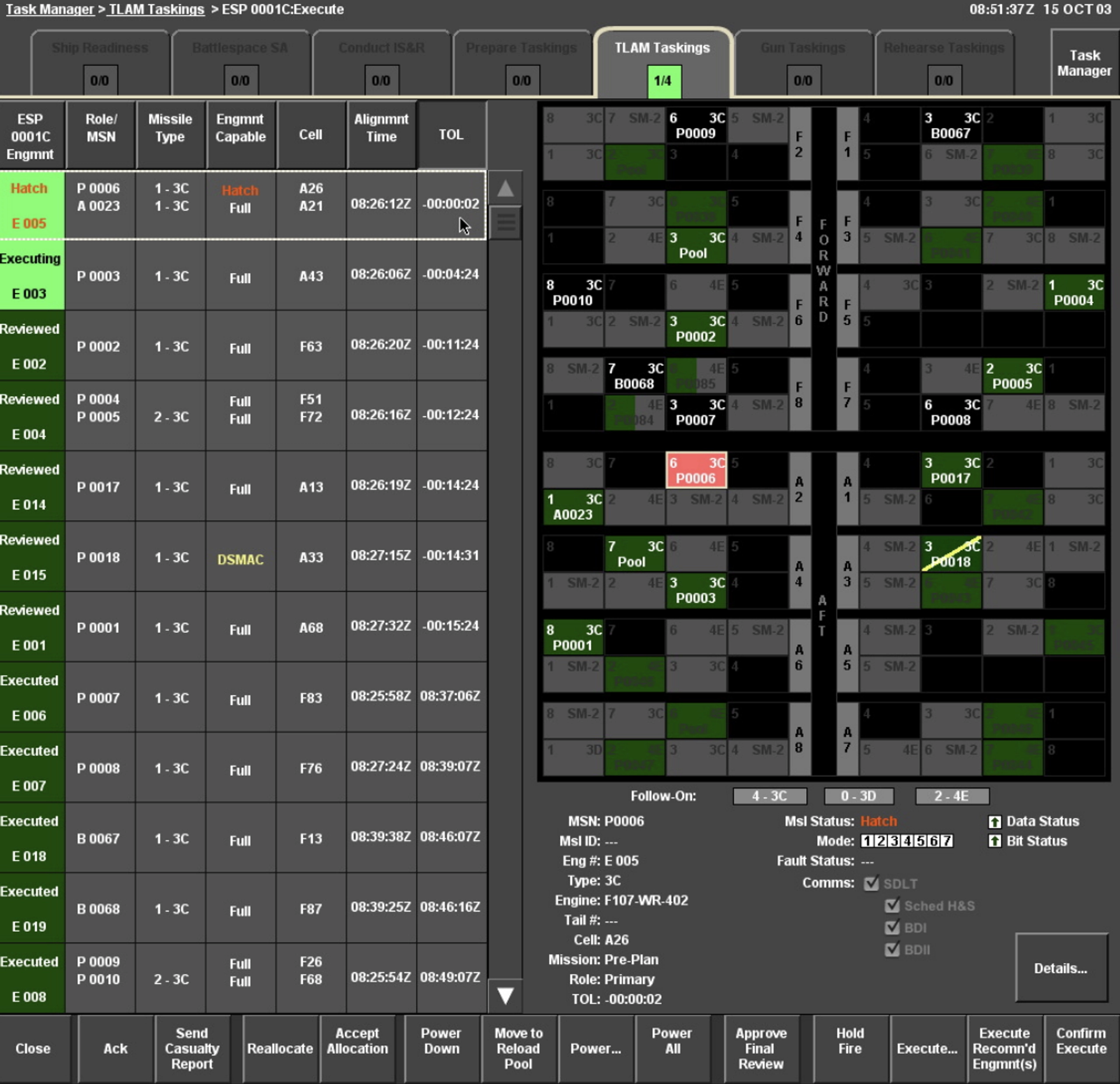
Level 3 of the Tomahawk missile weapon control system depicting the detailed status of a single step of a single task, as seen in a declassified paper on Tomahawk’s planning system released by the US Defense Technical Information Center (DTIC) (Image by DTIC)
When operating long-range weapons, waypoints are likely set based on available intelligence (such as air defense locations and target coordinates) as part of its pre-planned route.
Someone would need to plot the route on a computer, then load it into the weapon – the technical processes of which remain classified.
As the route is planned, digital terrain data of the route needs to be loaded into the missile for the terrain-matching navigation to work. Would the US provide the data for western Russia?
Would the data be preloaded before they enter Ukraine? If not, would Ukrainian personnel be given access to the data to upload it before launch? Or would someone from (or trained by) the US need to be on the ground to enter that data from a US-provided database file?
All these issues remain largely classified – but as seen from the example of the British Storm Shadow missiles now fielded by Ukraine, which also rely on US targeting data, it is not beyond the bounds of possibility for targeting information to be entered. The mechanics of exactly how that would work is the million-dollar question.
You can also highlight the text and press Ctrl + Enter

Putin’s Worst Nightmare