Officials and the state-loyal media working for them in the Russian border region of Bryansk are struggling to hew to the Kremlin official line that peacetime life is mostly unchanged, because Ukrainian drones, missiles, and sabotage teams keep contradicting it, violating the international border and blowing up things inside Russian Federation territory.
The most recent raid was overnight Monday to Tuesday. According to a confident Russian Defense Ministry statement published in Moscow, a total of two “enemy” robot aircraft flew across the border from Ukraine’s Chernihiv region and were duly shot down by Russian army air defenses. Neither injuries nor damage was reported, that official declaration said.
JOIN US ON TELEGRAM
Follow our coverage of the war on the @Kyivpost_official.
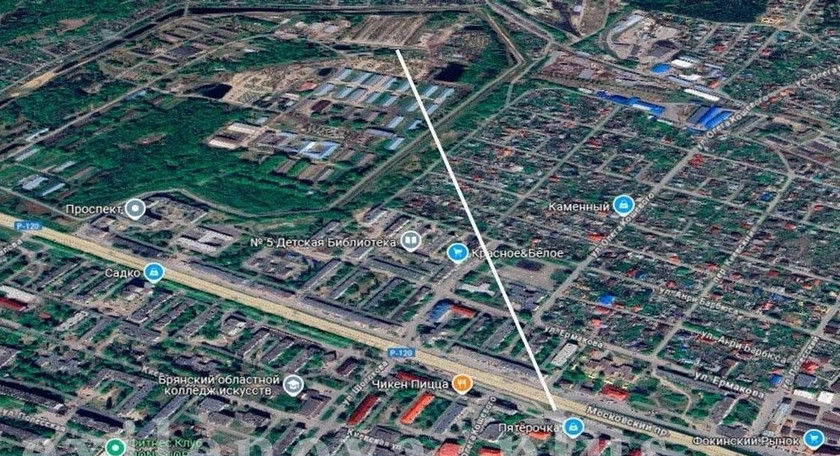
But in the district center of Klintsy, a town of about 60,000 in the far southwest of Russia’s Bryansk Oblast, only a few dozen kilometers from both the Belarusian and Ukrainian frontiers, local news platforms and media reported an air raid warning in effect for most of the night, sirens and anti-aircraft cannon and machine gun crews firing into the sky, drone hits and damage to town buildings, and one resident – a child – injured by flying debris.
The local “We Listen to Klintsy” Telegram news channel said of the Ukrainian attacks:
“Overnight, Ukrainian Nazis attacked the city of Klintsy using fixed-wing UAVs [unmanned aerial vehicles]. As a result of the barbaric actions of the Ukrainian Armed Forces, a teenager born in 2010 sustained injuries. An ambulance crew provided the boy with all necessary medical care at the scene. Windows were damaged in two apartment buildings. Three civilian vehicles were hit and damaged by shrapnel. Details will come after authorities inspect the scene in the morning.”
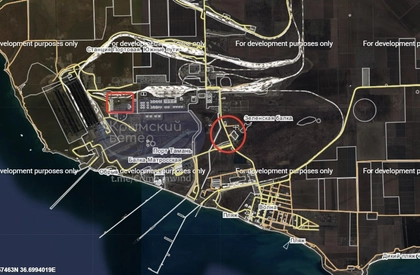
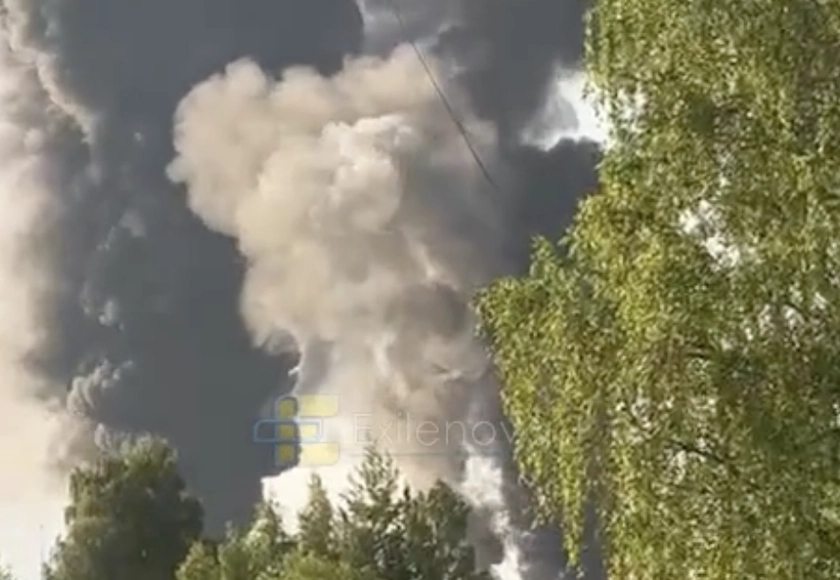
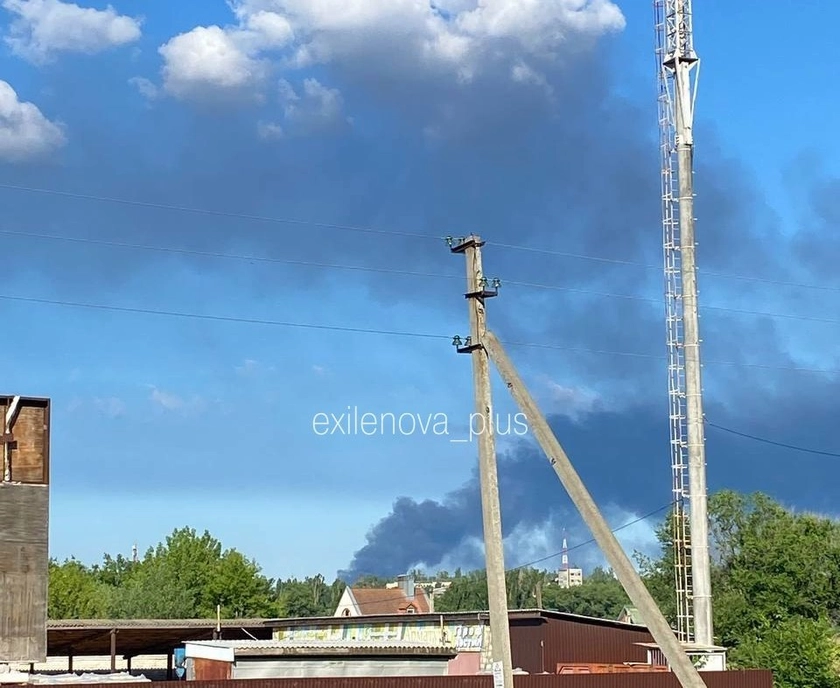
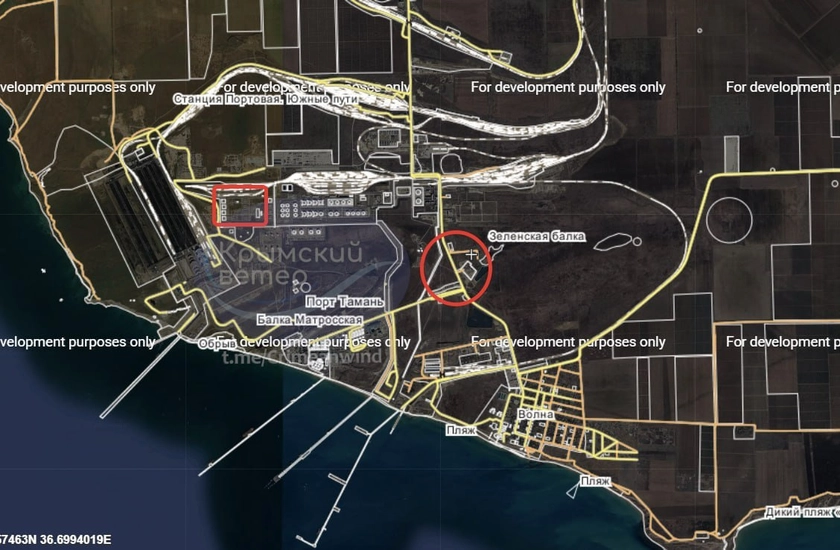
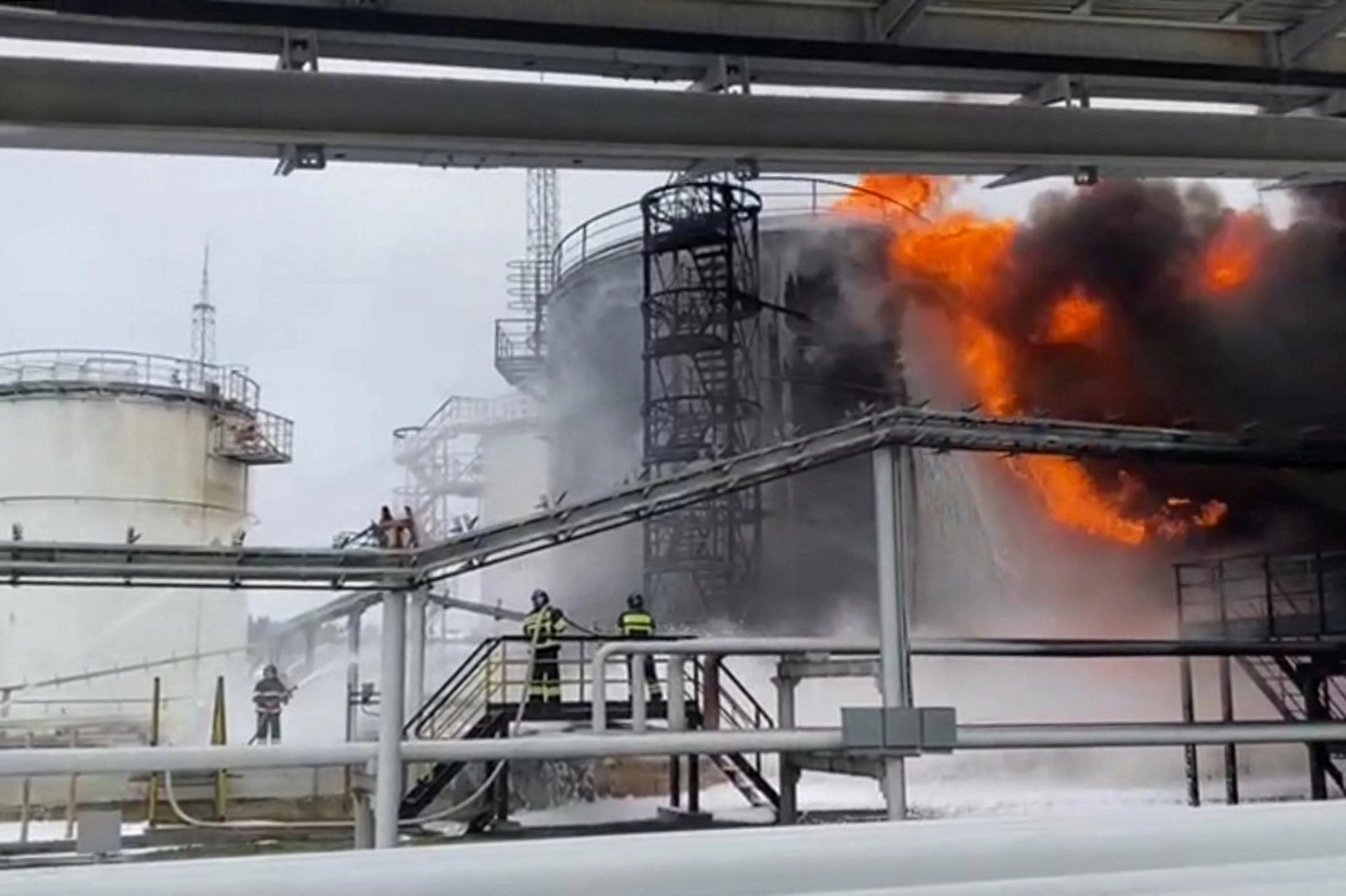
SBU, HUR, and SSO Joint Drone Strike Cripples Tamanneftegas Terminal
Bryansk Oblast Governor Alexander Bogomaz, in Tuesday comments published on his Telegram channel, said of the strike: “More vile attacks by the Ukrainian Armed Forces against civilians…A detailed official inspection of the damage will be carried out in the morning.”
Ukrainian civil defense media, the same night, reported the launch of an unspecified number of surface-to-surface ballistic missiles from the Bryansk region, towards targets either in Ukraine’s Chernihiv or Poltava regions, shortly before 4 a.m.
On Monday, the Astra news agency reported a Russian soldier, Ivan Slabchenko, was hospitalized following a drone strike on a military site in Bryansk Oblast, near the border village of Suzemka. A Ukrainian first-person-view (FPV) drone sighted and attacked Slabchenko during daylight hours while he was on duty, the Astra report said. The attack was not reported outside Bryansk Oblast in major Russian media.
The most recent confirmed drone attack against a Bryansk Oblast target without a clear link to the Russian military or war-making capacity took place on Wednesday, with a robot aircraft hitting the premises of Miratorg-Bryansk, in the village of Trubchevsk. The facility raises beef cattle and poultry for meat. Officials reported no persons hurt, but power was cut off to the site, and an unspecified number of livestock and chickens were killed. The attack was reported in local food industry media.
Ukrainian strike planners, since early summer, have accelerated a campaign of strikes against targets inside Russia, prioritizing energy infrastructure, military bases, and arms production facilities. Of all of the Russian Federation’s territories, the attacks arguably have hit Bogomaz’s Bryansk region the hardest, because of Bryansk’s short distance from the Ukrainian border (115-120 kilometers / 71-75 miles) and thick woodland cover and dense wetlands well-suited for commando and partisan raids.
In a punishing wave of strikes in the first two weeks of October, Ukrainian drones blew up a giant munitions depot near the town of Karachev, blowing up North Korean artillery shells, guided bombs, anti-air missiles, and MLRS (Multiple Launch Rocket System) missiles. Then, a drone/cruise missile strike pounded the Bryansk city power plant and adjacent transformers, cutting off electricity deliveries to more than a million Russian citizens for one to four days.
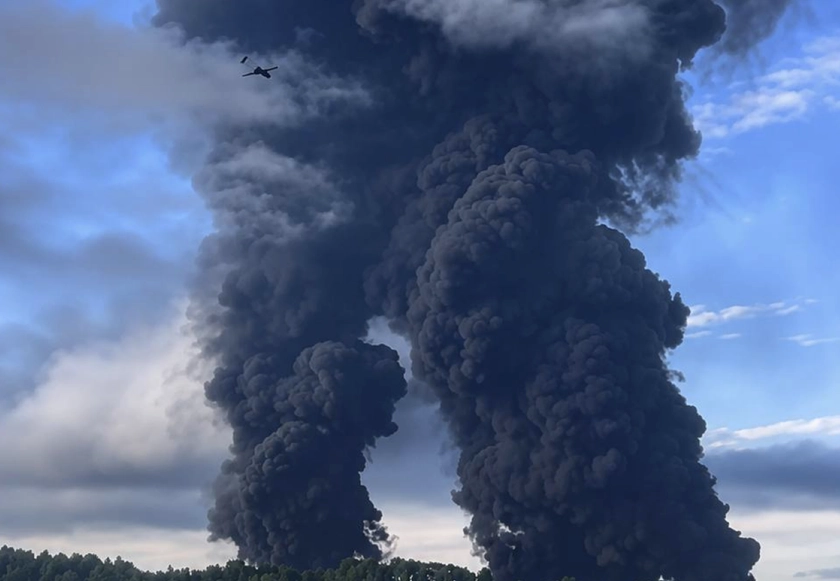
Overnight Oct. 5-6, a missile strike hit the Klinsty Thermal Power Plant, causing a massive fire, cutting off heating to about half of Klintsy’s 63,000 residents and shooting flames more than fifty meters (165 feet) into the air, the independent Astra news agency reported.
“The strike on Klintsy TPP is a blatant war crime by Ukrainian forces – fires raging, heating cut for over 30,000 residents, all to sow panic in our hearts,” Bogomaz said.
Ukraine-produced missiles then targeted a Bryansk region factory that, while it was still operating, was the number one producer of electronics components for the Russian military. Finally, a salvo wave of precision-guided US-made artillery rockets smashed and shut down a critical node of Russia’s Druzhba pipeline, near the Bryansk village of Unecha, cutting the sole NATO member states opposed to military support of Ukraine – Slovakia and Hungary – off from about 90% of those two countries’ imported oil.
Ukrainian behind-the-lines operators have, in the past month, per open sources and partisan group statements, infiltrated dozens of kilometers into Russian Federation territory in Bryansk Oblast to attack local infrastructure used by the Russian military. In a recent, well-documented Oct. 19 raid by a Tartar guerrilla group called ATESH, saboteurs used incendiary devices to set on fire and destroy a communications tower near the Sven Trasnportnaya settlement, in the Zhukov border district, about 100 kilometers (62 miles) from the Bryansk region international frontier.
Open-source images of the burning tower used by Russia’s 84th Engineer-Airfield Battalion matched photographs taken by NASA’s satellite fire monitoring FIRMS network to confirm the blaze ruined the town and burned out support buildings, cutting off real-time surveillance, microwave, and radio links used by Russian border troops responsible for monitoring about 150 kilometers (93 miles) of the Ukraine-Russia border.
Bogomaz said of the Oct. 19 attack and the blackouts it caused: “Tonight, Ukrainian terrorists attempted another dirty trick in our rear areas, sabotaging communications infrastructure in Zhukov District. This cowardly act left our border guards without vital links for hours, endangering our troops and civilians alike. We will hunt down these saboteurs and restore order – Bryansk will not bow to Kiev’s [sic] aggression.”
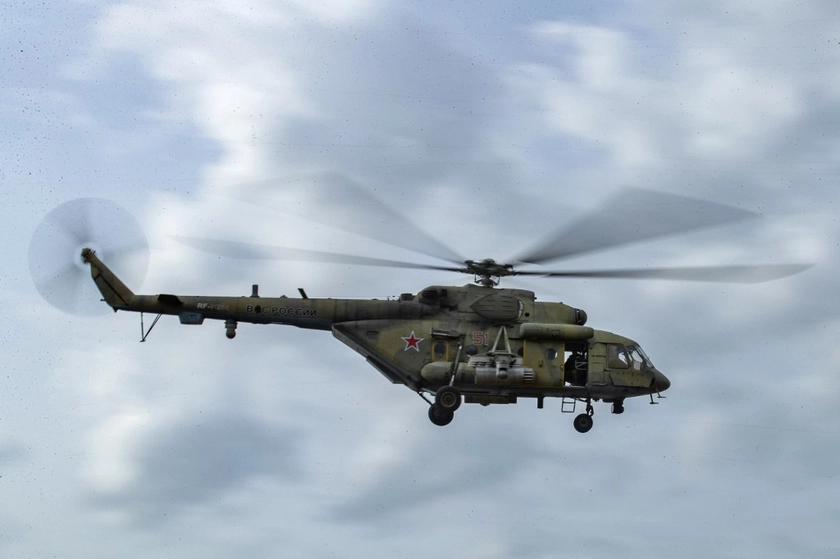
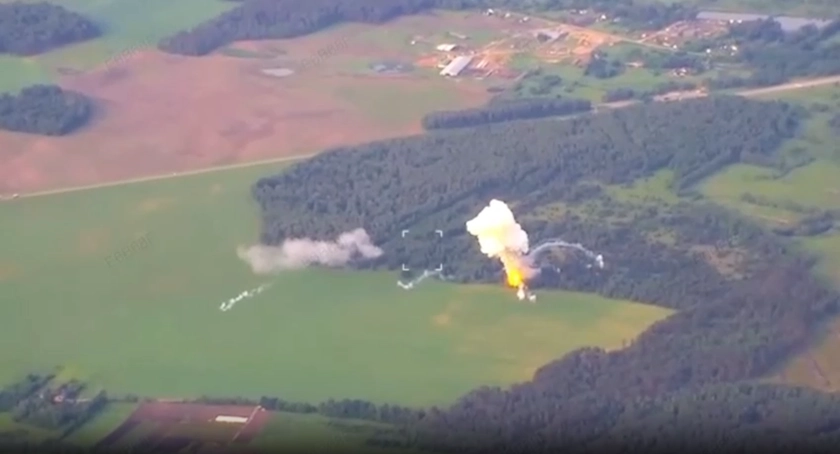
Ukraine’s special operations forces, the SSO, on Sept. 29 released spectacular video that the agency said was a first-ever-in-the-war shoot down of a military aircraft (a Russian Air Force Mi-8 transport/assault helicopter) by FPV drone strike. Some open-source researchers geo-located the video to Bryansk’s Klimovo district, some 20 kilometers (12 miles) from Ukraine, implying Ukrainian operators may have infiltrated into Russian Federation territory to launch the attack.
The major Bryansk-Gomel highway and parallel rail spur, connecting Russia to Belarus, runs so close to Ukraine that Ukrainian operators overfly it with short-range FPV drones looking for military convoys and 18-wheelers to hit.
In late June, Bogomaz, in comments to the Russian state-owned official information platform RIA Novosti, said that the Ukrainian military had unleashed a “brutal campaign of terror” against the “civilian population” of Bryansk.
“The quantity of strikes has tripled. It’s more than ever before. This is how they (Ukrainian forces) show their true colors – the faces of fascists,” Bogomaz said.
Operators from Ukraine’s HUR military intelligence agency, in past comments, have told Kyiv Post that military targets inside Russian territory are legitimate targets that will be attacked.
You can also highlight the text and press Ctrl + Enter