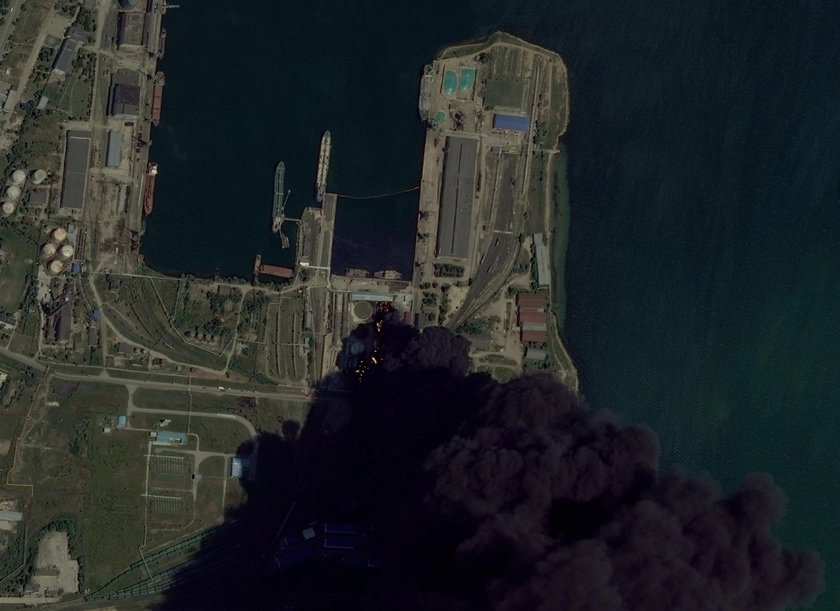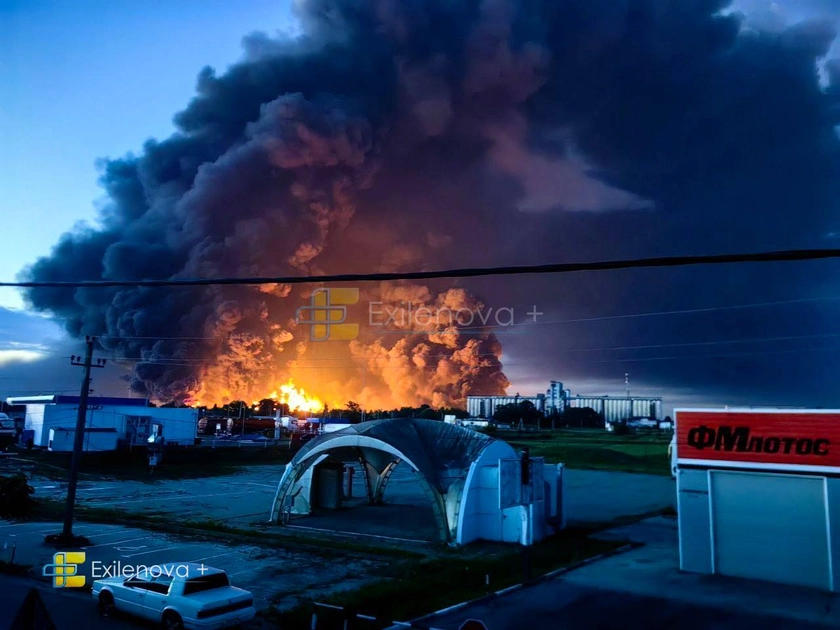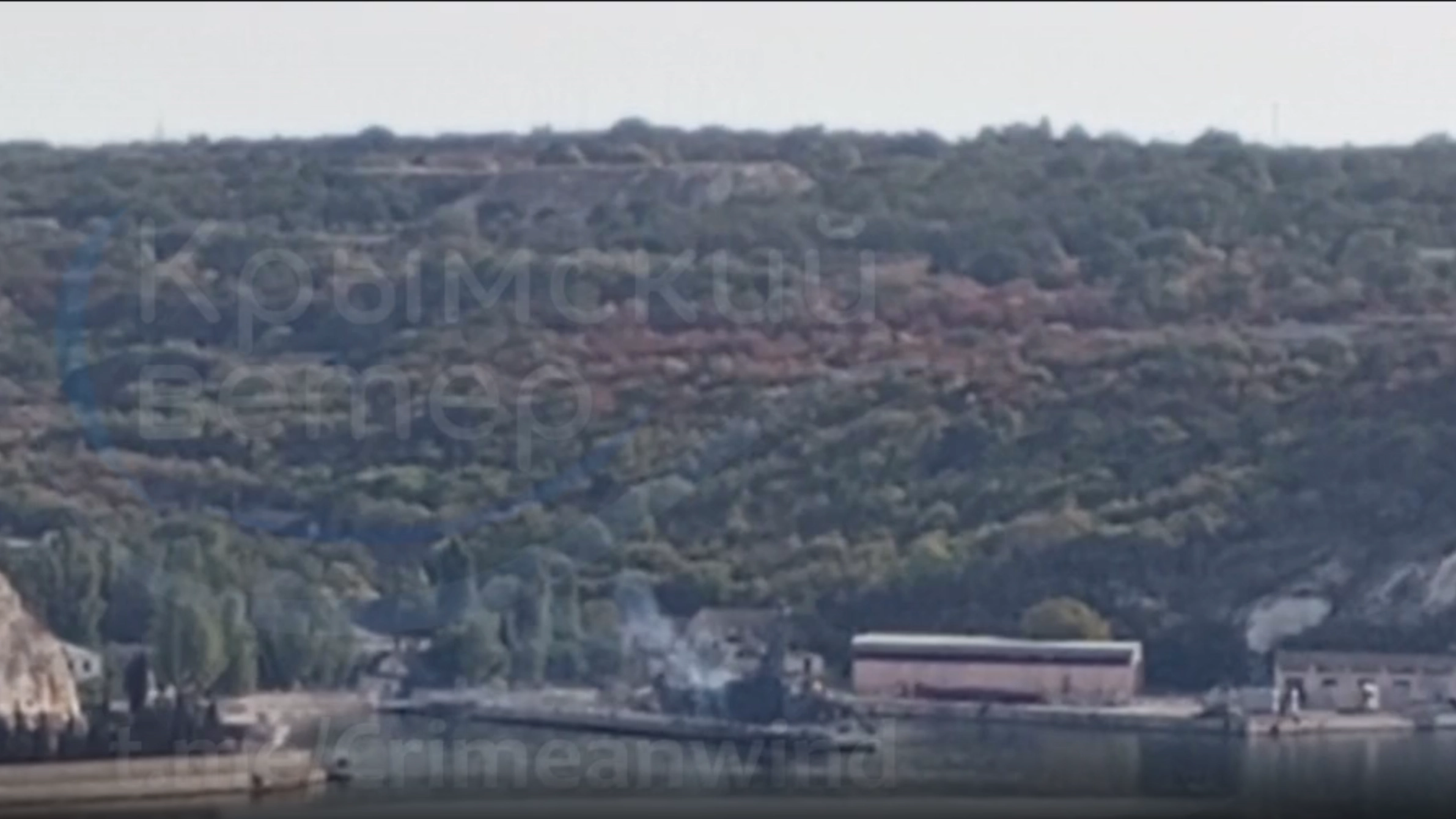
A Russian Albatros-M class anti-submarine ship belonging to the Black Sea Fleet reportedly caught fire in Sevastopol, according to the Telegram channel Crimean Wind, which published photos and videos from the scene.
The footage, recorded at the Sukharnaya Bay pier, shows thick smoke rising from a moored vessel concealed under camouflage nets. Initially, the type of the ship could not be confirmed, but followers of the channel later identified it as a Project 1124-M “Albatros-M” small anti-submarine ship.
JOIN US ON TELEGRAM
Follow our coverage of the war on the @Kyivpost_official.
According to Crimean Wind, the Black Sea Fleet currently operates four such vessels built between 1982 and 1989 — Muromets, Suzdalets, Kasimov, and Yeysk. Two of them were reportedly evacuated to the Novorossiysk naval base in 2024, while the remaining two stayed in Sevastopol. The specific ship that caught fire has not yet been officially confirmed.
No official comment has been released by Russia’s Ministry of Defense.
The reported fire adds to a growing list of unexplained accidents and confirmed attacks on the Russian Black Sea Fleet, which has suffered heavy losses since Ukraine began deploying domestically developed naval drones.
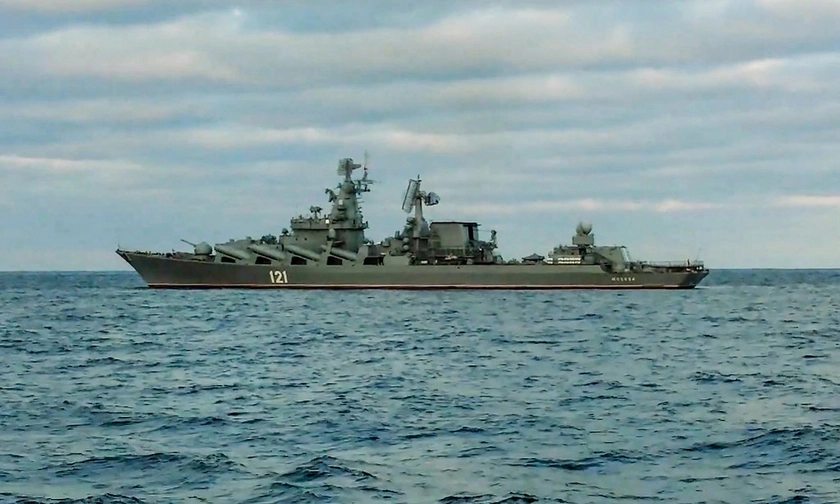
This comes shortly after Kyiv Post published an exclusive interview with the commander of Ukraine’s HUR special unit “Group 13,” which operates Magura V5 sea drones — the very systems responsible for a string of high-profile attacks on Russian vessels in the Black Sea, including the reconnaissance ship Ivan Khurs and the amphibious assault ship Caesar Kunikov.
Drone Strikes Ignite Fires at Russia’s Slavyansk Refinery and Crimean Power Plant
In the interview, the commander, callsign “Thirteen,” said he “really miss[es] the times when you could go out into the open sea and hunt a target,” arguing that operations have shifted to “breaking through barriers, defenses” and that results are now often limited.
He attributed the relative drop in successful attacks to Russian ships remaining in port, primarily in Novorossiysk, rather than sailing in open waters.
“Losing more than three fairly important ships in a little over a month hit them hard,” he said, adding that Moscow still lacks effective countermeasures and is therefore reluctant to risk its vessels at sea.
You can also highlight the text and press Ctrl + Enter