WASHINGTON, DC – Five hours behind closed doors, a Trump-aligned envoy team, and a Ukrainian president signaling flexibility without final commitments: The outlines of a potential endgame to Europe’s bloodiest war in generations are coming into view – even as the biggest questions remain unresolved.
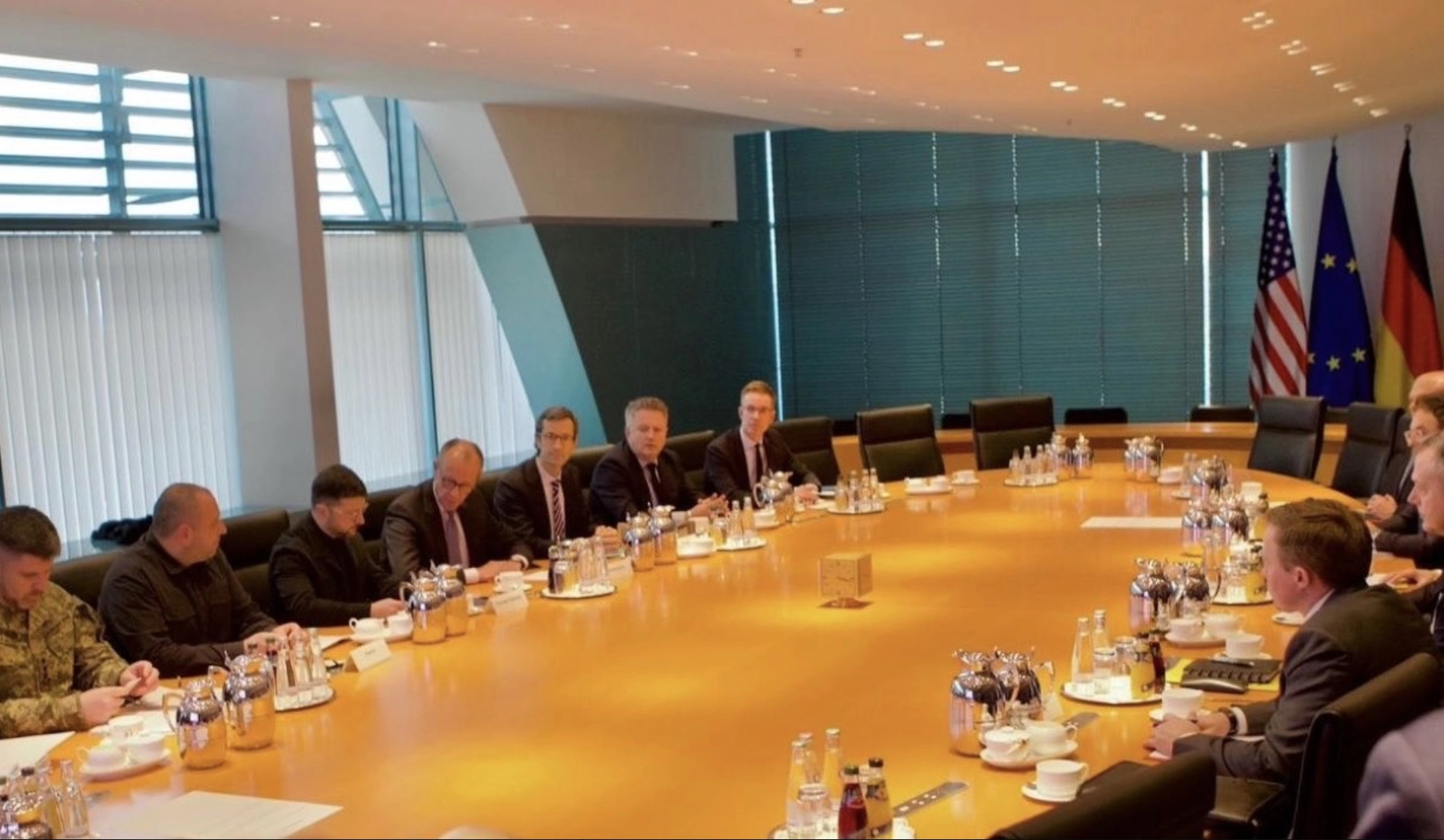
According to a US readout, Sunday talks between Special Envoy Steve Witkoff, Trump’s son-in-law Jared Kushner and President Volodymyr Zelensky focused on a 20-point peace plan, economic reforms and postwar reconstruction.
JOIN US ON TELEGRAM
Follow our coverage of the war on the @Kyivpost_official.
“A lot of progress was made,” Witkoff said in a statement, confirming the sides would reconvene Monday morning.
The length and composition of the talks – hosted by German Chancellor Friedrich Merz before he stepped aside – underscored Washington’s belief that a diplomatic opening may finally exist nearly four years after Russia’s full-scale invasion.
One Western official involved in the process described the meeting as “the most detailed conversation on sequencing we’ve seen – ceasefire mechanics, security guarantees and economic stabilization all in the same room.”
“This wasn’t a photo op. This was a grinding, five-hour negotiation where nobody pretended the tradeoffs wouldn’t be politically explosive,” the official told Kyiv Post.
Kyiv’s view: security first, territory later
From Kyiv’s perspective, the Berlin talks were anything but straightforward.
Russian Troops Forced to Walk 30 km After Ukraine Hits Logistics, Minister Says
Ahead of the meeting, Zelensky warned reporters in a WhatsApp briefing that negotiations over territory – particularly Ukraine-held areas of Donetsk – are “extremely sensitive and very heated.”
“If we are talking about a buffer zone along the line of contact, or an economic zone where only a police mission would be present, then the question is simple,” Zelensky said, adding, “If Ukrainian forces withdraw 5–10 kilometers, why would Russian forces not also withdraw the same distance deeper into the occupied territories?”
The issue, he added, remains unresolved.
According to Western officials, Zelensky raised security guarantees as a precondition for any final deal, while the US floated a multi-phase approach in which guarantees would be finalized over time – a sequencing Kyiv views with caution.
NATO shift – and its limits
The most consequential signal from Berlin was Zelensky’s stated willingness to drop Ukraine’s immediate aspiration to join NATO as part of a peace framework – a major shift for a country whose constitution enshrines that goal.
“From the very beginning, Ukraine’s desire was to join NATO – these are real security guarantees,” Zelensky said, adding, “Some partners from the US and Europe did not support this direction.”
Ukrainian officials stress, however, that this does not amount to a formal renunciation of NATO membership. Rather, NATO would not serve as the security guarantee within this specific peace plan – a distinction Zelensky described as a “connection,” not a concession.
Instead, Kyiv is pressing for legally binding bilateral guarantees from the US, alongside commitments from European allies and partners such as Canada and Japan. “This is already a compromise on our part,” Zelensky said.
A senior Western official characterized the talks as an effort to extend “Article 5–like protection without Article 5 itself.”
“That’s the narrow bridge everyone is trying to cross,” the official told Kyiv Post, adding, “Ukraine wants certainty. The US wants discretion. And Russia wants veto power over both.”
Zelensky said Kyiv has had no direct talks with Moscow but indicated a ceasefire along current front lines could be acceptable if embedded in a broader settlement.
Europe recalibrates – warily
European allies, including Britain, France, and Germany, are refining Trump administration proposals that would require Ukraine to cede territory, abandon NATO ambitions, and accept limits on its armed forces.
At the same time, Washington is working to stabilize Kyiv’s finances, including by leveraging frozen Russian central bank assets to support Ukraine’s military and civilian budgets.
Germany’s Defense Minister Boris Pistorius called Washington’s engagement “a good sign,” while acknowledging doubts about the negotiating setup. “It’s certainly not ideal,” he said. “But you can only dance with the people on the dance floor.”
Pistorius also warned against overreliance on security assurances without US muscle, pointing to Ukraine’s 1994 decision to surrender its nuclear arsenal in exchange for guarantees that later proved hollow. Without significant American involvement, he said, such promises “wouldn’t be worth much.”
“It’s quite good to have [German] Chancellor Merz involved after the Ukraine-Europe coordination meetings from last week,” Andrew D’Anieri, associate director at the Atlantic Council’s Eurasia Center, told Kyiv Post on Sunday.
“Good for Ukraine to show they have allies and ‘cards’ as they work toward a deal, even if the US administration continues to be skeptical of Europe’s power and relevance,” D’Anieri added.
Italy has emerged as a quiet player in Berlin, with Prime Minister Giorgia Meloni pushing a security clause inspired by NATO’s Article 5, even as questions persist over enforcement and political will.
Unanswered question
For advocates of Ukraine, the Berlin talks mark both momentum and risk.
Speaking to Kyiv Post Sunday night, Doug Klain of Razom, a US-based organization supporting Ukraine, called the meetings “the most intense round of negotiations yet this year.”
“Ukraine is clearly willing to make major concessions to reach a deal,” Klain said, adding, “The key question is if Ukraine and the US say yes but Russia says no – what does Washington do?”
“If the US then chooses to finally embark on a real pressure campaign against Moscow,” he emphasized, “there may be some hope yet for peace.”
For now, officials are reviewing draft documents and preparing to return to the table.
As one Western diplomat put it: “Nobody thinks this is done. But for the first time in a long time, people are at least arguing over how to end the war – not whether.”
In Berlin, that alone feels like a shift.
You can also highlight the text and press Ctrl + Enter