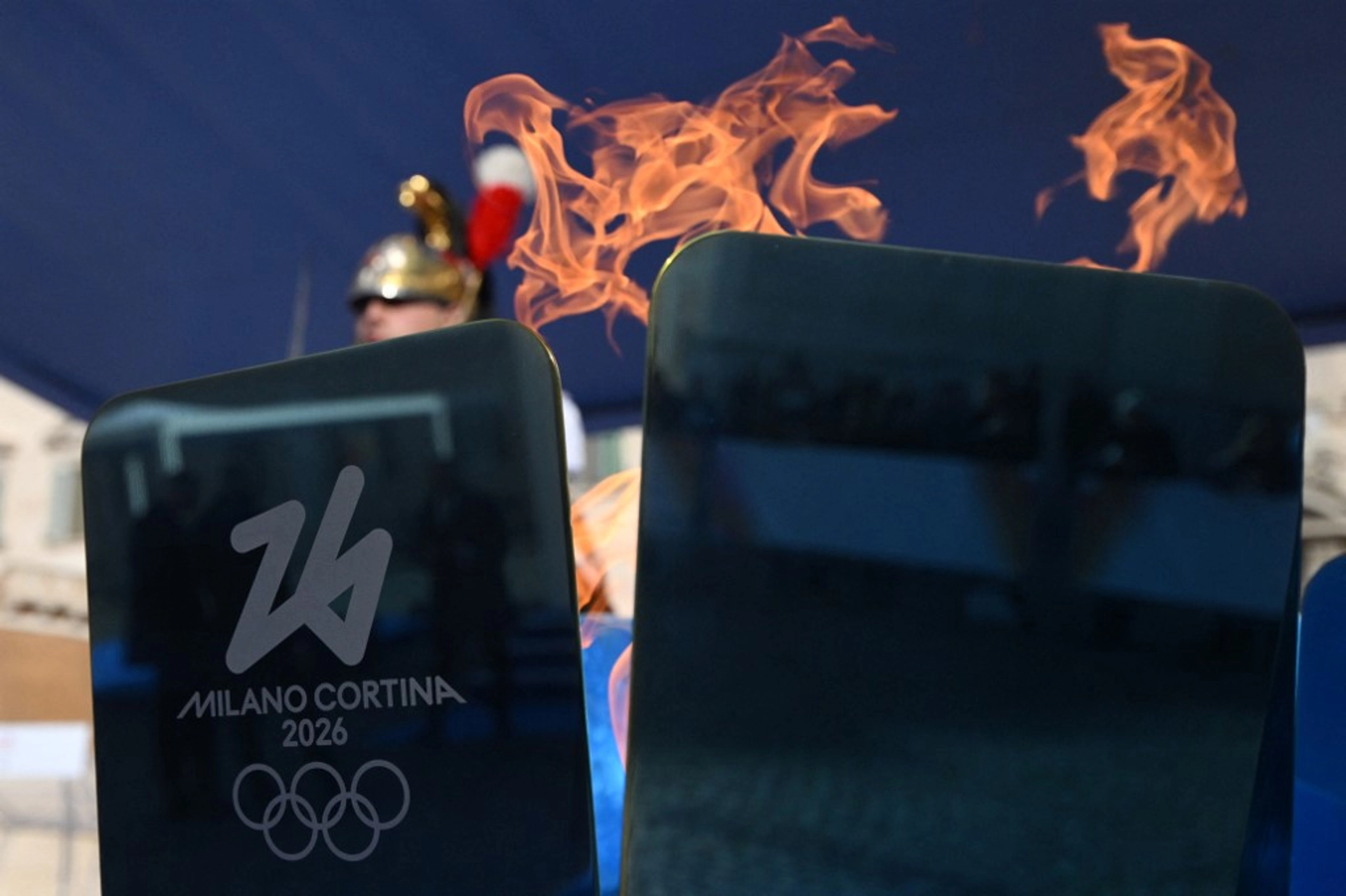
As preparations intensify for the 2026 Winter Olympic Games in Milan and Cortina d’Ampezzo, a familiar and deeply contested question has resurfaced: which Russian athletes, if any, should be allowed to compete – and under what conditions.
According to a report by the Ukrainian-based Molfar Intelligence Institute, produced with support from the Artycoders team, dozens of Russian winter sports athletes who could seek Olympic participation under a neutral flag have demonstrable links to Russia’s war effort or to state structures supporting the invasion of Ukraine.
JOIN US ON TELEGRAM
Follow our coverage of the war on the @Kyivpost_official.
Molfar is a Ukrainian research and educational organization specializing in strategic intelligence, digital security, and data analysis. Its work has been used by Ukrainian authorities, international media, and civil society groups to document Russian influence operations, war crimes, and sanction-evasion networks.
The resulting list identifies 56 Russian winter sports athletes who, according to the analysis, have expressed support for Russia’s invasion of Ukraine or maintain ties to institutions, narratives, or individuals closely linked to the Kremlin’s war apparatus.
Neutral in name only?
Since Russia’s full-scale invasion of Ukraine in February 2022, Russian and Belarusian athletes have been barred from competing under their national flags at most international sporting events. In March 2023, the International Olympic Committee (IOC) recommended that international federations allow individual athletes from Russia and Belarus to return to competition – but only under strict conditions.
Zelensky Says Putin Rejected G7 Peace Talks Offer
Those conditions include competing under a neutral status, no participation in team events, and, crucially, no “active support” for Russia’s war against Ukraine. Team sports such as ice hockey remain excluded, meaning Russia cannot compete for Olympic medals as a national delegation.
Determining what constitutes “active support,” however, has become one of the most contentious issues in international sport. The Molfar report argues that, in many cases, the athletes deemed eligible for neutral status fail that test.
How the list was compiled
Molfar’s researchers say the list was compiled using open-source intelligence and publicly available information. Criteria included:
- Public statements supporting the Russian army or invasion
- Social media activity endorsing pro-war or pro-Kremlin narratives on Telegram (TG), Vkontakte (VK) and Instagram
- Membership in Russian military or security structures such as CSKA (Central Sports Club of the Army) or Rosgvardia (Russia’s National Guard)
- Participation in events organized by sanctioned entities or state propaganda outlets
- Visits to Russian-occupied Ukrainian territories
- Family ties to the military or state propaganda efforts
- Financial links to organizations tied to the Russian state or defense sector
The institute notes that some factors – such as financial vulnerabilities or compromising interests – were assessed as reputational risks rather than direct evidence of ideological support.
Figure skating: elite talent, visible affiliations
Among the most prominent names highlighted are figure skaters Adeliia Petrosian and Petr Gumennik. Petrosian, 18, is a two-time Russian national champion, while Gumennik, 23, is a multiple medalist at Russian championships and Grand Prix events.
Molfar’s analysis, however, points to repeated public associations with state-backed or pro-war initiatives.
Petrosian, according to the report, wore clothing bearing the word “Russia” in 2022, after the start of the full-scale invasion. In 2024, she conducted a figure skating master class as part of Moscow’s “Summer in Moscow” festival – an event that, according to Ukrainian analysts, has been used to raise funds and promote messaging in support of Russia’s war effort. That same year, she participated in the Channel One Figure Skating Cup. Channel One is a Kremlin-controlled broadcaster sanctioned by the US in 2022 for its role in state propaganda.
Gumennik’s case centers largely on his social and family connections. In August 2022, he posted a photograph with Stas Boretsky, a Russian musician who has publicly supported the war and visited occupied Mariupol. Molfar also notes that Gumennik’s brother subscribes to Russian nationalist groups on VK, Russia’s largest social media platform, that promote the invasion.
The report further highlights the role of Gumennik’s father, an Orthodox archpriest serving at a church in St. Petersburg that has publicly supports Russian leader Vladimir Putin’s policies and provided aid to Russian troops. The church’s leadership has received official recognition from Russia-aligned security structures.
Ski mountaineering: new Olympic discipline, familiar patterns
Ski mountaineering will make its Olympic debut in 2026, and several Russian athletes in the discipline have also drawn scrutiny.
Nikita Filippov, according to the research, follows official Rosgvardia accounts on social media. Rosgvardia, is a militarized force directly subordinated to Putin and has been implicated in internal repression and operations related to the war. Filippov also published celebratory posts on Russia Day in June 2024 and appeared in July 2025 wearing a T-shirt reading “I love the Russian Federation.”
Another athlete, Andrey Fyodorov, is cited for following prominent pro-war bloggers and sharing Soviet-era film clips glorifying violence against Ukraine-linked nationalist movements. Molfar’s report devotes significant attention to Fyodorov’s family background, particularly his father’s repeated social media posts praising Russia’s military campaigns, justifying Soviet-era war crimes, and denigrating the Ukrainian armed forces. In October 2024, his father also published a video celebrating what he described as the “courage of the heroes of the SMO,” using the Kremlin’s official term for the war.
Qualification Moves Forward, but Neutrality Remains Disputed
According to Russia’s state news agency TASS, the IOC confirmed that Petrosian and Gumennik had been invited to compete under neutral status. As of now, the two figure skaters are the only Russian athletes to have met the qualification criteria for the 2026 Winter Olympics. Ski mountaineer Nikita Filippov has also met the sporting criteria, but has not yet received a formal invitation to compete in Italy.
As qualification pathways for Milan-Cortina 2026 continue to take shape, international federations face mounting pressure to define neutrality not only as the absence of a flag, but as the absence of active complicity.
For Ukraine and its supporters, the concern is that allowing such athletes to compete under a neutral banner risks turning neutrality into a legal fiction – one that masks continued alignment with a state waging war just beyond the Olympic spotlight.
According to Ukrainska Pravda, the National Olympic Committee of Ukraine, the Ministry of Youth and Sports of Ukraine, and the Ukrainian Skating Federation have jointly appealed to the IOC and the International Skating Union (ISU) to review the decision to allow Gumennik and Petrosian to compete in international events, including the 2026 Winter Olympic Games.
In a letter released by Ukraine’s National Olympic Committee, the organizations argue that the athletes’ public activities and affiliations contradict the IOC’s neutrality criteria for representatives of aggressor states. The letter reads:
“Despite Russia’s ongoing armed aggression against Ukraine, these figure skaters continue to take part in events that openly support the war, display banned symbols and maintain contacts with public personalities who promote Russian propaganda.”
Ukrainian officials warn that permitting such athletes to compete risks undermining the Olympic Charter and turning sport into an instrument of political influence rather than a platform for neutrality.
More cases under scrutiny
The cases of figure skating and ski mountaineering represent only part of the broader picture outlined in the Molfar investigation.
The full report documents similar patterns across multiple winter sports, including bobsleigh, short track and skeleton, where athletes’ social media activity, institutional ties and public statements raise questions about their eligibility under the IOC’s own neutrality standards.
As international federations continue to assess athlete eligibility ahead of Milan–Cortina 2026, the debate over what constitutes genuine neutrality is far from settled.
This article is the first in a series examining the findings of the Molfar Intelligence Institute. Further reporting will detail evidence related to other winter sports disciplines and athletes currently under review.
You can also highlight the text and press Ctrl + Enter