WASHINGTON DC – US Secretary of State Marco Rubio is tempering expectations – and sharpening the stakes – as the Trump administration presses ahead with a high-wire effort to broker an end to Russia’s war in Ukraine this weekend.
During his year-end press conference on Friday, Rubio made clear the US has no intention of forcing Kyiv into a ceasefire it cannot accept, even as Washington pushes both sides to clarify what, if anything, they are willing to trade to end a war now approaching its fifth year.
JOIN US ON TELEGRAM
Follow our coverage of the war on the @Kyivpost_official.
“This is not about imposing a deal on anybody,” Rubio told Kyiv Post’s correspondent at the State Department, adding: “A negotiated settlement requires two things: both sides to get something out of it, and both sides to give something.”
That message, delivered repeatedly over the course of the briefing, underscored a more cautious tone than President Donald Trump’s recent optimism.
Trump declared earlier this week that a peace agreement was “closer than ever” following US talks with Ukrainian officials in Berlin. Rubio, by contrast, stressed uncertainty – not only about timing, but about Russia’s intentions.
“We still don’t know whether Vladimir Putin wants to do a deal, or whether he wants to take over the entire country,” Rubio said, adding that Washington is still probing where, if anywhere, Moscow’s and Kyiv’s demands might overlap.
Intent in Plain Sight: the Politics of a UN-Recognized Genocide
That question looms large as US and Russian envoys prepare for another round of talks this weekend in Miami.
As Kyiv Post reported earlier, Ukrainian negotiators and European officials were scheduled to hold another round of consultations with US counterparts on Friday – a process Kyiv publicly framed as coordinated and constructive.
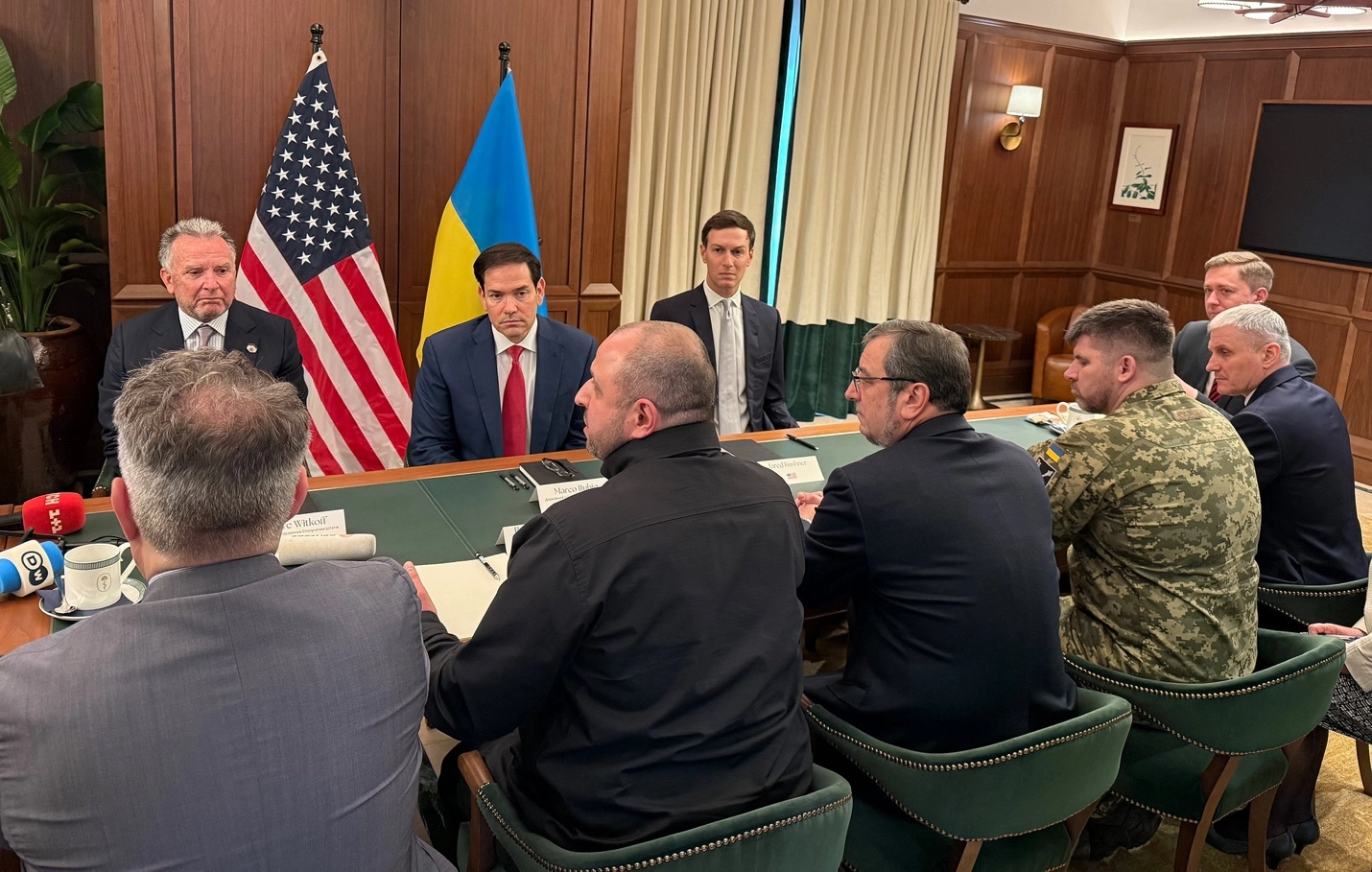
White House envoy Steve Witkoff and Trump’s son-in-law Jared Kushner are expected to meet both Ukrainian officials, as well as Kremlin envoy Kirill Dmitriev, this weekend in Miami.
Rubio said he may join portions of the discussions on Saturday.
The goal, Rubio said, is less about finalizing language and more about determining whether a deal is even possible.
“Maybe that happens this week, maybe that happens next month, maybe that’s not ready for a few months,” he said of a potential agreement. “Or it may not be possible.”
Progress – with caveats
Rubio acknowledged that the administration believes it has made “progress” since unveiling a revised US proposal last month, following intense shuttle diplomacy involving Ukraine, European allies, and Russia.
Ukraine’s Defense Minister Rustem Umerov said earlier in the day that he and Lieutenant General Andrii Hnatov had begun consultations with the American side, with European partners also participating at Washington’s invitation.
“We are committed to a constructive process,” Umerov said in a social media post, adding that Ukraine would brief President Volodymyr Zelensky following the talks and was acting in line with the president’s priorities. “Ukraine’s security must be guaranteed reliably and in the long term.”
Still, Rubio emphasized that the most intractable issues remain unresolved – a familiar warning in diplomatic efforts, but one that carries added weight given the gulf between the two sides.
“The hardest issues are always the last issues,” Rubio told Kyiv Post’s reporter.
Chief among them is the future of the Donbas region, which remains both a strategic military linchpin for Ukraine and a central political objective for the Kremlin.
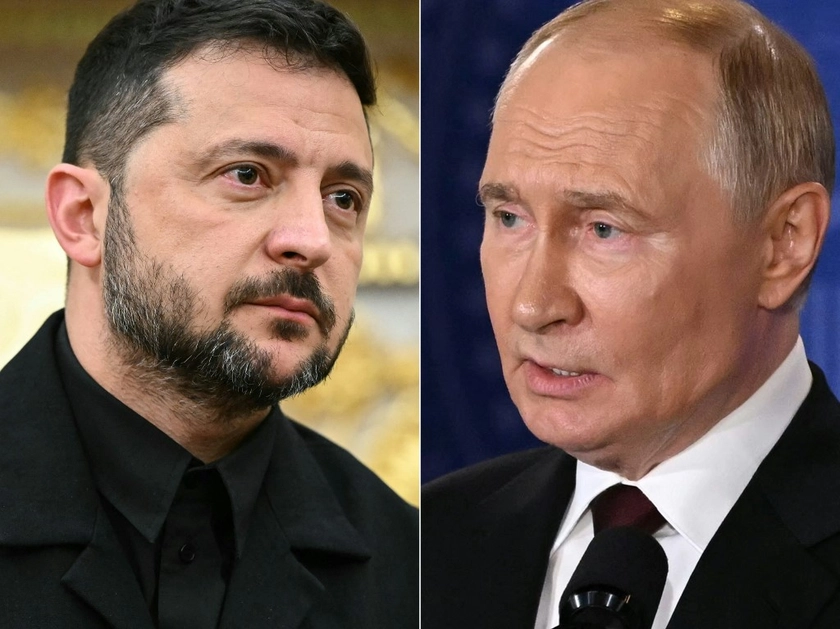
President Volodymyr Zelensky has signalled limited flexibility, saying Kyiv could accept a “free economic zone” in the roughly 15 percent of Donbas territory still under Ukrainian control – so long as it is not governed by Russia.
Moscow, however, has shown no such willingness to compromise. The Kremlin considers Donbas fully part of Russia, and Putin has said Russian forces would take the remainder of the region “by force” if necessary.
Security guarantees are another major fault line. Zelensky has made clear that Western-backed guarantees are essential to preventing future Russian aggression, calling them the most important element of any deal.
The US has floated the idea of “Article 5-like” protections short of formal NATO membership – an idea Zelensky has indicated openness to.
Russia has flatly rejected the prospect of Western troops or NATO-style guarantees in Ukraine, insisting such arrangements are unacceptable.
‘Not our war’
Rubio framed the US role as uniquely indispensable – but ultimately limited. “There’s a reason why this war hasn’t ended,” he said, adding, “It’s not our war.”
At the same time, Rubio argued that Washington is the only actor capable of mediating between Kyiv and Moscow.
“We have been told there is only one nation on earth that can actually talk to both sides,” he said. “That’s the United States.”
That leverage, Rubio suggested, comes with constraints. Neither side appears close to surrender, and neither is yet prepared to spell out the concessions it could make.
“We’re trying to figure out what Ukraine can live with and what Russia can live with,” Rubio said. “In the end, the decision will be up to Ukraine, and up to Russia. It will not be up to the United States.”
Putin’s defiance
If Rubio’s remarks were designed to lower expectations, Putin’s comments Friday offered little encouragement that Moscow is softening its stance ahead of the Miami talks.
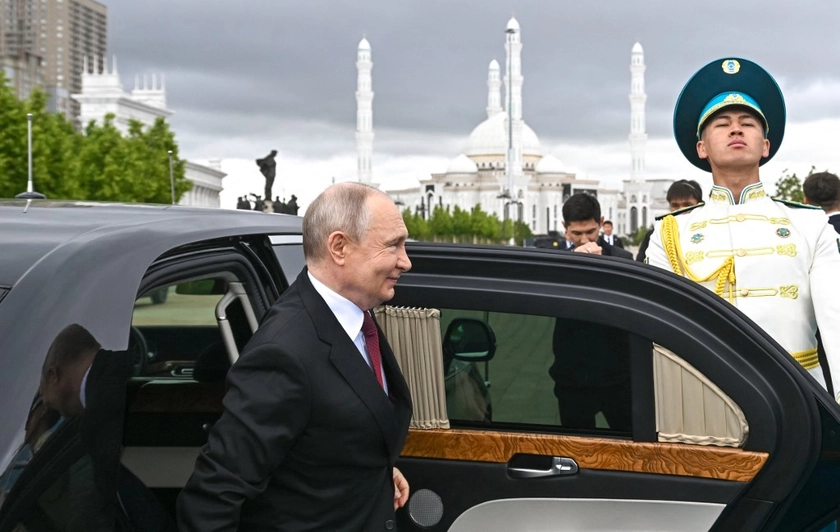
During a four-and-a-half-hour press conference, the Russian president boasted of battlefield gains in Ukraine and dismissed suggestions that Russia harbors ambitions to expand the conflict across Europe – provided its interests are respected.
“There won’t be any operations if you treat us with respect, if you respect our interests just as we’ve always tried to respect yours,” Putin said.
He offered no new compromises and reiterated that what he calls the “root causes” of the war – a phrase long used by the Kremlin to justify its invasion – must be addressed.
For Rubio and the Trump administration, the contrast between public optimism and diplomatic reality appears increasingly stark.
While talks continue and channels remain open, the secretary of state has made clear that progress should not be confused with inevitability.
The administration, Rubio suggested, is still trying to answer the most basic question of all: whether peace is something both sides truly want – or merely something they are testing until the next advantage presents itself.
You can also highlight the text and press Ctrl + Enter
Putin’s Worst Nightmare