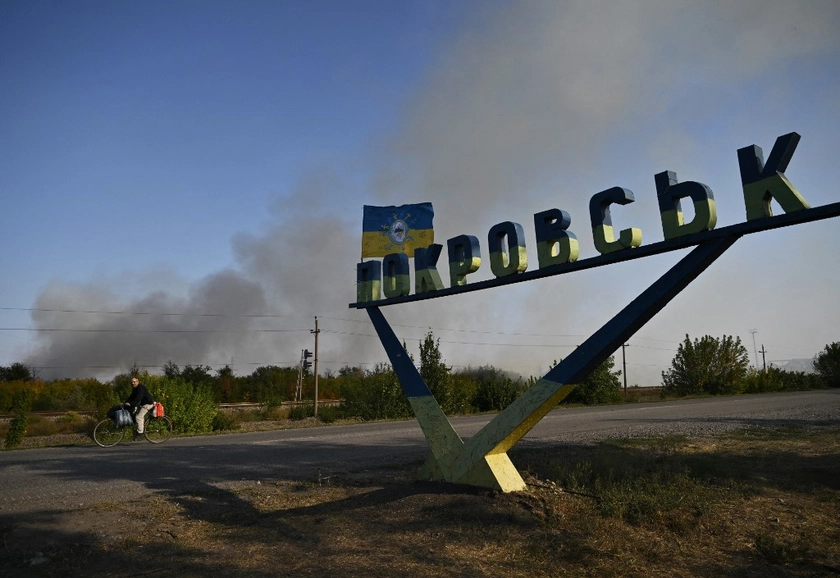
Ukrainian forces thwarted two Russian assaults using all-terrain vehicles (ATVs) in the Donetsk region over the past two days, stopping Russian advances near Yampil and Pokrovsk despite difficult weather conditions.
As per the Ground Forces report on Jan. 6, the Ukrainian Defense Forces repelled a Russian assault attempt involving ATVs toward Yampil. This village, located in the northern Donetsk region near the Slovyansk sector of the front, holds strategic importance due to its position along key transport routes and its proximity to several critical settlements.
JOIN US ON TELEGRAM
Follow our coverage of the war on the @Kyivpost_official.
According to a Telegram report, Russian forces attempted to exploit severe weather conditions – heavy snowfall, strong winds and near-zero visibility – to move an assault group undetected.
Due to the poor weather, aerial reconnaissance was limited, and Russian troops apparently expected to pass through covertly. Despite these conditions, Ukrainian forces detected the assault group advancing along the road to Yampil.
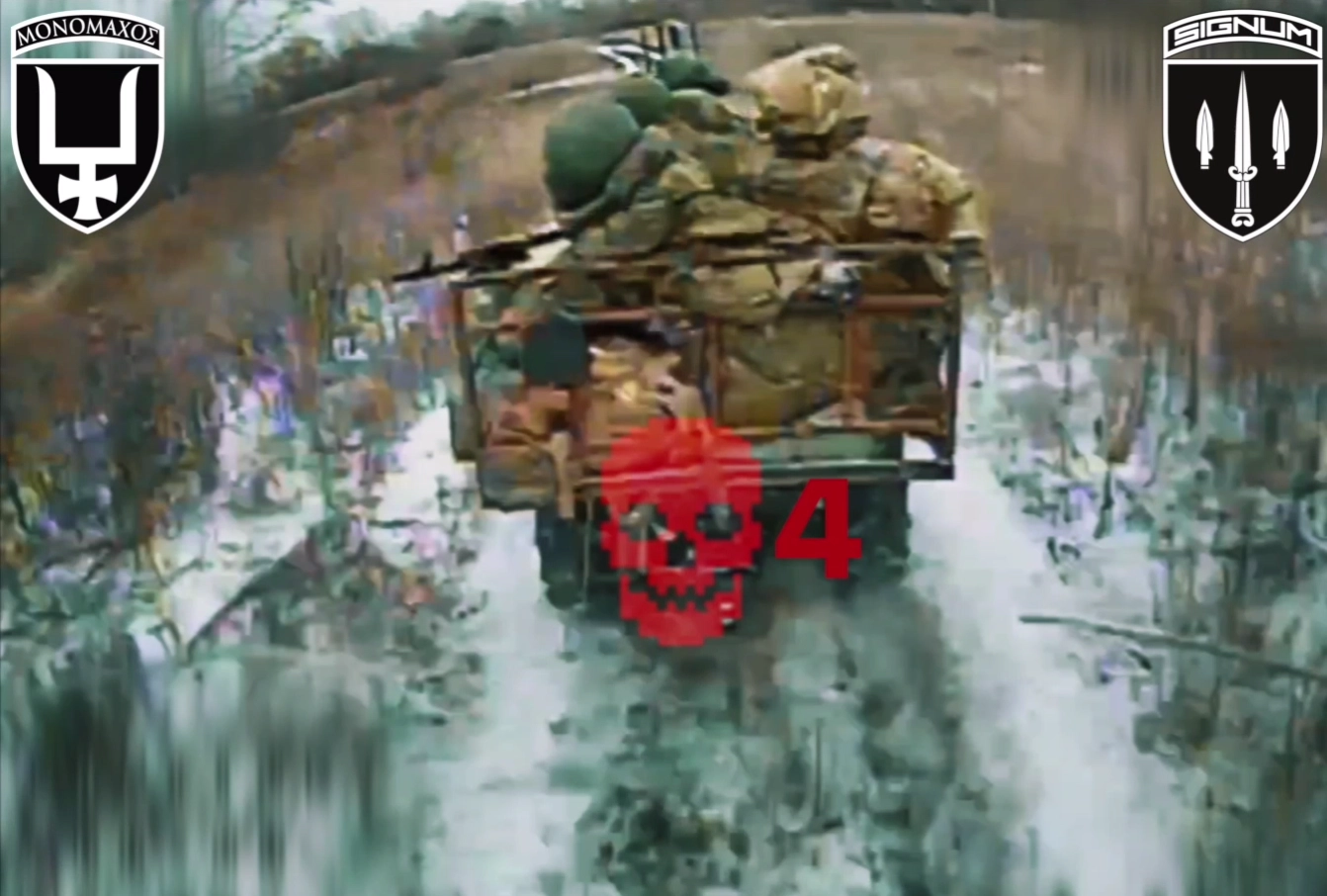
Drone operators from the SIGNUM battalion were immediately deployed, operating in coordinated pairs.
“They worked in pairs – clearly and calmly, without chaos. Coordination, experience, and consistency produced results,” the report, accompanied by a video, said.
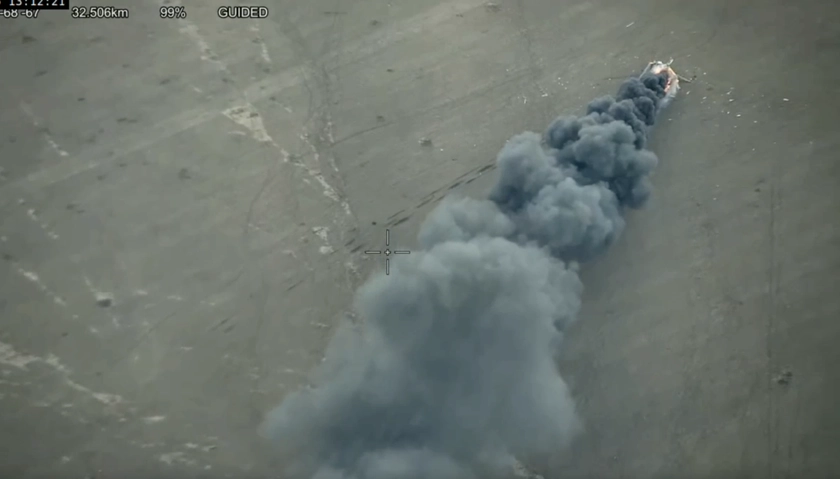
Drone footage, which Kyiv Post could not independently verify for time or location, shows the moment the assault was repelled.
Dnipropetrovsk Tightens Evacuations, Nikopol Defenses
“The assault was stopped. Enemy manpower was eliminated. Enemy equipment was burned,” the Ground Forces added.
The incident follows a similar report on Jan. 4, when Ukraine’s Sicheslav Separate Airborne Brigade announced the destruction of a column of Russian ATVs in the Pokrovsk area of the Donetsk region. That assault was also documented by Ukrainian drone footage.
In late September 2025, Russian sources claimed their forces had advanced into Yampil, but Ukraine’s 11th Army Corps denied the reports, calling them an element of information warfare aimed at spreading panic.
Ukrainian officials stressed that Yampil remains under the control of the Armed Forces of Ukraine (AFU) and that all sabotage attempts have been swiftly neutralized.
In early October, AFU’s Commander-in-Chief Oleksandr Syrsky announced that the situation in the area had been stabilized.
In August 2024, Russia’s Defense Minister Andrey Belousov said that the military was planning to establish tactical driving courses for buggies and ATVs at training centers across the Leningrad Military District.
Despite mounting evidence that assaults on Ukrainian defensive positions using motorcycles, ATVs, and buggies have resulted in heavy losses, Moscow has continued to portray their use as a positive development.
Announcing the new training initiative, Belousov said such vehicles were in high demand on the battlefield and had proven “successful and effective” for assault operations, troop rotations, cargo delivery, and medical evacuations.
There have also been reports that Russian forces are deploying mobile ATV and buggy teams to support first-person-view (FPV) drone operators, believing that smaller vehicles allow them to move less conspicuously across the battlefield.
The Defense Express outlet reported that several pro-Kremlin military bloggers suggested the creation of dedicated driver courses signaled a broader transition within Russia’s armed forces toward greater reliance on motorcycles and buggies.
Belousov’s remarks came on the same day that paratroopers from Ukraine’s 79th Air Assault Brigade published footage showing how they repelled a large-scale Russian assault near Kurakhove in the Donetsk region.
That attack involved dozens of armored vehicles supported by ATVs and motorcycles and resulted in heavy casualties among Russian forces.
Historically, the Russian military made use of lightweight vehicles and motorcycles but largely abandoned them around 2011, citing the absence of a clear operational concept or doctrine for their employment.
In early July 2024, the Russian military-focused website TopWar reported that new deliveries of the Erofey lightweight all-terrain tactical vehicle had been received by units of the Russian Combat Army Reserve (BARS) operating in the Zaporizhzhia region. The vehicle was originally designed for Russian special forces.
According to Mikhail Degtyarev, governor of Russia’s Khabarovsk region, the vehicles were undergoing combat testing. He said troops have praised the Erofey for its repairability, speed and maneuverability. While all delivered vehicles had been sent to frontline units, Degtyarev added that additional orders have been placed.
You can also highlight the text and press Ctrl + Enter

Putin’s Worst Nightmare
Zelensky Reveals Intercepted Intel From Putin’s Desk