WASHINGTON DC – US President Donald Trump is again testing the line between encouragement and escalation – offering rhetorical support to protesters in Iran while signaling he is prepared to back it up with force.
In a brief social media post on Saturday, Trump suggested the US could assist Iranians challenging their government.
JOIN US ON TELEGRAM
Follow our coverage of the war on the @Kyivpost_official.
“Iran is looking at FREEDOM, perhaps like never before,” Trump wrote. “The USA stands ready to help!!!”
What that help looks like remains deliberately unclear. But the message landed as unrest deepens across Iran – and as Trump is privately briefed on options for striking the country if the regime cracks down.
Sharper message to Tehran
Trump’s comments go further than his earlier warnings, hinting that US involvement might not be limited to responding only if Iranian authorities use violence.
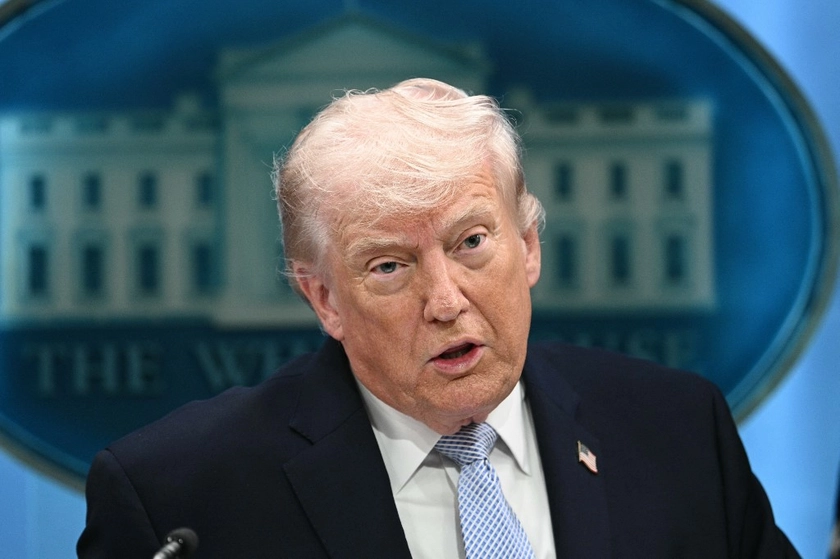
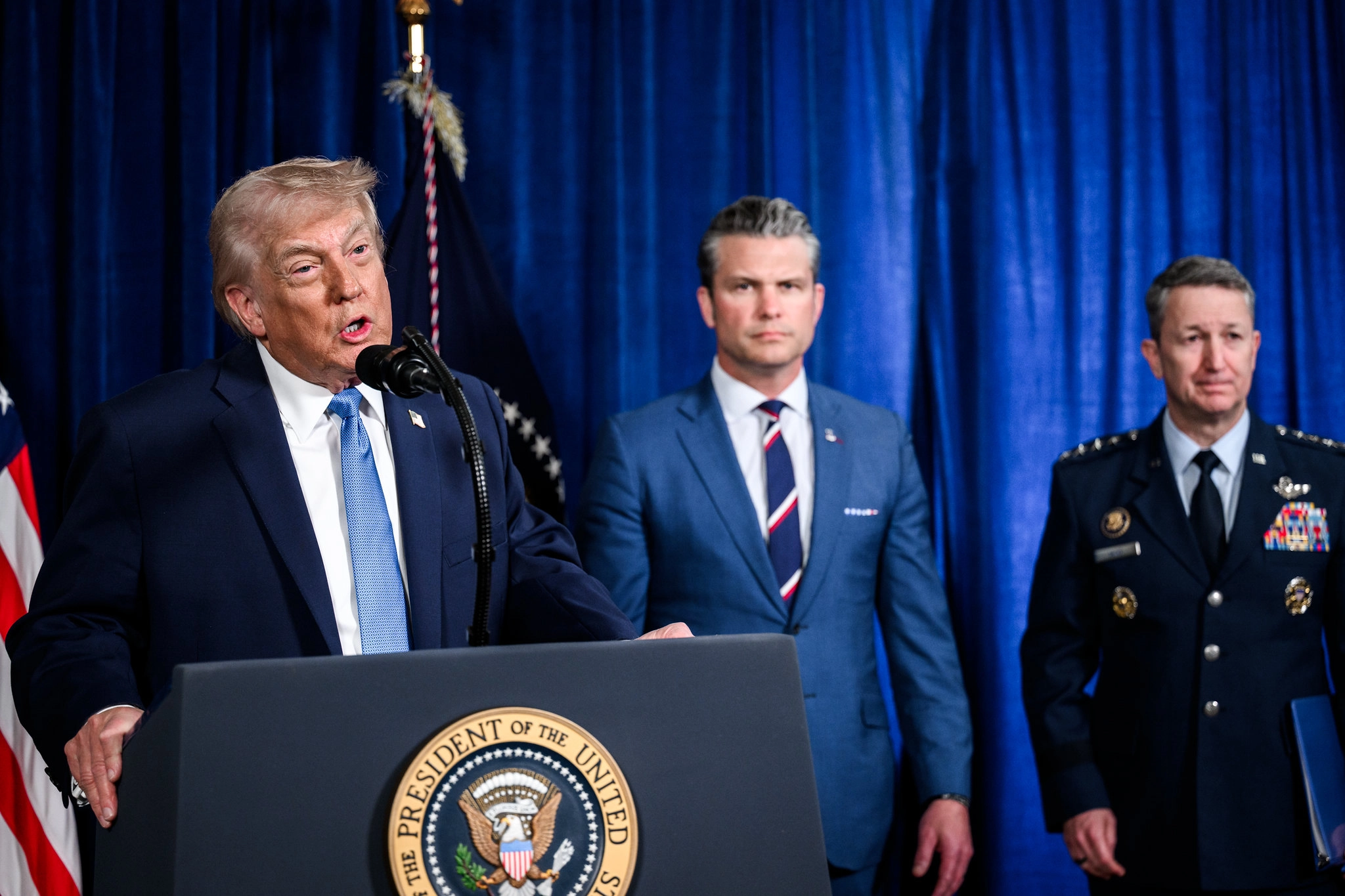
Speaking at the White House on Friday, the US president said Tehran would pay a heavy price if security forces began killing protesters.
“Iran’s in big trouble,” Trump said. “If they start killing people like they have in the past, we will get involved. That doesn’t mean boots on the ground – but it means hitting them very, very hard where it hurts.”
Over the past week, Trump has repeatedly raised the prospect of military force, a posture that has added momentum to protesters while tightening the pressure on Iran’s leadership.
Germany, Netherlands to Take Command of NATO’s Eastern Flank in Estonia
Behind the scenes: strike options on the table
According to multiple US officials familiar with the matter, Trump has been briefed in recent days on new military options as protests continue to spread.
Those options include strikes – some potentially on non-military sites in Tehran – designed to punish the regime for suppressing demonstrations sparked by a currency crisis and broader economic grievances.
No final decision has been made, officials emphasized on Saturday. Asked about planning for potential strikes, the White House pointed to Trump’s public statements and social media posts.
Senior officials cautioned that any military action would have to balance Trump’s threats with the risk of unintended consequences – including galvanizing public support for the regime or triggering retaliation against US personnel and allies in the region.
Rubio, allies amplify the signal
Trump’s message has been echoed across his administration and among congressional allies.
Secretary of State Marco Rubio reportedly spoke Saturday with Israeli Prime Minister Benjamin Netanyahu, discussing the protests in Iran alongside other regional issues.
Earlier in the day, Rubio posted online that the US “supports the brave people of Iran” – a stark, punctuation-free message that underscored the administration’s alignment with the demonstrators.
Republican Senator Lindsey Graham (R-SC) went further, framing Trump’s rhetoric as a promise of imminent change.
“TO THE IRANIAN PEOPLE: your long nightmare is soon coming to a close,” Graham wrote on social media.
“When President Trump says Make Iran Great Again, it means the protesters in Iran must prevail over the ayatollah… Help is on the way,” he added.
Other Republican voices have followed suit, signaling growing support in Congress for deeper US involvement.
Regional backdrop – and Trump’s record
The heightened rhetoric comes as the administration highlights Trump’s willingness to act elsewhere.
Since the start of his second term, Trump has ordered airstrikes or missile attacks in Syria, Yemen, Somalia and Nigeria – and earlier this month, a dramatic operation in Venezuela to seize Nicolás Maduro.
The State Department underscored that message Friday, posting video of the Venezuela operation with a blunt warning: “Do not play games with President Trump. When he says he’ll do something, he means it.”
Trump is also weighing options in Iran little more than six months after authorizing strikes on three of its nuclear facilities last June – an operation dubbed Midnight Hammer – which triggered Iranian missile retaliation and a brief opening for renewed nuclear talks.
Limits of pressure
Despite the growing unrest, analysts caution that translating protests into regime change remains difficult.
Iran’s demonstrations span all 31 provinces but lack a clear internal leader, while internet shutdowns have hampered coordination.
And there are no clear signs of defections from the Islamic Revolutionary Guard Corps or other security forces – a key prerequisite for rapid political change.
Rob Macaire, a former UK ambassador to Iran and now a senior fellow at the Washington-based Atlantic Council, warned that the regime retains enormous repressive power.
“This is a moment when things are coming to a peak,” Macaire said, noting the risk of serious bloodshed.
Macaire said the protests reflect how narrow the regime’s base of support has become, arguing that “the proportion of people supportive of the regime remains incredibly small – and is shrinking further as the circle of power gets tighter and tighter.”
For the protests to translate into real political change, Macaire said, defections from within the system – particularly from the IRGC [Islamic Revolutionary Guard Corps] or the Basij – would be decisive.
“Absent that, and absent a unifying leadership inside the country, change is more likely to come slowly, and from within the regime itself,” he said.
Uncertain endgame
Iran’s leadership, led by 86-year-old Supreme Leader Ayatollah Ali Khamenei, has vowed not to back down.
The Islamic regime, born of revolution, has little appetite for compromise – even as analysts agree the status quo is increasingly unsustainable.
For Trump, the challenge is threading a familiar needle: projecting strength, encouraging upheaval abroad and keeping all options on the table – without triggering a wider regional conflict he insists he does not want.
For now, Trump is leaving the promise deliberately vague.
But with protests intensifying and Washington’s rhetoric hardening, the gap between “standing ready to help” and doing something far more consequential is narrowing fast – and in Tehran, few doubt Washington is watching closely.
You can also highlight the text and press Ctrl + Enter