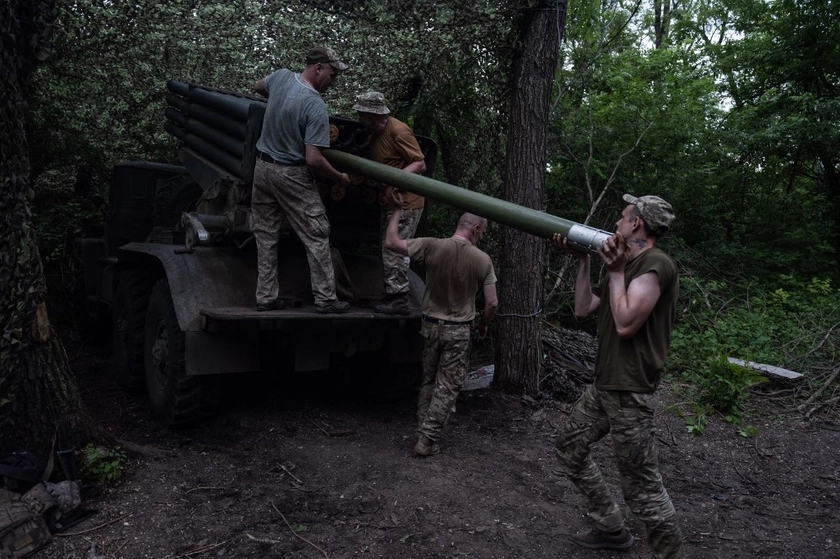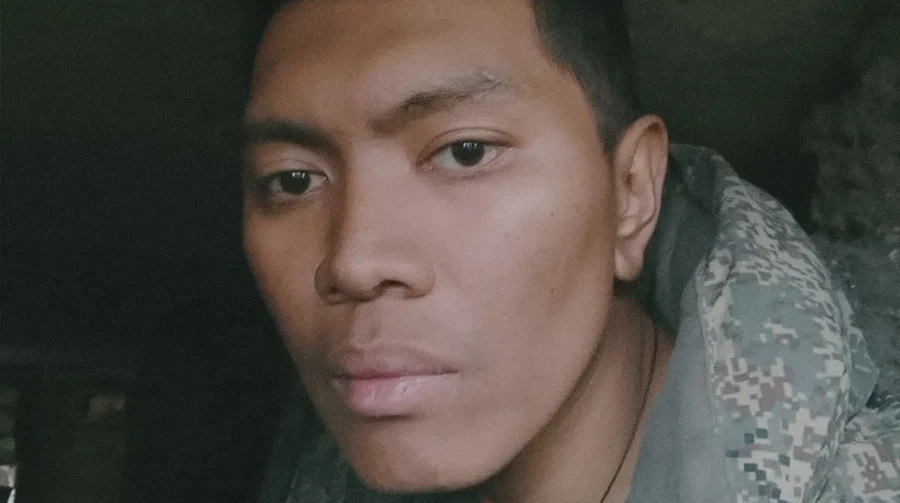
Ukraine’s Military Intelligence (HUR) said Monday that a Filipino national fighting with Russian forces was killed in the Donetsk region, highlighting what it described as Moscow’s expanding practice of recruiting foreign citizens through deception and coercion.
In a statement, HUR said its operatives identified the body of John Patrick, a citizen of the Philippines, among Russian troops killed near the village of Novoselivka in the Kramatorsk district.
JOIN US ON TELEGRAM
Follow our coverage of the war on the @Kyivpost_official.
According to HUR, the man served in Russia’s 9th assault company, 3rd battalion, 283rd regiment, 144th motorized rifle division in the 20th combined arms army. Like many foreign fighters, he was killed during what Ukrainian intelligence described as a “meat assault” – frontal attacks on Ukrainian positions with high casualty rates.
HUR said the Filipino mercenary carried only a weapon, ammunition and a scrap of paper with a unit number, a phone number and his commander’s name, and did not speak Russian.
Data recovered from his electronic devices showed his basic training lasted only about a week before he was sent to the front line, the agency said. After being wounded, he was left without evacuation and died slowly in a forested area, according to the statement.
Ukrainian intelligence said Russia is increasingly drawing foreign nationals and labor migrants into its armed forces by misleading them with promises of rear-area service or by threatening them with legal trouble.
Germany Warns of Russian Orbital Nuclear Threat
HUR warned foreign citizens against traveling to Russia or taking any form of work there, especially illegally, saying such trips carry a real risk of being forced into frontline assault units with little training and slim chances of survival.
Last year Kyiv Post gained exclusive access to one of Ukraine’s largest POW camps and spoke with foreign fighters captured after serving for Russia.
In the first interview, Joshua from Ghana explains how studying in Moscow and financial struggles led him to sign a contract with the Russian Ministry of Defense. From the front line to Ukrainian captivity, he shares his motivation, his dream of becoming President of Ghana, and how he reflects on the war today.
In the second interview, Mohammed Salah from Egypt describes how visa problems pushed him to join the Russian army in exchange for citizenship. After months on the front line and nearly a year in captivity, he opens up about regret, family, and his message to others:
“Don’t go to war.”
These rare testimonies shed light on why foreign nationals joined Russia’s war, how their perceptions have changed in captivity, and whether they want to return home.
You can also highlight the text and press Ctrl + Enter