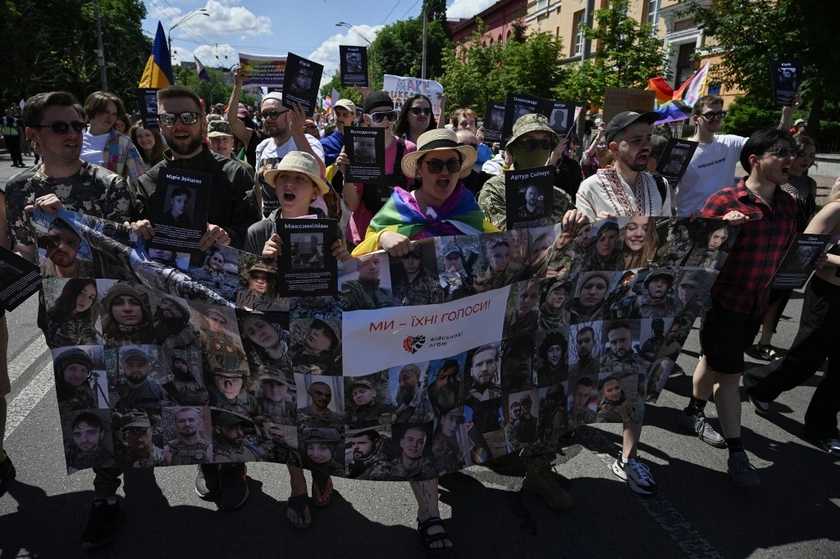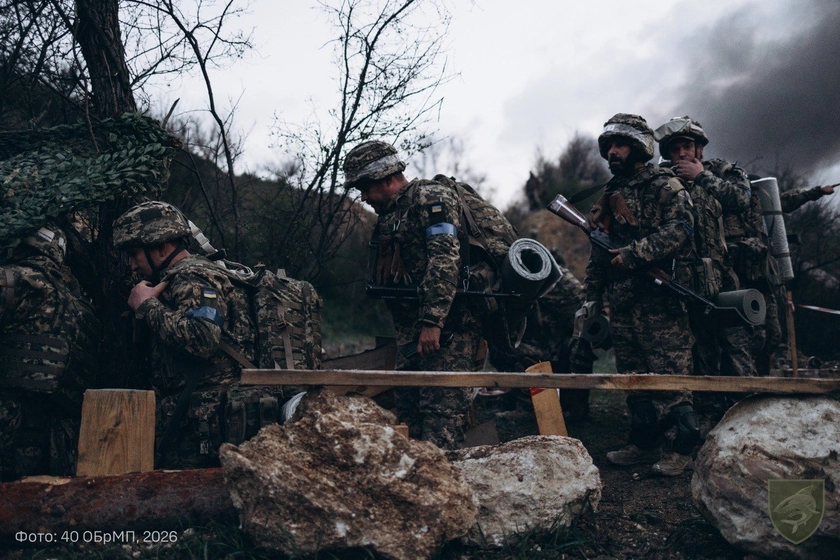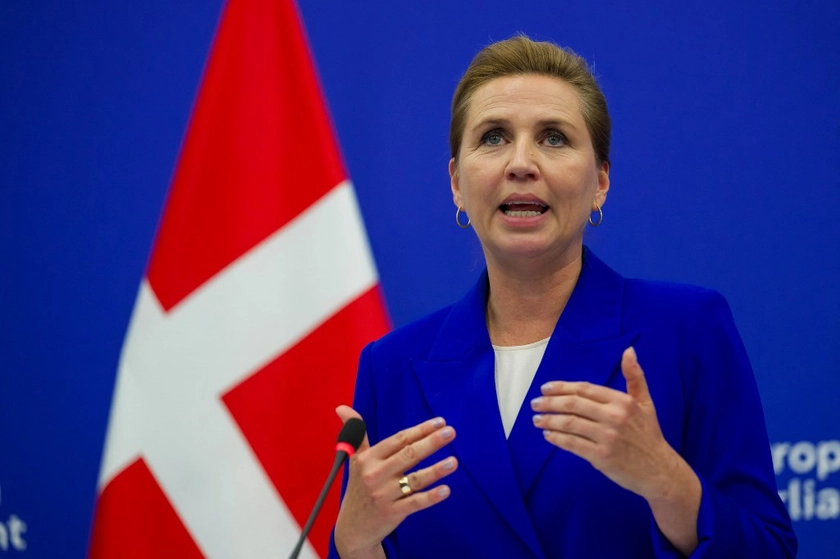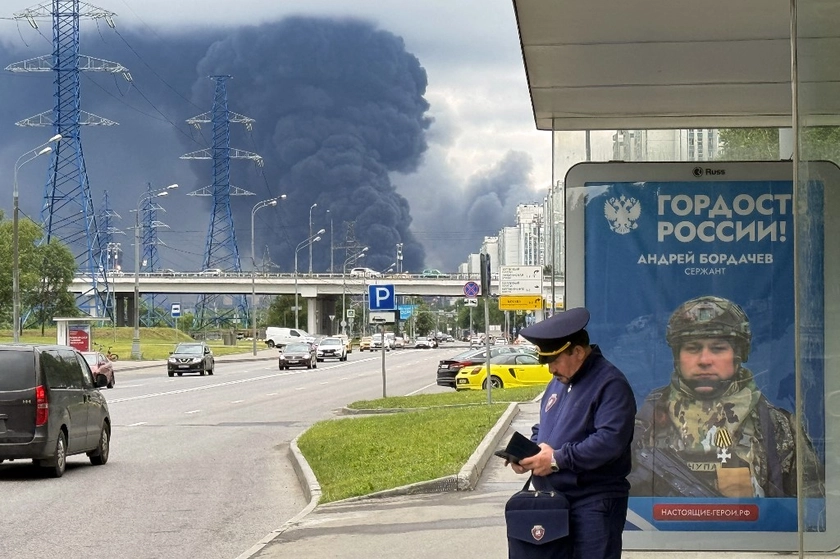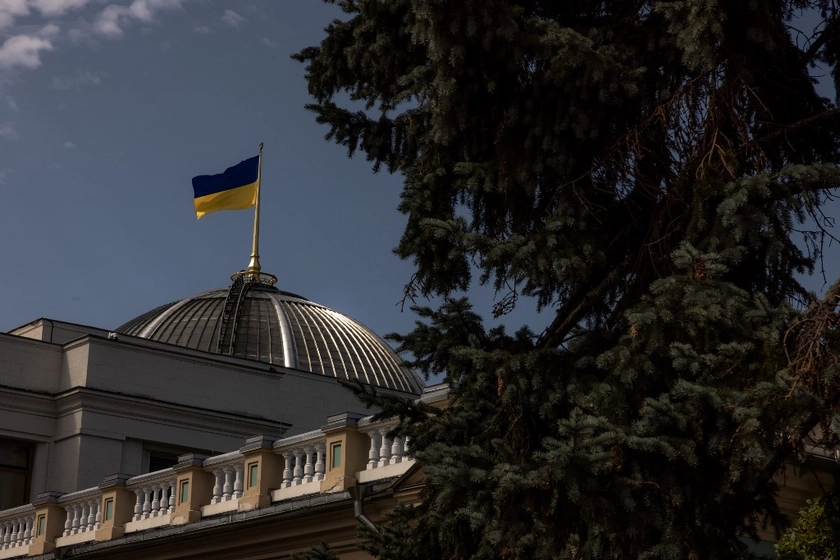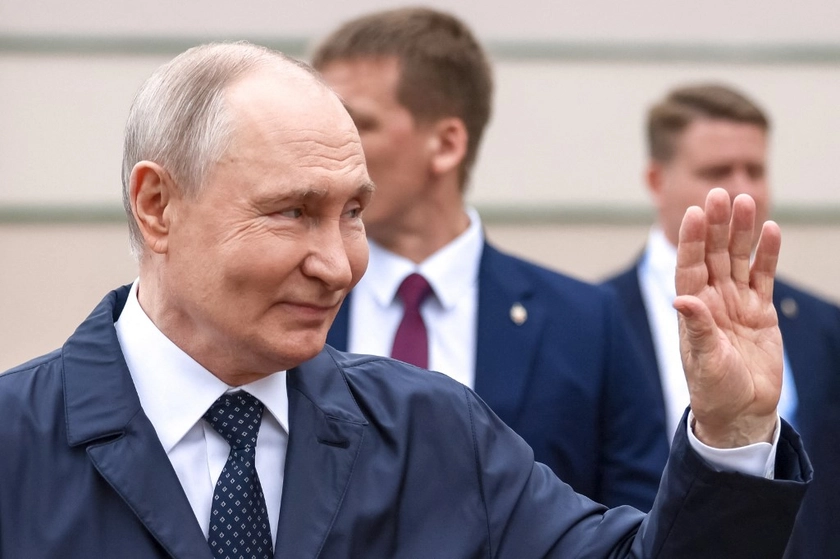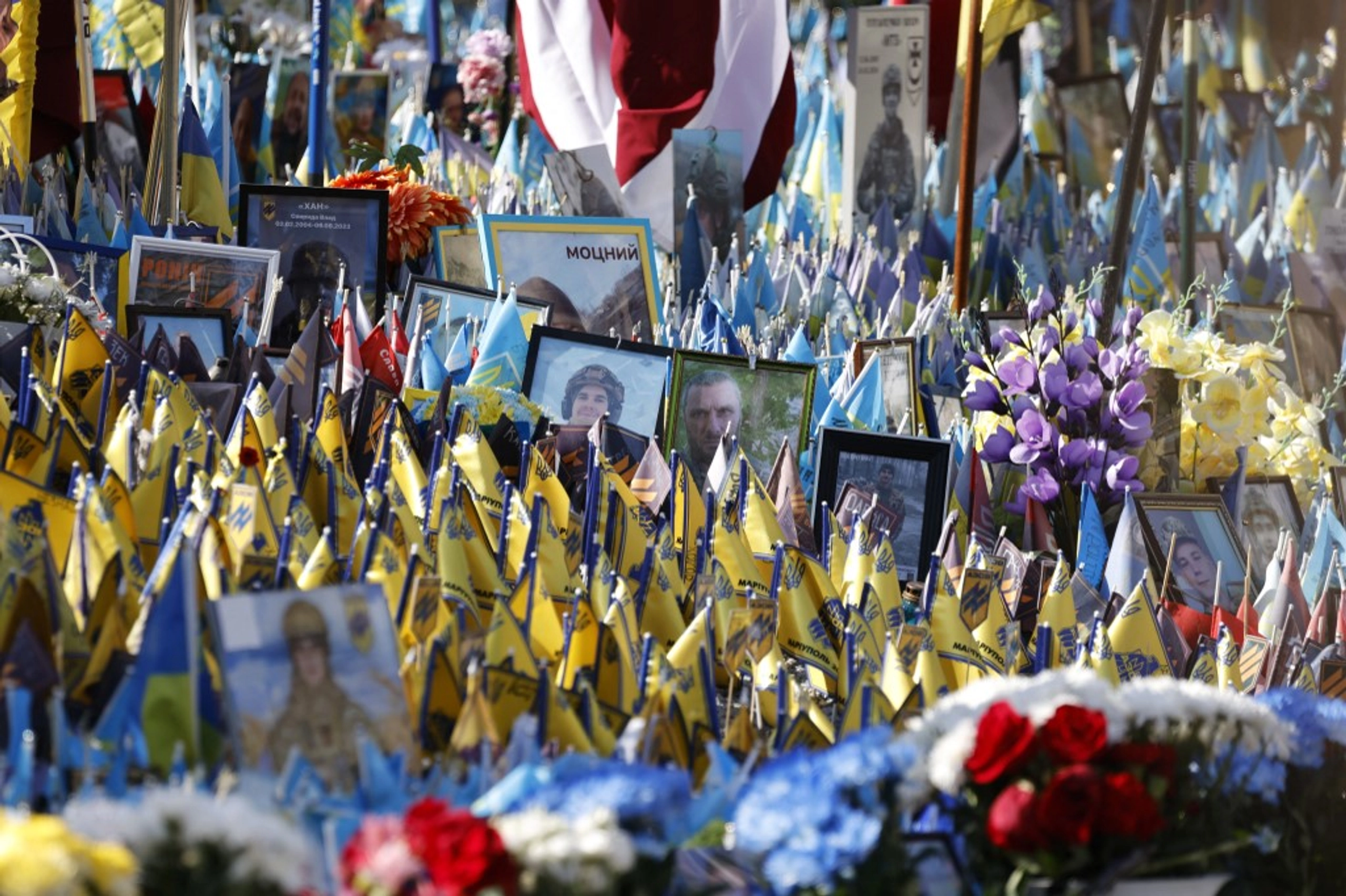
Feb. 24 will mark four years since Vladimir Putin launched his full-scale invasion of Ukraine, expecting victory within days. Instead, the world has witnessed 48 months of savage combat that has killed scores of thousands, destroyed entire cities, and displaced millions while failing to break Ukrainian resistance.
The early Ukrainian successes – driving Russian forces from the outskirts of Kyiv and around Kharkiv, liberating Kherson and parts of the Donbas – now seem like distant memories. What remains is a grinding attritional battle, with outcomes depending less on events along the front lines than on decisions made primarily in Washington, but also in Brussels, Berlin, London, and Paris.
JOIN US ON TELEGRAM
Follow our coverage of the war on the @Kyivpost_official.
That dependence has been a source of strength because of the critical assistance received, but it has also become Ukraine’s greatest vulnerability.
Attrition’s cruel arithmetic
Russia currently occupies roughly 18 percent of Ukrainian territory, including Crimea. That figure has not changed much in the past three years despite relentless Russian assaults and staggering casualties. Moscow’s forces are now losing on average more than a thousand soldiers each day – losses that would topple any democratic government. Putin’s calculation is simpler: Russia has cannon fodder to spare.
Ukraine faces different mathematics entirely. Inconsistent and often crudely implemented mobilization means exhausted soldiers who enlisted in 2022 remain at the front, while many young men have opted to leave the country en masse. Artillery crews operate under strict ammunition rationing, firing a fraction of what Russian gunners expend. The disparity in shells alone reveals how Western vacillation translates directly into Ukrainian casualties.
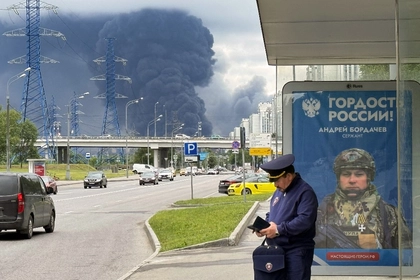
Ukrainian Missile Campaign Now Reaches Across Half of Russia
Ukrainian resilience and ingenuity have compensated where Western irresoluteness has failed. Denied long-range missiles, Kyiv built its own drone and missile programs. These homegrown weapons now strike airfields, ammunition depots, and refineries deep inside Russia. Strategic reach born of necessity, not allied generosity.
Russia’s strategy hasn’t changed. Grind Ukraine down through attrition. Rattle the nuclear arms saber. Bet that democracies lack the stomach for prolonged sacrifice and risk of a nuclear war.
So far, with Donald Trump’s administration declaring “it’s not our war” unless we can profit from it, Putin’s wager has paid off.
Ukraine finds itself squeezed between a Russian dictator bent on subjugation and an American president whose commitment fluctuates with his political mood and transactional instincts.
Political quicksand
The geopolitical landscape shifted dangerously with Trump’s return to power. His campaign promise to end the war “in 24 hours” and subsequent reluctance to guarantee meaningful support sent tremors through Kyiv and European capitals.
The administration has not abandoned Ukraine entirely, but the delays, equivocation, and Kremlin appeasement have given Moscow exactly what it wanted – doubt about American resolve, which in turn has constrained Ukraine’s European and other supporters.
Ukraine finds itself squeezed between a Russian dictator bent on subjugation and an American president whose commitment fluctuates with his political mood and transactional instincts.
Putin’s demands have not softened: recognition of annexed territories, Ukrainian disarmament, Russian veto power over Ukrainian foreign policy – domination disguised as the restoration of neighborly relations. He sees no reason to compromise when time appears to favor Moscow and Western unity seems tenuous.
The $61 billion aid package Congress finally passed in April 2024 provided some breathing room, but only after months of Republican obstruction and delayed assistance that cost Ukrainian lives. With Trump’s unpredictability and Republican control of Congress, funding has remained hostage to domestic American politics unrelated to Ukrainian survival.
President Volodymyr Zelensky continues to make Churchillian appeals to Western audiences and remains largely respected as the indefatigable champion of Ukraine’s cause. But his international stature masks domestic complications. Corruption scandals persist. Critics have questioned his centralization of power and controversial personnel decisions. His faction’s parliamentary majority is fragile, and political opponents await the end of the war to bring election campaigning out into the open.
Recently, Ukraine’s president has responded to mounting pressure by cleansing his inner circle and bringing in younger professionals untainted by corruption allegations and seemingly better equipped to meet the challenges of the prolonged war.
The latest opinion polls conducted in January show that Zelensky retains the confidence of about two-thirds of the population, which is also roughly the same percentage as those willing to endure the war for “as long as necessary,” with 52% opposed to making territorial concessions to Russia in exchange for security guarantees.
Fortunately for Ukraine, Europe has gradually shouldered more of the burden. EU assistance now exceeds American contributions. Germany has become the second-largest military donor – a remarkable shift for a nation that spent decades avoiding military commitments. Britain, France, Poland, and the Nordic-Baltic states have proven steadfast. A coalition of the willing has formed to facilitate the transition from war to peace when that moment arrives.
An impressive amount of help has also been delivered to Ukraine from numerous private organizations and individuals. As during the Spanish Civil War, International Brigades have been formed by foreigners from diverse countries wanting to help the Ukrainian army, and military training – not just equipment – has been provided by a host of countries.
Yet Europe faces its own obstacles: Hungary’s obstruction of EU initiatives, defense industries unable to scale production fast enough, and growing war fatigue among populations.
Instead of talking about the need to stop NATO’s expansion, defend Russian-speakers, and the need to de-Nazify Ukraine, Putin has now abandoned the rhetoric of 2022 and is openly stating that Russia’s primary goal is unashamedly imperialistic – to return its “historic lands.”
The mirage of premature peace
Pressure for negotiations has intensified. War exhaustion and Trump’s stated desire for a deal have created momentum toward talks. But so far, that has been all it has amounted to. Putin has demonstrated zero interest in genuine diplomacy.
In fact, Moscow’s demands in recent months have become even more barefaced. Instead of talking about the need to stop NATO’s eastward expansion, defend the rights of Russian-speakers in Ukraine, and the need to remove a Western-backed Nazi regime in Kyiv, Putin has now abandoned the rhetoric of 2022 and is openly stating that Russia’s primary goal is unashamedly imperialistic – to return its “historic lands.”
Any agreement that rewards Russian aggression with territorial gains would establish a catastrophic precedent. Territorial revision through force would become a viable strategy rather than an unthinkable crime. The whole question of Russia’s guilt for the aggression, war crimes, destruction, suffering, and displacement it has caused would be swept under a carpet provided by an amenable Trump administration, as would be the question of reparations, getting Russia to pay for the enormous damage it has caused.
As of early 2026, the West has frozen approximately $300 billion in Russian central bank assets, primarily held in European and US financial institutions. But the fate of these assets has remained a subject of intense debate. Clarity on strategy is needed as Ukraine’s need for reconstruction funding becomes increasingly urgent.
Still, Ukraine retains considerable resilience despite the immense hardships. Its defense industry has matured rapidly. Its military has absorbed brutal lessons, adapted, and become a major force to be reckoned with – a potential first line of defense for Europe.
Meanwhile, Moscow is increasingly showing vulnerabilities: an economy unsustainably militarized and impacted by sanctions; loss of energy markets and Ukrainian strikes on energy infrastructure; Russian casualties exceeding 1.2 million, with as many as 325,000 dead; depleting stockpiles of Soviet-era equipment. The question is whether these structural weaknesses and growing economic hardship will remain manageable before Ukraine exhausts its soldiers and supplies.
The price of incrementalism
Four years have delivered harsh education. The most critical lesson: incremental support prolongs conflicts and multiplies costs. Ukraine is constantly requesting capabilities. Western nations have provided important, but limited, quantities with crippling restrictions. Delayed aid proves insufficient. The cycle repeats.
Had Ukraine received in March 2022 what it finally obtained in 2024 – ATACMS missiles, F-16 fighters, long-range strike capabilities – this war would have looked fundamentally different. Possibly over by now. Almost certainly shorter.
Western “escalation management” has proven to be an expensive folly. Each time Russia crossed a supposed red line without triggering the predicted escalation, it exposed Putin’s nuclear threats as largely theatrical – bluffs designed to paralyze Western decision-making. And they worked.
Yes, the war has revealed Russian military weaknesses in stark detail: logistics failures, pervasive corruption, incompetent leadership. But it has also demonstrated surprising Russian strengths: the capacity to absorb horrific losses, adapt tactics under pressure, and maintain political control despite military setbacks.
And Europe’s defense posture has, in the meantime, undergone a genuine transformation. NATO has expanded with Finland and Sweden. Defense spending has increased across the continent. The illusion that economic interdependence prevents war lies in ruins. None of this will secure Ukraine, however, without NATO membership or equivalent security guarantees. At least these are now being seriously negotiated.
The cost of appeasement has become undeniable. Inadequate response to Russia’s 2014 Crimea seizure enabled the 2022 invasion. Insufficient support in 2022 prolonged the war into 2025. The pattern is clear: Weakness invites aggression.
Ukraine needs Western support – not just enough to survive, but to make a just peace possible. Europe is realizing it must develop its defense. No settlement should legitimize Russian conquest or leave Ukraine vulnerable to renewed attack.
What hangs in the balance
Four years into this war, Ukraine continues to fight for survival while relying on inconsistent levels of external support and facing an enemy that sees no reason to stop. Trump frequently questions whether the effort is worth the cost and pressures Ukraine to compromise in ways that serve Putin and himself rather than Kyiv or NATO.
The implications reach far beyond Ukraine’s borders. Europe has the most at stake. If Ukraine falls or accepts terms that reward aggression, no European nation can feel secure. For the United States, abandoning Ukraine under pressure raises fundamental questions about the credibility of American commitments worldwide and signals a retreat from the principles on which the United Nations and international law are based.
Ukraine needs sustained, substantial Western support – not just enough to survive, but to make a just peace possible. Europe is realizing it must develop genuine political and industrial self-sufficiency in defense. No settlement should legitimize Russian conquest or leave Ukraine vulnerable to renewed attack.
Supporting Ukraine is not charity – it is an investment in an international order that serves Western interests. It costs less to support Ukraine now than to confront a more emboldened Russia later. That calculation should be clear.
As a battered but unvanquished Ukraine endures a particularly harsh winter because of the intensified Russian drone and missile attacks – remember its plea four years ago to the countries that said they cared: “Please close the sky” – Ukraine today deserves more than sympathy. More than ever, it needs the means to contain the Russian onslaught, genuine acceptance into the democratic European community, and security guarantees to ensure that such an attack does not recur as soon as imperialist, despotic Russia regroups its forces.
In truth, this stopped being only Ukraine’s war long ago. Yet 12 years after Russia seized Crimea and parts of eastern Ukraine, and four years after launching its brutal full-scale offensive aimed at destroying the country and intimidating the free world, a crucial question has become even more pressing:
Will Russia be allowed to continue reviving the Soviet Union as an expansionist, anti-Western empire under a quasi-fascist, rather than communist, Putin, fueling a new and intense Cold War between East and West? Or will Ukraine be empowered to thwart this goal and reaffirm its existing rights under the UN Charter and international law as an independent, democratic European state and defender of the free world?
The views expressed in this opinion article are the author’s and not necessarily those of Kyiv Post.
You can also highlight the text and press Ctrl + Enter