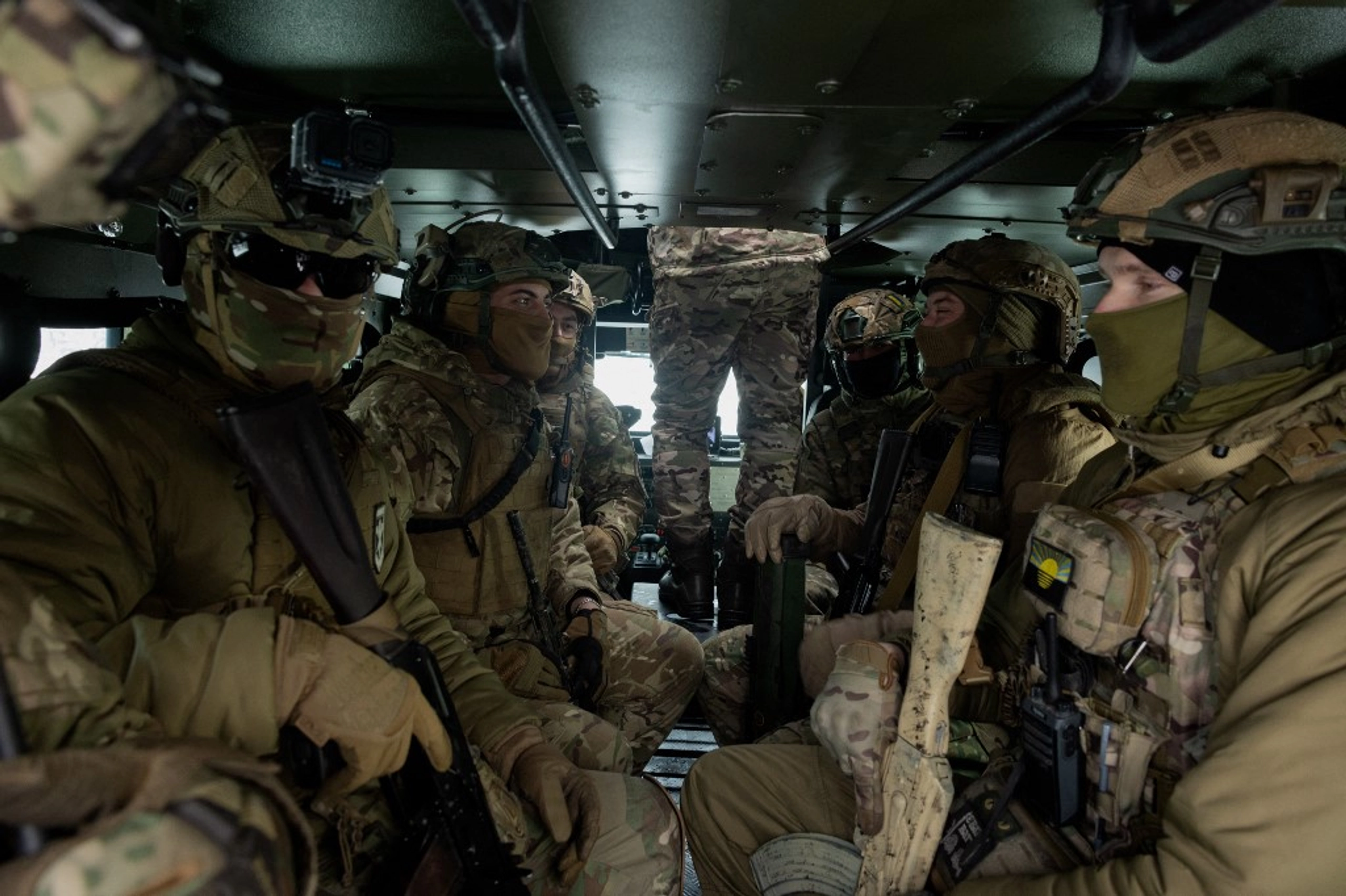
Ukraine has disbanded its International Legion, folding foreign volunteers into regular assault units of the Armed Forces as part of what military commanders describe as an evolution of the army’s structure.
According to a BBC report published last December, Ukraine’s General Staff decided to dissolve all four International Legion units by the end of the year, reassigning both Ukrainian and foreign fighters to assault formations within the Ground Forces.
JOIN US ON TELEGRAM
Follow our coverage of the war on the @Kyivpost_official.
Initially formed under the Territorial Defense Forces and later subordinated to the Ground Forces, the International Legion functioned as a set of special-purpose battalions composed largely of foreign nationals. Over time, however, Ukrainian commanders concluded that the separate structure had outlived its usefulness.
Military officials cited by the BBC said the legions had played a critical role in the early phase of the war, when Ukraine urgently needed manpower and international support, but argued that the army has since shifted toward a more standardized, professionalized structure.
Foreign fighters are now being transferred into assault regiments, among the most combat-intensive units in the Ukrainian military, rather than serving in standalone international formations.
Fighters say decision risks deterring volunteers
The move has drawn criticism from some foreign fighters, who argue that dissolving the International Legion could reduce the flow of volunteers or deter them altogether.
Oleksiy Leonov on Ukraine’s South: From the Front Line to Cross-Border Cooperation
Le Monde, which reported on the issue on Feb. 8, said the decision was announced discreetly by Ukraine’s General Staff on Dec. 31, 2025. Some legionnaires learned of their reassignment weeks earlier, often with little notice.
Bjorn Kallsoy, a Danish volunteer known by the call sign “Viking,” told Le Monde that many fighters were shocked by the sudden transfers and complained of poor communication, low morale and deteriorating living conditions while awaiting reassignment.
“The International Legion offered a secure framework for foreign volunteers,” Kallsoy said, adding that concerns about language barriers and unfamiliar command structures have grown since the transfers began.
Andriy Spivak, chief of staff of the legion’s 2nd battalion, told Le Monde that dismantling the unit risked wasting hard-won expertise.
He said the International Legion was the only structure in Ukraine’s army where all officers were bilingual and recruitment and training were conducted by multilingual teams. According to Spivak, the legion had also developed innovative defensive tactics combining drone operators and infantry – skills that may be lost in assault units with different missions.
Despite objections, the 2nd battalion was granted only a temporary reprieve until mid-February before being reassigned.
Numbers, attrition and shifting composition
Ukrainian authorities have never disclosed exact figures for the number of foreigners who served in the International Legion. Several thousand are believed to have signed three-year contracts, though the force never reached the 20,000 fighters once envisioned in 2022.
By 2025, the legion consisted of four battalions, each theoretically numbering 400 to 600 personnel. It took part in major battles, including the defense and liberation of parts of the Kharkiv region, fighting near Bakhmut, and later operations around Vovchansk and Chasiv Yar.
Le Monde reported that by 2025, attrition and defections had significantly thinned the ranks. While Western volunteers dominated early in the war, South Americans, particularly Colombians, later formed the largest contingent.
Not all foreign units affected
Ukraine continues to operate a separate international unit under its military intelligence agency, the HUR, which recruits foreigners with prior combat experience. That formation has not been dissolved.
Within the regular army, foreign soldiers receive the same pay as Ukrainian troops but retain the right to terminate their contracts after six months – a provision that some fighters say they may now use.
Several legionnaires interviewed by Le Monde warned that the decision sends a damaging signal at a time when Ukraine faces acute manpower shortages and Russia shows no sign of scaling back its war.
Ukrainian military officials, however, maintain that integrating foreign fighters into standard assault units is necessary to ensure cohesion, efficiency and long-term sustainability as the conflict enters its fourth year.
You can also highlight the text and press Ctrl + Enter