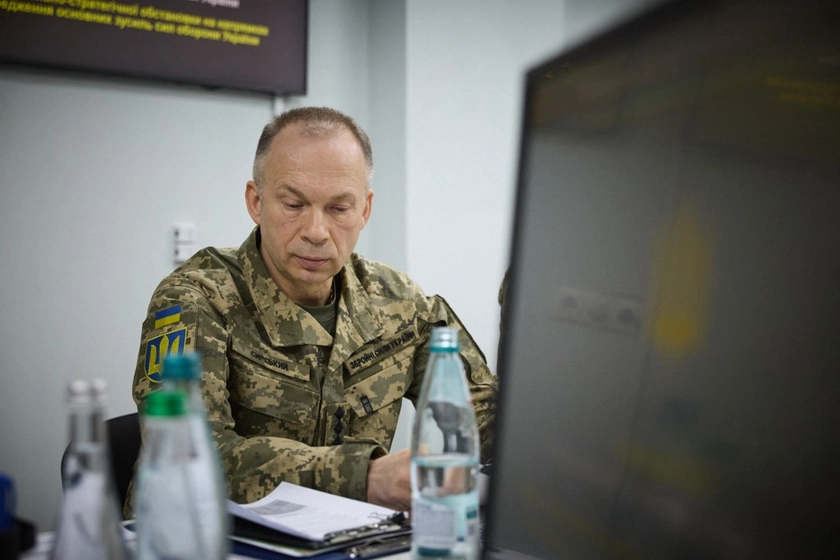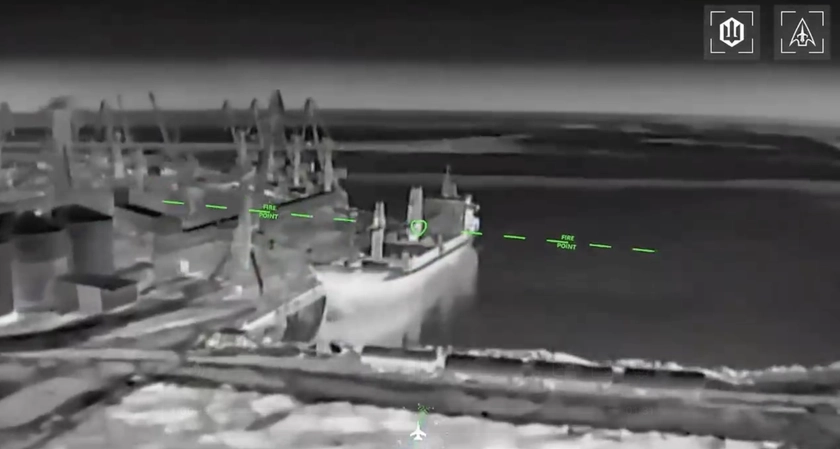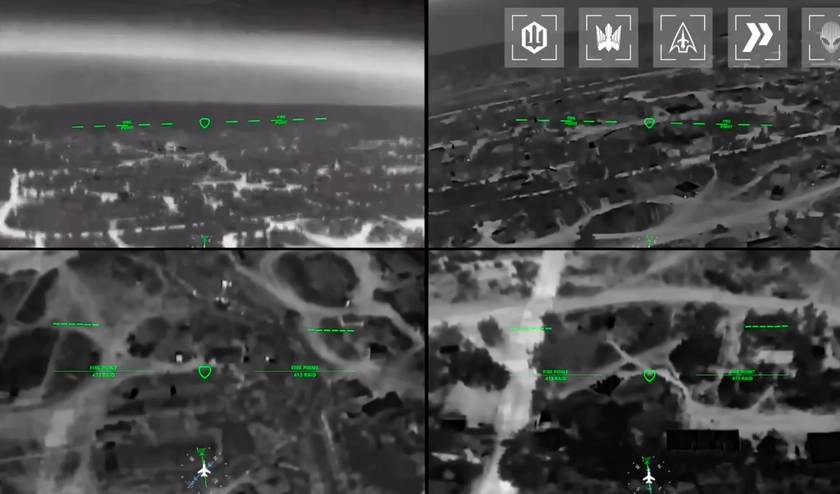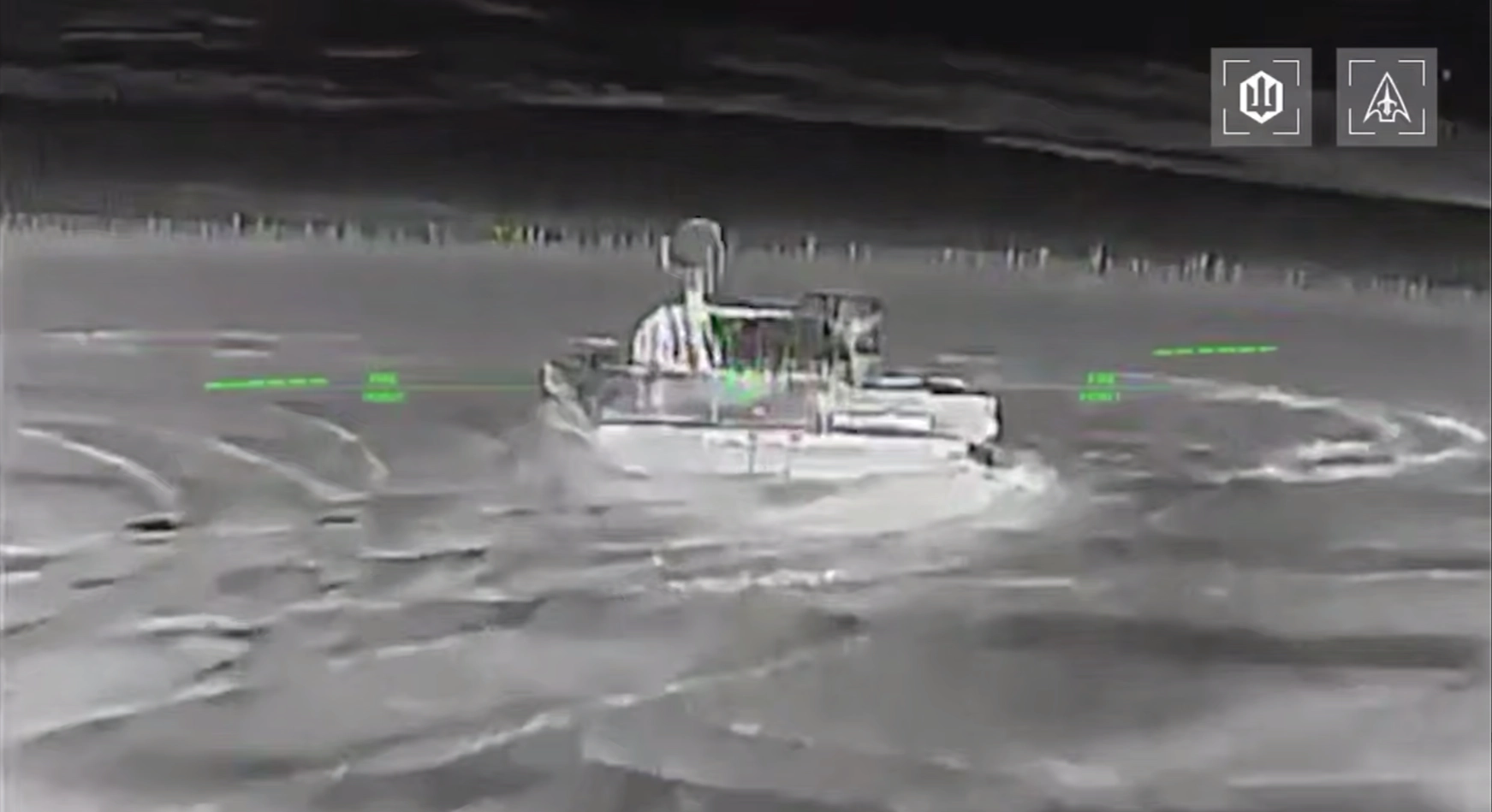
The Unmanned Systems Forces (USF) destroyed three Russian Tor-M1 air defense systems, worth a total of $75 million, in the early hours of Friday, Feb. 20, according to USF chief Robert “Madyar” Brovdi.
“All three TORs are in the occupied part of the Zaporizhzhia region. The operation was carried out simultaneously by the Birds of the 1st Separate Center of the Unmanned Systems Forces,” Brovdi said, sharing on Telegram a video of the operation lasting more than 90 seconds.
JOIN US ON TELEGRAM
Follow our coverage of the war on the @Kyivpost_official.
Kyiv Post could not independently verify the video’s time and location.
Brovdi emphasized that systematically identifying and destroying components of enemy long-, medium-, and short-range air defense remains a USF priority.
“Overnight minus ~75 million dollars, but first of all - a strike on the near echelon of the worm air defense, which always causes significant trouble. Someday those costly scabies will end,” he wrote.
The Tor-M1 is a short-range air defense system capable of detecting and striking multiple targets simultaneously with a maximum range of 12 kilometers (7.5 miles), at an estimated cost of $25 million per unit.
In combat conditions, the Tor-M1was reportedly used for the first time during the 2008 Russian-Georgian war, when Georgian units shot down a Russian Tu-22M bomber.
Ukraine’s Drone Forces Strike Russian Training Ground in Zaporizhzhia
In Ukraine, Tor-M1 were largely “canned” in the early 2000s. However, after fighting began in Donbas region, the Ukrainian army returned several Tor-M1 systems to service.
Open sources also note that after Russia intervened in the conflict in Syria, it deployed Tor-M1 systems to protect its military bases.
Separately, according to a report from the General Staff of Ukraine, the Defense Forces struck multiple Russian positions, including command posts, warehouses, and troop concentration areas.
Notably, some of these strikes occurred in the occupied territories of the Zaporizhzhia region.
The report specifies that an unmanned aerial vehicle (UAV) command post in the Zlatopil area, a warehouse of material and technical means in the village of Bohdanivka, and a Russian repair base in the Rozivka area were all hit.
Ukrainian forces also targeted the Russian manpower concentration near Stepnohirsk.
In the Kherson region, areas near occupied Lyubimivka and Tendrivska Spit saw strikes on a command and observation post as well as concentrations of Russian troops.
In addition, two material and technical equipment depots were struck: one in Lobanove (occupied Crimea) and another in Mozhnyakivka (occupied Luhansk region).
“Enemy losses and the extent of the damage inflicted are being specified,” the report reads.
Notably, Ukraine recaptured a net total of 63 square kilometers (24.32 square miles) from Russian forces last week, primarily in the Zaporizhzhia region, according to an AFP analysis of data from the Institute for the Study of War (ISW).
Overall, Kyiv regained 91 square kilometers (35.14 square miles), including 86 square kilometers (33.20 square miles) approximately 80 kilometers (49.71 miles) east of Zaporizhzhia city, where Russian troops had made significant advances since the summer of 2025.
Russian forces reportedly captured 28 square kilometers (10.81 square miles) elsewhere along the front, leaving Ukraine with a net gain of 63 square kilometers, its largest territorial recovery in a short period since the counteroffensive in June 2023.
ISW analysts suggested that these Ukrainian counterattacks likely took advantage of a recent Starlink shutdown affecting Russian forces, which disrupted battlefield communications and command-and-control.
Observers noted that Russian Starlink antennas were disabled following Elon Musk’s announcement of “measures” to block the Kremlin’s use of the technology, which Moscow had reportedly been employing to bypass electronic jamming and conduct precision strikes.
You can also highlight the text and press Ctrl + Enter