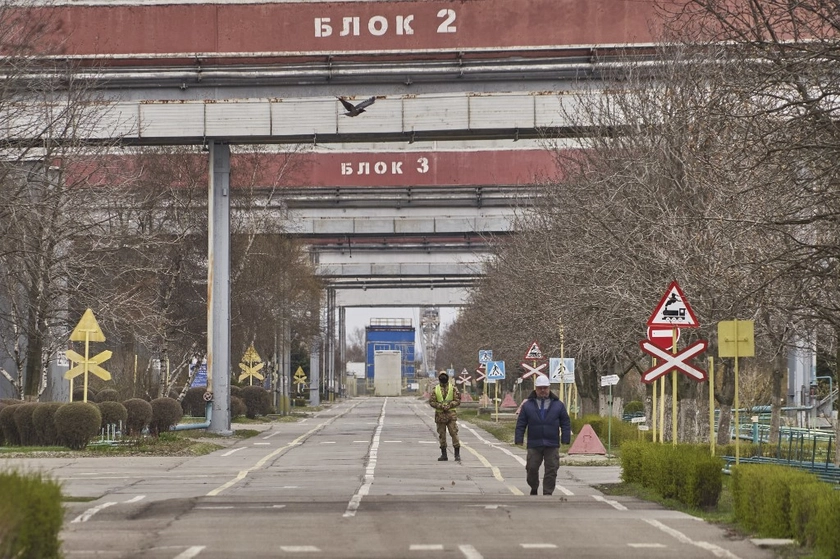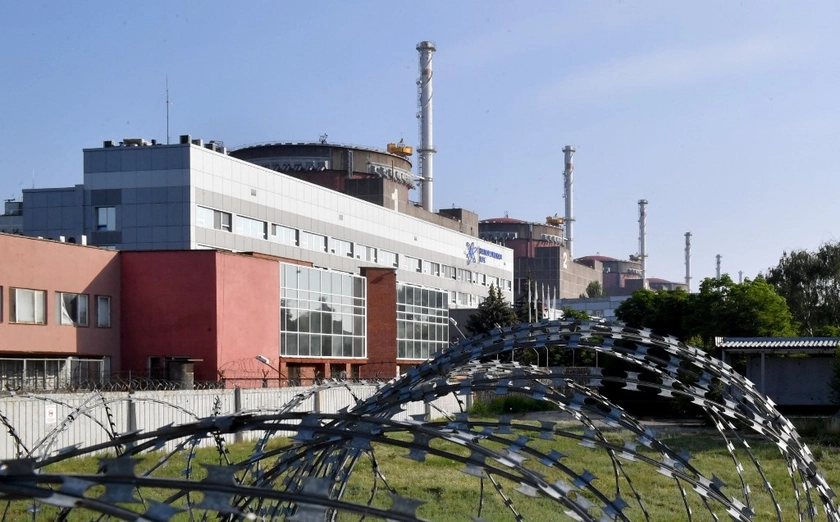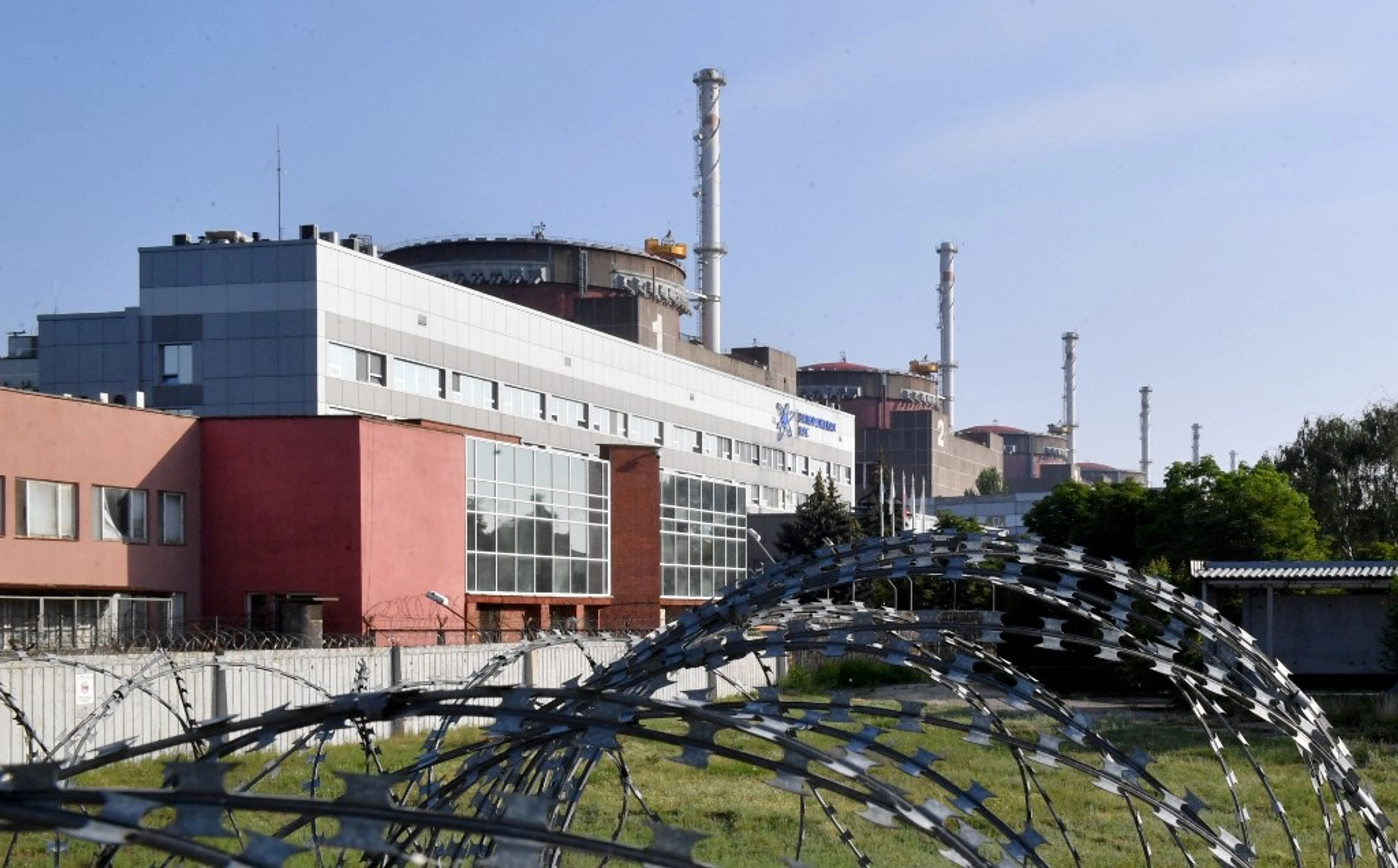
Engineers have reconnected the temporarily occupied Zaporizhzhia Nuclear Power Plant (ZNPP) to Ukraine’s external power grid, narrowly averting a disaster after the station spent nearly three days relying entirely on emergency diesel generators.
Ending a 65-hour total grid failure
According to a statement released by Ukraine’s state nuclear operator, Energoatom, external electricity was re-established to the facility on Saturday, June 13 at 2:30 p.m. local time. The plant’s internal safety and monitoring configurations are currently drawing electricity via a 330 kV high-voltage overhead transmission line.
JOIN US ON TELEGRAM
Follow our coverage of the war on the @Kyivpost_official.
The nuclear facility had been plunged into a state of total grid isolation on June 10 at 9:09 p.m., following the shutdown of the vital ZaTES – Ferrosplavna No. 1 backup line. The immediate loss of external energy triggered automated safety protocols, forcing the facility to engage its array of emergency diesel generators to maintain the operation of cooling pumps and radiation monitoring equipment.
A dangerous acceleration of emergencies
The weekend incident represents an acceleration in the degradation of the regional electrical infrastructure.
This event marks the 19th complete blackout at the ZNPP since its occupation by Russian military forces in 2022, and stands as the seventh grid failure recorded in 2026 alone.
Energoatom has repeatedly warned that each individual loss of off-site power places Europe’s largest nuclear installation on the precipice of a severe radiological accident. While all six of the facility’s reactors are currently maintained in a non-operational “cold shutdown” state, they still require an uninterrupted supply of electricity to circulate coolant through the active cores and spent fuel pools.

Russia’s Invasion of Ukraine is Now Longer than WWI – Five Things to Know
If the emergency diesel generators fail or exhaust their localized fuel reserves before grid reconnection occurs, the reactors will overheat, risking a core meltdown.
A chronology of fragility
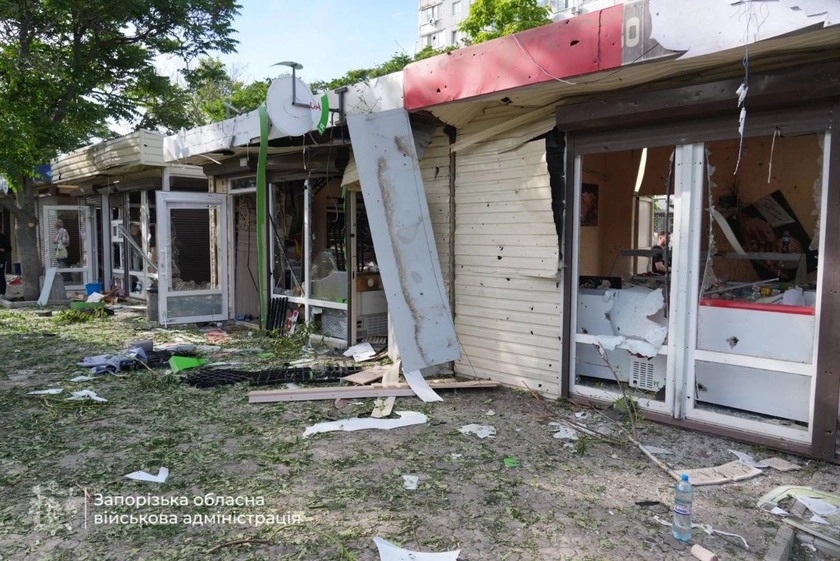
The June 13 reconnection follows a near-identical emergency just one week prior, underscoring the instability of the active war zone. This recent sequence of crises began on June 3, when a drone strike knocked out the nearby Nikopolska substation, inducing a brief 20-minute power flick that triggered emergency alarms.
To address the mounting dangers, the International Atomic Energy Agency (IAEA) brokered a highly fragile, localized temporary ceasefire between Ukrainian and Russian forces on June 5 to protect repair crews. The following day, on June 6, engineers reconnected the plant after a 15-hour blackout – the 18th since the invasion began – which was caused by heavy infrastructure damage to the “Dniprovska” high-voltage line.
However, this stability was short-lived, as the grid collapsed yet again on June 10 following the failure of the ZaTES – Ferrosplavna No. 1 line, initiating a 65-hour race against time to restore power to the facility.
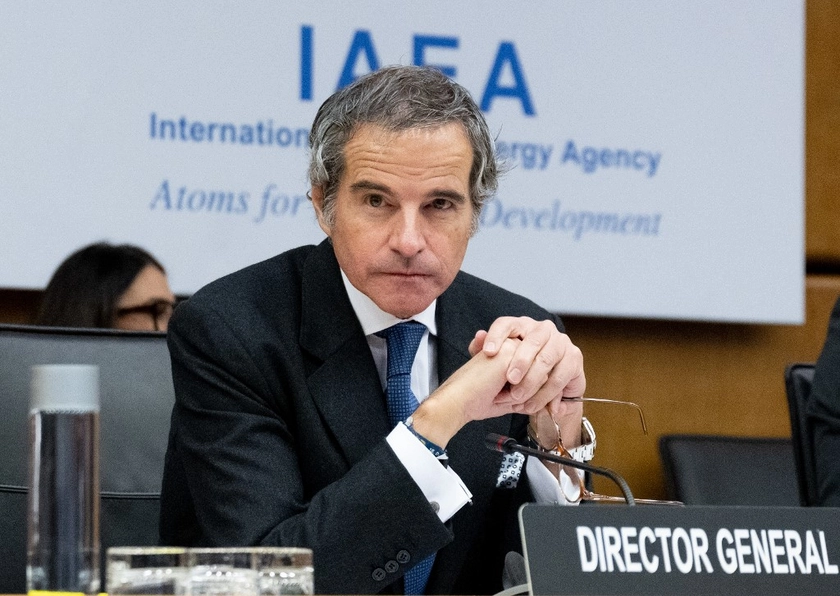
IAEA Director General Rafael Grossi has continuously lambasted the ongoing militarization of the surrounding Enerhodar sector, stressing that relying on emergency diesel generators as a routine safety buffer is an unsustainable and dangerous practice.
You can also highlight the text and press Ctrl + Enter

Putin’s Worst Nightmare