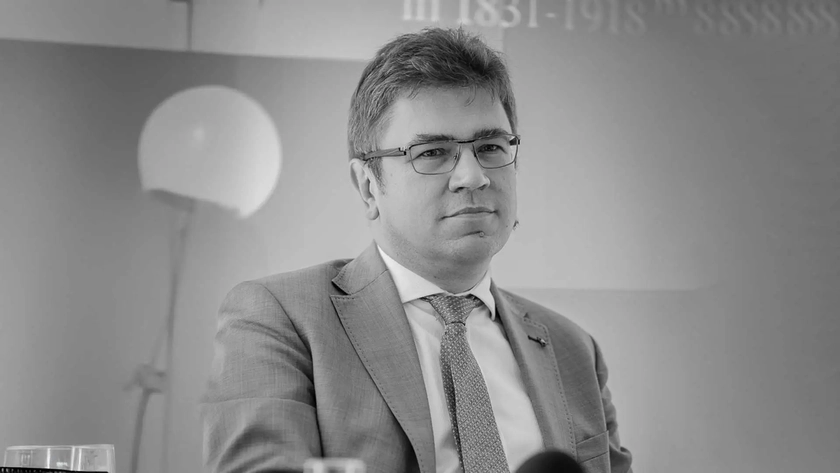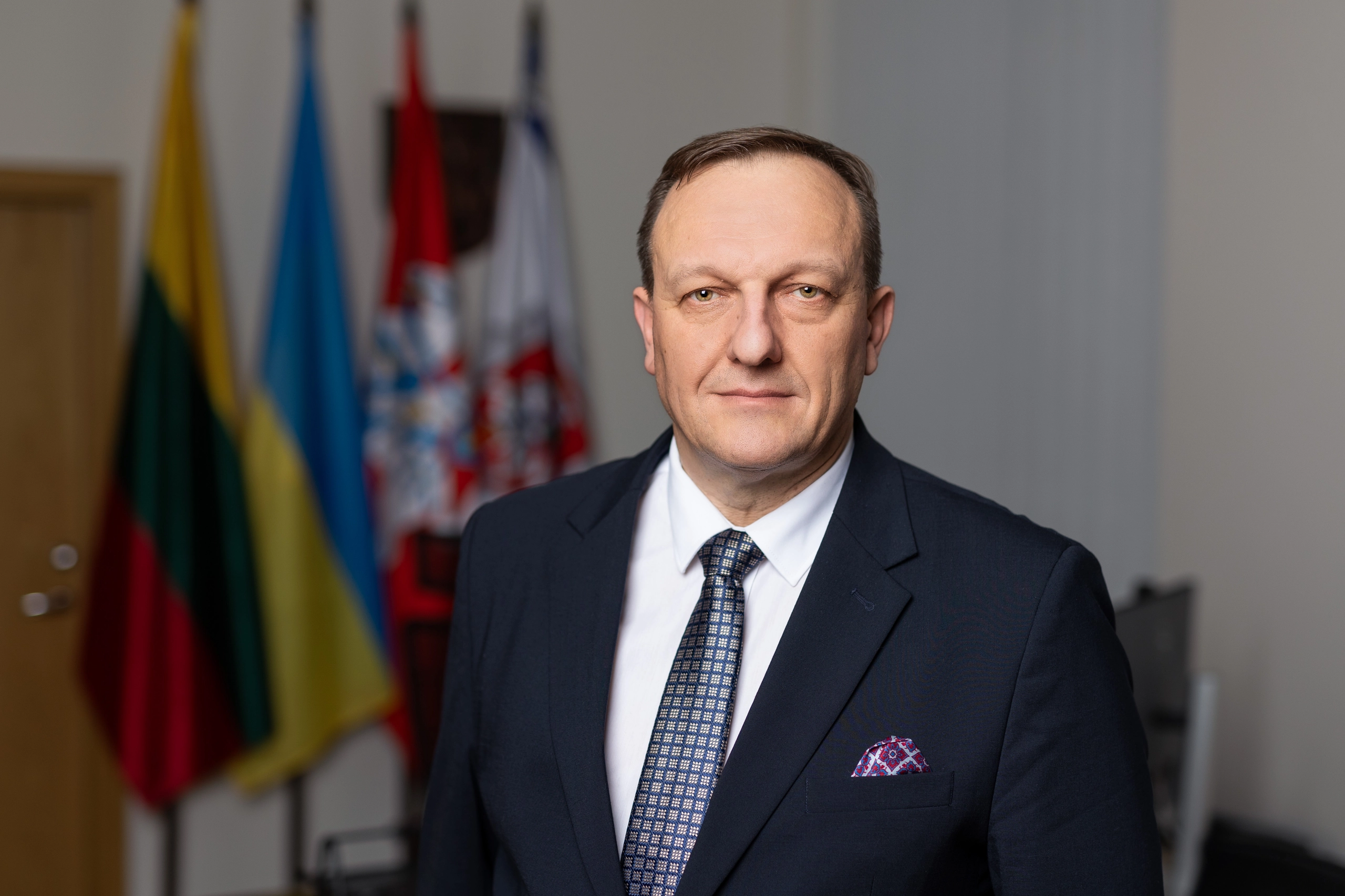
Kyiv Post speaks with Vladislav Kondratovič, Lithuania’s Minister of the Interior of the Republic of Lithuania (Social Democratic Party of Lithuania – Lietuvos socialdemokratų partija, LSDP), about hybrid actions targeting Lithuania, the state of Western alliances, security policy, Ukraine’s path to EU membership, regional relations, and national minorities in Lithuania.
Michał Kujawski: In December, the German daily “Die Welt,” in cooperation with the German Wargaming Center of the Helmut-Schmidt-University, prepared a simulation of a Russian invasion of Lithuania. In the scenario, Russia seizes Mariampol with limited forces while NATO remains inactive. Leaving aside the credibility of this war game, similar scenarios are being discussed regarding Estonia’s Narva. What is the sense of security today?
JOIN US ON TELEGRAM
Follow our coverage of the war on the @Kyivpost_official.
Vladislav Kondratovič: I understand that the German side is analyzing the situation in Lithuania. According to the plans, a German brigade will be stationed here, and we are preparing for that. Developing forecasts is natural – the military must be ready for various threats and scenarios, whether openly articulated or not. We have long repeated that the threat from the East is real – one only needs to look at the Russian-Belarusian Zapad exercises, during which operations directed against us are rehearsed.
However, we must keep a cool head. Lithuania, like the other Baltic states and Poland, is determined to ensure that no aggression takes place. We are investing in security and modernizing our armed forces to the highest possible level so that we remain a credible partner within NATO. We must have our own capabilities and be ready to support other allies.
Russian Troops Forced to Walk 30 km After Ukraine Hits Logistics, Minister Says
MK: Fortunately, there are no kinetic military actions, but there are numerous acts of sabotage, diversion, and – more broadly – hybrid activities. We are talking about explosive devices on a cargo aircraft, smuggling balloons, or GPS interference. Vilnius airport is regularly closed. What scale of activity are we dealing with?
VK: We have been experiencing hybrid actions since 2021, when Belarus initiated migration pressure. Minsk instrumentalized and weaponized the migration to destabilize the situation and raise tensions, not only against us but against the entire EU. Acts of sabotage occur, such as arson attacks on shopping centers – not only in Lithuania but also in Poland. Close cooperation between services is crucial: the police, intelligence, and other institutions, also at the international level within the EU and NATO. Thanks to this, many actions have been thwarted, but we remain vigilant.
“We have long repeated that the threat from the East is real – one only needs to look at the Russian-Belarusian Zapad exercises, during which operations directed against us are rehearsed. However, we must keep a cool head.”
MK: Should the balloons regularly entering Lithuania from Belarus be treated as simple contraband, or something more?
VK: This is an example of criminal organizations being used – under the cover of cigarette smuggling – to exert pressure. It poses a threat to civil aviation; Vilnius airport lies just 30 kilometers from the Belarusian border. We do not see Belarusian services stopping those involved in this activity. It is convenient for Minsk – not only economically, but also as a tool of destabilization. We are counteracting this intensively, and the situation is gradually improving. We are detaining those involved in smuggling to limit cooperation opportunities on the Belarusian side – regardless of whether we are dealing with hybrid pressure or ordinary crime.
MK: Lithuania, a relatively small country, has received a considerable number of migrants and refugees from Belarus and Ukraine. What proportion of society do refugees constitute?
VK: Around 200,000 third-country nationals reside in Lithuania under various legal grounds. Among them are approximately 77,000 Ukrainian citizens, of whom around 50,000 are war refugees; the others arrived earlier. They function under the same rules as in other EU countries – they are provided with good conditions and, to a large extent, integrate well. A significant share are women and children; the youngest attend schools. Depending on their place of residence, education is available in different languages, including Polish – there are dozens of Polish schools in Lithuania.
Many Ukrainians work and learn Lithuanian, even though it belongs to a different language group. Some will likely stay, others will return – it is an individual decision. There are over 50,000 Belarusians, most of them employed. Many have families and historical ties to Lithuania, especially in border regions. More than 1,000 Belarusians are protected as political refugees.
MK: In some Western countries, four years after the invasion began, social tensions and anti-Ukrainian voices are emerging. Are similar tensions visible in Lithuania?
VK: There are incidents, but I would not describe this as a serious problem. Societies feel fatigue from the war – it is a tremendous effort, also emotionally. However, integration and economic factors do not provide arguments for changing course. For the Lithuanian government, continued support for Ukraine remains a strategic objective.
MK: What is Lithuania’s integration policy toward foreigners?
VK: Similar to that in other European countries. Differences – for example in free public transport – may occur at the municipal level. Lithuania is a country of many nationalities. I myself am Polish. We have a well-developed education system in Polish, as well as in Russian. We create opportunities to study in one’s mother tongue.
MK: How large is the Russian minority? Is it not on the same scale as in Latvia or Estonia?
VK: National minorities constitute about 15 percent of the population – roughly 300,000 people of various nationalities: Polish, Ukrainian, Belarusian, or Russian. It depends on the region – for example, in the Vilnius region, people of Polish origin predominate. There are still issues to address, such as the spelling of surnames, but we are moving forward. From Jan. 1, 2026, driving license exams can be taken in Polish, and from February – in Ukrainian. Interest is high. We are also considering Belarusian. We are continuing work on the law on national minorities, but changes must have broad social consensus.
“For the Lithuanian government, continued support for Ukraine remains a strategic objective.”
MK: Polish-Lithuanian relations – also in the historical context – are very good today, although the shared history has sometimes been difficult.
VK: We cooperate closely – at the level of governments and presidents, also within international alliances. Problems, if they arise, are usually local rather than central. An example may be the reorganization of a school in Paluknys (Polish: Połuknia), which sparked opposition from the Polish community – this was a decision of local authorities. We must act carefully, because national diversity is Lithuania’s strength.
MK: Poland and Lithuania regularly refer to their shared heritage – the Polish-Lithuanian Commonwealth, the Grand Duchy of Lithuania, the January Uprising. Recently, we saw joint commemorations in Vilnius with the participation of the presidents of Poland and Ukraine.
VK: November 11, Poland’s Independence Day, is also widely celebrated, especially in the Vilnius region. Only together can we face threats from the East. Contacts with minorities are also important in this regard.
MK: In the 1990s, however, there were tensions – some Polish circles proposed autonomy in the Vilnius region.
VK: Tensions can arise easily, it takes just one irresponsible step. That is why we must safeguard what we have today.
MK: Last summer, after his release from prison, Sergei Tikhanovsky sparked controversy by suggesting the creation of Belarusian enclaves or autonomy. Is this fuel for extremist forces?
VK: Yes, although one must remember that he had just left prison after many years behind bars. In such situations, words must be weighed carefully – certain reactions are difficult to contain later.
MK: In many EU countries, pro-Russian forces or those skeptical about continued support for Ukraine are gaining ground. Some speak of a crisis in transatlantic relations. How does Lithuania navigate this?
VK: We are a NATO member, and strong transatlantic cooperation is the foundation of our security. Collective defense is far more effective than acting alone. We are only as strong as NATO.
MK: Observing the rise in support for radical forces such as Germany’s AfD [Alternative for Germany], do you have concerns?
VK: Traditional parties must respond to this. They often defend the values that extremist groups seek to undermine, which poses a threat to the stability of the EU. This does not concern Germany alone. There are countries in the East that dream of the success of radical parties. For now, however, mainstream parties maintain support and mitigate risks. Nevertheless, the threat to a system built over decades is worrying.
MK: There is increasing talk of Ukraine’s rapid accession to the EU. Some countries support it without reservations, others set conditions, and still others – such as Hungary – oppose it. What is your position on Ukraine’s EU membership?
VK: Without stepping into the competences of the Foreign Ministry, I can say that the state and the government support Ukraine’s European path. There is still much work to be done, but it has chosen the right direction. Most European countries are open to its membership. The past four years show that Ukraine is capable of standing up to an aggressor that is militarily and economically stronger. If it wants to – it can.
You can also highlight the text and press Ctrl + Enter