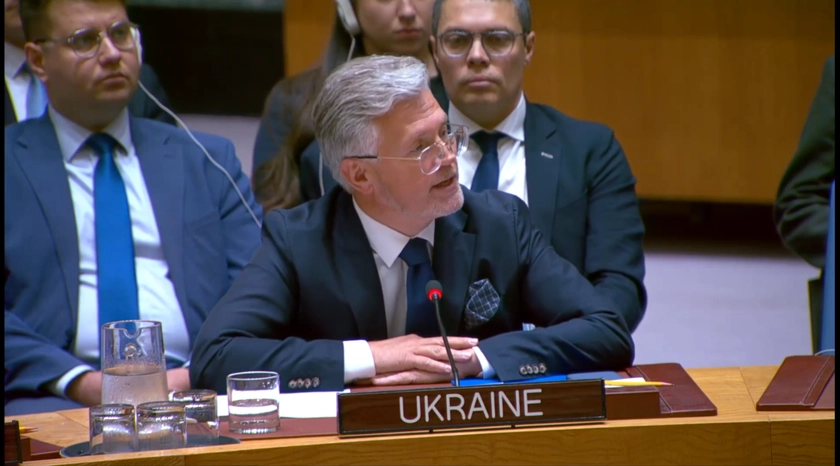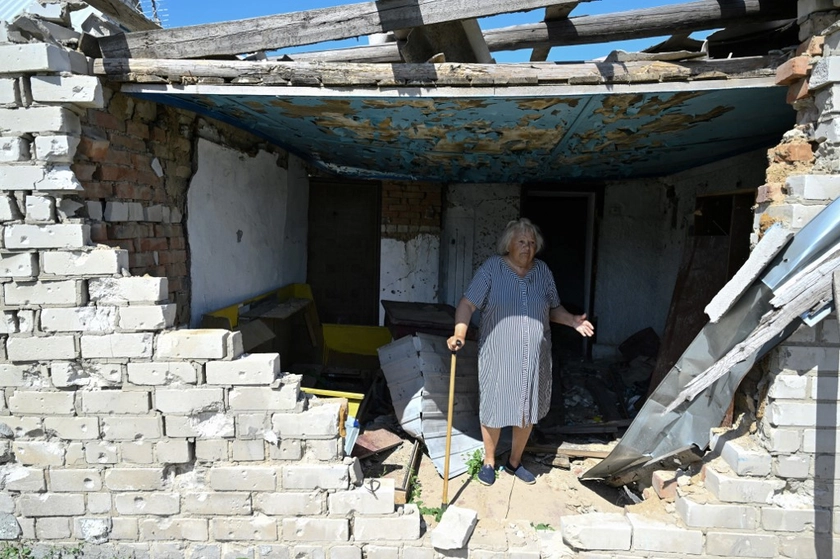
For over four years of full-scale war, the United Nations (UN) in Ukraine has operated under constant security threats and funding constraints. It has continued to deliver life-saving assistance to those who need it most, particularly in frontline regions, despite attacks on humanitarian workers and convoys.
In 2025 alone, the UN reached more than five million people, providing food and livelihood support, emergency water supply, essential medicine, psychosocial assistance following attacks and evacuations, and emergency health services.
JOIN US ON TELEGRAM
Follow our coverage of the war on the @Kyivpost_official.
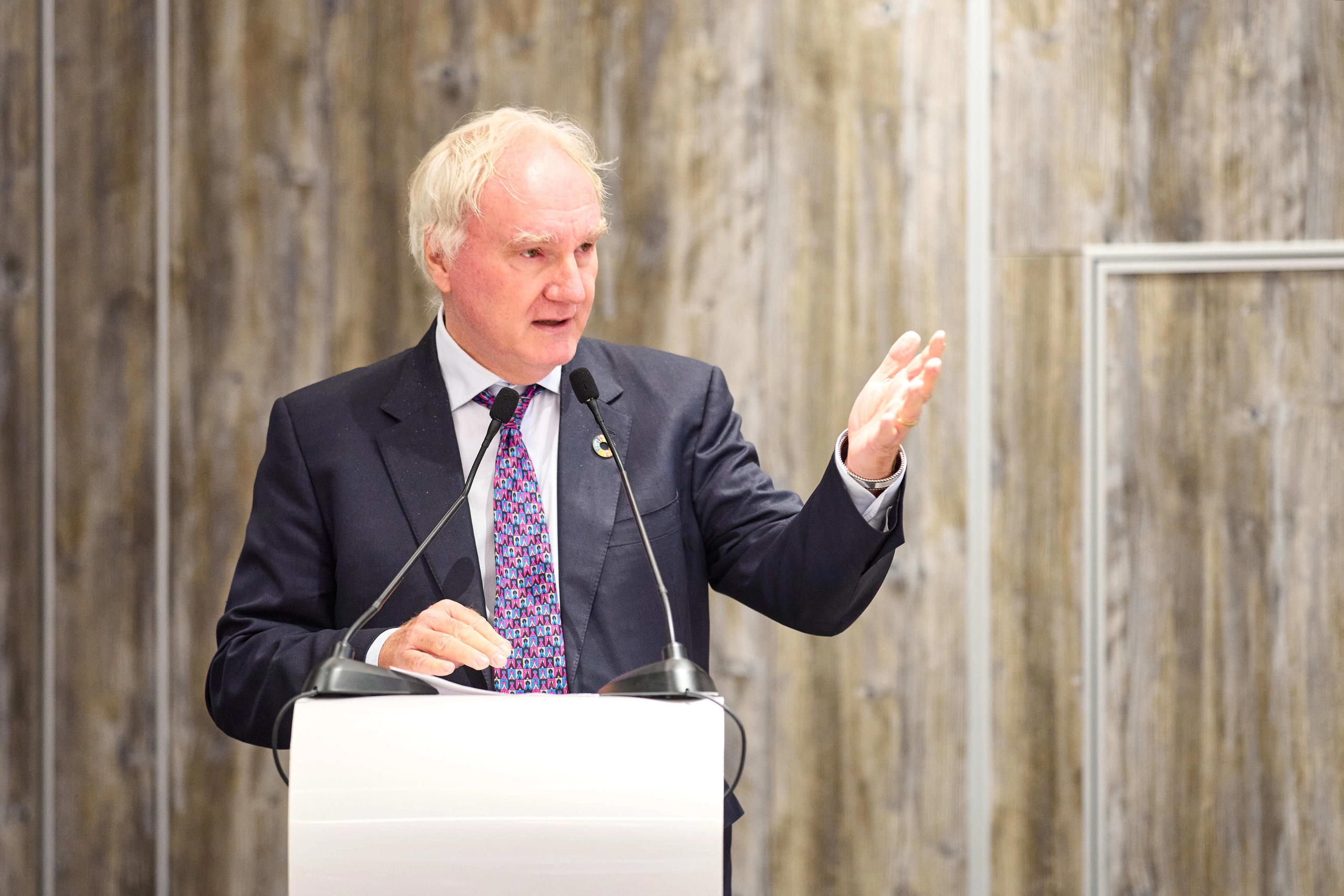
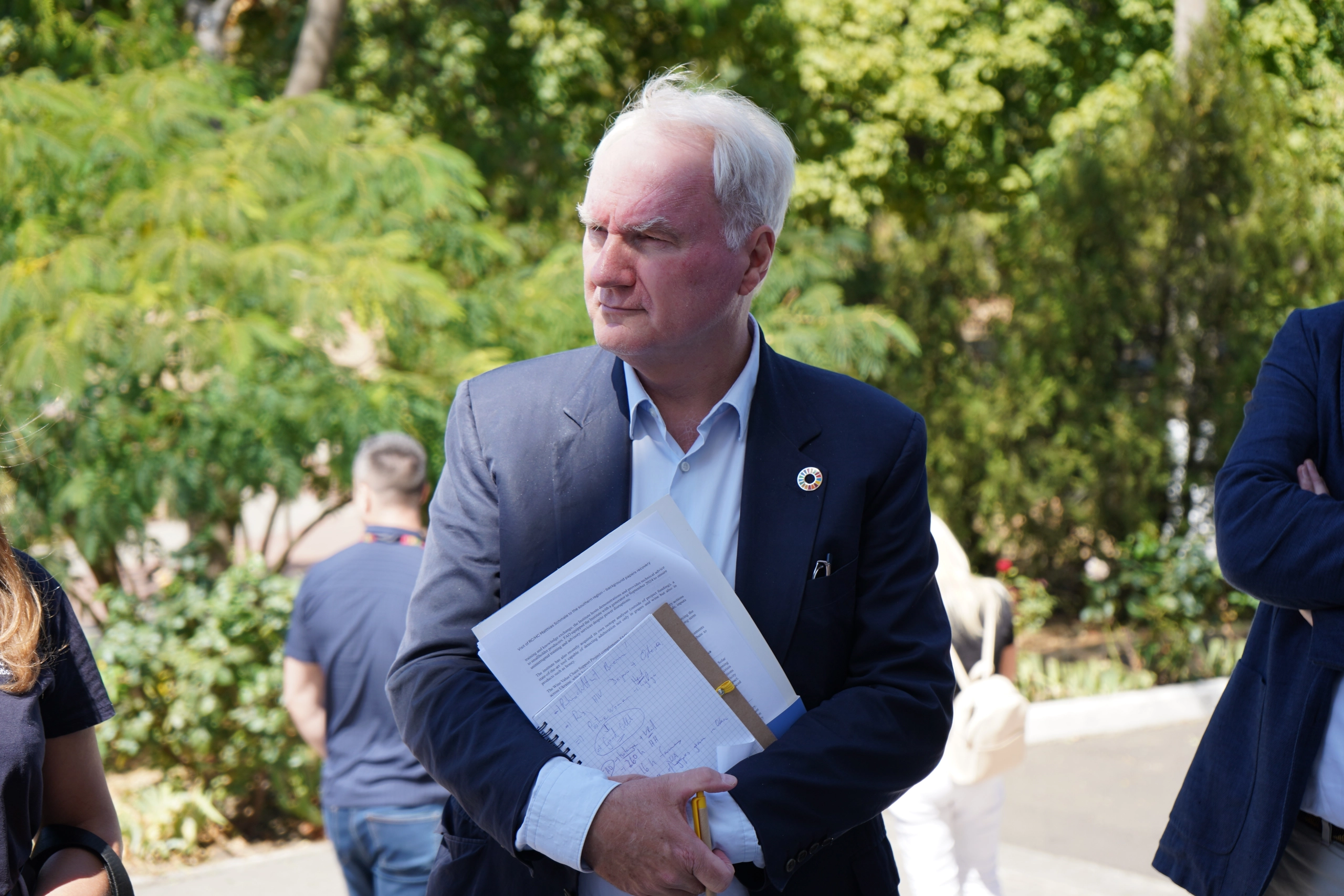
The total recovery budget required to implement the multi-year Cooperation Framework 2025-2029 stands at $4.36 billion. It’s time to take stock of activities that have taken place since Russia launched its full-scale invasion, in an interview with Matthias Schmale, assistant UN secretary-general, resident and humanitarian coordinator in Ukraine.
“How do you keep civilians and humanitarian workers safe in the middle of a war of drones?”
Ugo Poletti (UP): What has been the single greatest operational challenge to sustaining life-saving assistance across Ukraine?
Matthias Schmale (MS): I can mention two. The first is the technological nature of this war. I mean the drone attacks, etc. I’ve been in other situations where preserving the safety of not only the civilian population, but also humanitarian workers, has been a challenge. But not at this level of risk and fueled by technology as it is now. In Kherson, there had been daily attacks throughout 2025, and a lot of them were drones. So, that’s been the biggest challenge. How do we do this work safely?
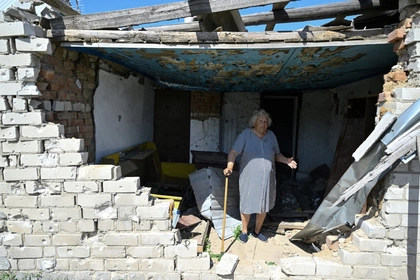
Global Community Calls for Urgent Evacuation from Oleshky as Conditions Deteriorate
The second element… is the weaponization of energy and the impact for thousands, if not millions of people living in cities. Most of our humanitarian response until recently has been focused on rural areas and small towns along the front line. We’ve supported IDPs [internally displaced persons] in cities like Dnipro, but the city itself was a humanitarian disaster. That’s a new “quality” – in inverted commas – of this war that really stands out. And I’m not sure anyone was quite prepared for a major crisis hitting cities. In 2025 alone, the UN reached more than five million people.
UP: How has your humanitarian work in Ukraine changes from the beginning of the war through these past four years?
MS: We have three key priorities… The first is responding to military strikes – the immediate response – which mainly happens through NGOs [non-governmental organizations]. That hasn’t really changed. A military strike with civilian impact has to be responded to and our fantastic network of NGOs supported by UN agencies has consistently done the best they could for four years now.
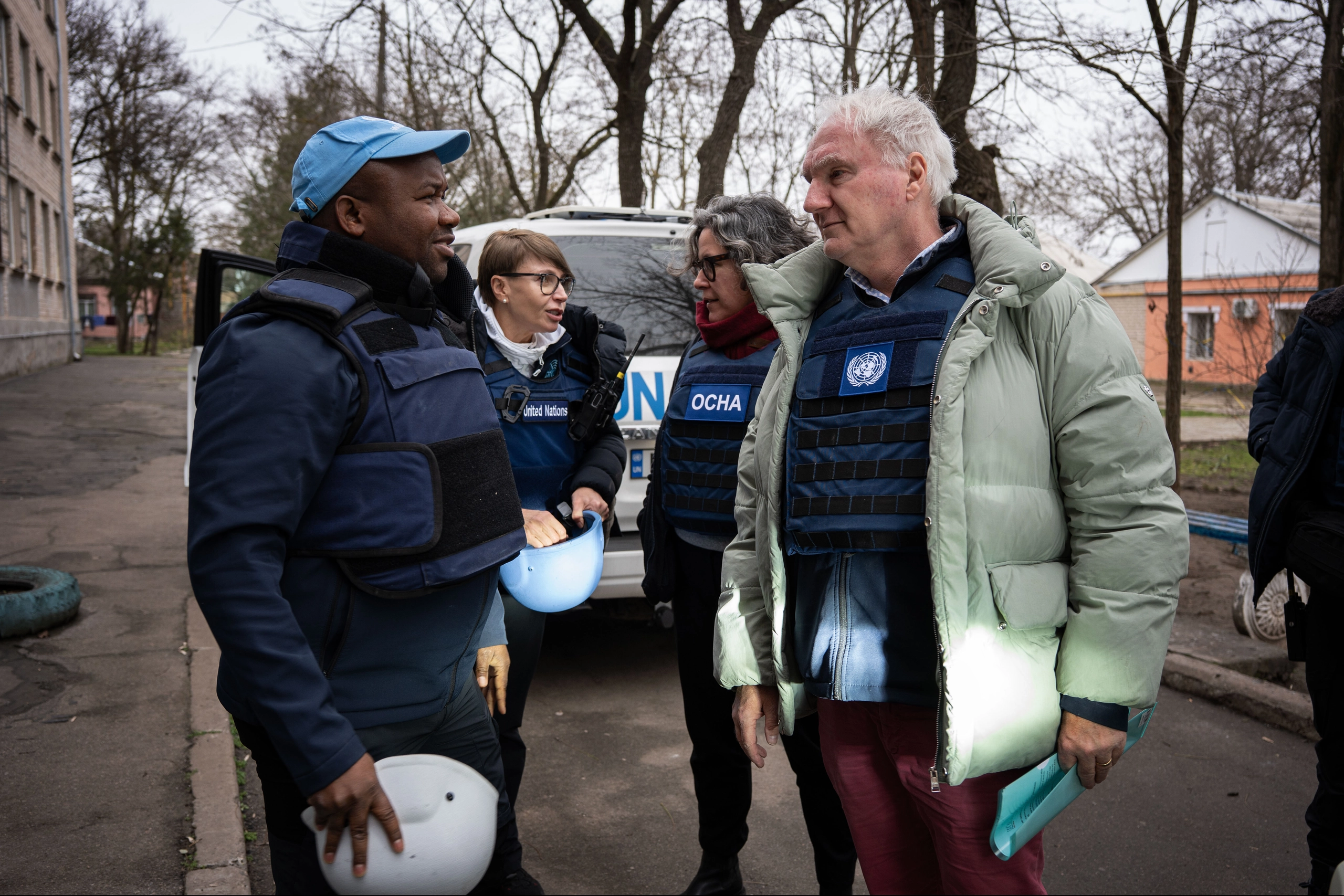
The second priority is providing a response along the front line for vulnerable people. That mainly involves organizing interagency convoys to bring vital goods to the front.
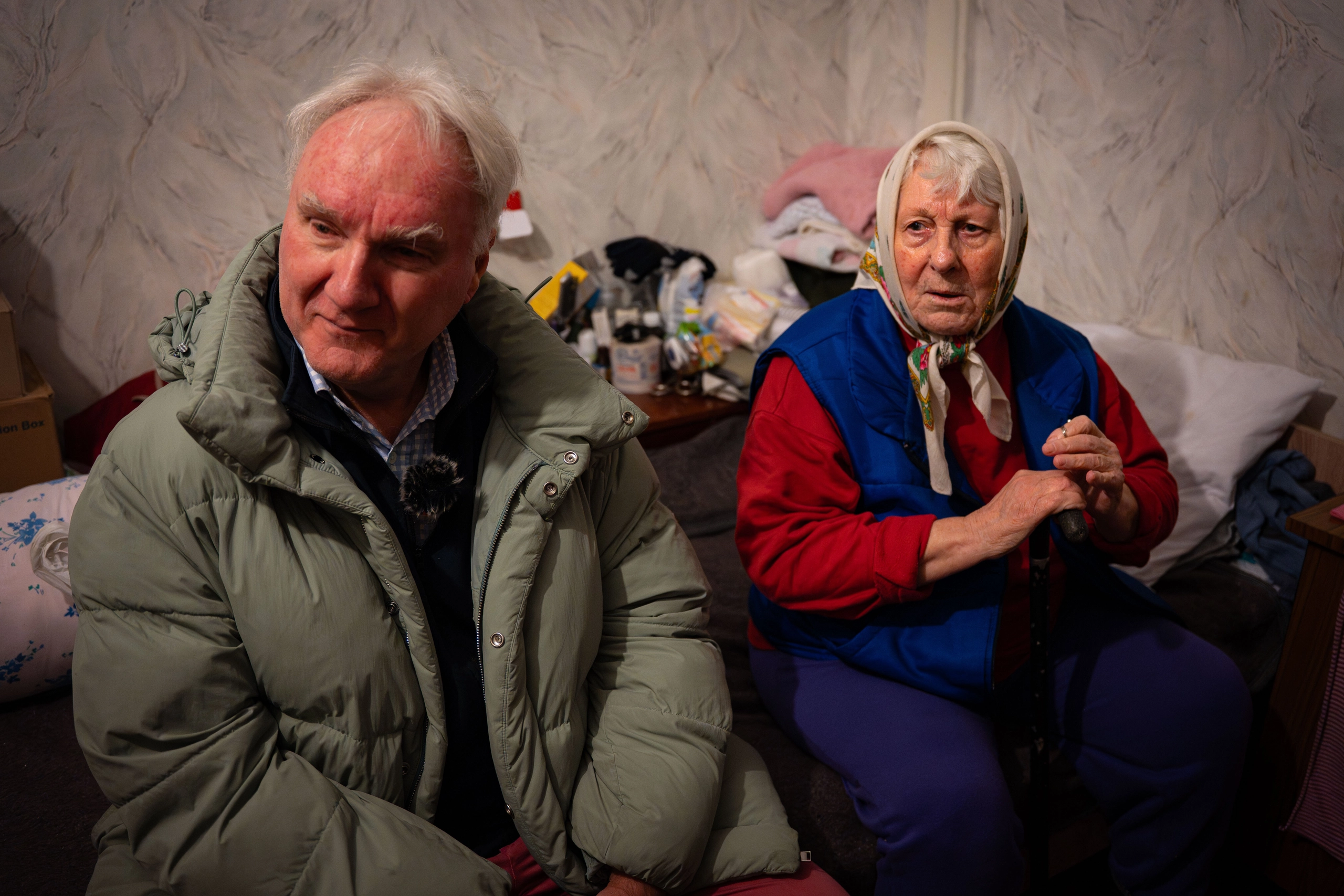
What changes over time is access. The changing nature of the war means we are sometimes unable to reach those communities we reached before. But the actual aid we do is the same.
The third priority is helping with evacuations. And that’s where we see a change. I think the longer this war lasts, the worse it is for people who have been sitting in pretty miserable conditions for two or even three years. You cannot help a vulnerable old lady or a man with limited mobility with humanitarian aid in the fourth year of war with a cash payment. What these people need, I think, is what we call in the UN a more durable solution – like proper housing, jobs and income.
Therefore, we have to shift from thinking that there’s a standard humanitarian solution to the problems the war is causing, to a more developed response or early recovery response. That’s the biggest change in what we’ve been doing so far with global humanitarian funding under pressure.
UP: How are recent funding cuts affecting operation in Ukraine? What gaps are you most concerned about in the months ahead?
MS: There are two main areas of worry for now. One is that we work with over 500 NGOs – over 400 of them are Ukrainian. And some of these NGOs delivering vital services are existentially impacted [by funding cuts], meaning that some have had to lay off huge numbers of staff. Some have even closed. And many of these NGOs provide small-scale – albeit vital – services to very vulnerable groups.
I’m thinking, for example, of victims and survivors of conflict-related sexual violence. Groups like that no longer have the support that we were able to provide in the past because of NGOs being so directly impacted. GBV [gender-based violence] is an example. LGBTQI communities are another example.
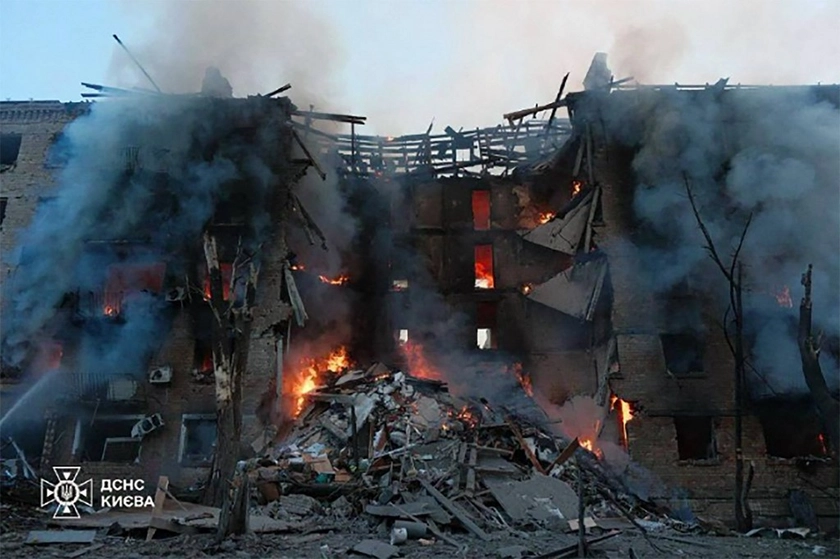
The second issue is that there are new needs emerging. One of the challenges we face now is damaged residential buildings and apartments. I’ve had to move from my own apartment because it was completely flooded due to broken pipes in the building – not in the apartment itself. So, the whole building is now empty because the apartments are inhabitable. We didn’t really plan for this.
How do you use the summer to help people repair their apartments and get back into their homes? We are used to doing it after strikes. A part of the support after military strikes is to help people repair their apartments – at least basic repairs to the windows. Now, I think 3,000 apartments in high rise buildings in Kyiv are uninhabitable. We did not plan for this kind of impact. Thousands of people in cities are having to repair their homes.
UP: How do you balance immediate life-saving interventions that you described, with longer term recovery projects like demining and rebuilding of infrastructure?
MS: I try to maintain a clear distinction, because most big donors make that same distinction. They have recovery pots and they have humanitarian funding pots. And I often say to donors, but also to my humanitarian colleagues, that we should not use shrinking humanitarian research resources for actions that are about early recovery. We should keep the limited humanitarian funding for the core lifesaving work.
“There is a distinction between early recovery (generators, water systems) and humanitarian aid (life-saving actions, evacuations).”
Generators, coal generation, gas, electricity equipment. That’s early recovery and not humanitarian. And if we use limited humanitarian funding for the infrastructure side, such as energy equipment and installations, we would not have humanitarian money for the first response after military strikes.
So that’s my appeal. Let’s keep the two things separate. And I actually think, as the current winter crisis shows, that there is more money available in early recovery budget lines than in humanitarian lines.
UP: And what about administrative service centers? Are they playing a key role in restoring public services? Why is strengthening local administrative capacity such an important component of humanitarian recovery efforts?
MS: You know, many of us are used to working in a place like Afghanistan that is a failed state. Or Somalia. But Ukraine is not a failed state. It’s a functioning state with functioning services. And its needs are huge.
So, I think the starting point has to be: What can the state do? What services can it provide, including humanitarian protection services? And where do we need to be complementary?Obviously the war has destroyed some of these capacities at a local level.
It makes perfect sense therefore through a humanitarian lens to say that if we want the state to continue functioning at all levels, and especially local levels, we need to also support re-establishing or strengthening the capacities at that level.
“Ukraine is not a failed state and has to continue functioning at all levels in order to support humanitarian aid.”
UP: Psychological trauma is one of the worst, least visible, but long-lasting impacts of the war. How has the UN designed long-term mental health and psychological support programs that go beyond immediate crisis intervention?
MS: I think the UN’s approach, and its colleagues working for the World Health Organization or UNICEF or UNPFA, is that their starting point is – what are the available state services and how can we strengthen those, including local health centers? The equivalent of a local administrative center is a local health center that we can build.
I think longer term psychological support, especially for vulnerable groups like conflict-related sexual violence survivors, has to happen in civil society. Place plays a key role there.So wherever we can, we are working with the government side to strengthen their mental health support capacity, but also – in a complementary way – civil society.
UP: Monitoring civilian casualties and documenting human rights violations are sensitive yet essential tasks. How does the UN maintain impartiality and credibility in this work amid active conflict?
MS: Thank you for asking that question because I cannot stress enough that our work is not just about providing humanitarian aid and recovery support, but human rights work.
We have 60 or 70 human rights monitors – UN monitors whose main job, exactly as your question implies, is to really document war. That includes perceived or alleged war crimes as a basis for future accountability. Impartiality here means that we very much verify the facts ourselves. Our human rights monitors will be alerted by authorities and others to kill cases.
But impartiality demands that we independently verify the facts. And sometimes this leads to tension because – understandably – people who have experienced violations, you know, will not always understand, like in any crime, that it is important to verify the effects objectively and independently. So that for me is the main tool, and we have experts who know how to capture and document such cases and do so independently, both from the survivors and victims as well as the authorities.
UP: Finally, I would like to revert back to the concept that Ukraine is not a failed state. How would you describe the level of cooperation with Ukrainian national and local authorities, civil society and similar organizations?
MS: There are different elements to this. First, it’s about security. Wherever we work, it is the responsibility of the host government at all levels to provide security. We would not be able to do our work near the front line, as I mentioned earlier, if there wasn’t security provided by the state. We really depend on security support or an enabling security environment.
The second element is the role of the authorities – they have functioning systems and know where the vulnerable people are. Helping to identify those we should support is – in most cases – government led. Sometimes, we do our own impartial verification, like I just described for human rights violations. But I think the state, as a functioning state, plays a key role in letting us know where to reach vulnerable people in need of support.
The third element is local coordination. We have our own coordination mechanism – the so-called humanitarian country team – along with the UN country team. But, we cannot work here without coordinating our work with the authorities. And I think there are good attempts by the authorities to coordinate.
Let me give you a specific example. In the current crisis in cities, the Ministry of Energy and Ministry of Development has formed a joint task force to coordinate requests for energy equipment and to make sure that whatever support is given reaches the right places, including at local levels. So, I think in an ideal situation, coordination comes from the authorities. Of course, in conditions of war they cannot do everything, and they cannot do it perfectly, but they can provide a lot of coordination support.
You can also highlight the text and press Ctrl + Enter