Ukraine’s economy shrank -0.5% in the first quarter of 2026 compared to the same period a year earlier, according to a flash real GDP estimate published by the State Statistics Service of Ukraine on May 5.
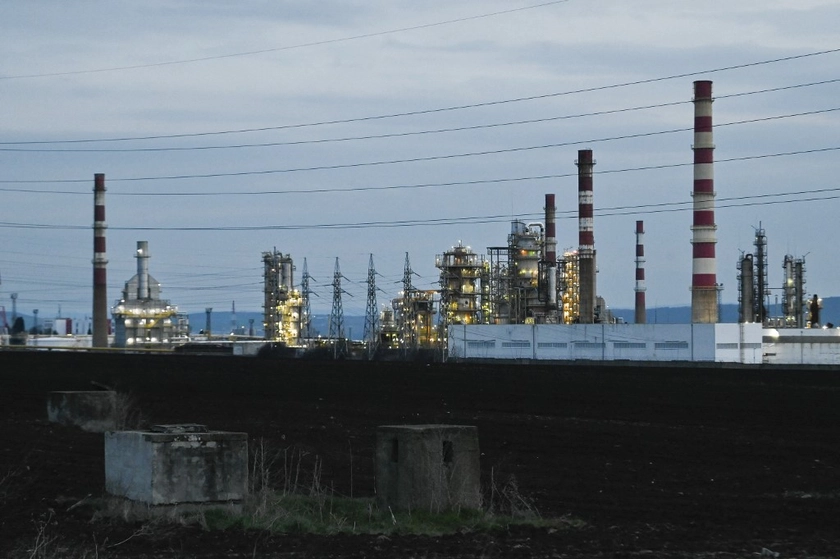
Russian bombardment of energy infrastructure has begun showing up in baseline economic figures, dragging output into modest negative territory.
JOIN US ON TELEGRAM
Follow our coverage of the war on the @Kyivpost_official.
On a seasonally adjusted quarter-on-quarter basis, real GDP fell 0.7% from the fourth quarter of 2025, the agency wrote. Full preliminary Q1 2026 figures are due in June 2026.
The contraction marks a reversal from the recovery momentum Ukraine had posted through much of 2024 and 2025.
Russian attacks on energy and logistics infrastructure, an unusually cold winter, and delays in foreign aid weighed on economic activity, Ukraine’s central bank, the National Bank of Ukraine (NBU) wrote in its 2026 April Inflation Report. Restrained fiscal policy, linked to delays in external financing, also weighed on the economy, NBU wrote.
The NBU downgraded its 2026 GDP growth forecast to 1.3%, citing weaker first-quarter results, the still fragile condition of the energy system, and the accumulating economic fallout from the war in the Middle East.
Russia’s strikes decreased economic performance of electricity generation and transport sectors, Oleksandra Betliy, the Institute for Economic Research and Policy Consulting (IER) leading research fellow, told Kyiv Post.

Poland Warns Ukraine: No EU Entry ‘With Bandera’
“The first sector to suffer a significant decline was electricity generation. At times, transmission was also disrupted due to damage. The second sector that has suffered a severe decline is transportation due to heavy strikes on Ukrzaliznytsia. Especially on locomotives and ports, which results in businesses finding it harder to transport their production,” Betliy said.
But mining, trade and agriculture’s economic performance still rose during the first quarter, she added.
The NBU expects growth to accelerate to 2.8%-3.7% in 2027-2028 as economic conditions gradually normalize and geopolitical tensions ease. The recovery is projected to be driven by resilient consumer demand, stronger investment activity, energy system restoration, and larger harvests.
You can also highlight the text and press Ctrl + Enter

Russian Economy 'in Dead End' as War Costs Devour Budget
Baltic States Urge EU to Accelerate Russian Oil Ban