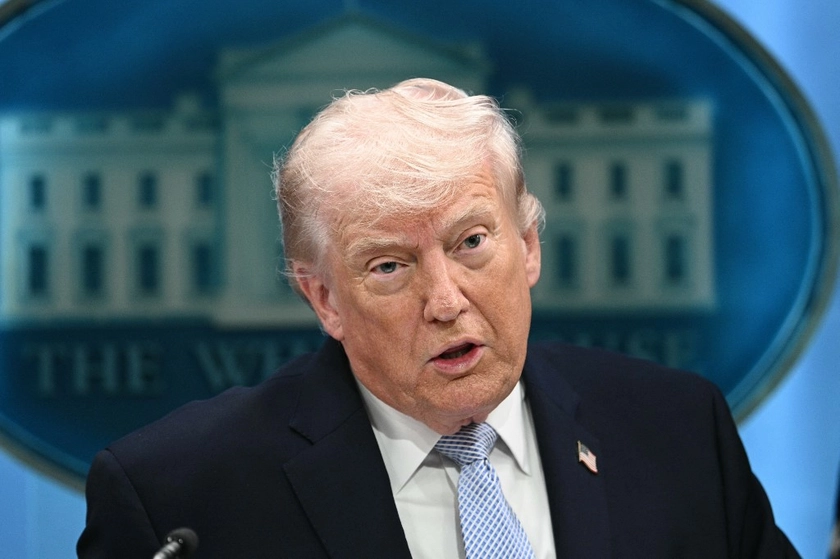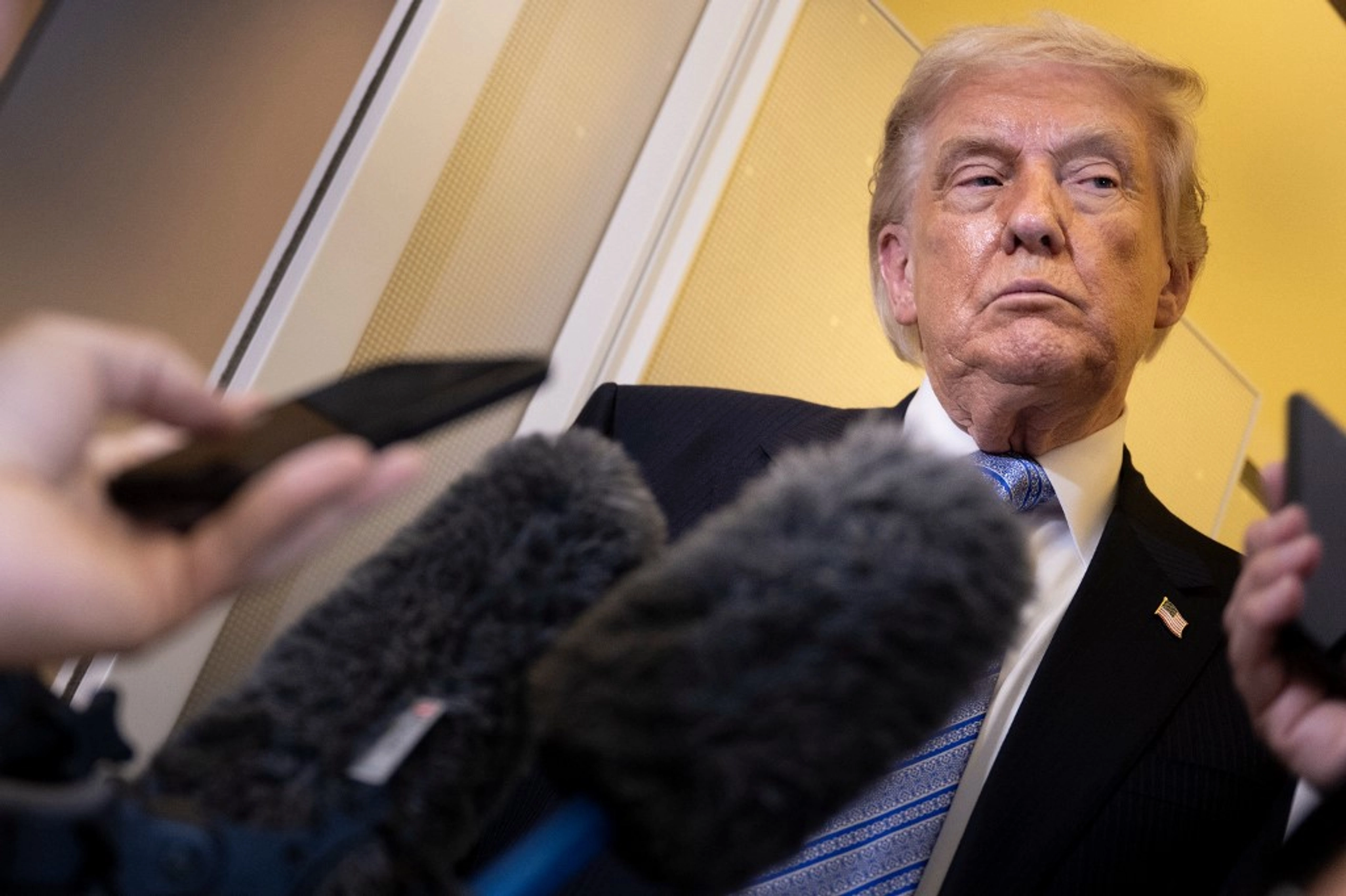
US President Donald Trump has issued a blunt warning to the Iranian leadership, stating that the Islamic Republic faces severe consequences if it walks away from a proposed permanent peace treaty with Washington.
In an interview broadcast on the French television network BFMTV, Trump expressed deep skepticism about the immediate future of backchannel diplomacy but made it clear that the alternative for Tehran would be devastating.
JOIN US ON TELEGRAM
Follow our coverage of the war on the @Kyivpost_official.
The Trump ultimatum
Addressing the deadlocked negotiations, Trump emphasized that the window for a diplomatic resolution is closing:
“I have no idea if they’re going to do it. If not, they’re going to have very tough times, very tough times. They’d better make a deal,” Trump declared.
The rhetoric marks a significant sharpening of Washington’s stance while intermediaries in Islamabad, Pakistan, attempt to formalize a 14-point memorandum of understanding. The current draft asks Iran to relax its military stranglehold on the Strait of Hormuz and relocate its highly enriched uranium stocks abroad in exchange for a 30-day easing of the US naval blockade.
However, Trump’s remarks indicate that the White House is growing impatient with Tehran’s hesitation, particularly after the Islamic Revolutionary Guard Corps (IRGC) threatened large-scale missile strikes on American regional bases following the US Navy’s interception of two blockaded Iranian oil tankers.
US Congress Can Make Russia Pay for Its War Crimes
The surging bill of conflict
The push to force a resolution is also driven by the escalating financial burden of the war on the American taxpayer. According to the latest budgetary assessments released by the Pentagon, the conflict has now cost the US a staggering $29 billion.
This updated figure represents a sharp $4 billion increase from the $25 billion estimate presented by Defense Secretary Pete Hegseth during a congressional hearing just two weeks prior, underscoring the high operational costs of maintaining massive naval and aerial deployments in the Persian Gulf.
Escalation frameworks ready
Should Trump’s warning materialize into a total collapse of talks, the Pentagon has already finalized a multi-tiered offensive template under an active “escalation plan”. The suspended joint US-Israeli air campaign could be reactivated as early as next week under a revamped operational mandate, utilizing hundreds of combat aircraft and two active Carrier Strike Groups staged in the region.
Advanced contingency scripts include a high-risk special forces raid to physically seize nuclear materials at the hardened Isfahan facility, alongside an amphibious assault by US Marines to capture Kharg Island, the main bottleneck for Iran’s maritime oil exports.
Planners are rushing these frameworks because classified intelligence reveals Iran has successfully restored 30 out of 33 missile launchpad positions along the Strait of Hormuz, retaining 70% of its ballistic inventory despite earlier White House claims that Tehran’s military had been completely decimated.
US Secretary of State Marco Rubio noted that Washington is aggressively pushing for a clear diplomatic solution because American military resources are finite and must be balanced with critical parallel security priorities.
Trump’s public ultimatum serves to notify Tehran that Washington is prepared to deploy the full weight of its $29 billion war machine if a diplomatic exit is rejected.
You can also highlight the text and press Ctrl + Enter