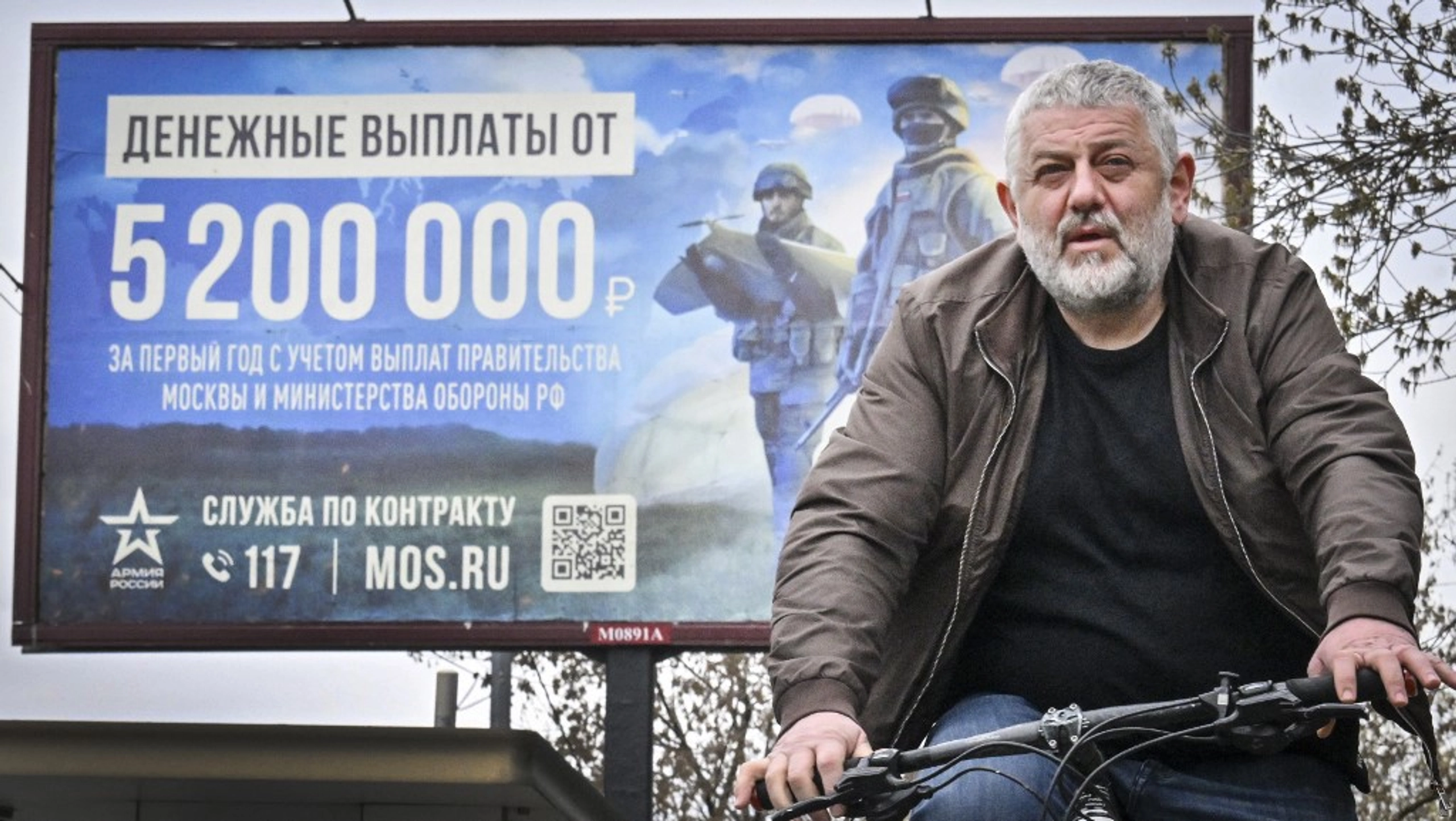
A new mobilization may be announced in Russia this fall due to the dire situation at the front, the failure of the winter-spring offensive, and heavy losses, said Andrei Gurulev, a Duma deputy and former member of the Defense and Security Committee.
“Right now, behind the scenes and in high offices, there is active discussion about the need for a new large-scale mobilization,” he wrote on Telegram.
JOIN US ON TELEGRAM
Follow our coverage of the war on the @Kyivpost_official.
“Informed people say that a fundamental decision on this matter has already been made, and it will take place this fall,” Gurulev added.
According to him, Russia’s winter-spring campaign has not produced the results “we all expected.”
“It is early summer, and the advance has essentially stalled. The Special Military Operation (SMO) has finally turned into a brutal stalemate,” the Duma member wrote.
He argued that such a decision, however, “will not lead to a breakthrough” unless the issue of Ukrainian Armed Forces (AFU) drones is addressed. According to him, drones are “taking apart infantry” on the approaches, preventing assault groups from “raising their heads” and “literally overwhelming” both the front line and the immediate rear.
“People are needed at the front, but let’s be honest: if we simply recruit men and send them to the front lines without solving the problem of enemy drones, it will not lead to any breakthrough. We will simply see a multiple increase in casualties.”
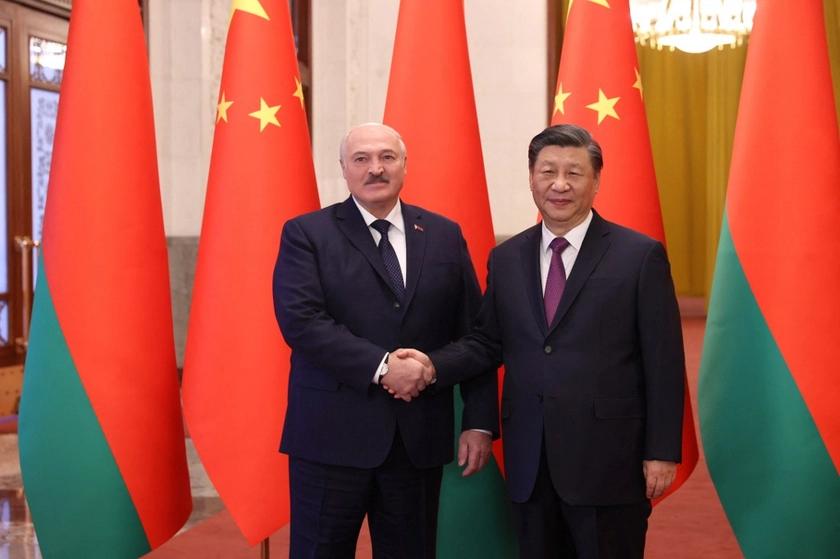
Xi Meets Putin Ally Lukashenko in Beijing After Talks With Kremlin
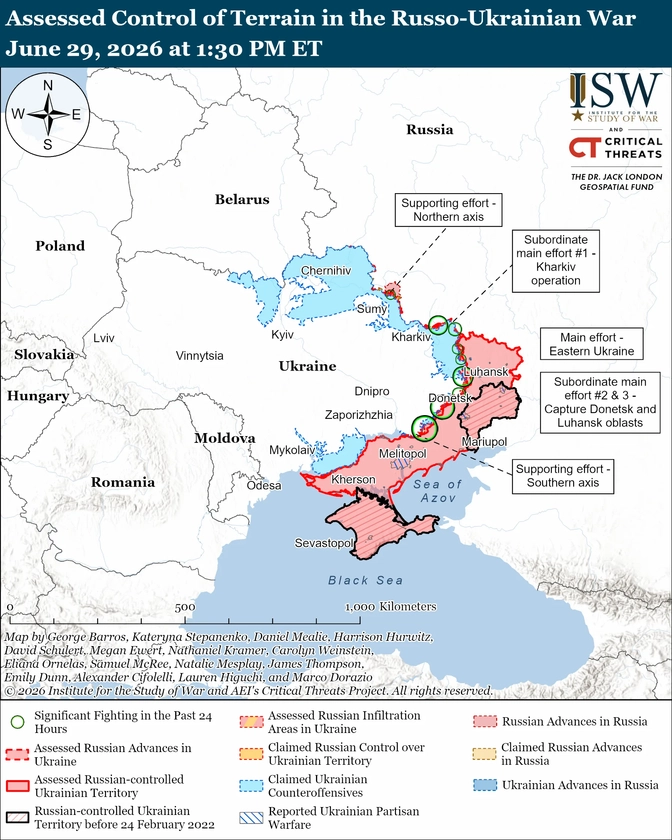
Gurulev also drew attention to the situation in Crimea, where a fuel shortage has emerged, as well as drone attacks on the occupier-named “Novorossiya highway,” which serves as a key supply route to the peninsula.
“Some people think Crimea is just a resort. No. Today, it is a frontline region, and approaches to ensuring its security must be strict and military-based,” he wrote.
“The enemy is acting brazenly, trying to cut off the peninsula and our southern groups from fuel supplies,” Gurulev wrote.
He said that Russia must restructure its governance and “hold those responsible for failures on the Novorossiya highway accountable so that others do not even think of neglecting such issues.”
“If we want to win, we need to make decisions and strictly implement them. But this is not happening yet. And this has been going on for years, which means, unfortunately, things will only get worse,” Gurulev concluded.
The London-based International Institute for Strategic Studies (IISS) previously wrote about the possibility of a new mobilization in Russia.
In its report, “The Coming Crisis in Russia’s Political Economy,” it noted that current funding for military operations and replenishment of forces fighting in Ukraine is close to exhaustion, and that the Kremlin faces a “fundamental choice” – either scale back its military ambitions or significantly increase demands on the economy and society.
The second option, according to the IISS, could include renewed mobilization, border closures, restrictions on labor mobility (including forced employment in defense industry businesses), and a shift toward a “fully militarized economy” with greater state ownership and price controls.
In February, experts from the US-based Institute for the Study of War (ISW) wrote that the Kremlin may be preparing society for a new “partial mobilization.”
They pointed to new laws adopted late last year on the use of reservists and year-round conscription as possible indicators of such preparations.
They also noted that internet and messaging app restrictions could signal preparations for tighter domestic control, as increased censorship may be used to suppress public discontent.
Meanwhile, Andriy Yusov, a representative of Ukraine’s Defense Intelligence (HUR), said that mobilization in Russia continues without interruption, but its scale is no longer sufficient to compensate for losses.
At the “Security Architecture” forum on Monday, June 1, Yusov said:
“Recruitment and mobilization efforts in Russia have not stopped throughout the full-scale invasion and are still ongoing. Alongside attempts to recruit foreign mercenaries, Russia is also increasing these efforts. Why do they need new people? It is logical: losses must be compensated for, and current recruitment barely covers them.”
Yusov added that this is an additional challenge for the Kremlin and the Russian military, which are searching for solutions.
“And it is no longer enough to simply mobilize prisoners or penal units. The crisis for Putin is deepening, and it is clear that they will take additional measures,” he said
Following a Ukrainian General Staff meeting in late May, President Volodymyr Zelensky said Ukraine had taken note of Russia’s plans to mobilize 100,000 troops and would reinforce its own forces in the Chernihiv-Kyiv sector.
Zelensky said Ukraine currently assesses that Russia does not yet have the capacity to conduct a covert mobilization on such a scale. Instead, Moscow may resort to “political decisions of a different format,” including steps similar to its recent actions involving Moldova’s Transnistria region.
Zelensky also said Ukraine is preparing to expand its long-range strike campaign against targets inside Russia, describing such attacks as “long-range sanctions” that have already helped reduce Moscow’s ability to sustain the war.
“Ukraine will definitely defend itself,” he said, adding that Kyiv’s priority is to strengthen the country’s defenses and prevent any of the Kremlin’s potential scenarios for expanding the war through northern Ukraine.
In late May, Russian citizens increasingly reported receiving so-called “mobilization orders” after visits to military enlistment offices.
Search data cited by The Moscow Times, along with legal and human rights groups, points to a sharp rise in concern over the practice in recent months.
Google Trends showed a surge in searches for “mobilization orders” beginning in late March, peaking in early April.
Queries such as “mobilization order inserted,” “how long is a mobilization order valid,” and “red mobilization order” became breakout searches. Yandex recorded an even sharper rise, with searches increasing from under 10,000 in January to around 40,000 in April.
A mobilization order is an official document issued by local draft commissions and attached to a military ID booklet. It outlines instructions for reservists in case of nationwide mobilization, including reporting locations, documents, and unit assignments. While it does not imply immediate deployment, it places individuals in a pool that can be rapidly activated.
The anti-conscription project “Call to Conscience” said in April that reservists were increasingly summoned under the pretext of “updating military records,” with some allegedly pressured into accepting mobilization orders, joining reserve units, or signing contracts.
Local authorities have also begun publishing notices. In March, officials in Novoromanovo in the Altai region released lists ordering men with military IDs to appear for mobilization orders. Similar reports followed in Novosibirsk and the Chelyabinsk region.
You can also highlight the text and press Ctrl + Enter

Russia Hit by 660-Drone Overnight Barrage Targeting Moscow, Crimea and Key Military Sites