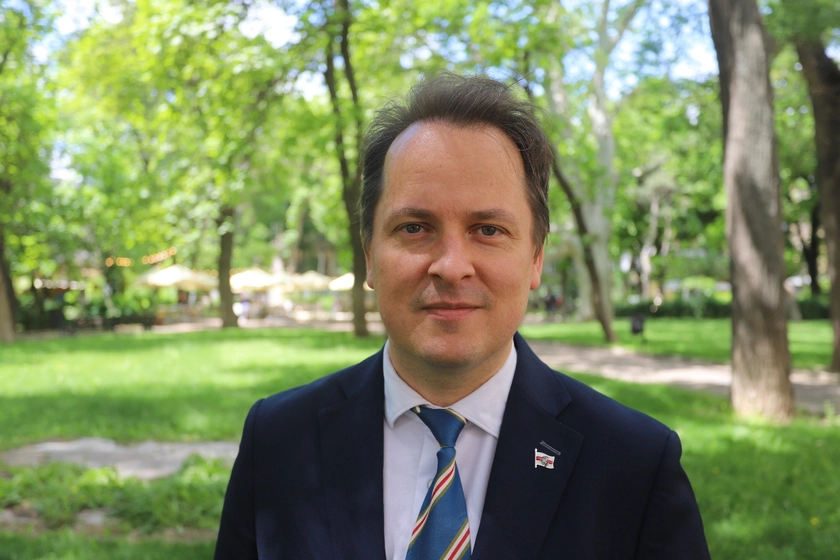
Daniil Chebykin is a Yerevan-based Russian regional political activist sought by the Russian government as an “extremist” and “terrorist.” He founded the Omsk Civic Association, which advocates regionalism and opposes the war.
He is also involved in ”Tvyordy Znak,” a project conceived in Armenia by deserter Vladimir Berngardt, which helps Russian soldiers avoid mobilization or leave the military after reaching the front.
JOIN US ON TELEGRAM
Follow our coverage of the war on the @Kyivpost_official.
Kyiv Post spoke to him about Russia’s war on Ukraine, desertion, and Russia’s threats to Armenia.
Kyiv Post: How do you believe the war affects the ordinary Russian today?
Daniil Chebykin: By 2026, it has become impossible to ignore the war, even in places thousands of kilometers from Ukraine.
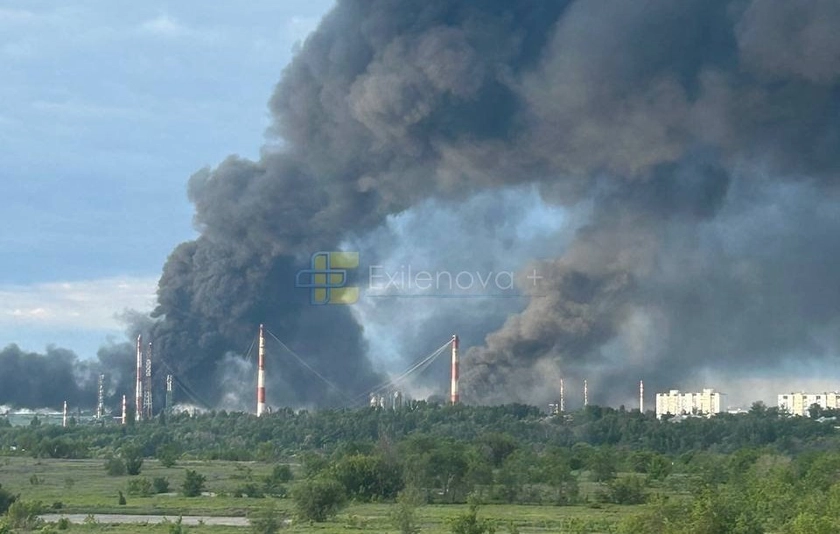
I’m from Omsk, a city more than 3,000 kilometers (1,864 miles) from the Ukrainian border. Yet the war is increasingly shaping everyday life there. Authorities regularly justify restrictions by citing security concerns. Internet access is shut down under the pretext of drone threats, even though no Ukrainian drones have ever reached Omsk. Civilian drone use has been heavily restricted, and workers at major industrial facilities face new limitations.
What has changed is that the state increasingly intrudes into those lives.
At Omsk’s oil refinery, for example, employees – more than 15,000 people – are reportedly prohibited from bringing GPS-enabled devices onto the premises. That effectively means modern smartphones and fitness trackers are banned. Tens of thousands of people are being pushed back to basic phones.
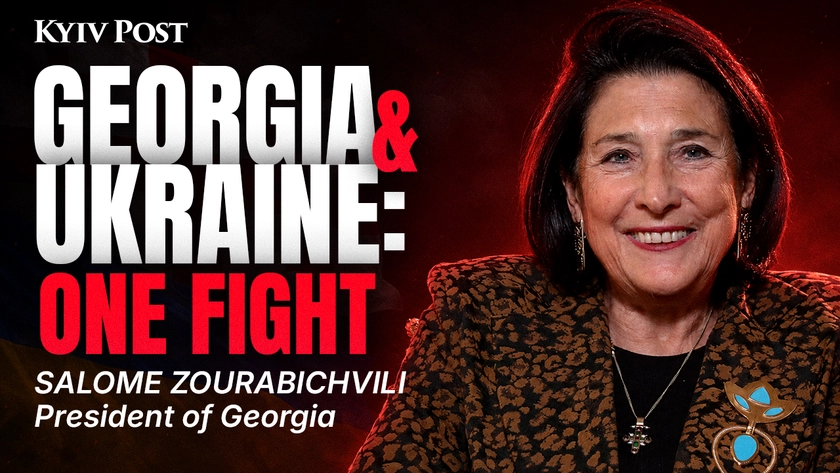
President of Georgia on Protests, Security in the Black Sea Region, and the Country’s Prospects
Officially, these measures are about security. But many people increasingly see them as part of a broader effort to consolidate political control.
Yet Putin’s approval ratings remain high.
I agree that the authorities are probably inflating Putin’s approval ratings. Nevertheless, I do believe his personal rating remains genuinely high. At the same time, I think support for the war itself is significantly lower than often portrayed.
There is a segment of society that genuinely supports the war and consumes state propaganda. But much of the population is indifferent rather than enthusiastic. People adapt to the situation, keep their opinions to themselves, and try to live their lives.
What has changed is that the state increasingly intrudes into those lives. Independent information is becoming harder to access. Most major social media platforms require VPNs, and the government is actively targeting VPN services.
So far, dissatisfaction has not translated into mass protests. Russia’s repressive environment makes that difficult. But I believe these policies are gradually eroding support for the ruling party, even if many people remain reluctant to challenge Putin directly.
Are key social media platforms truly inaccessible to ordinary people?
Only through VPN unless it’s Russia’s native MAX and Vkontakte. Otherwise, Telegram was blocked recently. Instagram was blocked long ago. X, Facebook, and YouTube are also restricted.
Some services are not formally banned but deliberately slowed down. YouTube, for example, has reportedly been throttled to around 128 kilobits per second. Technically, the website still works, but in practice it is impossible to watch videos.
You’ve fled conscription yourself. Is desertion becoming a significant phenomenon?
Absolutely.
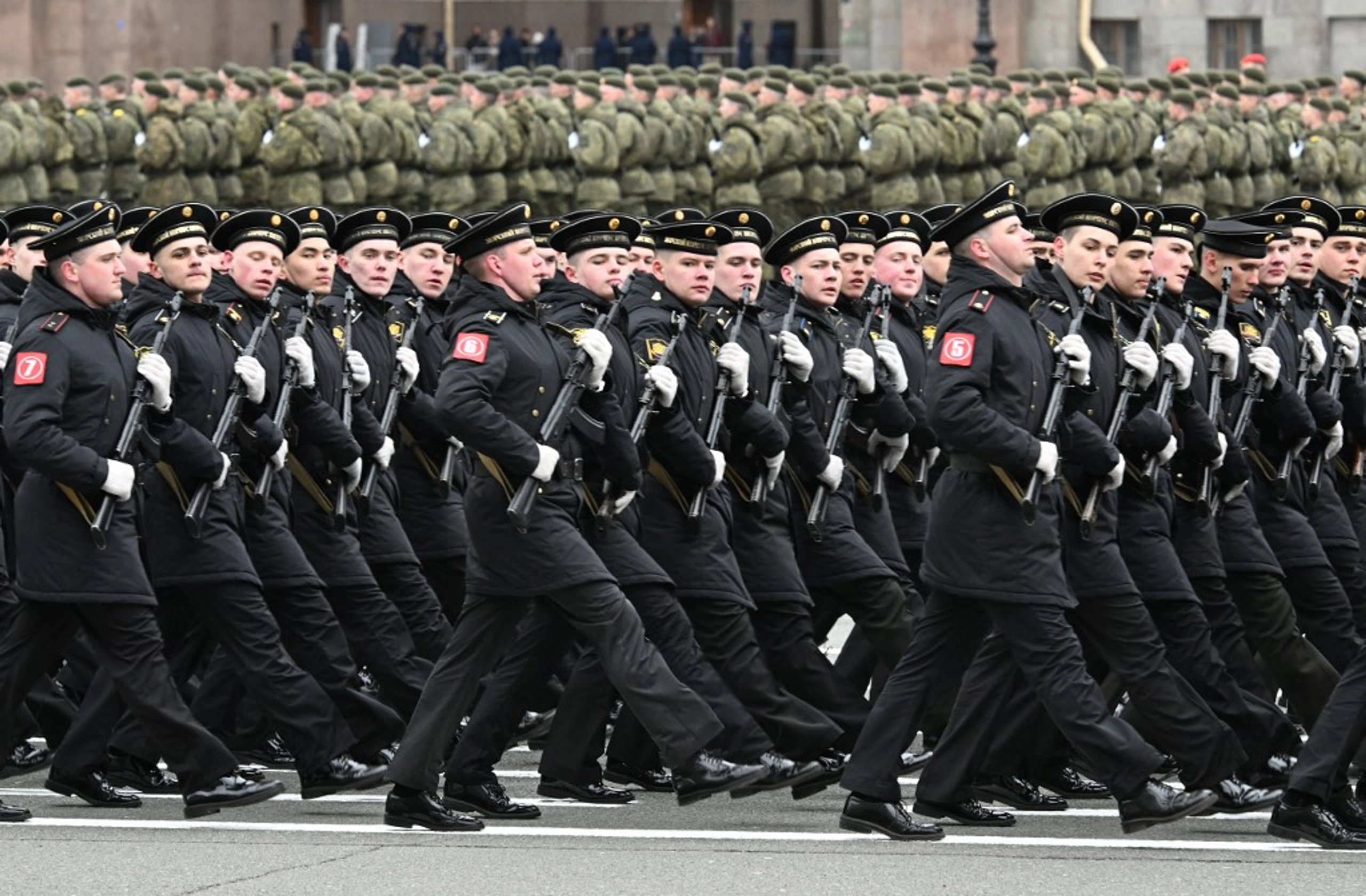
When we launched our anti-mobilization hotline in 2022, most inquiries came from people trying to avoid being drafted. By 2026, the picture has changed dramatically. We now hear from many soldiers who have already reached the front and want to leave.
The exact number of deserters is impossible to determine, but estimates range from roughly 300,000 to 800,000 people. Some individuals have deserted more than once after being caught and returned to military service, which complicates the statistics.
Recruits are often encouraged to sign contracts that promise higher pay, but inflation has eroded much of the financial incentive.
Even a relatively small organization like Tvyordy Znak currently receives more than 200 requests every day. And there are multiple groups working in this space, including Idite Lesom, Stoparmy, and others.
Many deserters fall into two broad categories. The first are mobilized soldiers who initially supported the war or accepted official narratives but changed their views after experiencing it firsthand. The second are younger conscripts caught in what increasingly resembles a system of permanent mobilization.
Draft notices now trigger immediate restrictions on daily life, including limits on travel and access to certain services. Recruits are often encouraged to sign contracts that promise higher pay, but inflation has eroded much of the financial incentive, while casualty rates remain high. In fact, the average survival time for newly contracted soldiers can be extremely short.
Many people eventually conclude that escaping the system is preferable to fighting in the war.
You have compared today’s war to World War I rather than World War II. Why?
DC: During World War II, the Soviet Union was fighting a defensive war. Today’s situation is fundamentally different.
The closer historical parallel, in my view, is World War I. As that conflict dragged on, increasing numbers of Russian soldiers concluded they were dying for goals that had little to do with their own interests. Entire units deserted. Eventually, the military structure itself began to collapse, and the military’s collapse contributed to the revolutionary events of 1917.
I’m not claiming history will repeat itself exactly. But many Russian soldiers today are reaching similar conclusions. They increasingly understand that they are not fighting Nazis and that they are not defending Russia from NATO. They see how they are treated by their own commanders and begin questioning why they are there at all.
That is why I believe desertion has become one of the most important forms of anti-war resistance available inside Russia.
What do you think motivates Putin to continue the war despite the costs?
I don’t think Putin operates according to a coherent long-term strategy. He operates like a tsar.
His primary objective is to preserve power. That approach worked after the annexation of Crimea, when his popularity surged. I suspect he expected the full-scale invasion to produce a similar result.
Instead, he miscalculated.
Since then, many decisions have appeared reactive rather than strategic. Mobilization, for example, looked less like part of a grand plan and more like an attempt to solve an immediate military problem.
The contradiction becomes particularly obvious when discussing demographics. Russia faces a serious demographic decline, yet the state continues pursuing policies that consume enormous human resources.
But even if millions of children were born tomorrow, they would not become adults for another 20 years.
Economically, the consequences are already visible. Military spending distorts the economy, technological development slows, and Russia falls further behind advanced economies. Yet none of this appears to alter the Kremlin’s course.
If we try to imagine a genuine long-term plan, the picture becomes even less clear. Ukraine’s capabilities continue to expand. Long-range drones and missiles are becoming more sophisticated. Attacks on energy infrastructure continue. So what exactly is the endgame?From a rational standpoint, the logical course would be to acknowledge the mistake, halt military operations, stop mobilization, and begin dismantling the machinery of repression. Instead, the government talks about demographic decline and then proposes measures such as restricting abortion and encouraging higher birth rates.
But even if millions of children were born tomorrow, they would not become adults for another 20 years.
What about propaganda? It has moved far beyond television and increasingly targets children through schools.
That’s one of the most serious challenges Russia faces.
The state promotes a highly ideological version of history through textbooks, mandatory patriotic lessons, and visits by veterans. In some ways, the scale of historical distortion is extraordinary.
It is a kind of ideological Frankenstein's monster.
But I also think there are limits to how effective this system can be.
Soviet ideology, whatever its flaws, offered a coherent worldview and a vision of the future. Today’s propaganda is much less consistent. One day it invokes the Soviet Union, the next the Russian Empire, then Orthodoxy, nationalism, anti-Western rhetoric, or something else entirely.
It is a kind of ideological Frankenstein’s monster.
The Soviet Union at least promised a future – communism, prosperity, equality, however unrealistic those promises may have been. Today’s system struggles to articulate any comparable vision.
That is why I remain cautiously optimistic. Many young people continue looking for alternative sources of information and finding ways around restrictions. Reality often proves more persuasive than propaganda.
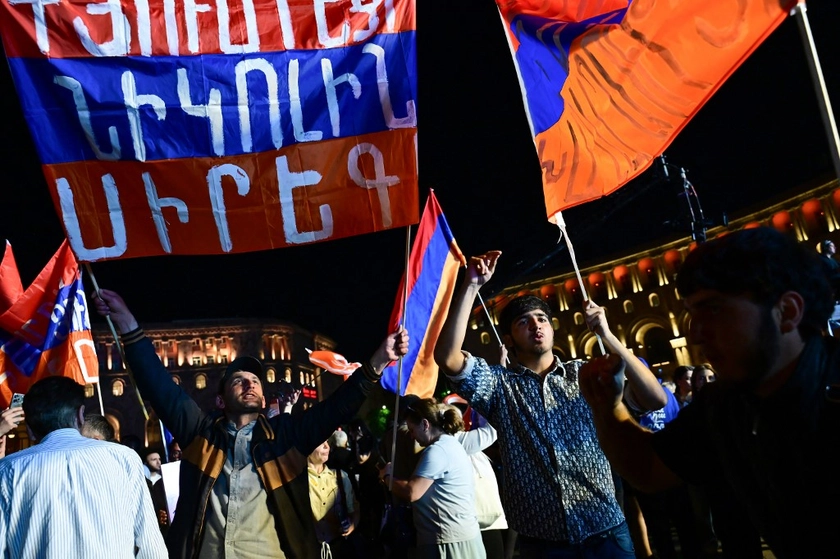
You now live in Armenia. How do Armenians view Russia at the moment?
There has been a profound shift since 2022.
Many Armenians increasingly view Russia as an unreliable ally, largely because of Moscow’s role during the Nagorno-Karabakh conflict and its broader relationship with Azerbaijan. As a result, support for closer ties with Europe has grown significantly.
Armenia’s future relationship with the EU remains uncertain, but the aspiration for greater European integration is clearly stronger than it was a few years ago.
What I find particularly revealing is the rhetoric coming from Moscow. Russian officials increasingly warn that Armenia could face an “Ukrainian scenario” if it continues moving closer to Europe.
To me, that exposes the real logic behind Russia’s policy.
For years, the Kremlin justified its actions in Ukraine through rhetoric about “denazification” and “demilitarization.” Yet similar warnings are now directed at Armenia, a country nobody seriously accuses of Nazism or militarism.
The real issue, in my view, is not ideology. It is that neighboring countries are choosing political paths independent of Moscow.
That is what the Kremlin finds unacceptable.
You can also highlight the text and press Ctrl + Enter