With parliamentary elections this Sunday, Armenia is entering a decisive phase that could shift its geopolitical trajectory, ease conflict and help soothe relations with regional neighbours.
In the streets of Yerevan, campaign posters from 18 parties and alliances compete for visibility. Those of incumbent Prime Minister Nikol Pashinyan, depicted forming a heart with his hands, are among the most prominent in the capital.
JOIN US ON TELEGRAM
Follow our coverage of the war on the @Kyivpost_official.
In office since 2018, Pashinyan is currently leading in the polls with about 32% of the vote.
This election will test whether he can secure a parliamentary majority strong enough to implement constitutional reforms, including concluding a peace agreement with Azerbaijan and normalising relations with Turkey, while continuing a gradual rapprochement with the EU.
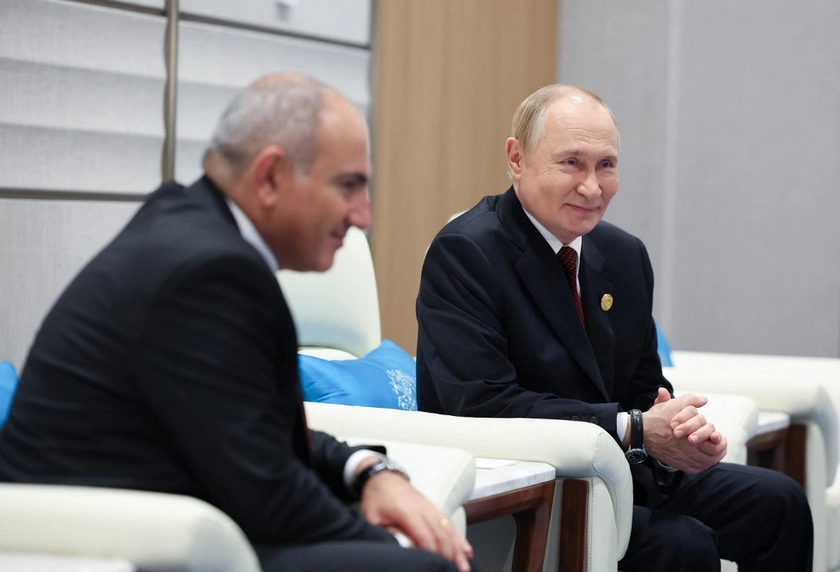
This strategic shift has coincided with a gradual distancing from Russia, Armenia’s long-standing security partner, even as the country remains heavily dependent on Moscow in economic and energy terms.
“These are not elections simply dividing pro-Russian and pro-Western forces,” says Richard Giragossian, director of the Regional Studies Center in Yerevan. “But both Moscow and Brussels are closely monitoring the outcome.”
A fragile post-Karabakh realignment
Since Azerbaijan’s military takeover of Nagorno-Karabakh in 2023 and the displacement of more than 100,000 ethnic Armenians from the disputed territory, relations between Yerevan and Moscow have deteriorated significantly.
EU: No More Protection for Ukrainian Men?
Pashinyan accused Russia of failing to provide adequate security guarantees during the offensive, while Armenia has accelerated its diplomatic engagement with the EU alongside emerging peace talks with Azerbaijan.
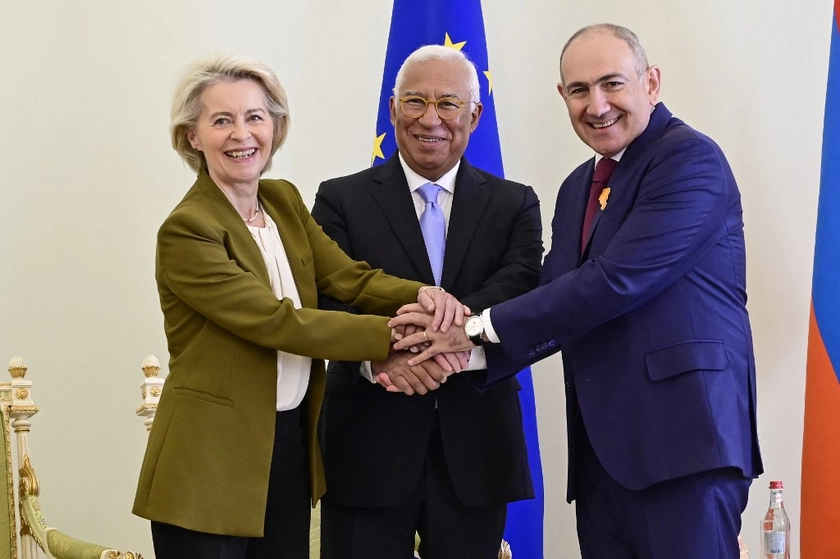
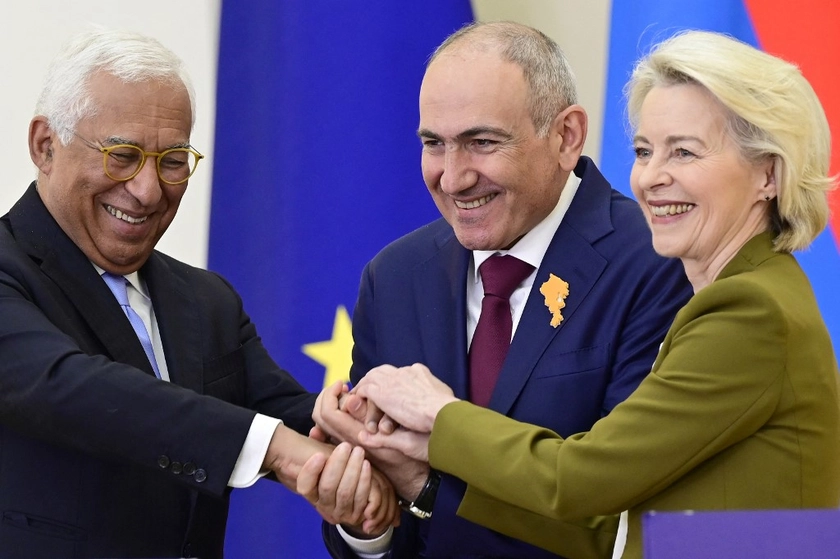
In 2025, Armenia’s parliament adopted legislation expressing the country’s intention to pursue EU membership. The successive organisation of an EU–Armenia summit and a European Political Community meeting in Yerevan in early May was also interpreted in Brussels as a signal of political alignment.
EU Ambassador to Armenia Vassilis Maragos noted that Brussels strongly supports Armenia’s efforts to normalise regional relations in the Caucasus, particularly with last month’s “connectivity” agreement to boost investment in digital infrastructure, semiconductor manufacturing and innovation.
“The connectivity partnership focuses on new projects in the context of peace and normalisation in the region, as well as border opening,” Maragos told Euractiv. “We have already identified three new border crossing points that we will support.”
Turkey-Armenia relations remain fragile
The electoral outcome is critical for Armenia’s regional diplomacy.
Benyamin Poghossian, an analyst in Armenia, warned that if Pashinyan fails to secure a majority in parliament the election result could “undermine not only the normalisation process with Azerbaijan, but also the one with Türkiye”.
Despite the absence of diplomatic relations since 1990, Armenia and Turkey have recently increased their engagement, including steps toward reopening borders, restoring historical infrastructure such as the Ani Bridge, and exploring the revival of the Kars-Gyumri railway line.
In Margara, near the Turkish border and within sight of Mount Ararat, expectations are cautiously rising among the village of 1400 inhabitants, where only the region’s famous white storks, known in Armenia as aragil, can travel on their seasonal migrations from one country to another for now.
“It’s time. Today, Armenian goods have to go through Georgia to reach Türkiye. Opening the border would simplify everything,” said Grigori Voskanyan, a taxi driver operating between Margara and Yerevan, near a border crossing recently renovated with European support.
EU steps up engagement as Russia increases pressure
From Russia’s standpoint, Armenia’s gradual drift away from Moscow’s traditional role as “Caucasus gatekeeper” is increasingly sensitive, particularly as Yerevan deepens its engagement with Brussels.
On Saturday, Russia recalled its ambassador in Yerevan for consultations over Armenia’s growing ties with the EU. At the same time, Moscow has intensified economic pressure through new restrictions on Armenian exports, including agricultural products, flowers and mineral water.
Russian authorities cite sanitary and technical concerns, but the measures are widely viewed in Yerevan and Brussels as politically motivated.
Ursula von der Leyen, the European Commission president, described the restrictions as “unacceptable economic coercion” and officials are exploring measures to support Armenian exporters and diversify trade routes.
EU officials say the bloc is also stepping up support for regional connectivity and border infrastructure projects.
A delicate balancing act for Yerevan
Despite rising tensions, analysts argue that a complete rupture with Russia remains unlikely in the short term.
Poghossian noted that Moscow maintains a strategic presence in Armenia, notably through the deployment of border guards along the Armenian-Iranian border. That region is where the “Trump Initiative for Peace and Prosperity”, a US-supported regional road project connecting Armenia and Azerbaijan in southern Armenia, is expected to be implemented. It plays a central role in the ongoing peace negotiations with Baku.
“Theoretically, Russia could block this project,” Poghossian said.
“Russia has many tools at its disposal,” he added, pointing to potential leverage including energy pricing, transport links and financial transfers.
Given this leverage, some members of Armenia’s opposition have criticised Pashinyan for weakening traditional ties with Russia. Nevertheless, analysts argue that the government’s approach remains largely pragmatic.
“The current government understands that EU membership remains a distant prospect,” said Giragossian. “Its main objective is to adapt the country to the new reality following the loss of Nagorno-Karabakh in 2023.”
Domestic tensions over foreign policy direction
Pashinyan’s main opponent, businessman Samvel Karapetyan (who is currently polling at 12.5%) and his “Strong Armenia” party, is capitalising on public discontent over the Karabakh conflict and fears of Russia’s negative impact on the country and its economy.
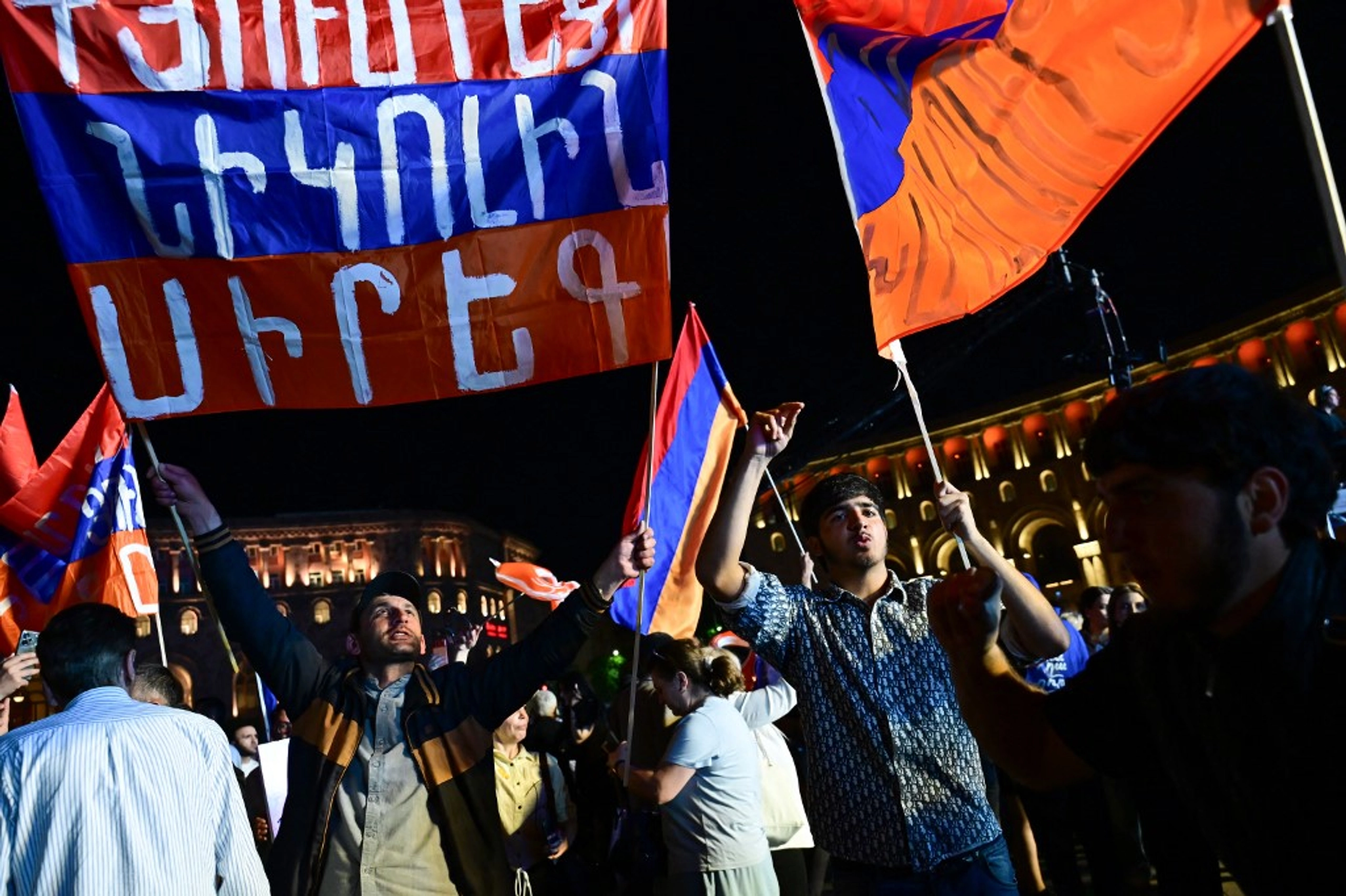
During a rally in Republic Square in Yerevan on 3 June, hundreds of his supporters gathered, including displaced families from across Armenia. Karapetyan, who is currently under investigation for money laundering and is suspected of acting on behalf of Russian interests, had to communicate with his supporters via a pre-recorded video message.
“We want to stay close to Russia, not the European Union,” said supporter Danik Avetisyan at the rally. “Listen, no one did anything when 100,000 Armenians in Karabakh were attacked by Azerbaijan.”
Still, as the vote approaches, the election is increasingly seen less as a binary choice between East and West, and more as a referendum on how the country manages its geopolitical constraints in a rapidly changing regional order.
See the original of this report by Emma Collet here.
You can also highlight the text and press Ctrl + Enter

Russia Hit by 660-Drone Overnight Barrage Targeting Moscow, Crimea and Key Military Sites