The team of Sviatlana Tsikhanouskaya, president of Belarus’s Coordination Council and head of the Belarusian democratic government-in-exile, is one of the two organized opposition forces in Belarus. The other comprises Belarusian volunteer units fighting as part of the Armed Forces of Ukraine.
Tsikhanouskaya and her team have come a long way since their unexpected electoral success following the brutal suppression of protests by the regime of Belarusian pro-Kremlin dictator Alexander Lukashenko in 2020. The democratic force now represents a serious and systematic effort aimed at coordinating opposition activities, preparing for Belarus’s democratic transition, and actively seeking allies within Lukashenko’s regime as it draws closer to Russian President Vladmir Putin.
But can Europe’s last dictatorship really be democratized? Who inside the current regime can the opposition call allies? How does the Belarusian opposition view Ukraine’s role? And how do the opposition’s leaders assess the unexpected warming of relations between Lukashenko and members of US President Donald Trump’s team?
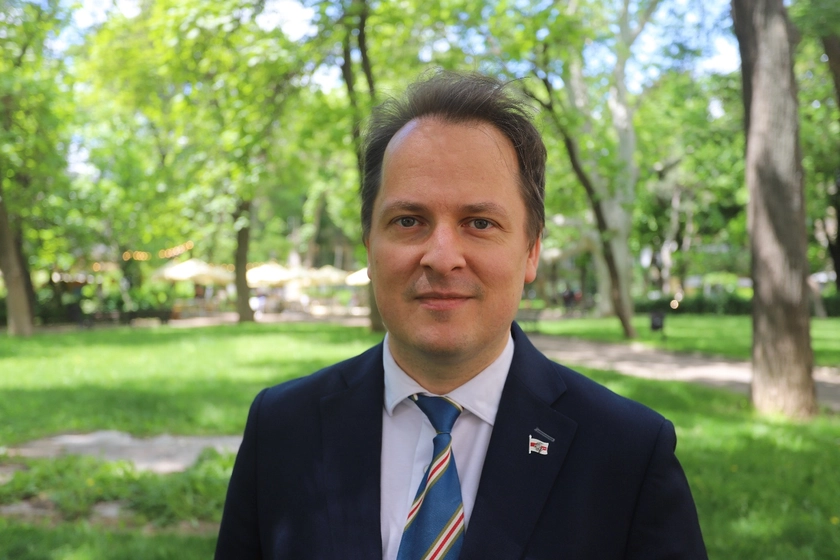
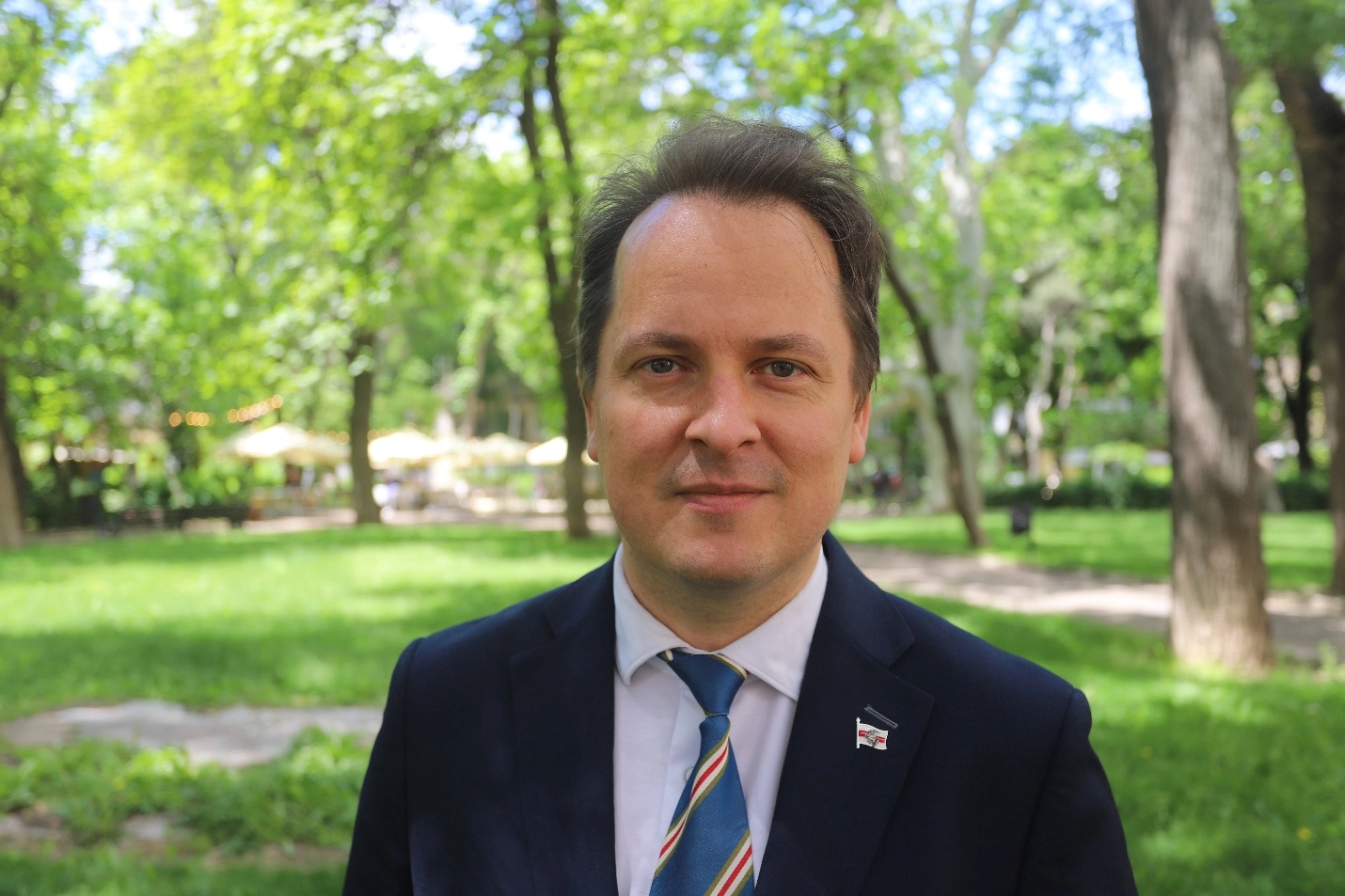
Franak Viacorka, adviser to Sviatlana Tsikhanouskaya and head of her foreign policy department, speaks to Kyiv Post about these and other critical issues.
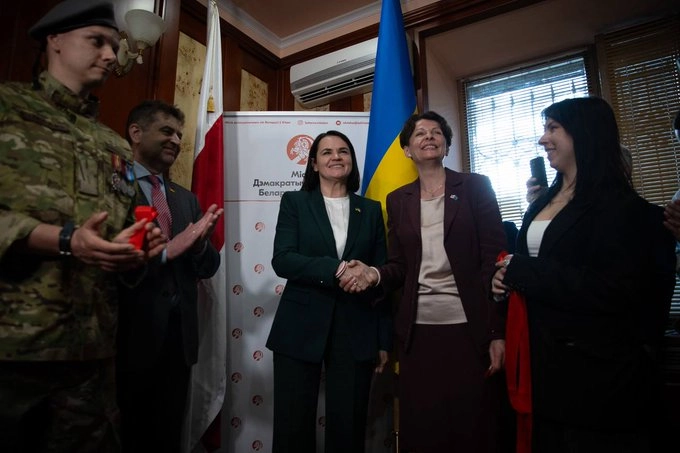
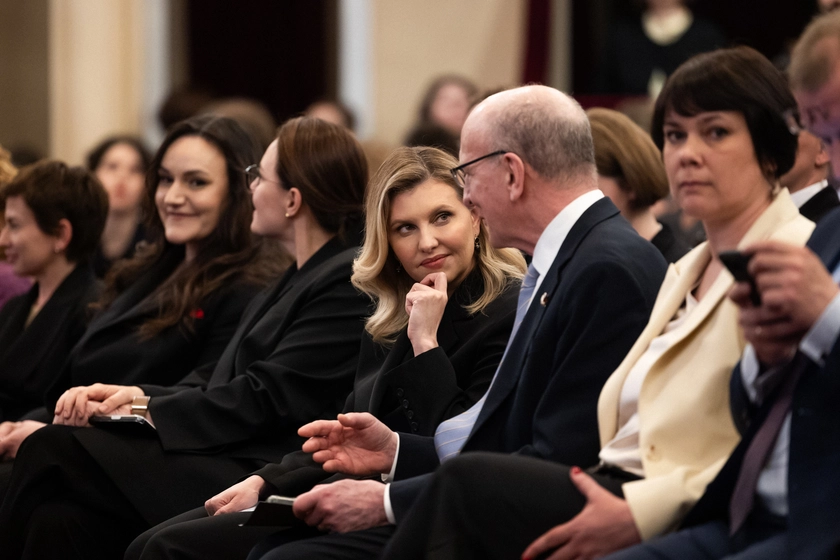
Kyiv Post: Please can you tell our readers a little bit about your impressions and conclusions after the historic visit of Sviatlana Tsikhanouskaya and your team to Kyiv in May 2026?
Russian FPV Drones and Artillery Kill Two, Wound Four Civilians Across Ukraine
Franak Viacorka: It was historic, it was symbolic, and it sent a very important message to the Belarusian people that Ukraine distinguishes between Lukashenko and the Belarusian people. I believe we can do much more right now to stop Russia and to weaken Lukashenko’s regime. And Ukraine is ready to become a regional leader.
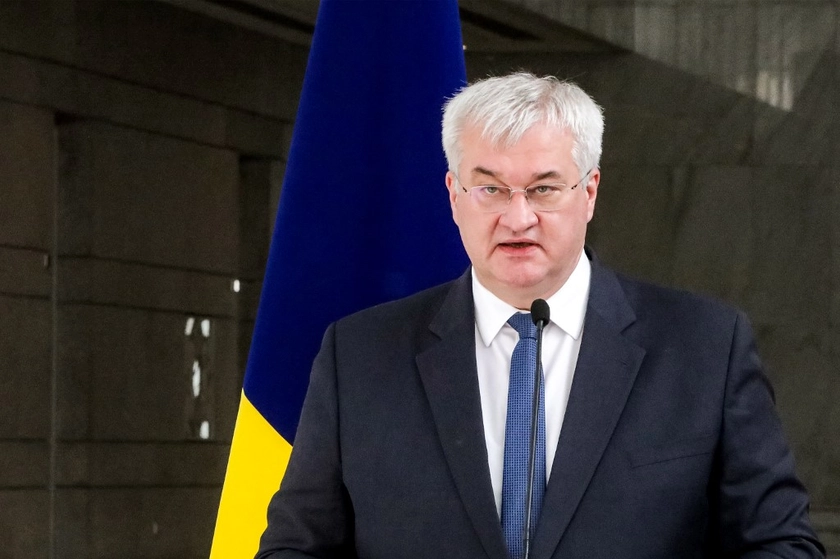
Ukraine is not only fighting for itself. It fights for Moldova, for Belarus, and for the South Caucasus. President [Volodymyr] Zelensky made a very strong and powerful speech about Belarus, along with Minister [of Foreign Affairs] Andrii Sybiha. We discussed how we can work more on bringing our nations together, how to stop Russification, and how to stop the Russian World, which is advancing. It is coming to Ukraine, and it is coming to Belarus as well.
Ukraine has great experience in strengthening national identity. So now we need to help Belarusians understand what they can do to help Ukraine. We want to strengthen these ties between ordinary Ukrainians and Belarusians. I think there will be many other visits to Ukraine very soon for us; we are already planning the next one. And I want to thank everyone who contributed to making this moment happen.
We opened the mission in the center of Kyiv – the Belarus Democratic Forces Mission – which will be a hub for different initiatives and organizations. And we have a strong diaspora in Ukraine working as volunteers, helping military volunteers, and donating to the Ukrainian army. Belarusian businesses that did not flee Ukraine after the war began are now helping Ukraine to win. That’s our goal. Because if Ukraine wins, that will be a chance for Belarus.
Who are your agents of change in Belarus? We know that change takes a lot of people, and that many opposition leaders moved away or have found themselves in jail. Meanwhile, so many people have been repressed.
There are many scenarios. But first, we have to count on Belarusian society.
There are many people within the nomenklatura who are ready to support democratic change. They were ready in 2020 to switch sides, but we lacked time and we also lacked international support. But a few ministers, and deputy ministers, secretly expressed their support for Tsikhanouskaya back then. And many are still in their positions.
Unfortunately, in the army and among the siloviki [political and ruling elite] many people were arrested or fired, but many are still in place. We now have to map those who can be our allies within the system. I think many regular officers, many people in the police, many mid-level officials, especially regional officials, hate Lukashenko.
They hate him because he doesn’t care about them. And I think they will be our allies.
So, combining protests from the streets with support from some nomenklatura groups will be crucial. And I don’t think that leaves many people who will defend Lukashenko.
Yes, there is a pro-Russian clique, including military figures, primarily those who are around Lukashenko right now. But they have become much smaller in number. They have concentrated power, but a large swath of officials and elites are pro-independence and pro-European.
Do you have a sense of the general mood or feeling within the Belarusian military?
One often hears that the Belarusian military are strongly against being used against Ukraine.
But there are different types of military.
There is the defense army, and of course they don’t want to fight against Ukraine. They protested in 2022, many defected, and they now live in fear. They are also under great pressure. And I don’t think the Belarusian army will pose any threat to the Ukrainian army, which is hundreds of times stronger right now.
But when we speak about the internal police and internal troops, there are many people, especially in KGB departments and KGB units. Unfortunately, many there are strongly pro-Russian, and they have moved into higher positions.
And there is a major campaign of brainwashing, unfortunately. That’s why we try to balance it and send them a message: we are not against you. We are against Putin, we are against Lukashenko. And if you don’t follow criminal orders, you can have a future in Belarus too.
And it works because sometimes we receive feedback, especially after the last visit to Kyiv.
We have many good contacts – new contacts from within the system – among people who will be with us when the moment comes.
What does your contingency planning look like, for example if Lukashenko had a heart attack tomorrow? What scenario do you foresee? Would Moscow simply replace him with one of its own figures, or would there be some kind of split in Minsk? What sort of scenario do you consider most realistic?
It would be difficult to appoint some Russian general to lead Belarus. Belarusian society would never accept it and there is no large Russian ethnic minority. Ethnic Russians make up only 5.7% of the population of Belarus.
So they would likely try to find another Lukashenko within the system. Someone equally pro-Russian, equally imperialistic. His son? No, I don’t think his sons can be an option as heirs to Lukashenko.
I think they would try to find someone from the current groups, from the KGB, maybe from the older generation of the military. They may find someone. But I think other groups would fight against it.
And we have to work with those groups within the nomenklatura that are ready to support a pro-independence course so that, when the moment comes, they can take power.
What more can Ukraine, both at the official and societal level, do to help the Belarusian National Democratic Movement?
It’s already happening. We see it in what Ukraine has started to do, and what President Zelensky has started to do.
Ukrainian society highlighting [what’s happening in] Belarus is already very important. It’s important to highlight the crimes of Lukashenko, to not allow him to avoid responsibility, and to send a message to the Belarusian people that they are a European nation, they are allies of Ukraine, and they are not enemies.
It is Lukashenko and his clique who are the criminals. That’s why it’s very important to split the elite. The recipe for victory is to split the nomenklatura.
If there is a majority of the nomenklatura on our side – the Ukrainian, Belarusian, and European side – then we will win.
And Putin is not as almighty as many people think. Putin has lost Armenia, Putin is losing Moldova, and Putin has definitely lost Ukraine forever. And I’m also not sure that Putin will have enough power to control nine million Belarusians. It’s quite a large country.
What should the West do to support democratic change in Belarus? As of now, we see Trump’s representatives visiting Belarus. Even US diplomat Keith Kellogg visited Belarus, shook hands with Lukashenko, and Lukashenko called them friends. It’s something that makes people ask: What is going on?
The most important thing is not to freeze the situation.
Putin and Lukashenko hope that the situation will become frozen – that everyone will get back to business as usual, sanctions will be lifted, and Belarus will remain under Russian control and under Russia’s grip. We must not allow this to happen. We must create new dynamics.
We must impose maximum and devastating sanctions on both Lukashenko and Putin until real democratic change takes place. Only then can this open a new momentum.
Americans are currently trying to find a way to release political prisoners. It’s a noble goal. But what we don’t like, what we are afraid of, is that they may soften pressure too much. They could help legitimize Lukashenko.
This is where the Ukrainian voice is crucial. The European voice is crucial. We must not allow Lukashenko to legitimize himself and avoid responsibility.
So these visits, if they are only about political prisoners, can be good and can serve a good purpose. But if they go too far in legitimizing the regime, there is a real danger that Belarus will remain under Russian control for a long, long time.
There have been many messages, including from Ukrainian special services, about preparations for a Russian invasion from Belarus into western Ukraine, and not only western Ukraine but also one of the Baltic countries, such as Lithuania. Is this credible? Is it possible for Russia to prepare an invasion of the Baltics from Belarus now or within the next three, four, or five months?
Preparations are taking place. They are modernizing Soviet infrastructure and communication lines. They are building military bases. The deployment of Oreshnik and nuclear weapons is also a form of blackmail.
They don’t have enough resources. At the same time, they are preparing infrastructure along the borders with Ukraine, Lithuania, Poland, and Latvia – basically all borders except the one with Russia.
I don’t see an invasion taking place today or tomorrow. But they are definitely ready for escalation. They are preparing for escalation, plus provocations on the border, which are taking place every month– with migrants, helicopters, and drones.
This is also a way of testing how prepared the West is for possible escalation.
I don’t see that Putin has enough manpower right now to open a new front. But if there is a ceasefire, if Putin has some time to regroup, then we must not exclude escalation against other countries as well.
At the same time, we must not create panic. Poland is much better prepared. The Baltic states are much better prepared as well.
But we must remain cautious, and we must strengthen ourselves. First of all, if we want to prevent escalation, we must strengthen Ukraine
You can also highlight the text and press Ctrl + Enter