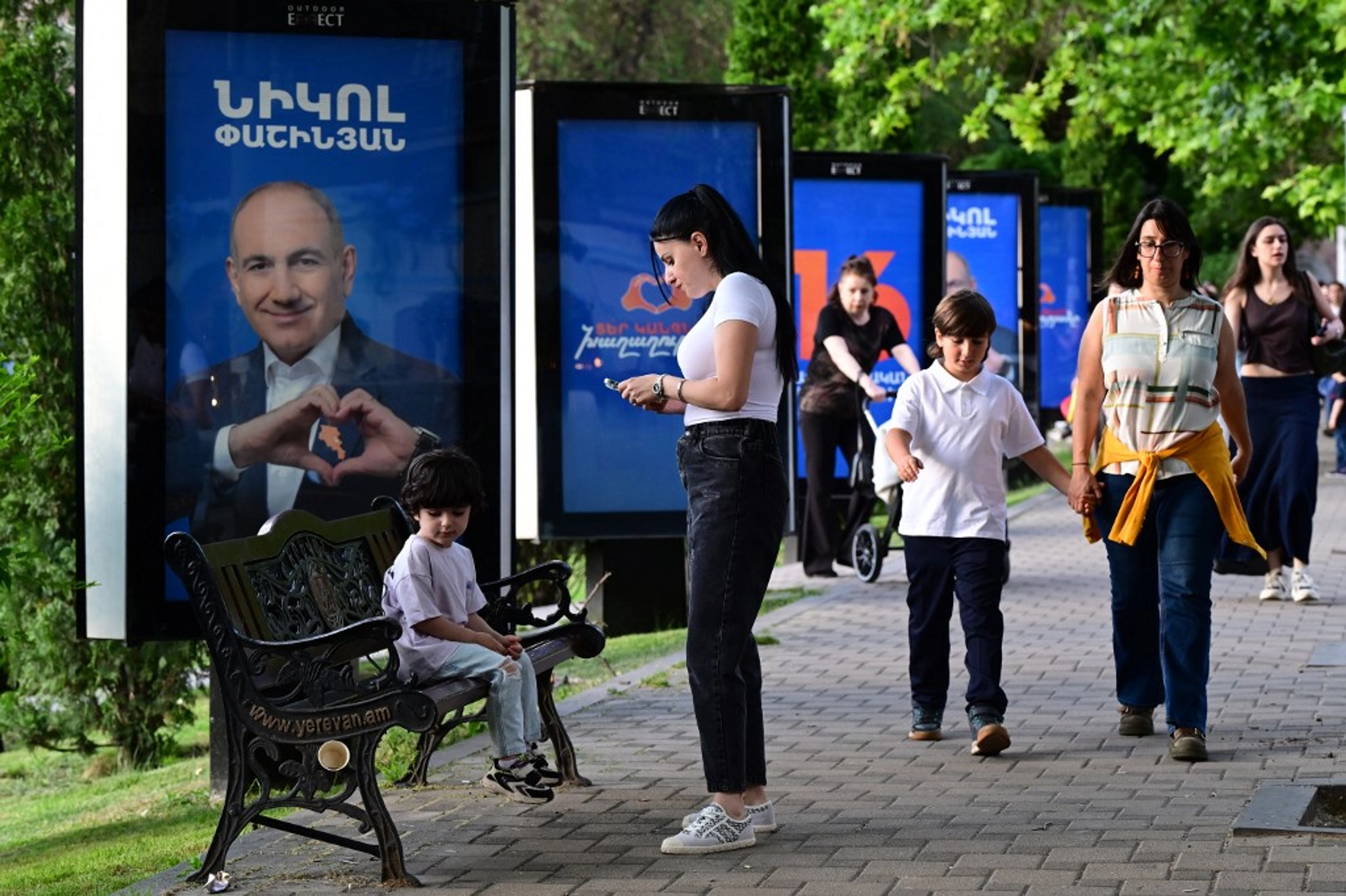
Armenian citizens arriving from Russia to participate in the June 7 parliamentary elections will be required to attend a mandatory 25-day military reserve training camp or face legal consequences, the Deputy Chief of the Prime Minister’s staff Taron Chakhoyan said.
Chakhoyan issued a stark warning in a video posted to his social media stating that those who fail to report for the exercises will face criminal prosecution.
JOIN US ON TELEGRAM
Follow our coverage of the war on the @Kyivpost_official.
“Citizens of Armenia who arrive for bribes from Russia to vote for Samo from Kaluga will be called up for 25-day training camps, and whoever refuses will be prosecuted,” Chakhoyan said.
Government officials in Yerevan have pointed out concerns regarding foreign influence aimed at supporting Samvel Karapetyan, the owner of Tashir Group conglomerate, and the “Strong Armenia” alliance, whose leader has a history of working in the Russian city Kaluga.
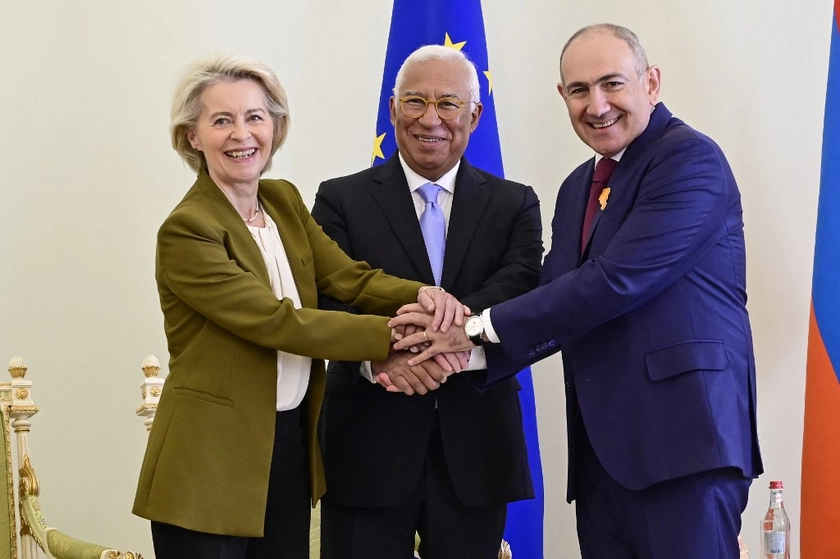
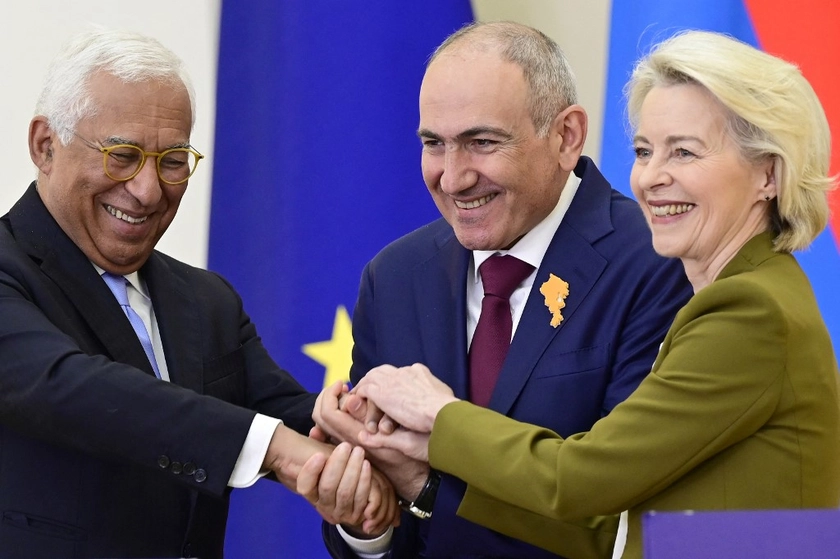
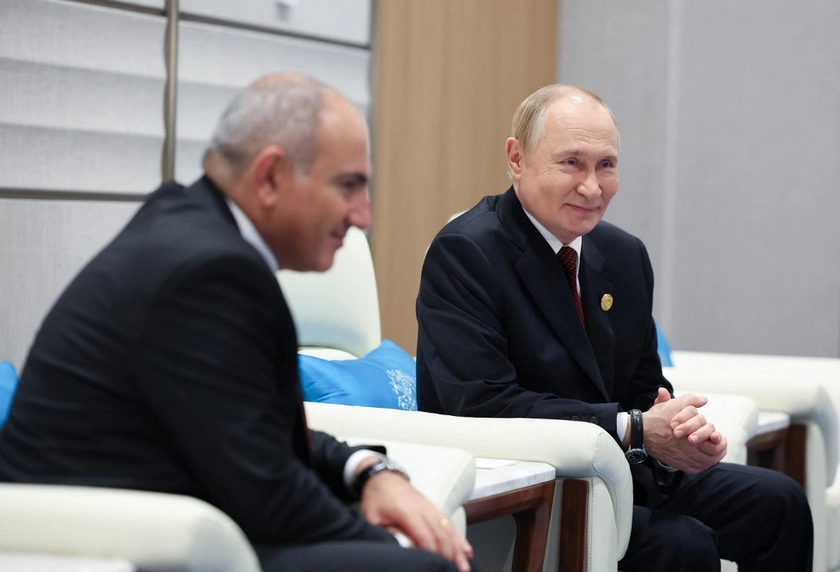
The remarks came amid recent concerns from Yerevan and the Western capitals that Moscow is trying to influence the votes by mobilizing Russian-based Armenians against Prime Minister Nikol Pashinyan, whose government has moved closer to joining the EU in recent years.
Gevorg Papojan, the Armenian minister of economy and deputy chairman of the governing party “Civil Treaty”, has issued a similar statement, saying that he is very pleased with the decision.
“I am very happy, because, firstly, our polls show that most of these people will vote for us [“Civil Treaty”], and secondly, we need those people,” Papojan said, adding that 30,000-40,000 people will be sent to the meeting, “and only then they will return to Kaluga.”
Syrsky: Russian Maps Show False Advances to Please Top Command
Border checks, tighter law enforcement
Signs of tighter law enforcement have already appeared at the border, after Reuters reported that Russian officials discussed a plan to transport large numbers of Armenian citizens living in Russia to vote for Pashinyan’s opponents in the parliamentary elections.
As reported by foreign media, the military police of Armenia had already begun checking male passengers arriving at Yerevan’s main airport, with some of them already being handed military draft notices.
Meanwhile, the authorities said they were helping enlist citizens for military registrations and compulsory services, but did not publicly specify aiming measures solely at voters coming from Russia.
Armenia’s high stake vote towards EU
On June 7, parliamentary elections will be held in Armenia, with voters choosing a new parliament that could redefine Armenia’s path between the EU and Russia.
Meanwhile, over the past two years, the Armenian government has taken initial steps toward closer integration with the EU, even as Russia and its Eurasian Economic Union partners continue to complicate the country’s accession path.
“The Armenian government, as well as domestic and international observers, have warned that Russia is conducting increasingly aggressive interference and manipulation campaigns,” the European Parliament’s research service said, adding that it Moscow is following the same playbook it has used with Moldova, which, together with Ukraine, is moving forward on the next legal steps toward EU membership.
“In parallel, the Kremlin is overtly warning Armenia about the significant costs of pursuing a pro-European path,” the research service explained.
All EU states approve opening cluster in Ukraine, Moldova accession talks
On Wednesday, all EU member states approved preparations to open the first cluster of accession negotiations with Ukraine and Moldova, according to the Cyprus EU Council Presidency and Prime Minister Svyrydenko.
The move marks a major milestone on Kyiv’s path toward EU membership, with cluster 1 covering fundamental reforms, including the rule of law and democratic institutions that must be opened before broader accession talks can proceed.
“We are one step closer to EU membership: steadily moving towards our goal,” Svyrydenko said, thanking the Cypriot presidency and EU member states for supporting Ukraine’s European integration efforts.
The first negotiation cluster, known as the “Fundamentals” cluster, covers key areas including the rule of law, democratic institutions, judicial reform, public administration, and fundamental rights.
Its opening is considered a mandatory stage in the accession process of Ukraine and Moldova, serving as the foundation for broader membership negotiations.
You can also highlight the text and press Ctrl + Enter

Russia Hit by 660-Drone Overnight Barrage Targeting Moscow, Crimea and Key Military Sites