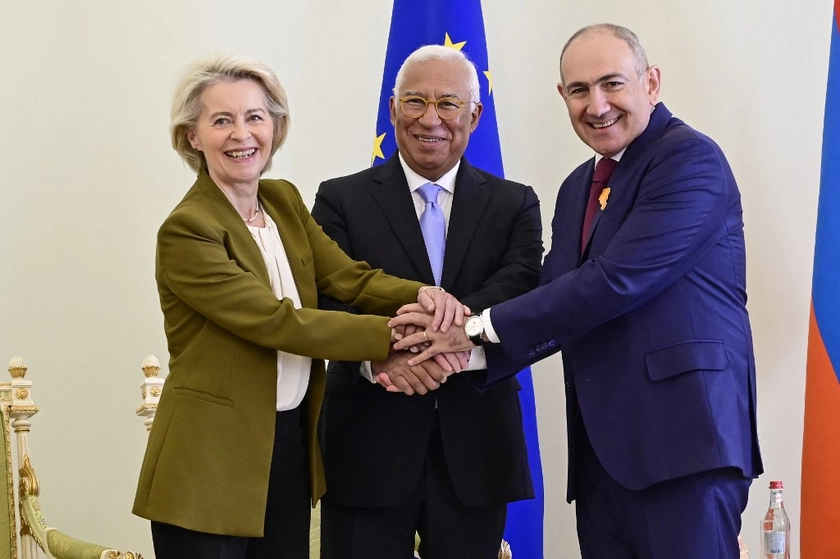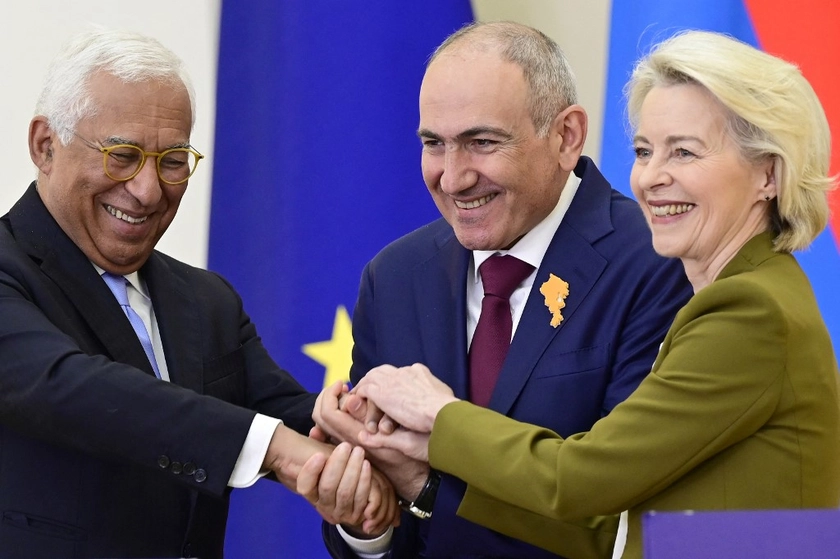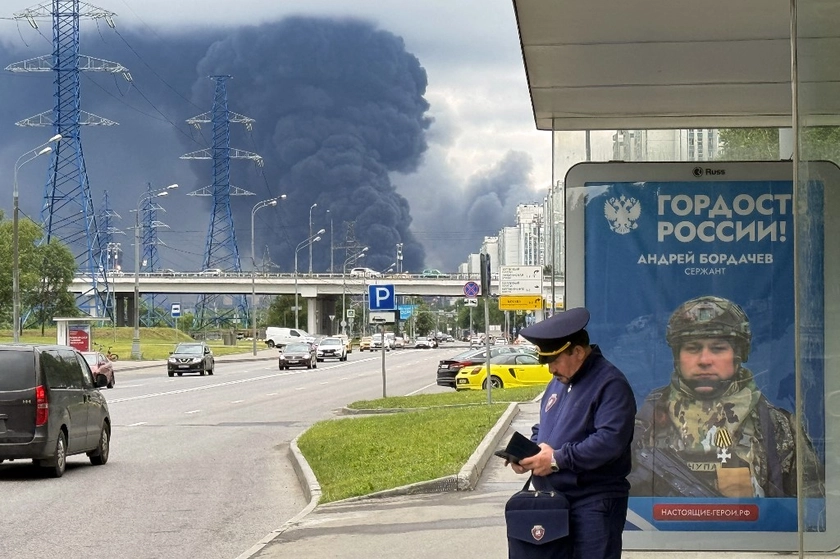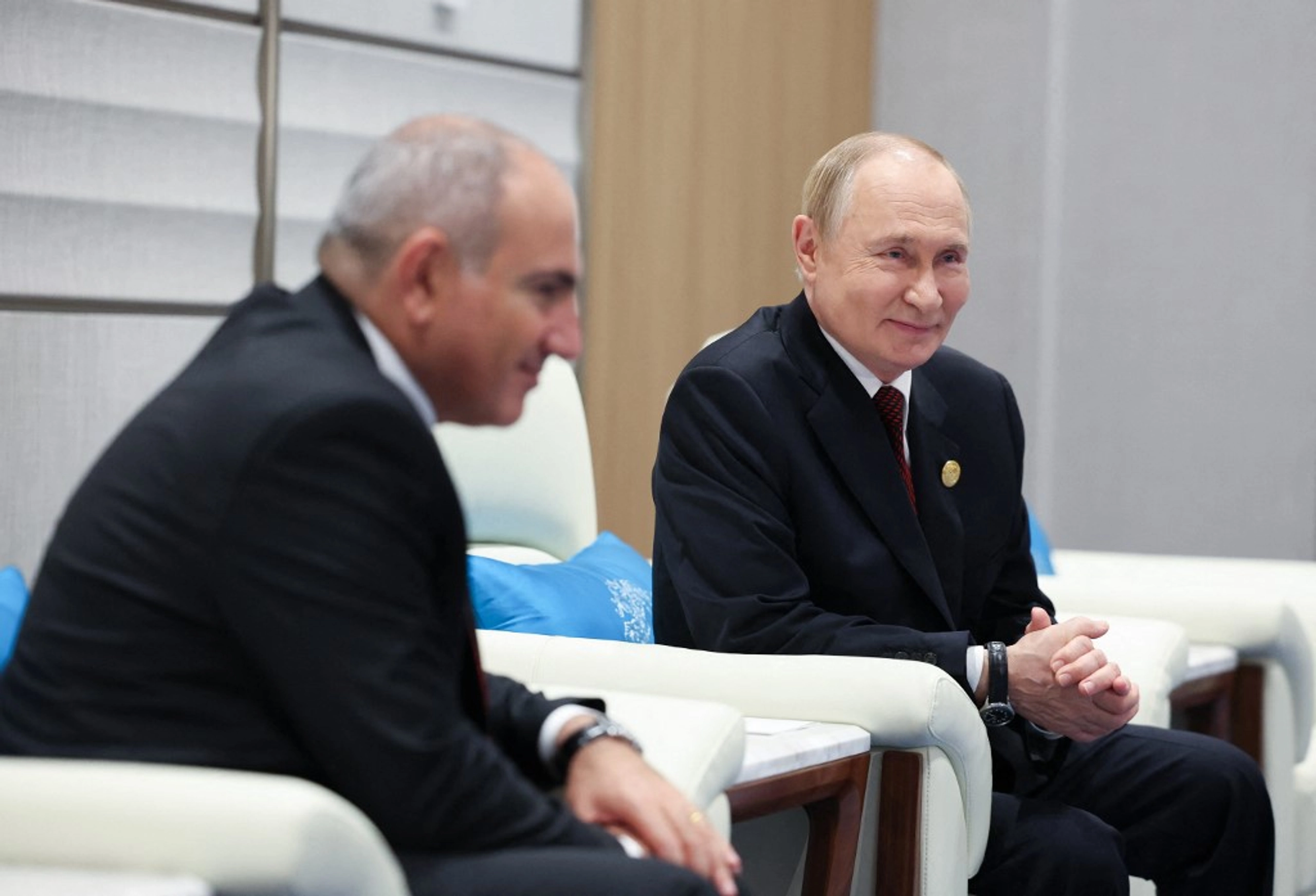
Russian state television has been consumed by outrage over Armenia’s parliamentary election. In a way, the panic is understandable.
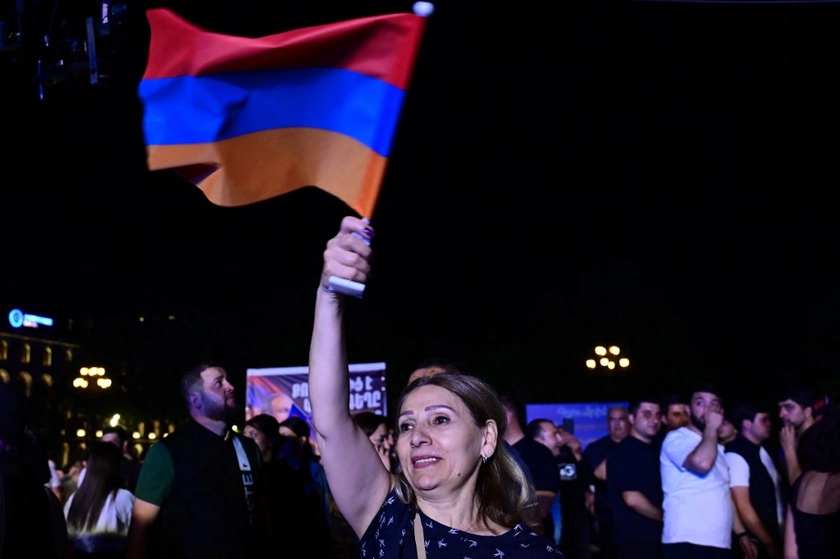
For months, Moscow appeared to hope that Armenia would punish Prime Minister Nikol Pashinyan at the ballot box and return to Russia’s political orbit. Instead, Pashinyan’s Civil Contract party won the June 7 vote with nearly 50 percent, securing the right to continue governing.
JOIN US ON TELEGRAM
Follow our coverage of the war on the @Kyivpost_official.
Russian propagandists immediately presented the outcome as the product of “dirty games,” arrests, manipulation, and alleged voting violations. But the real frustration in Moscow lies elsewhere: despite Russia’s increasingly open attempts to shape Armenia’s political mood, Armenian voters again backed a leader whose policies have increasingly challenged Moscow’s influence.
Moscow had invested heavily in the information campaign. Russian propagandist Margarita Simonyan, herself of Armenian origin, had long called for Pashinyan’s removal. Years ago, she accused him of betraying Armenia and lashed out at his voters, suggesting they were blind or foolish for supporting him.
But the result delivered a painful surprise to Simonyan, Vladimir Putin, and the broader circle of Kremlin loyalists. Pashinyan did not merely survive the election; he won decisively.
Questioning the legitimacy
Following the vote, Moscow quickly switched to questioning its legitimacy. Russian Foreign Ministry spokeswoman Maria Zakharova claimed the election took place amid repression and Western interference. The accusation was striking, not only because of Moscow’s own dismal democratic record, but because it exposed Russia’s growing desperation over its fading influence in the South Caucasus.
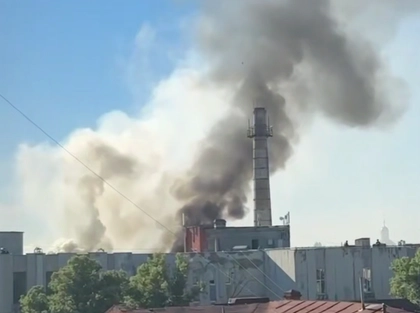
Ukraine Hits Targets 1,300 km Inside Russia, Striking Ufa Oil Refinery and Penza Missile-Linked Plant
In contrast, the OSCE Office for Democratic Institutions and Human Rights (ODIHR) stated that Armenia’s parliamentary elections offered voters a genuine choice among political alternatives in a professionally managed process. Remarkably, even observers from the Commonwealth of Independent States – a Moscow-dominated grouping – refused to back the Kremlin’s narrative of a stolen election, instead describing the vote as free and competitive.
“Path of Ukraine”
Moscow has repeatedly warned that if Armenia continues moving away from Russia, it could “follow the path of Ukraine.” But even that warning is losing its edge. The war no longer demonstrates Russia’s power in the way the Kremlin intended; increasingly, it exposes Russia’s vulnerability.
Putin’s political spectacles now take place under the shadow of Ukrainian long-range strikes, air-defense alerts, and tight security calculations. As NATO Secretary General Mark Rutte recently remarked alongside President Volodymyr Zelensky, Ukraine has become so effective that Putin could hold his May 9 parade only after Zelensky granted a two-hour window – and even then, the event wrapped up in just one hour and 55 minutes.
Freedom or tomatoes?
For years, Kremlin loyalists convinced themselves that Moscow would never allow “Russophobes” to come to power in the so-called “near abroad.” They invented the myth that Moscow may decide what kind of governments neighboring countries are allowed to have – and that any other choice will not be tolerated.
Armenia has now tested that claim.
Pashinyan’s victory showed that even in a country Russia long treated as part of its backyard, Moscow can no longer dictate political outcomes. The Kremlin can fund propaganda, deploy its commentators, amplify loyalist politicians, and issue thinly veiled warnings. But it could not prevent Armenian voters from endorsing a government that has increasingly challenged Russia’s influence.
Moscow’s “tomato and cucumber” trade sanctions have backfired, damaging its image among the Armenian public. As Armenian Parliament Speaker Alen Simonyan put it, Armenia will not trade its freedom for tomatoes and cucumbers.
That is why Moscow’s newfound concern for Armenian democracy sounds like nothing more than a bitter tantrum over losing another critical lever of influence in a country it long treated as its own property.
The views expressed in this opinion article are the author’s and not necessarily those of Kyiv Post.
You can also highlight the text and press Ctrl + Enter
Russia Hit by 660-Drone Overnight Barrage Targeting Moscow, Crimea and Key Military Sites