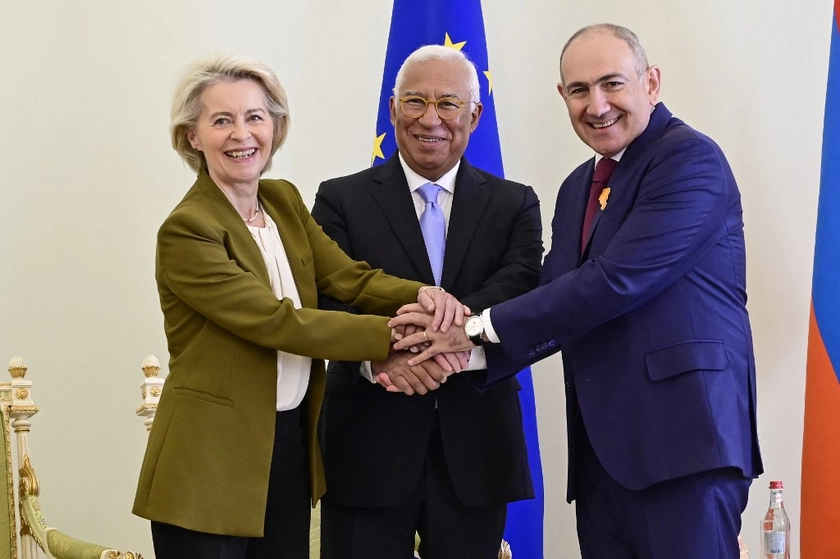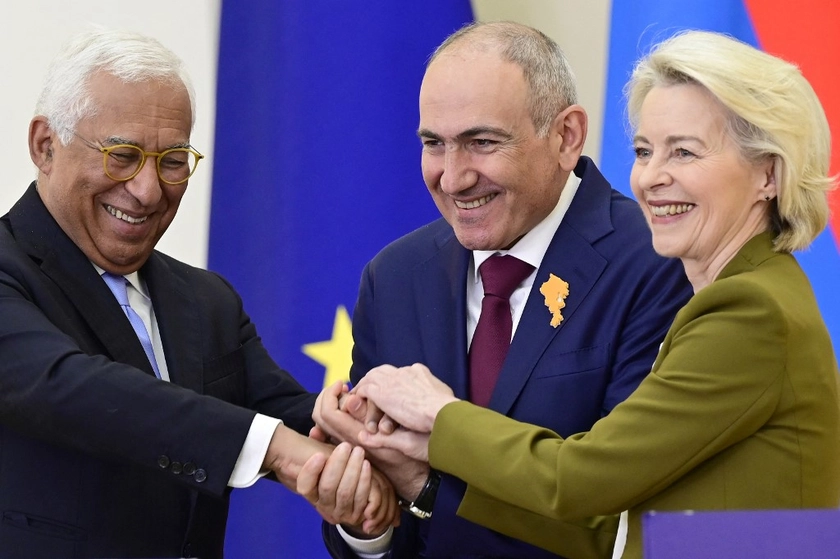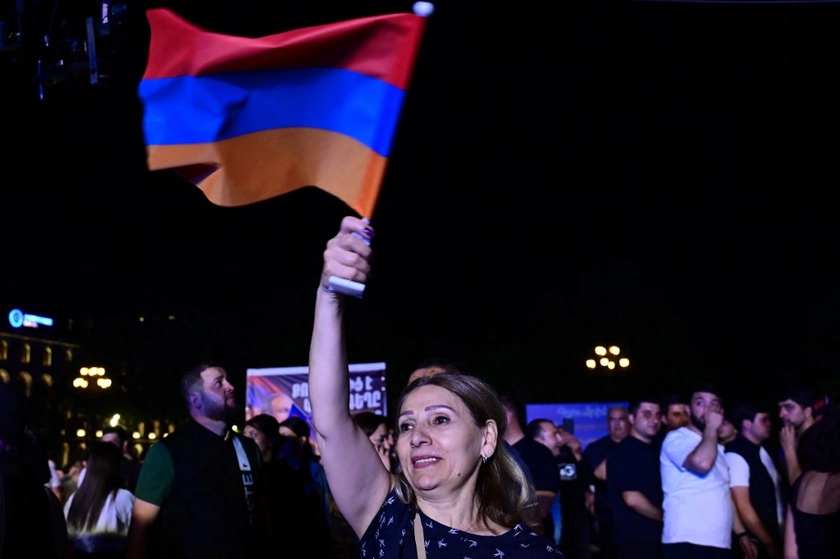
Armenian Prime Minister Nikol Pashinyan has successfully defended his mandate, but the narrow arithmetic of his electoral victory threatens to stall the South Caucasus peace process indefinitely.
Official results from the Central Electoral Commission show Pashinyan’s Civil Contract party securing 49.81% of the vote. While this gives him the simple majority needed to form a government and retain the premiership, it falls critically short of the supermajority required to reshape Armenia’s constitutional and geopolitical landscape.
JOIN US ON TELEGRAM
Follow our coverage of the war on the @Kyivpost_official.
The results also cement a formidable, Moscow-backed opposition bloc within the new parliament. Powerful Armenia, led by pro-Russian oligarch Samvel Karapetyan, surged to 23.29% (projected to hold 29 seats), while former President Robert Kocharyan’s faction secured roughly 10% (around 12 seats).
Together, this hardline opposition wields enough power to block fundamental legal and structural shifts in Yerevan.
The constitutional cul-de-sac
In an interview with Kyiv Post, political analyst and conflict expert Arif Yunus explained why Pashinyan’s political survival does not automatically translate into a diplomatic breakthrough with Azerbaijan.
Throughout the campaign, Pashinyan framed the election as a existential referendum on foreign policy.
“He consistently told voters that a ballot for him was a vote for peace, while a ballot for his opponents was a vote for war,” Yunus argued.
Kasparov: Ukrainian Flag in Sevastopol Is the Shock Russia Needs to Accept Empire Is Dead
However, Baku’s primary prerequisite for signing a comprehensive peace treaty remains unchanged: Armenia must amend its constitution. Azerbaijan objects specifically to the preamble of the Armenian constitution, which references the 1989 unification declaration between the Armenian SSR and Nagorno-Karabakh.
“To remove this text, a constitutional referendum is required,” Yunus explained. “But for a referendum proposal to even pass the parliament and reach the public, Pashinyan needs a two-thirds supermajority. He simply does not have the numbers.
“With roughly 50% of the seats, the Prime Minister is trapped in a legislative deadlock. The Kremlin-aligned opposition – holding over 40 seats – now possesses an absolute veto over the constitutional changes that Baku demands.
Kremlin pressure
The constitutional impasse over Azerbaijan is further complicated by intense, direct pressure from Moscow.
Moscow is pushing Yerevan to hold a separate referendum to clarify its geopolitical alignment: either recommit to the Russian-led Eurasian Economic Union (EAEU) or formally pursue an integration path with the European Union.
With the Armenian judiciary maintaining a degree of independence, Pashinyan cannot simply bypass the legal system by decree. Arif Yunus does not rule out the possibility that the prime minister may launch targeted anti-corruption and criminal investigations against key pro-Russian opposition figures, whom he characterizes as “Putin’s men.” Such legal pressure, he suggests, could potentially help Pashinyan fragment the opposition bloc and secure the votes needed to break the legislative deadlock.
Aliyev’s strategic silence
While Monday brought a wave of international congratulations for Pashinyan, the silence from two specific capitals – Moscow and Baku – was highly noteworthy.
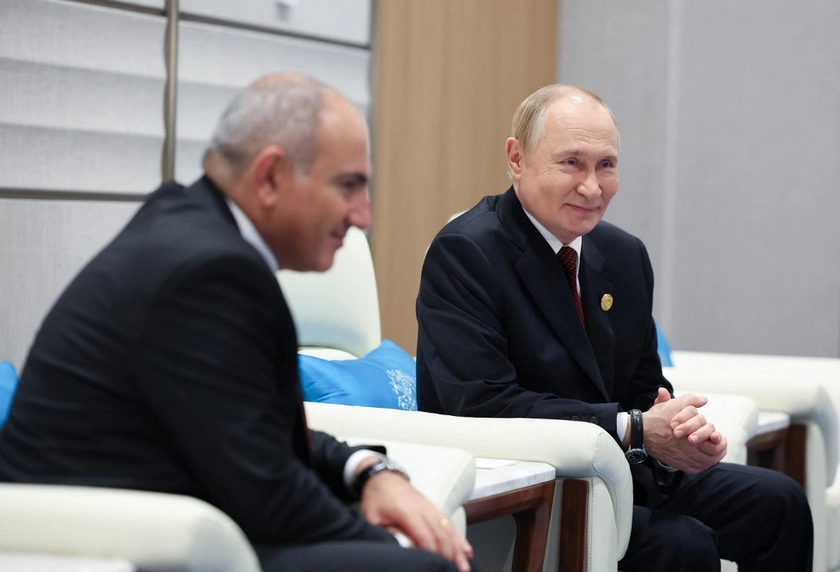
Vladimir Putin’s Kremlin pointedly refused to congratulate the re-elected prime minister. Instead, Russian Foreign Ministry spokeswoman Maria Zakharova took an aggressive stance, claiming the election was held under conditions of political repression.
Azerbaijani President Ilham Aliyev also did not rush to offer any public congratulations.
From a strategic standpoint, Pashinyan’s political survival is the most favorable outcome for Baku. A triumph by revanchist figures such as former President Robert Kocharyan or the newly emergent, Moscow-backed billionaire Samvel Karapetyan would likely have derailed the fragile peace architecture.
Pashinyan remains the first Armenian leader to explicitly acknowledge Azerbaijan’s territorial integrity.
Yet Aliyev remains silent. Yunus argues that Baku’s reluctance is linked to the Kremlin’s posture. Rather than independently engaging a re-elected counterpart to finalize a historic peace treaty, Aliyev appears to be waiting to see how Putin will react.
The anatomy of the new opposition
The election results did not diminish the tools of Russian leverage over Yerevan. While the total number of pro-Russian seats in the National Assembly grew, the internal balance of power shifted away from old forces toward new, economically potent actors.
The rise of Samvel Karapetyan – a billionaire oligarch imported from Moscow’s elite business circles – is a critical component of this strategy.
With no political background, Karapetyan presented himself as an independent diaspora leader bringing a new perspective to Armenia. In practice, his targeted campaign won over much of Kocharyan’s support base, displacing him as the primary voice of dissent.
This lack of consolidation among pro-Russian factions before the vote may have been a deliberate design by Moscow. By embedding multiple, distinct Kremlin-aligned factions within the Armenian parliament rather than a single monolith, Russia has built a flexible legislative blockade. Whenever required, these separate factions can be synchronized to veto constitutional initiatives or mount joint resistance against Pashinyan’s pro-Western integration policies.
You can also highlight the text and press Ctrl + Enter
Russia Hit by 660-Drone Overnight Barrage Targeting Moscow, Crimea and Key Military Sites