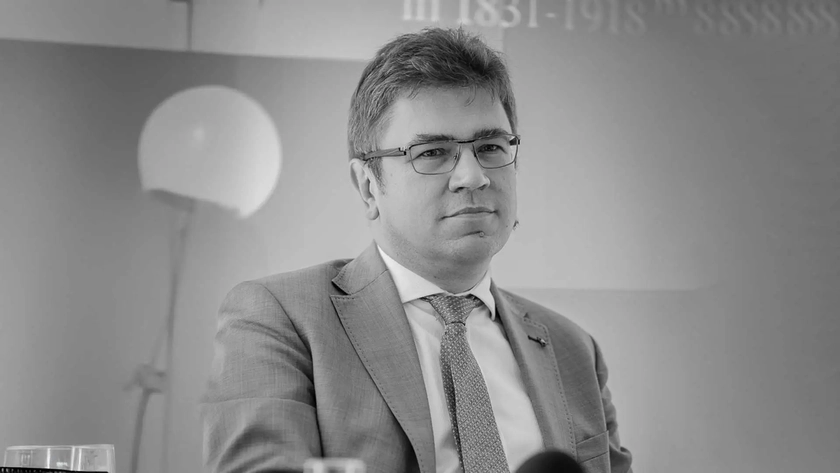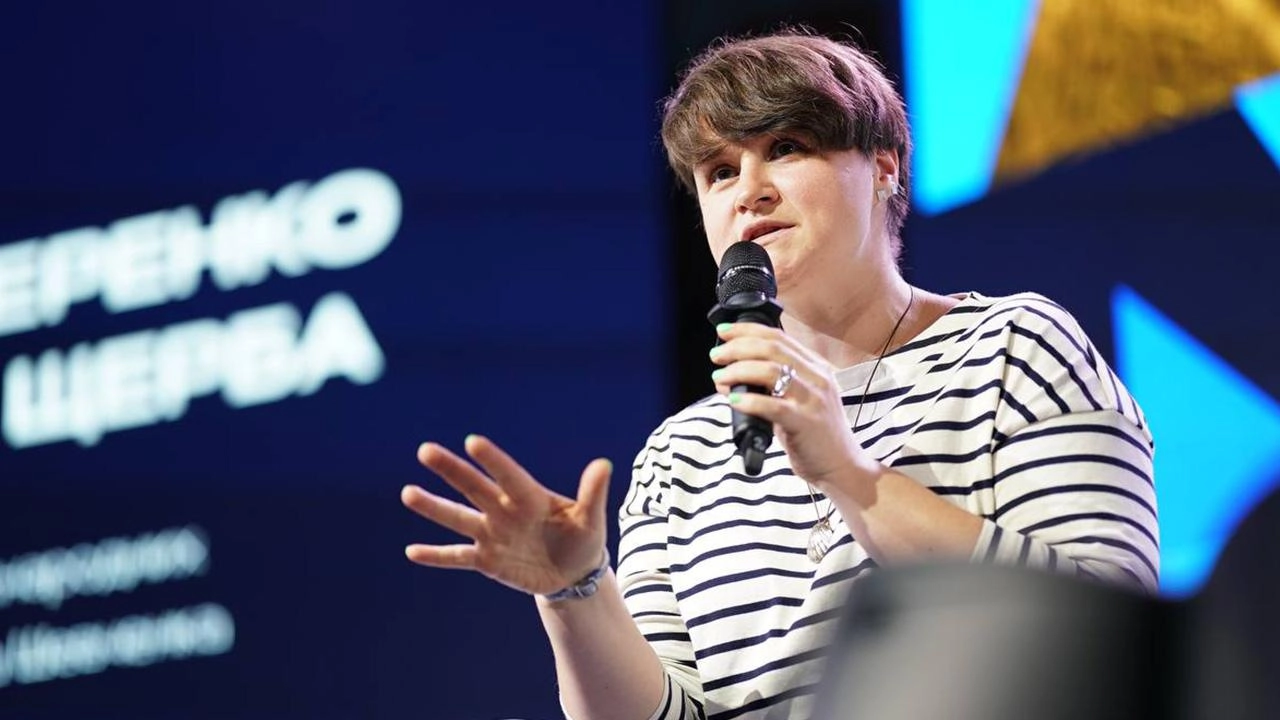
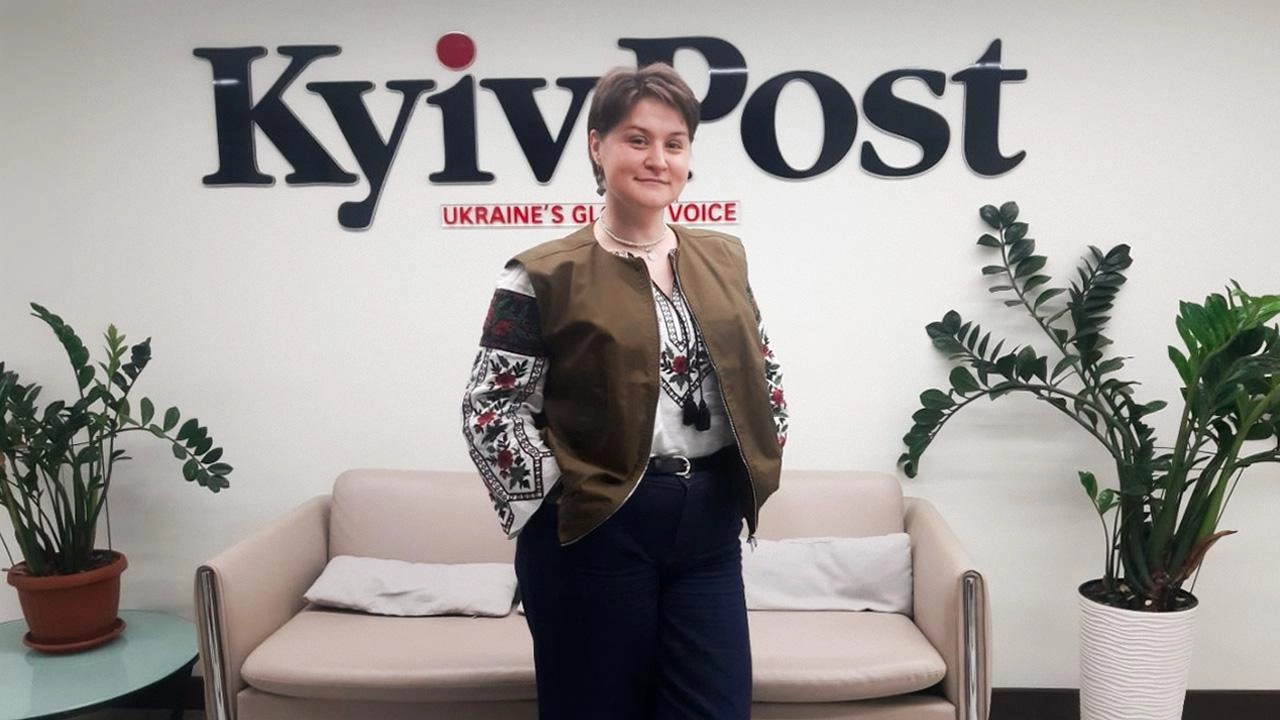
Oleksandra Romantsova, the executive director of the Center for Civil Liberties, spoke to Kyiv Post about the creation of a special tribunal for Russia’s crime of aggression against Ukraine, the work of the “Tribunal for Putin” initiative, the difficult balance between human rights and national security during the war, and the transformation of Ukrainian civil society.
JOIN US ON TELEGRAM
Follow our coverage of the war on the @Kyivpost_official.
Special tribunal for Russia and the Council of Europe: Why this platform in particular
Kyiv Post: Ms. Romantsova, recently the European Union co-founded a special tribunal for Russia for the crime of aggression against Ukraine. Why was the Council of Europe chosen as the base platform for this process?
Oleksandra Romantsova: Actually, Ukraine had been looking for ways to create a legitimate international institution whose decisions would be unconditionally recognized in international relations for a long time. That is why the Council of Europe is a good and professional choice for several reasons.
Firstly, it has one of the oldest judicial formats – the European Court of Human Rights (ECHR), created earlier than the International Criminal Court (ICC) or ad-hoc tribunals. This institution possesses vast experience in determining, for instance, the financial equivalent of human rights violations by a state. That is why the Register of Damage is currently located there.
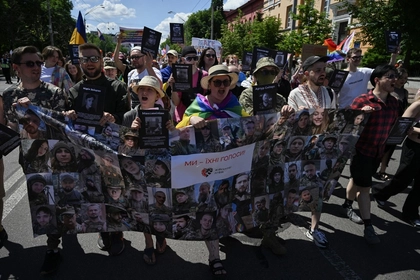
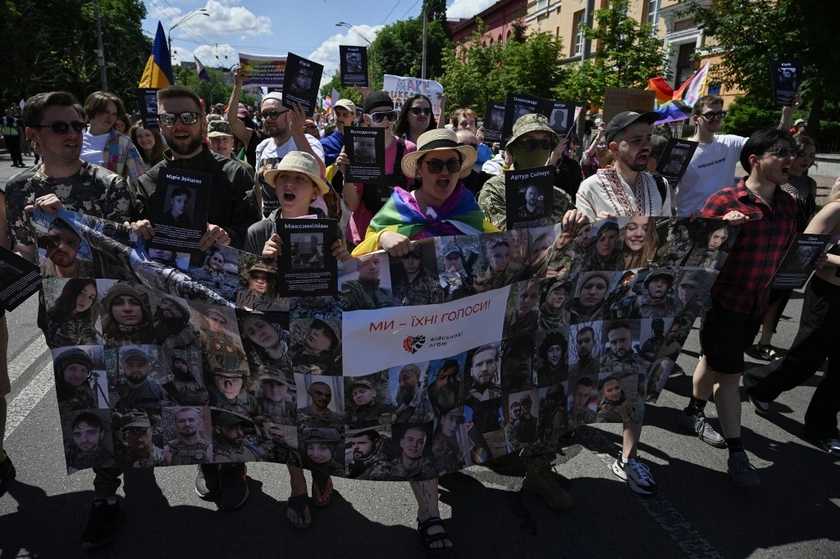
‘Die Together’: Ukraine’s LGBTQ Soldiers Fighting Russia – and for Their Rights
Secondly, it is an authoritative international association created to prevent war.
It is in the Council of Europe that we, Ukraine, have the greatest support, as evidenced by the resolutions on Crimea and Donbas adopted since 2014. Of course, this is an alternative option, since the UN Security Council is blocked and does not work due to structural flaws and Russia’s veto power.
In the future, the document awaits ratification by countries wishing to join the process. At the same time, such signing means not just formal recognition of the legitimacy of future court decisions, but implies concrete obligations, including budget funding and participation in judge selection procedures.
By the way, judges will be selected solely on a professional basis, rather than as representatives of specific states. This is exactly how all subsequent processes will unfold.
At what stage is the creation of the Special Tribunal to convict Russia for the crime of aggression against Ukraine now? The decision on the EU’s involvement is the next step, right?
Yes! Let me remind you, it all started in 2023 when the European Union created the first agency in The Hague to collect information on the crime of aggression. This was necessary because there is no single standard of justice in EU countries: For example, in the Czech Republic, testimonies of Ukrainians are collected by the police, while in Poland, by the prosecutor’s office. Eurojust helps to exchange data, but does not unify it.
The next step was the Register of Damage, which transformed into the International Compliance Committee. It has already received over 100,000 applications regarding property, loss of a breadwinner, captivity, or loss of business. But we need everyone to apply there, because we have millions of victims and millions of potential episodes.
Legal obstacles and the “Tribunal for Putin” initiative
What are the main obstacles – legal or practical – to the process of creating the Special Tribunal for the Russian Federation now?
The first is the budget. Justice is an expensive pleasure. It is necessary to determine who will pay, how the money will be distributed, and where to find unique specialists from the administrative to the investigative level.
The second involves procedural nuances. Will the court operate in the absence of the defendants? Who is the victim in a court dealing with the crime of aggression – the state or specific individuals?
The statute of the tribunal, which a coalition of partners worked on together with the Ministry of Foreign Affairs of Ukraine (specifically Anton Korynevych and the Deputy Head of the Office of the President Iryna Mudra), stipulates that it is the judges who will determine by their decision when the war started – in 2014 or in 2022.
And finally, where to hold the defendants if they are detained? The Netherlands is not very happy about potentially holding representatives of a nuclear state that couldn’t care less about international rules.
Hypothetically, they could be held in Ukraine, but it is important for us that the process is as flawless, objective, and fair as possible, so that no one in the world can criticize it.
It is very important to us that there are as few complaints about the unfairness of the process as possible. Russia is a country with an unpredictable past that has been manipulating information for centuries. If we do not record everything with joint international documents and resolutions, they will simply rewrite everything.
In parallel, there is the “Tribunal for Putin” (T4P) initiative. What is its role, and how many cases have already been recorded?
“Tribunal for Putin” is not a court, but a global association of human rights organizations engaged in the independent documentation of war crimes, crimes against humanity, and genocide since 2014.
As of June 4, 108,049 cases have been recorded in our database. The statistics are open in five languages on the tribunal’s website.
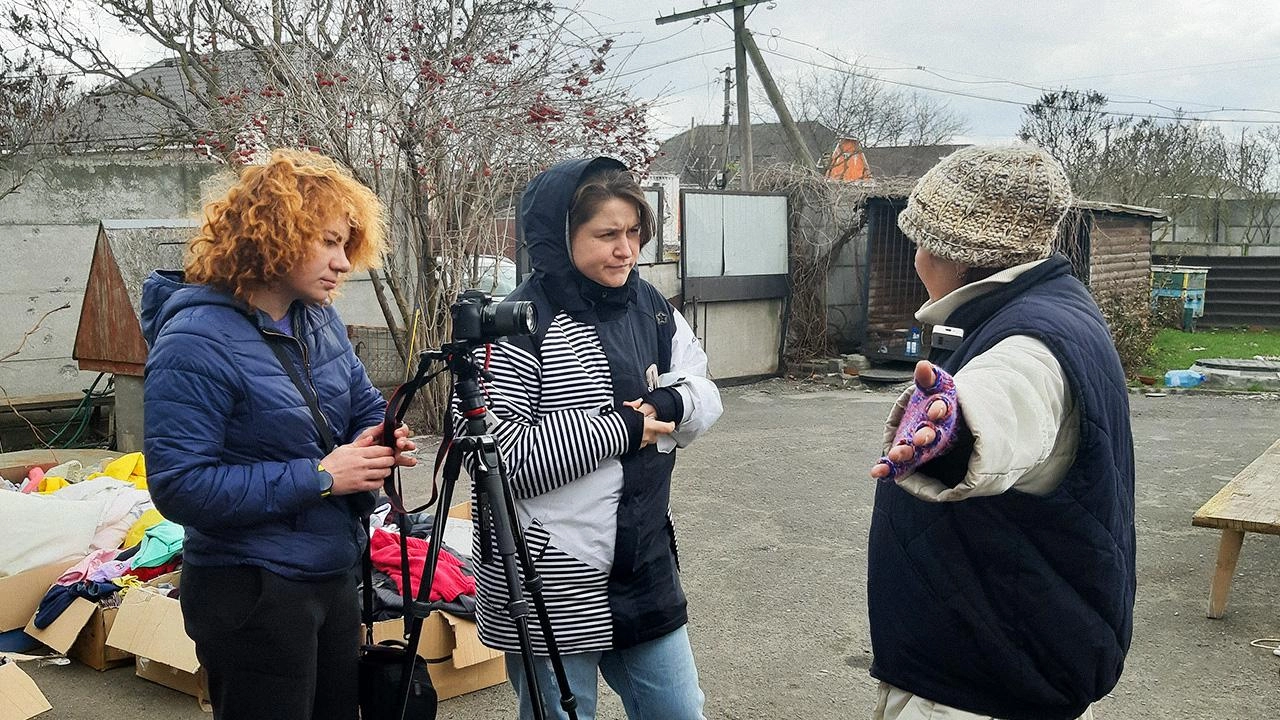
For comparison, human rights defenders have collected data in accordance with international standards since 2014, whereas the Department of International Crimes in the Prosecutor General’s Office was established only in 2019. Our information verifies what Ukraine says as a state.
We are preparing submissions to the ICC to stimulate the issuance of new arrest warrants for the Russian command. There are currently six warrants, but we expect many more – in particular, regarding torture, shelling, and the blowing up of the Kakhovka Hydroelectric Power Plant.
Balance of security and human rights: mobilization and elections
Today, Ukraine is looking for a balance between national security and human rights. Where is this line drawn in the context of a full-scale war?
Human rights are always about balance.
In international law, there is the concept of derogation – when a state officially explains that due to objective circumstances, such as occupied territories, it temporarily cannot guarantee a certain right, for instance, the right to a fair trial. Ukraine has notified international institutions about this.
“If lawlessness is tolerated in one area, the law will quickly cease to exist in others.”
But war cannot justify everything across the board. War does not grant the right to dispose of money without accounting to society. The same applies to the work of the Territorial Recruitment Centers (TRC).
Mobilization is necessary for a state at war; it is a duty of citizens. However, illegal actions, beatings, and blocking lawyers from accompanying citizens cannot be tolerated in any way. If lawlessness is tolerated in one area, the law will quickly cease to exist in others.
Are democratic elections, which are sometimes mentioned by foreign politicians, possible under these circumstances?
When [US President] Donald Trump gives the example of US elections during the Civil War, I advise watching “Gangs of New York” – today those processes would not pass any democratic filter.
What kind of elections can we talk about when a Russian drone can strike a polling station at any moment?
Moreover, we have colossal legal and demographic obstacles. Millions of voters who went abroad need to be re-registered. The Constitution does not describe elections under such conditions, and it cannot be amended during martial law – the Constitutional Court has the final word.
“Our diversity is our survival mechanism, and in this, we are extremely talented.”
In addition, there is a residency requirement – mandatory residence in Ukraine for the past 5 years. Since most of the evacuees are women with children, a serious gender disproportion arises: women who saved their families automatically lose the right to run for national office.
Preparing to untie these knots is necessary right now, but holding elections “by the book” today is unrealistic.
Laboratory of change: How civil society has changed
Ukrainian civil society of the 2014 model and today’s – what is the main difference?
It has finally broken the glass ceilings and walls between different social groups. At the beginning of the full-scale invasion, a dancer from the National Opera, an auto mechanic from Troieshchyna, a hair salon owner from Borshchahivka, and a star singer all found themselves in the same Territorial Defense unit.
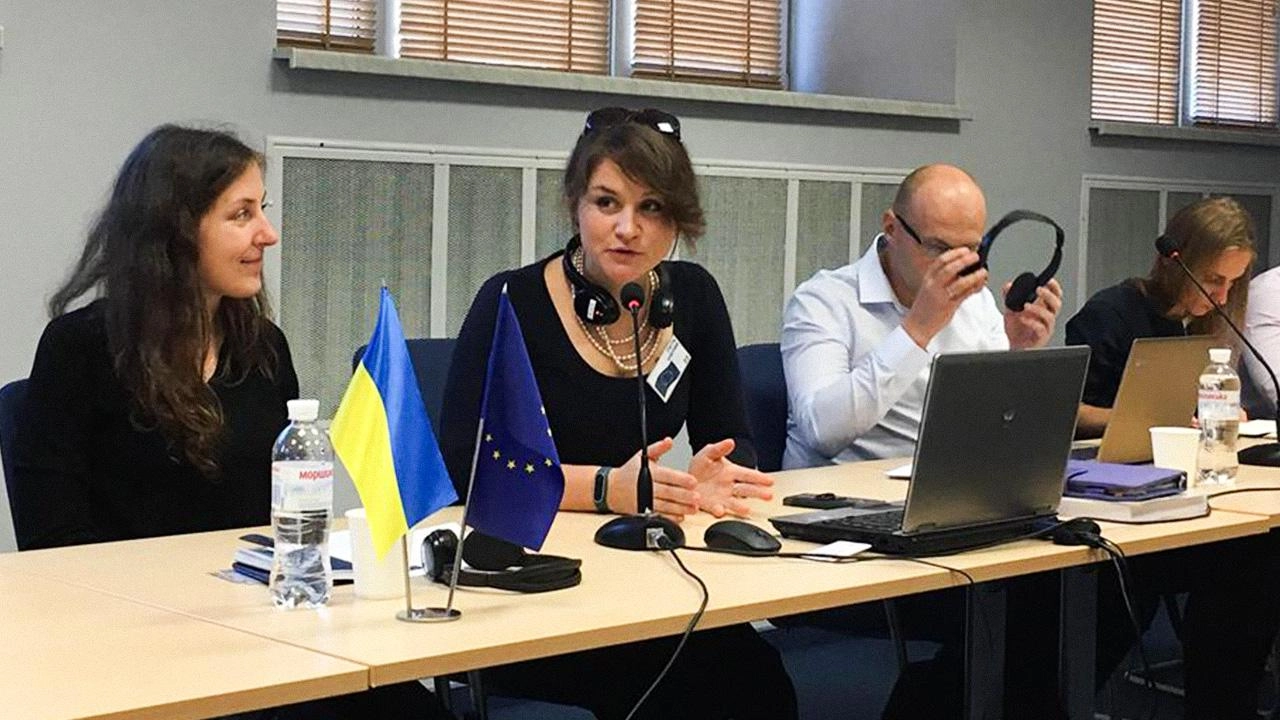
For 10 years, the Center for Civil Liberties presented the Volunteer Award. We closed it because it is no longer needed: Today, up to 80% of Ukraine’s population is involved in healthy volunteering and donations.
Not being included in this process is simply strange here now, because it has become a social norm. Civil society in Ukraine has turned into a real global laboratory of social change that has grown to the scale of the entire population.
Vision of the future from Oleksandra Romantsova
How do you see Ukraine after the end of this war?
Strong and partner-oriented. I really do not want our society to turn into “eternal victims” who only know how to ask for help. We must enter the European Union as equal, strong partners who can contribute a lot to it.
Every Ukrainian currently abroad is a unique ambassador capable of building scientific, business, and cultural bridges between two countries, since they understand both contexts. It is time for us to stop assessing who is a “correct” Ukrainian and who is not. Our diversity is our survival mechanism, and in this, we are extremely talented.
And finally: If you were in my place, what would you ask Oleksandra Romantsova and what would the answer be?
I would ask myself, “What keeps you going?” Because working on the topic of war crimes is, resource-wise, very difficult.
I am supported by the people around me. I have thousands of reasons to be proud of Ukrainians. We are not perfect, but we are alive. I am inspired by the very chance to be inside a society capable of rethinking its past and realizing itself in an entirely new quality.
Friends sometimes call me a “toxic optimist.” But look at your family history since the 1900s: Our great-grandmothers and great-grandfathers survived much more terrible things and stood their ground. We have resources, we have opportunities, and we will definitely learn not just to survive, but to go on living and build a future for our children.
You can also highlight the text and press Ctrl + Enter