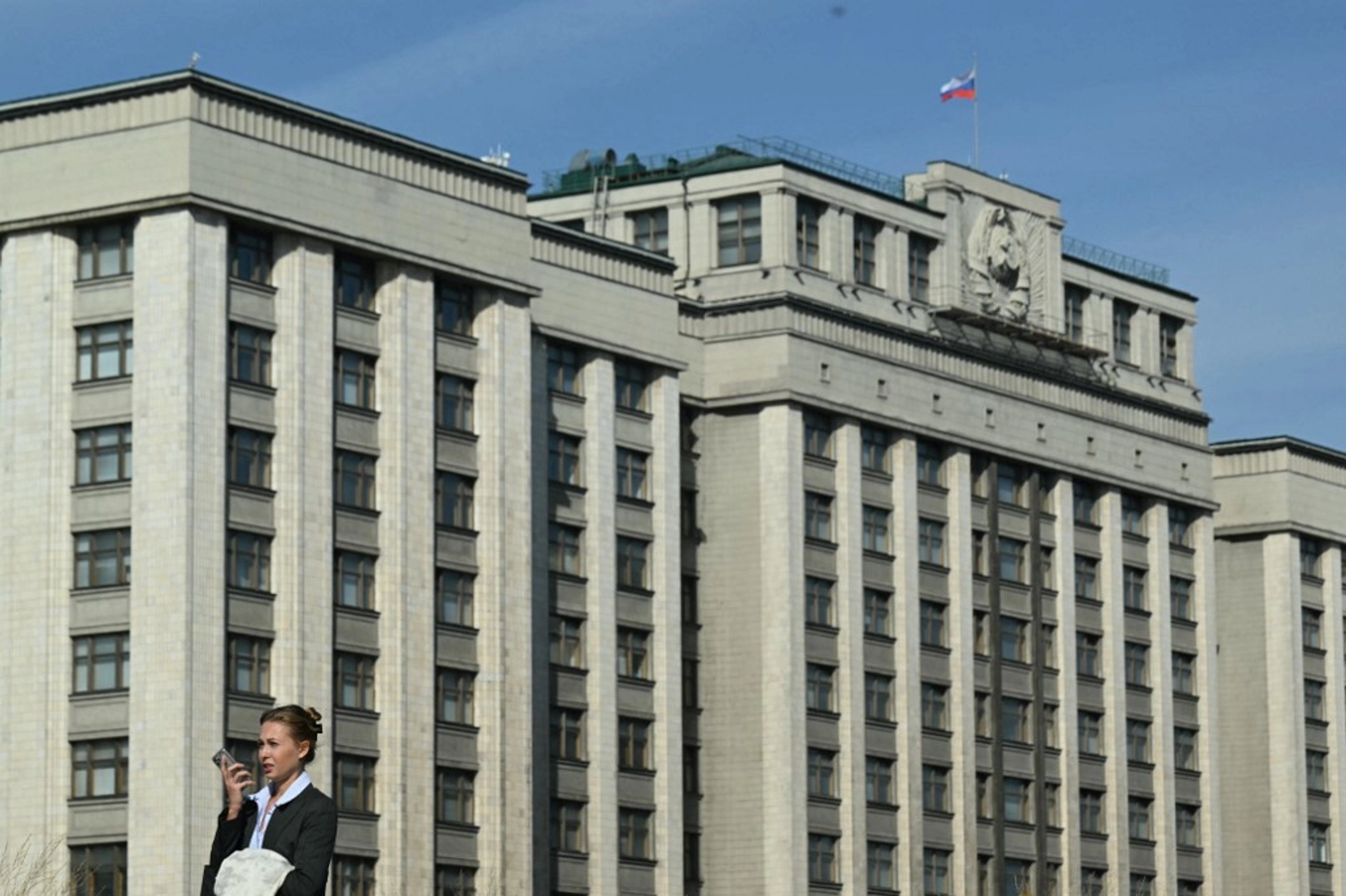
As Russia pushes to tighten control over digital infrastructure, the State Duma has approved a package of amendments banning the use and sale of foreign satellite equipment that has not received authorization to use Russian radio frequencies.
According to Russian media outlet Izvestia, satellite internet devices that have not been assigned radio frequencies by the state will be banned from circulation under the new legislative package “Anti-Fraud 2.0.”
JOIN US ON TELEGRAM
Follow our coverage of the war on the @Kyivpost_official.
The new measures, which go beyond import restrictions introduced in April, are primarily aimed at Elon Musk’s Starlink terminals.
Despite the service already being banned in Russia, the terminals have continued to enter the country through unofficial channels in recent years, The Moscow Times reported Wednesday.
This newly approved legislation aims to stop the circulation of equipment operating outside Russia’s regulated frequency framework and to cover a ban on domestic sales as well. Essentially, the move is meant to close loopholes that allowed such equipment to enter the market in the first place, despite earlier controls.
Elon Musk’s Starlink was “by default illegitimate on the territory of the Russian Federation,” the founder of K-Internet, Sergey Pekhterev said, adding that it did not “in any way comply with the requirements for a satellite communication terminal, meaning no frequencies were allocated to them.”
Ukraine Says Strikes on Russia’s Shadow Fleet Are Legal
The terminals themselves had also not been certified, he explained.
The head of the Department of Information and Analytical Research at T.Hunter, Igor Bederyov, said the terminals operated outside of Russia’s traffic monitoring system, framing the issue in terms of “digital sovereignty.”
“Data transmitted from the country’s territory must comply with national laws,” Bederyov said, adding that the main governmental concern is the creation of communication channels beyond Russia’s oversight.
Under Russian law, licensed telecommunications operators are required to route traffic through the System for Operative Investigative Activities (SORM), which enables state-monitoring of communications.
The new legislation comes amid Russia’s broader push to build its own domestic Starlink-style satellite internet systems, with Russian state-owned and private companies working on low-Earth orbit constellations, including the “Rassvet” network, aiming to reduce reliance on foreign services.
Recent reports that “Rassvet” has already lost one satellite from its initial batch of 16 operational spacecraft months after launch indicate that these systems are still in an early stage of deployment.
You can also highlight the text and press Ctrl + Enter

Russia Hit by 660-Drone Overnight Barrage Targeting Moscow, Crimea and Key Military Sites