Ukraine has reached a staff-level agreement with the International Monetary Fund (IMF) on the first review of its four-year $8.1 billion Extended Fund Facility (EFF) loan program. The agreement leads the way to roughly $690 million in fresh financing, despite the Fund warning that the country’s reform drive has slowed.
The disbursement opens the door to broader international financing for Ukraine, helping ensure the country remains committed to reforms.
JOIN US ON TELEGRAM
Follow our coverage of the war on the @Kyivpost_official.
The IMF greenlit the financing arrangement despite two structural benchmarks for the first quarter being implemented with delays, and a VAT benchmark being missed. Ukraine’s government intends to renegotiate the timeline for implementing VAT for Private Entrepreneurs (referred to as FOPs in Ukraine). Subject to approval by the IMF Executive Board, the agreement was announced on June 12, following a virtual and in-person session led by mission chief Gavin Gray.
The Fund also projects a slower than previously forecast real GDP growth rate of between1.0 and 1.6 percent in 2026. The main factor is the impact of Russia’s ongoing war and the effects of the conflict in the Middle East, according to the IMF press release.
Kyiv Post previously reported that the Fund had projected 2% GDP growth for Ukraine in 2026. The National Bank of Ukraine (NBU) – Ukraine’s central bank – slashed Ukraine’s real GDP forecast from 1.8% to 1.3% for 2026.
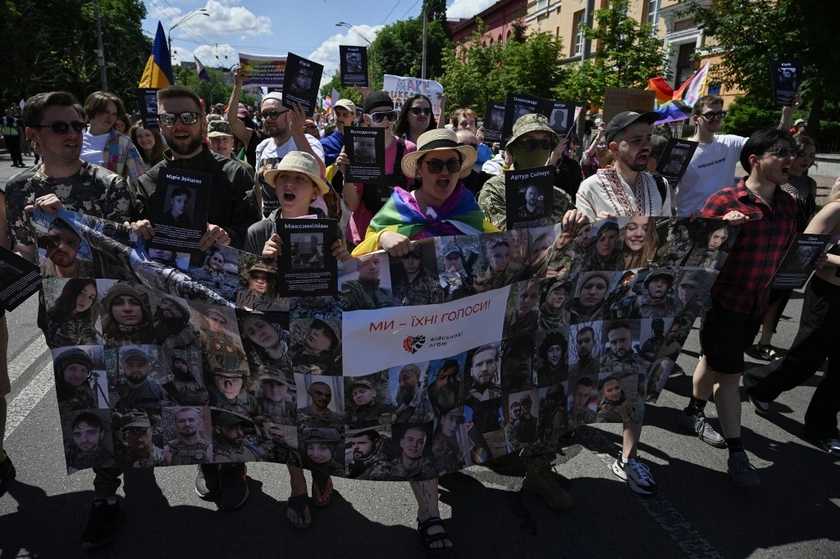
‘Die Together’: Ukraine’s LGBTQ Soldiers Fighting Russia – and for Their Rights
The IMF’s strict emphasis on Ukraine’s fiscal policy
The Fund frames tax and the informal economy as the fairest and most effective way to raise the revenues Ukraine needs while supporting growth. Commitments under the program include removing VAT customs exemption for parcels, and closing a loophole which the Fund says encourages non-essential imports. Bloomberg also reported that the IMF has agreed to let Ukraine postpone legislation to July.
Other fiscal measures include tackling international transfer pricing that helps companies use unfair tax arbitrage to avoid paying taxes in Ukraine. Again, the IMF stated that businesses should stop abusing the simplified tax regime (FOPs),splitting businesses into smaller LLCs, switching between tax regimes, and that they should eliminate disguised employment.
To combat tax evasion, it proposes that Ukraine should also support institutional change at the Economic Security Bureau and the State Customs Service.
The IMF is finally happy with Ukraine’s central bank policy
The press release quoted Gray as saying the independence of the NBU remains a critical pillar for macrofinancial stability, noting that the NBU had delayed lowering the key rate in response to higher inflation.
The NBU guided inflation expectations by “adopting a tightening bias,” hinting that it would raise the key policy rate as soon as inflation worsens or other serious risks materialize, rather than waiting until it’s too late. Kyiv Post previously reported the NBU saying this during its previous briefing on monetary policy, alarmed by the spike in fuel prices from the Middle East war. A more flexible exchange rate was acting as a shock absorber and helping to safeguard reserves, the IMF wrote.
IMF’s ex-European Director Alfred Kammer had previously told Kyiv Post in Washington, DC that the “NBU is doing a fantastic job” to “manage monetary policy with lots of agility, and being timely in its intervention in order to control inflation.
”Banks remain well capitalized, liquid, and highly provisioned with expanded credit supply since 2024 despite the “challenging environment,” the IMF wrote in its press release. Under the program, Ukraine’s authorities are committed to reforms to help attract private investment for post-war reconstruction. The expectation is that this can be achieved by enhancing financial sector resilience, supervision and crisis management, as well as developing financial and capital market infrastructure in line with international standards.
Ukraine’s economic bloc is laying the groundwork for reforms to ease the local capital market’s ownership structure to attract domestic and foreign investors and create more investment instruments in the country.
On June 5, Ukraine’s Ministry of Economy submitted new legislation to parliament to implement the reforms and create a new capital market holding. Ukraine plans to reform the regulation of critical institutions that handle securities record-keeping, clearing, and settlement – these being the National Depository of Ukraine (NDU) and Settlement Center(SC), Kyiv Post previously reported.
The time has come for Ukraine’s energy sector to introduce market pricing reform
The Fund wrote that the current system of household utility tariffs and related public service obligations had weakened state-owned energy companies, limiting funds for repairs and investment. With IMF technical assistance, the authorities are drafting a roadmap to gradually liberalize the market, paired with social protection for vulnerable households. The tariffs should be adjusted in stages and strengthening the energy regulator’s independence is expected to further support the sector, the Fund added.
Fresh momentum on governance and anti-corruption needed
The IMF welcomed the implementation of a risk-based approach to monitoring public officials’ declarations. It stated that Ukraine’s authorities need to strengthen supervisory boards, complete merit-based management appointments, improve transparency and accountability, and address identified governance weaknesses.This will also help establish professional management of state assets and support private investment and reconstruction, according to the press release.
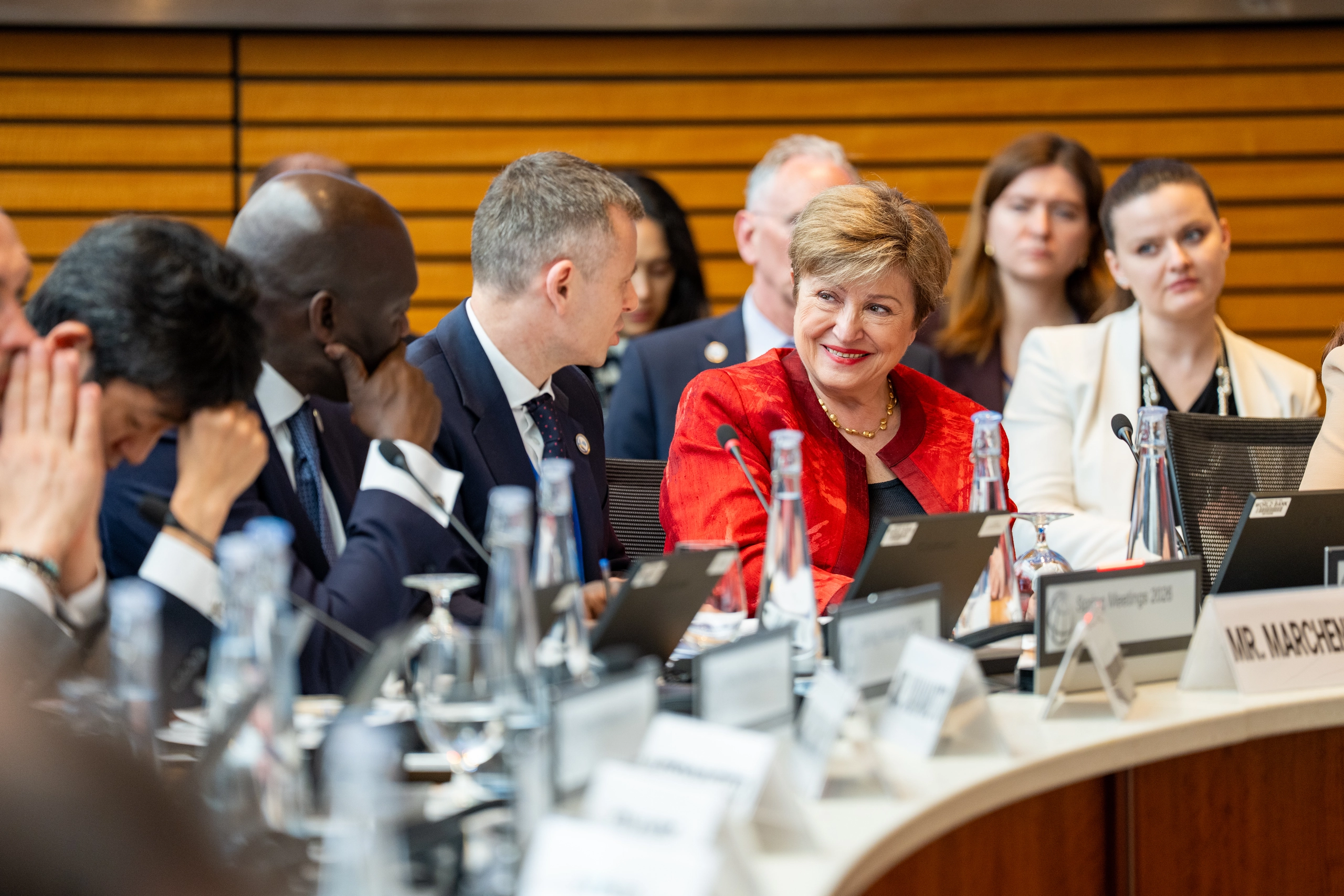
The mission met with Prime Minister Yulia Svyrydenko, Head of the Office of the President Kyrylo Budanov, NBU Governor Andriy Pyshnyy, Finance Minister Serhiy Marchenko and other officials and civil society representatives, the IMF wrote.
You can also highlight the text and press Ctrl + Enter