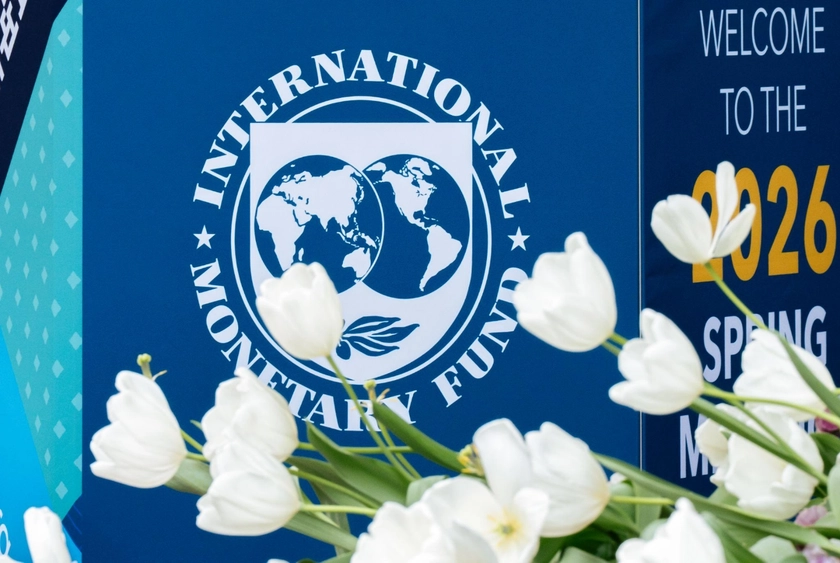
In its April 2026 statement, the International Monetary Fund (IMF) projects 2% GDP growth for Ukraine in 2026, which is the same as it previously projected in 2025. This is despite the country suffering from Russia’s energy strikes in January this year, according to a press release on the Regional Economic Outlook for Europe at the 2026 IMF Spring Meetings.
The IMF’s stance turned out to be a silver lining, although the difference between the IMF’s more optimistic figure and the National Bank of Ukraine’s (NBU) more pessimistic figure is minuscule – the NBU slashed Ukraine’s real GDP forecast from 2.2% to 1.8% in February this year.
JOIN US ON TELEGRAM
Follow our coverage of the war on the @Kyivpost_official.
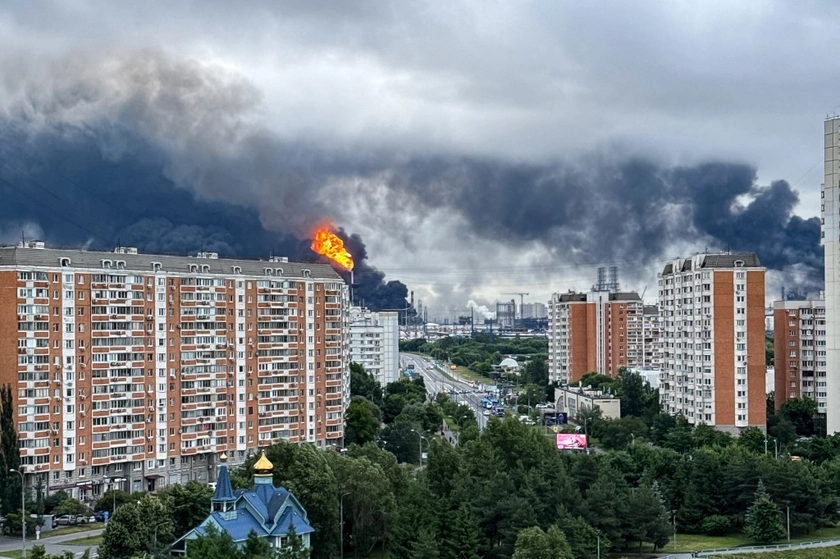
Russia’s attacks in 2026 massively damaged the energy grid, disrupted logistics and enlarged the electricity deficit to approximately 7% in the fourth quarter of 2025, the NBU previously said during its briefing on monetary policy.
This spring, the IMF projects real GDP growth at 2.0% for 2026, 3.5% for 2027 and 4.2% for 2028, but these projections are based on the assumption that Russia’s full-scale invasion of Ukraine will end in 2026. It is still a slight decrease since publishing the previous outlook in October 2025, when the IMF estimated GDP growth for 2026 at 4.5%, and 4.8% in 2027.
As for headline inflation, the IMF projects it at 6.1% for 2026 (down from 7.6% in the October 2025 Outlook), 7.7% for 2027 (up from 5.3% in the October 2025 Outlook), and 5.7% for 2028. The full report has not been published at the time of writing to explain what stands behind the IMF’s calculation.
Russian Economy 'in Dead End' as War Costs Devour Budget
A key change in the IMF’s revised economic forecast is an extended assumption about the duration of the war – the IMF now expects it will last one year longer than the October forecast, which had anticipated an end by late 2025.
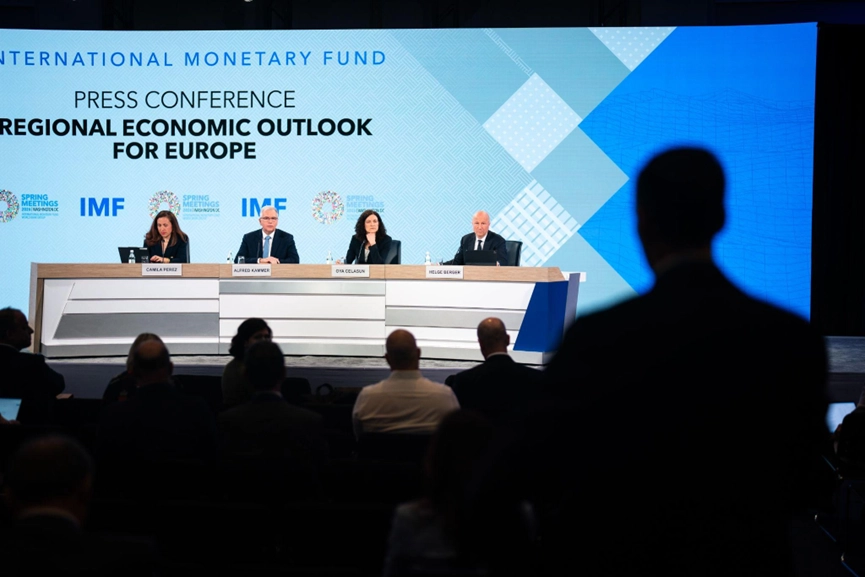
Central Bank became “proficient” at wartime policy
IMF European Department Director Alfred Kammer praised the NBU for its handling of wartime inflation, calling its performance “a good job” despite facing far more severe and frequent supply shocks than any other central bank in its peer group.
Keeping inflation in check under the IMF program has proven far more challenging for Ukraine’s central bank than for its peers, given the constant stream of short-term supply shocks that repeatedly push prices upward.
The NBU has nonetheless “become very proficient in operating in such an environment,” he said, replying to a Kyiv Post question.
“[The NBU] is facing lots of negative short-term supply shocks which suddenly have an impulse on inflation. They did an incredibly good job in keeping inflation under control in those circumstances,” Kammer replied.
“They are taking interest action [adjusting the interest rate] when required in order to prevent second-round effects and to avoid de-anchoring of inflation expectations. Bottom line: incredibly difficult, many more shocks, much more pronounced, and they’re doing a good job in dealing with that. And they have become very proficient in operating in such an environment,” Kammer explained.
You can also highlight the text and press Ctrl + Enter

OPINION: Ukraine’s Warning Britain Still Refuses to Heed
Russian Economy 'in Dead End' as War Costs Devour Budget