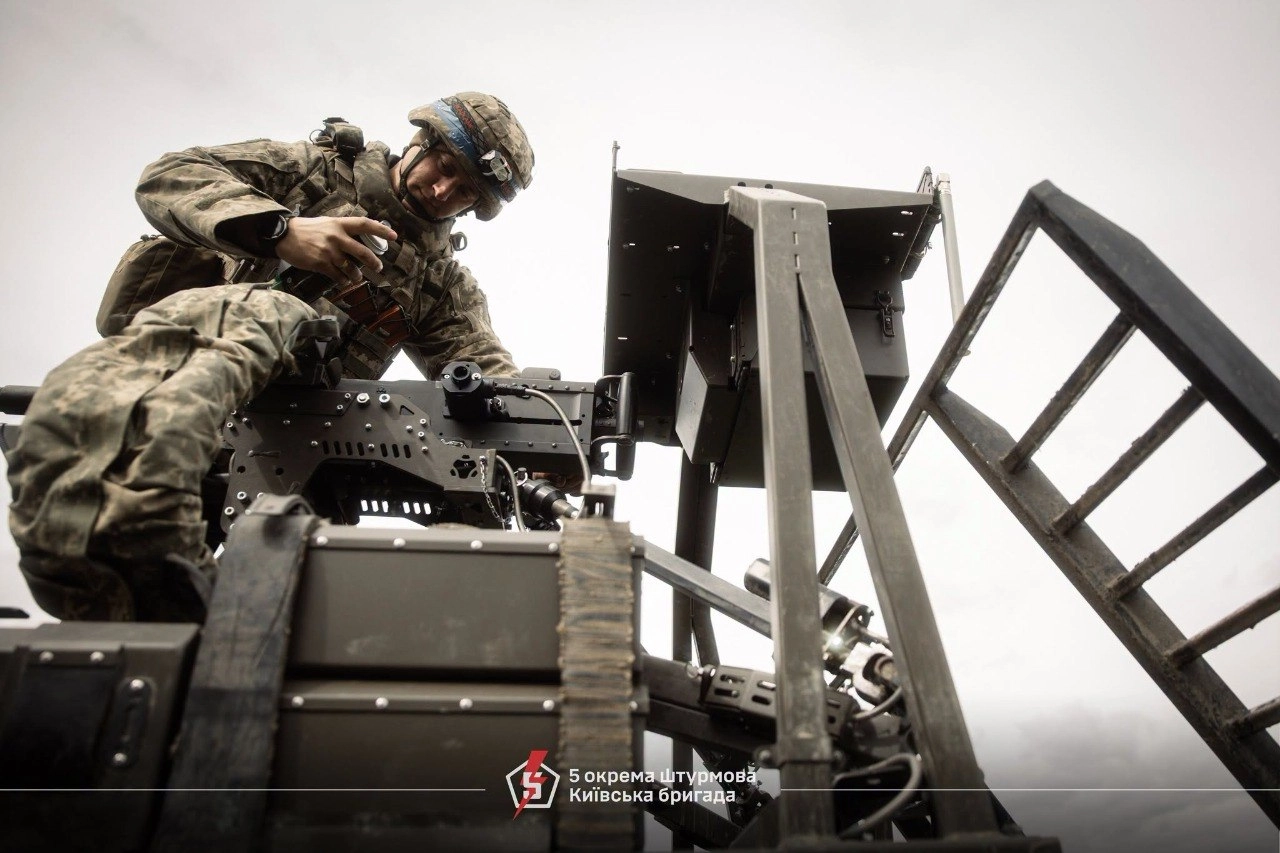
The Armed Forces of Ukraine (AFU) plan to scale up the deployment of experimental technologies designed to counter Russian attack unmanned aerial vehicles (UAVs) and first-person view (FPV) drones, according to a statement by Commander-in-Chief General Oleksandr Syrsky.
Syrsky stated that the continued use of strike drones by Russian forces necessitates technological solutions to improve the survivability of Ukrainian units on the battlefield.
JOIN US ON TELEGRAM
Follow our coverage of the war on the @Kyivpost_official.
The announcement followed a demonstration organized by the AFU’s Central Directorate of Innovation Activity, a platform that coordinates military research with technology developers and defense manufacturers.
According to Syrsky, Ukrainian manufacturers presented new developments and demonstrated their operation in simulated combat conditions. He noted that the test results confirmed the systems possess the capacity to reduce the effectiveness of enemy air attacks.
Technical specifications, operational principles, and deployment tactics remain classified.
“Our task is to ensure that the Russian occupiers learn about their capabilities directly on the battlefield,” Syrsky said.
The military command will analyze the test results before finalizing decisions regarding the scale of production and the integration of these systems into frontline units.
Structural overhaul of military personnel system
The deployment of new defense technologies coincides with the initial phase of a comprehensive overhaul of Ukraine’s military personnel system. The reform introduces fixed-term contracts, revised frontline compensation, and a framework for future release from service.

A System Under Fire: WHO’s Ukraine Chief on How Healthcare Has Held On
Deputy Defense Minister Mstyslav Banik recently outlined the reform during a briefing in Kyiv, stating the objective is to provide clearer service timelines for troops, particularly those mobilized at the start of the full-scale invasion.
Under the revised framework, active-duty soldiers are permitted to sign contracts for a minimum of 10 months, while civilians entering service are subject to a 14-month minimum. Upon completion of the contract, personnel become eligible for temporary deferments from future mobilization based on their combat experience and total length of service.
The reform also implements adjustments to military compensation utilizing the existing defense budget. Frontline assault troops will be eligible for an average monthly pay of approximately Hr. 300,000 ($6,700). The minimum salary for personnel serving outside of combat zones will increase from Hr. 20,000 ($447) to Hr. 30,000 ($670).
Banik stated that the decision to prioritize infantry compensation is based on the risks associated with those positions and a current shortage of infantry personnel.
Additionally, the Ministry of Defense is expanding efforts to recruit foreign volunteers. The ministry also indicated that the implementation of predictable contract terms is expected to encourage the return of service members who previously left their units without authorization.
You can also highlight the text and press Ctrl + Enter

Ukraine to Begin Phased Demobilization by End of 2026