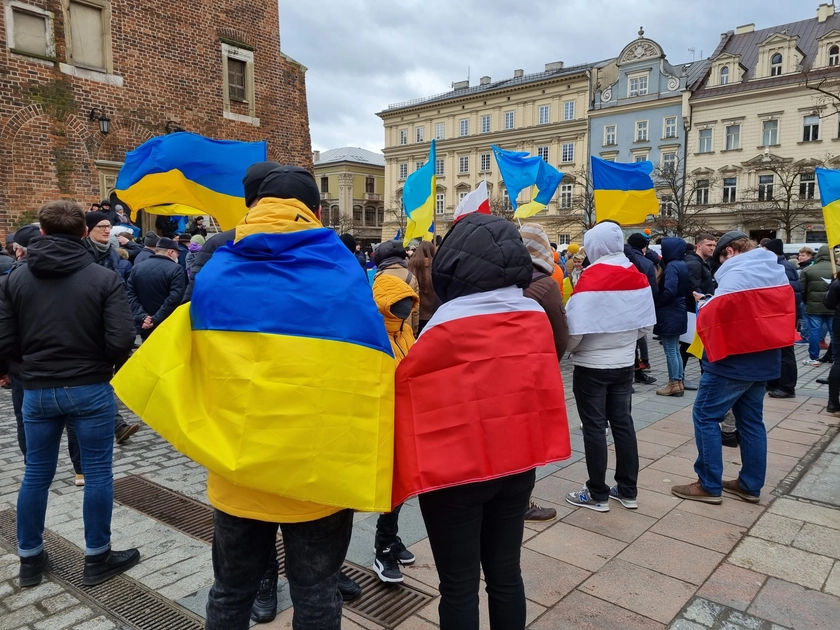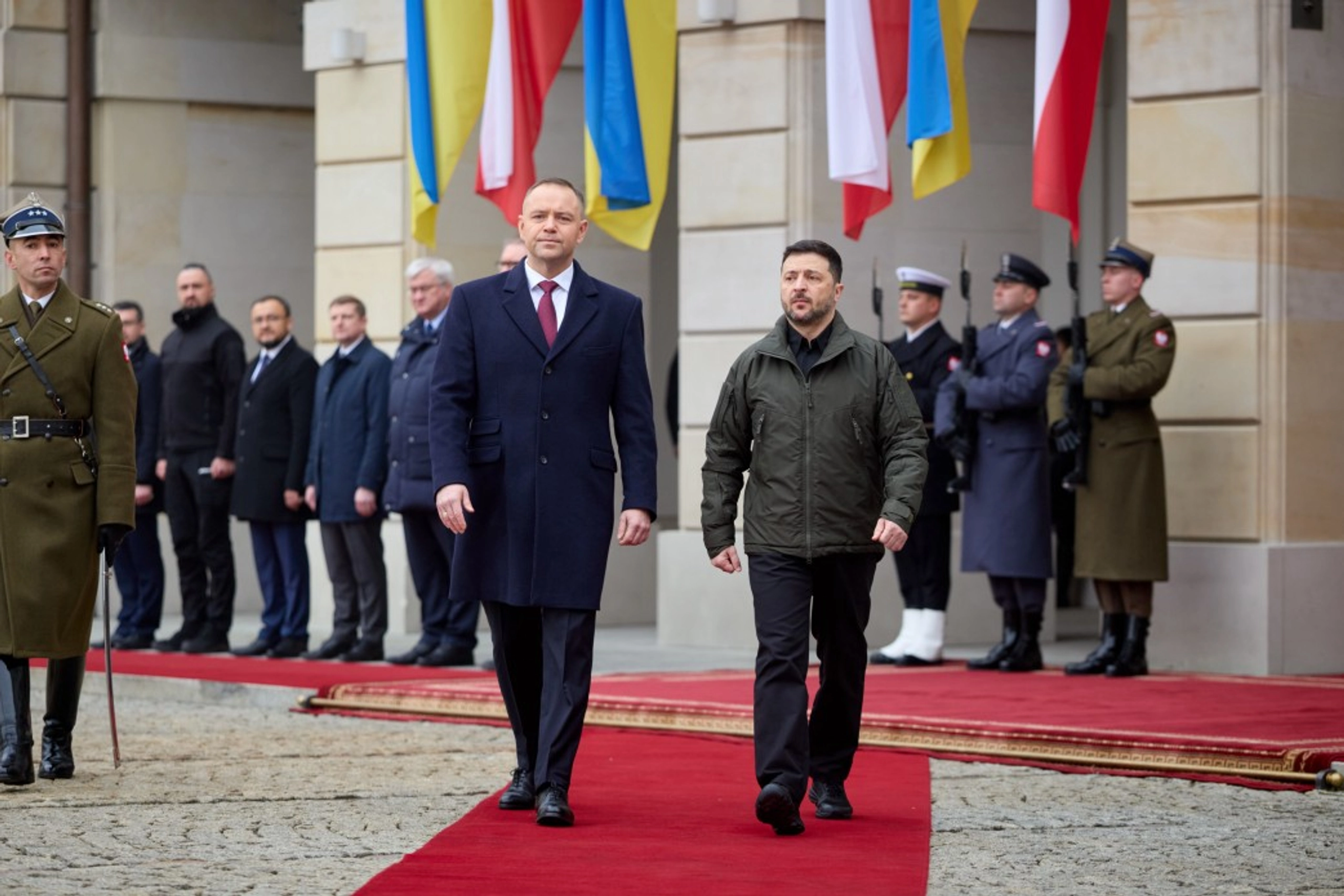
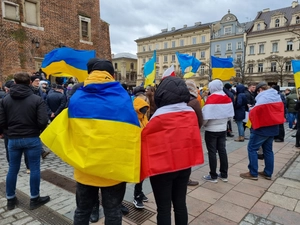
For more than four years, neighboring Poland has been Ukraine’s most reliable partner. When Russian tanks rolled into Kyiv in February 2022, Polish border guards allowed millions of Ukrainian refugees in without paperwork. Families opened their homes to strangers. Volunteers at train stations served food and clothing overnight. Poland became the main logistics hub for Western military aid, and Polish diplomats advocated Ukraine’s European dreams in Brussels.
This alliance, forged through decades of patient reconciliation, was one of the most important geopolitical events of the 21st century. Now that the partnership faces the most serious test – not from Moscow’s missiles, but from Warsaw’s presidential palace.
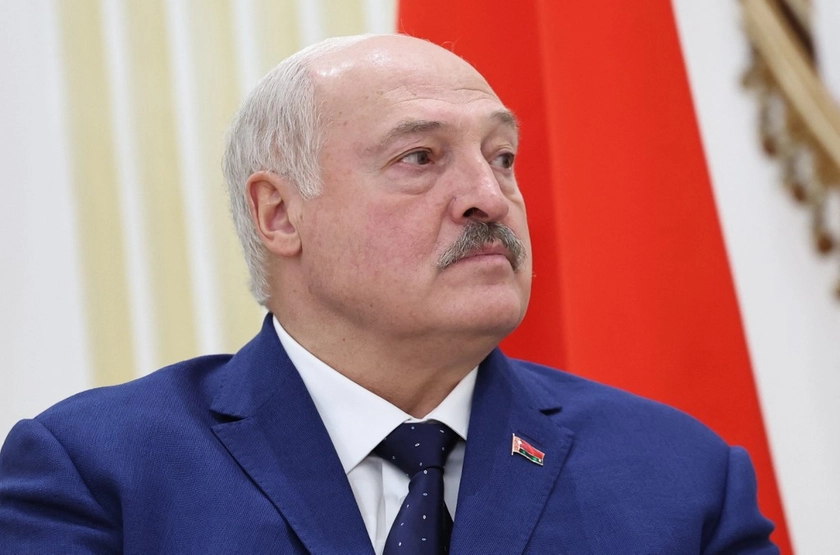
Poland’s President Karol Nawrocki, has publicly opposed Ukraine’s EU membership, citing agricultural competition and sovereignty. He has collaborated with Hungarian Prime Minister Peter Magyar in blocking fast-track procedures for Ukraine’s membership.
Most disturbingly, he has reopened historical wounds that past leaders have worked so hard to heal from the Volyn massacres of 1943.
The irony is stunning: Nawrocki is playing to conservative domestic audiences and has given the Kremlin an unearned victory by fracturing the regional alliance that threatens Russian hegemony.
The irony is stunning: Nawrocki is playing to conservative domestic audiences and has given the Kremlin an unearned victory by fracturing the regional alliance that threatens Russian hegemony.
The weight of history, the promise of reconciliation
The Volyn massacres of 1943, in which tens of thousands of Polish civilians were slaughtered by Ukrainian nationalist forces, remain a painful memory in Poland. The atrocities occurred in what today is northwestern Ukraine but was then occupied by Nazi Germany. The region, along with Eastern Galicia, had previously been part of the interwar Polish state, whose largest ethnic minority – some 5-6 million-strong – were Ukrainians who had resisted what for them was Polish domination and colonization.
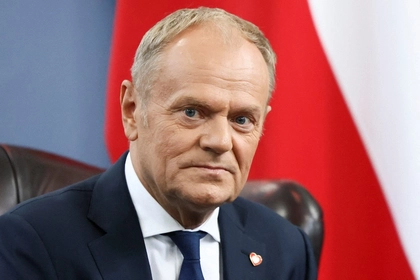
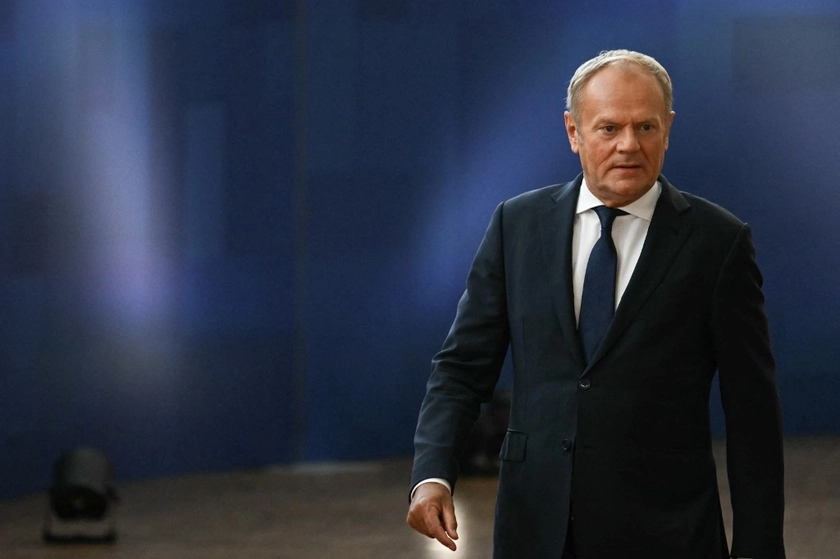
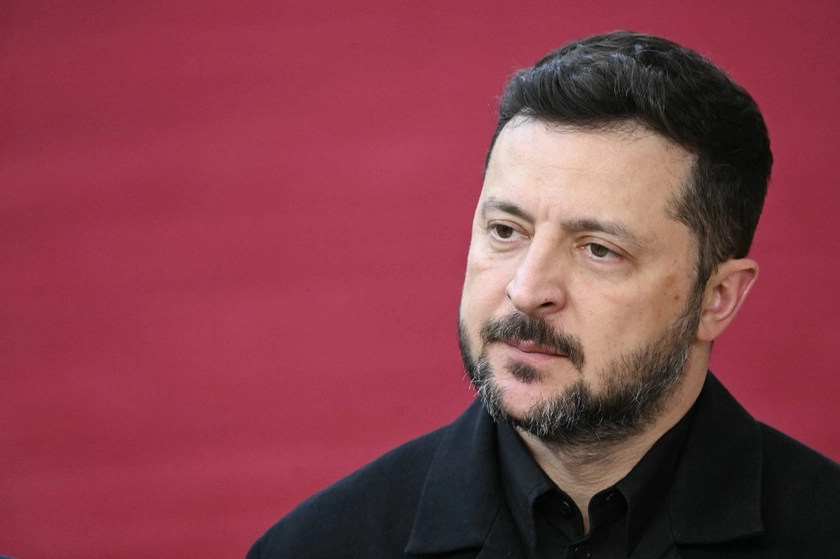
Polish PM Tusk Warns Diplomatic Rift Over Zelensky’s Award ‘Pleases Putin’
For their part, Ukrainians who remember that the killing and ethnic cleansing took place on both sides, question the unverified figures of victims presented by the Polish side, and stress that Poland’s share of the hatred and enmity that erupted at that time must also be factored in.
What was so remarkable about the modern Polish-Ukrainian partnership was that both sides were willing to deal with this legacy. In 1997, Polish President Aleksander Kwaśniewski and Ukrainian President Leonid Kuchma came together in Kyiv and issued a declaration acknowledging the suffering of both nations.
It was a moment of political courage – Kwaśniewski was criticized at home, but he chose reconciliation over nationalism.
Pope John Paul II’s 1999 visit to Ukraine was particularly significant. He made a direct call for forgiveness between the two nations, and it resonated because of his Polish heritage. His words gave leaders moral permission to choose reconciliation without appearing weak.
Both sides were mature enough to know that dwelling on historical grievances only served those who sought to weaken and divide Poland and Ukraine. They chose instead to work toward institutions of cooperation, expand trade, and build relationships that would make future conflict unthinkable.
Nawrocki now reopens these wounds, in violation of the basic principle that Poland itself made peace with Germany after World War II – that nations can acknowledge historical wrongs and still move forward together.
Nawrocki’s objections – and what lies beneath
The intensity of Nawrocki’s opposition, particularly with reference to the past, suggests that historical grievances likely serve as political cover for a deeper anxiety: Poland’s place in a new European context.
Polish farmers have legitimate concerns about competition from Ukraine’s vast agricultural market. The EU has mechanisms to deal with such transitions – phased integration, temporary protections, and structural funds. Solutions exist, but they require negotiation rather than obstruction.
The intensity of Nawrocki's opposition, particularly with reference to the past, suggests that historical grievances likely serve as political cover for a deeper anxiety: Poland’s place in a new European context.
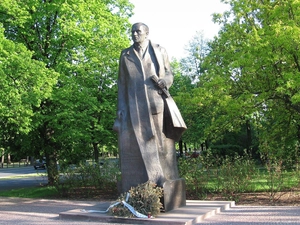
Poland has been the largest and most dynamic post-communist success story in the EU for three decades now, and it has had the biggest influence as a bridge between old and new Europe. Ukraine – a country with a diminished yet still large population, vast agricultural resources, enormous industrial capacity, and potential for reconstruction – would not join the EU as a mere supplicant. It would be a major member state, potentially dwarfing or overshadowing Poland in terms of economic weight and political relevance.
This seems to be the sort of fear that Nawrocki is hiding behind. The Volyn massacres and the UPA (Ukrainian Insurgent Army) that fought for Ukraine’s independence against the Germans, Poles, and Soviets, become convenient historical rationales for what is essentially competitive positioning. It is easier to invoke historical justice than admit anxiety about relative status.
Nawrocki’s alignment with Magyar raises even more questions. If Nawrocki is proud to say he supports Magyar’s obstruction of Ukraine’s quicker EU accession and to reopen old historical wounds, then he associates himself with, or rather implicitly assumes the role of, Europe’s recent most pro-Kremlin leader – Magyar’s predecessor, Viktor Orbán.
But Nawrocki’s actions have also revealed their irony. Rather than isolating Ukraine, Nawrocki’s stance has triggered a remarkable display of unity in the country. Three former Ukrainian presidents – Petro Poroshenko, Viktor Yushchenko, and Leonid Kuchma – have promptly backed Zelensky and temporarily bridged deep political rifts in Ukraine.
In the meantime, Nawrocki has generated anti-Ukrainian sentiment in Poland itself, creating real fear for the hundreds of thousands of Ukrainian refugees who live there and have been waiting for a chance to get out.
It is exactly the opposite of what Nawrocki wanted to do: Ukraine has united against him, Poland has divided against him, and as a result, he has assumed the role of an irresponsible populist politician who seemingly is prepared to overlook the fact that he is playing into the hands of the Kremlin.
Polish voices of reason
Fortunately, Nawrocki is not speaking for all of Poland. His position has drawn intense criticism from those who cherish the Polish-Ukrainian bond.
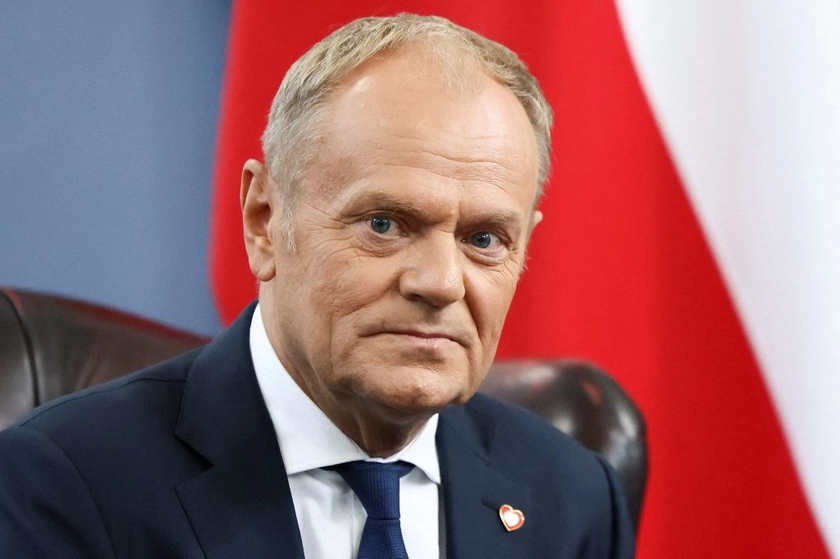
Poland’s Prime Minister, Donald Tusk has made it crystal clear that the president cannot block Ukraine’s membership in the EU; the constitution requires parliamentary approval. Foreign Minister Radosław Sikorski has publicly defended Ukraine’s European path.
Fortunately, Nawrocki is not speaking for all of Poland. His position has drawn intense criticism from those who cherish the Polish-Ukrainian bond.
These positions concern the judgment of officials who recognize that Poland’s security depends on Ukraine’s strength. But the pushback goes beyond government. Film-maker Agnieszka Holland and historian Timothy Snyder argue that Nawrocki’s approach is in direct contrast to the reconciliation work of earlier generations.
Major Polish newspapers have criticized the stance as strategically self-defeating. Polish families who have hosted Ukrainian refugees are making their own judgment – thousands who opened their doors in 2022 cannot understand how their president could turn his back on people they now consider friends.
Opinion polling captures this sentiment: while Ukrainian support among Poles has declined from the extraordinary mobilization of 2022, a majority still recognize that Ukraine’s independence and Western integration directly serve Polish interests. Polish clergy, including Archbishop Marek Jedraszewski of Kraków, have said that honoring victims does not need sabotaging contemporary Ukrainian statehood.
This internal Polish debate suggests that Nawrocki’s presidency need not be catastrophic for Polish-Ukrainian relations. Constitutional checks, governmental opposition, and public pressure can constrain his ability to do lasting damage.
The path forward
Both Poland and Ukraine face a choice. They can let historical grievances and economic anxieties split a partnership that serves the vital interests of both nations, or they can show the diplomatic maturity that has defined their relationship for three decades.
The Polish-Ukrainian alliance has survived Russian aggression, economic pressure, and the burden of difficult history. What sustains is not diplomatic formality but the thousands of daily connections between ordinary people – the business partnerships, the families divided by borders, and the young people who see their futures as linked.
And the very real continuing threat to both coming from a resurgent imperial-minded Russia, which has patriots from both Poland and Ukraine to share the motto: For your freedom and ours!
With wisdom and a clear-eyed understanding of shared interests, it can and will survive this test, too.
The views expressed in this opinion article are the author’s and not necessarily of Kyiv Post.
You can also highlight the text and press Ctrl + Enter