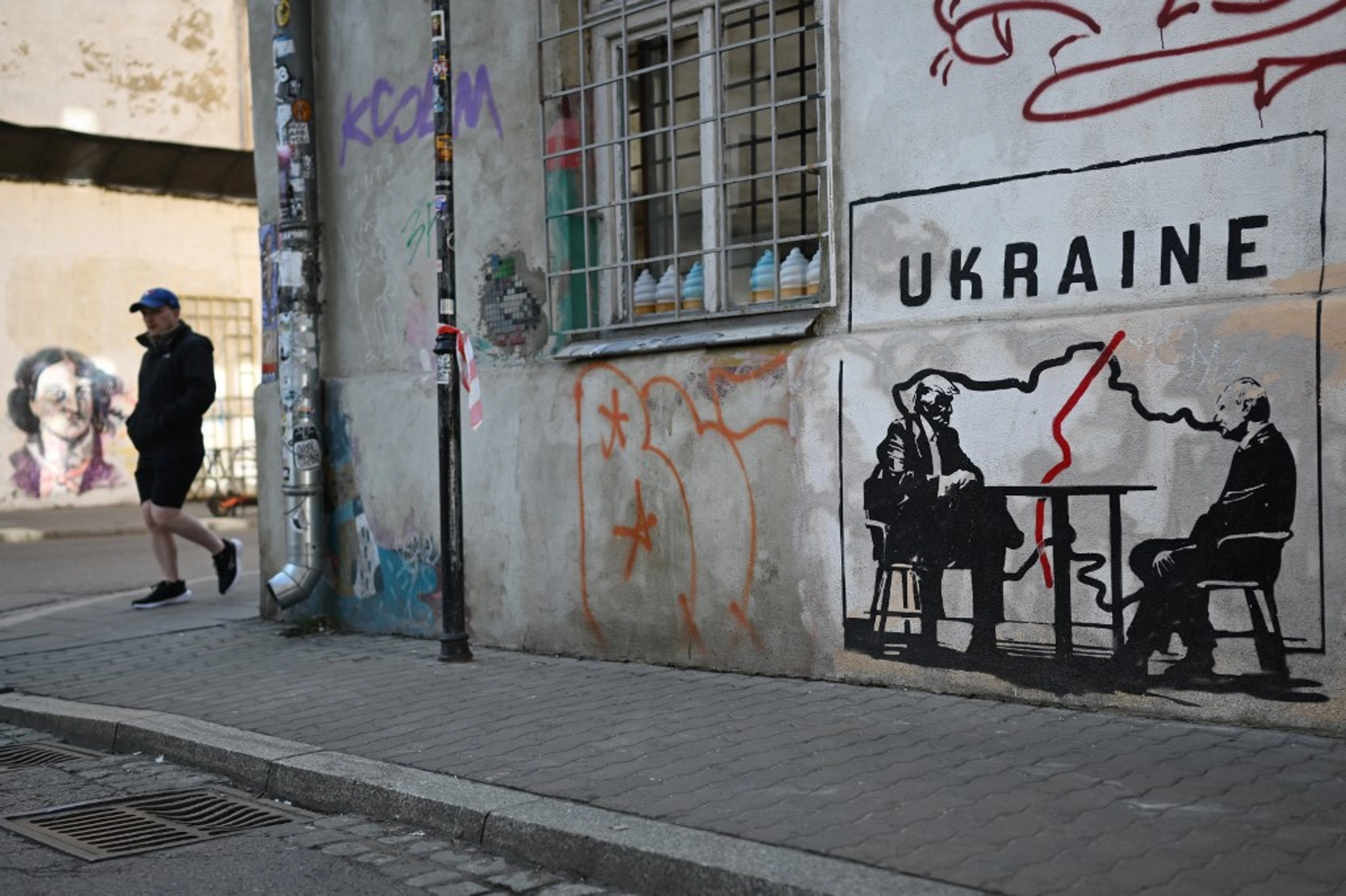
Words matter for Russia – especially those that don’t call “war” a war. Language helps to cloud people’s thinking and label violence by other names, giving Russia the space to commit new crimes.
Russia calls its full-scale war against Ukraine a “special military operation” and its intervention in Crimea and Eastern Ukraine a “separatist conflict” to create an illusion that it’s a minor thing rather than a destruction of the entire post WWII world order.
JOIN US ON TELEGRAM
Follow our coverage of the war on the @Kyivpost_official.
It calls its continued demands for capitulation of Ukraine “negotiations” to reduce support for Ukraine and sow false hopes for peace.
A single, carefully chosen word – “separatists,” “negotiations,” “conflict” – can neutralize Western resolve more effectively than any military operation. It costs nothing to produce, but it works as a political instrument designed to conceal aggression, diffuse responsibility, and weaken resistance.
Sun Tzu stated that “The supreme art of war is to subdue the enemy without fighting.” Russia’s KGB-rooted government is doing exactly this.
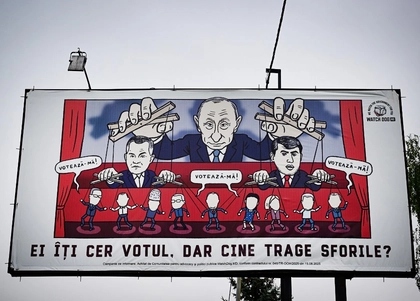
Using disinformation and manipulations, it helped elect Trump and thus weakened the US and undermined NATO. It finances both far-right and far-left political parties and promotes anti-migrant sentiment to destabilize European unity and weaken the social fabric of European countries. Its fakes spurred riots in Southport in 2024, stirred up “yellow vests” protests in France, and border blockades by Polish farmers.
Russia Warns Citizens Against Travel to Moldova
At the same time, it cultivates its image as a “great country” with a “great culture.” It is fairly successful.
According to a recent poll, only three European countries have more people who say they would defend their country in the event of an attack than people who say they would not.
Using its “newspeak,” Russia tweaks reality to distract people’s attention from its war against Europe while it builds up its military strength.
The cornerstone of this strategy is language.
Russian troops, not separatists
Consider “separatist.” There were never any “separatists” in the Donetsk and Luhansk oblasts of Ukraine. The so-called “separatist leaders” are Ukrainian collaborators whom Russia used to conceal its aggression.
They never had any political ambitions. One worked as a Santa Claus, another as a dealer in a Ponzi scheme, etc.
In 2014, Russian special forces, saboteurs, and then regular troops, first stirred unrest in many Ukrainian cities and later occupied some territory of Ukraine, installing their puppet regimes in the occupied land.
The creation of the so-called “independent republics,” whose puppet governments then invite Russian troops, is a standard instrument that Russia uses to “justify” its aggressive wars.
It relied on this approach in 1918 before its war with the newly independent Ukraine, in 1939 ahead of its attack on Finland, in 1991-92 during the conflict in Moldova, and in wars with Georgia in 1991-92 and 2008, among other instances.
The only two reasons for the creation of the so-called “Donetsk and Luhansk People’s Republics” were the weakness of the Ukrainian government in 2014 and pressure from Ukraine’s partners to surrender territories for fear of escalation.
Despite that, the “separatist” narrative is so widespread that it is hard to find Western coverage on the matter that does not use this cliche. The frequency of use does not make it correct.
Yet, it made Russian aggression “invisible” (i.e., many people believe that Russia’s war on Ukraine started in 2022 rather than 2014) and justified “business as usual” with Russia, including the infamous Nord Stream II project.
Putin’s war
Another frequently used, but wrong definition, is “Putin’s war.”
You can find it everywhere – from NYT or WSJ articles, to the Cannes speech of Russian filmmaker Andrey Zvyagintsev, who pleads for Putin to stop the war.
But why would he stop?
Although political sentiments in a dictatorship can be biased, his popularity today is higher than it was before the annexation of Crimea. Even among Russians who live outside of Russia, about 40% support Putin, nearly 80% of Russians steadily support the war, and there is no lack of volunteers (about 30,000 per month) who are willing to join the Russian army and go kill Ukrainians.
Their families obviously don’t mind either.
The Russian military industry, which currently employs about 3 million people, has no shortage of labor force. Tens of thousands of workers, including foreigners, work in the Alabuga drone-producing plant.
The wars in Chechnya in 2000-03 and in Georgia in 2008 increased Putin’s approval ratings too. Putin is just fulfilling the collective will of the Russian people who believe that, as a superior nation, they are allowed to kill others.
It is Russia’s war, not Putin’s war.
A hypothetical replacement of Putin by another person may lead to a ceasefire. However, without dismantling the Russian imperial mindset, which is obvious even in the Russian so-called opposition, any ceasefire will only lead to a more intense war, once Russia recovers from Ukrainian strikes.
Negotiation is a cover-up for genocide
But perhaps the worst of all deceitful terms is “negotiations.”
In reality, these are only performative talks because Russia does not want any agreement, as Putin recently confirmed.
“Negotiations” is a spectacle organized by Putin and supported by Trump, in which Ukraine has to participate to preserve the remnants of the US backing. The only purpose of these so-called “peace talks” is the reduction of international support for Ukraine.
If peace is within reach (spoiler: it’s not), then there is no need to provide Ukraine with more weapons and funding.
These fake “negotiations” can last for years without any agreement on a ceasefire, let alone peace, since their only tangible result – the end of the diplomatic isolation of Russia – has already been achieved.
This opened the door for Russia’s return to other areas.
Although Russia intensifies the devastation of Ukraine, its athletes participate in international competitions, its movies receive all possible awards, and its artists are, once again, on the world stage.
Using these fake “negotiations,” Russia is normalizing the genocide in the same way as it normalized the occupation of Ukrainian territories using “separatists.”
Therefore, why would Putin want to negotiate with President Stubb or any European leader if he is constantly cultivating new “Orbans” in many European countries?
Given current political developments in the EU, he can realistically expect Alice Weidel or Marine Le Pen as his European counterparts in the near future.
And why would he be willing to retreat if he has steady support from China, the Russian people, and the US?
Russia has given the world many words, including “sputnik,” “pogrom,” and “gulag.”
If Europe continues to focus on “negotiations,” this war will add another Russian word to the global lexicon: “denazification” or the destruction of a democratic nation labeled as “nazis” while everybody is focused on a fake “peace process.”
Every concession framed as “diplomacy” is a village burned. Every time Western leaders repeat Russian “newspeak,” they become its amplifiers.
Ultimately, after 12 years of Russian aggression, Ukraine does not need borrowed euphemisms from its partners.
Ukraine needs more advanced and effective weapons to strengthen its ability to win the war.
The views expressed in this opinion article are the author’s and not necessarily those of Kyiv Post.
You can also highlight the text and press Ctrl + Enter
Attack on Moscow Oil Refinery: Putin Under Pressure?