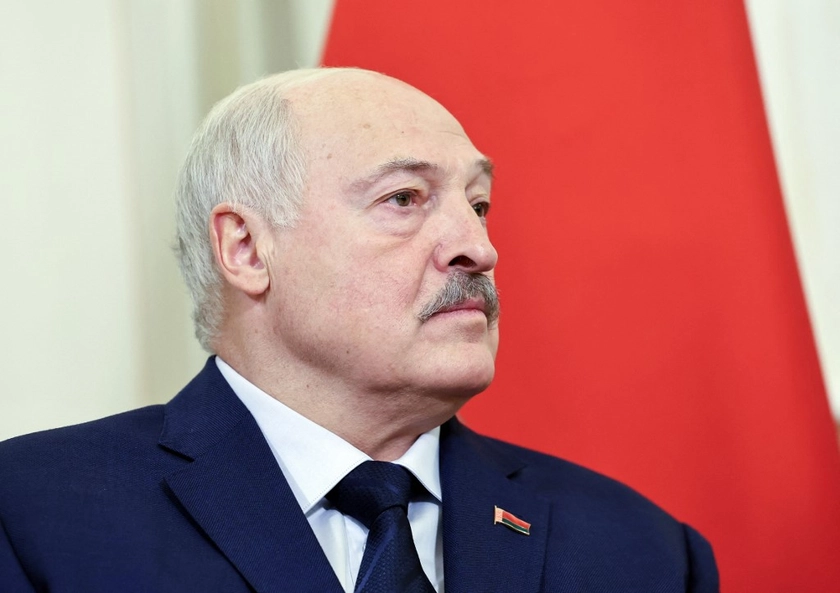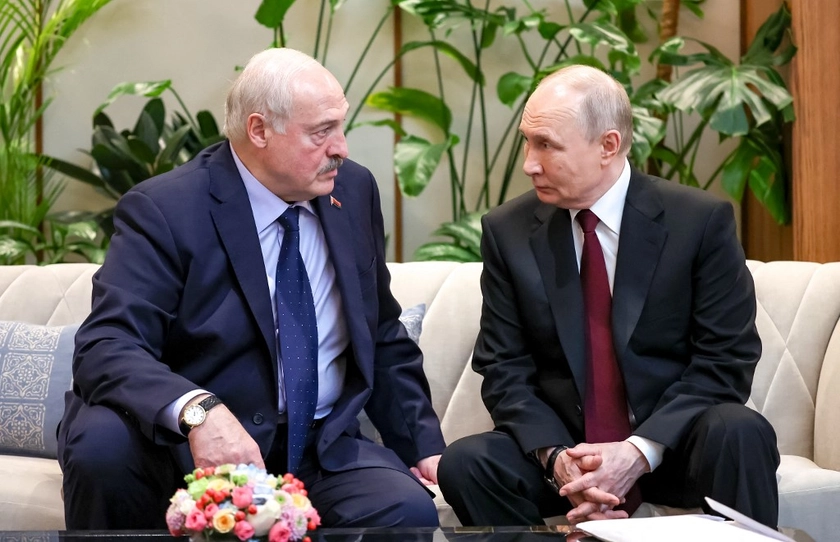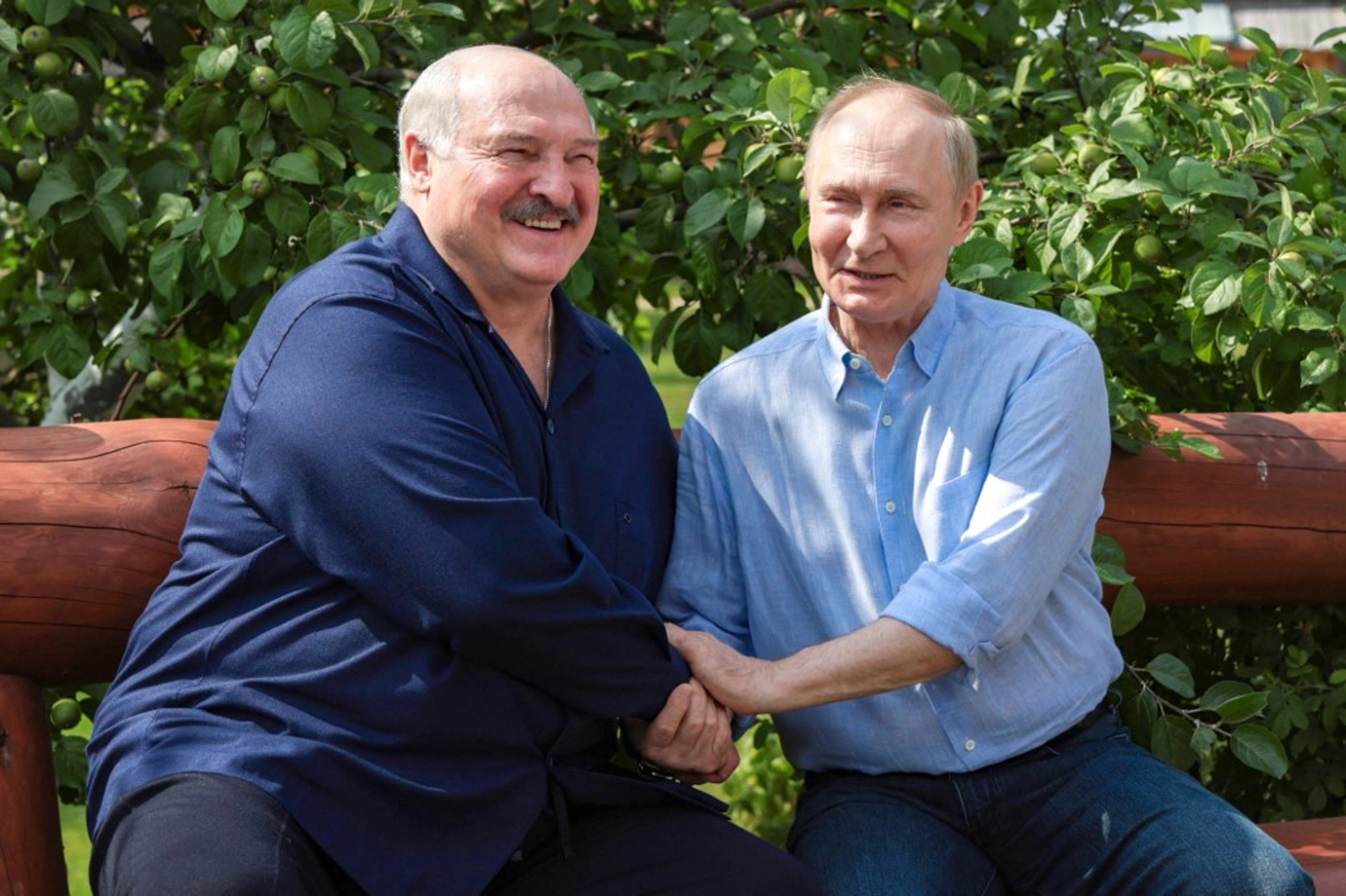
Russian President Vladimir Putin and Belarusian leader Alexander Lukashenko held closed-door talks on Friday, at Putin’s secluded Valdai residence. Officially, the Kremlin described the meeting as a routine discussion of trade, joint projects and “regional security.”
But the timing tells a far more serious story.
JOIN US ON TELEGRAM
Follow our coverage of the war on the @Kyivpost_official.
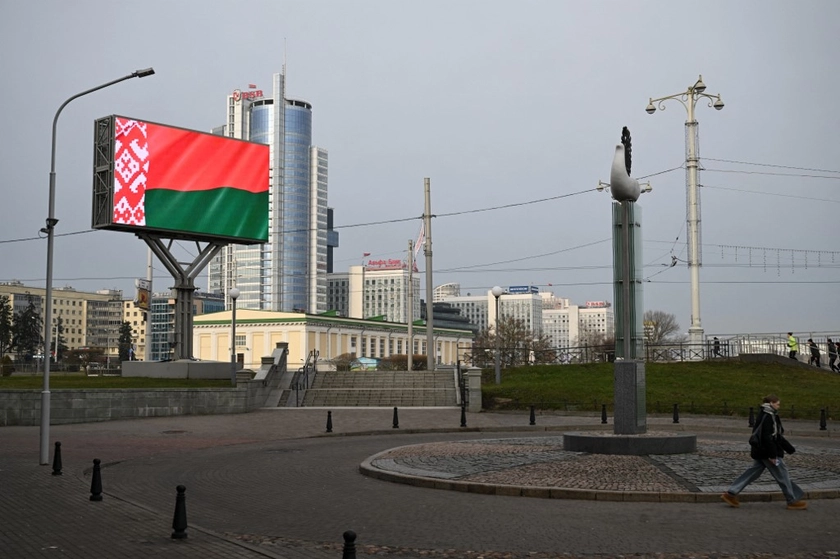
The talks came at a moment of rising tension between Kyiv and Minsk, following Ukraine’s warning over Russian military infrastructure on Belarusian territory. For Ukraine, Belarus is no longer merely a passive Russian ally. It is a logistical, military and strategic enabler of Moscow’s war.
The closed format of the Valdai meeting – with no press conference, no public statements and no signed documents expected – only deepens the sense that the most important discussions were not meant for public consumption.
The shadow of Kyiv’s warning
The meeting followed a direct warning from President Volodymyr Zelensky, who recently gave Belarus one week to remove Russian signal relay stations that Kyiv says were being used to guide attacks against Ukraine.
The Kremlin dismissed the warning as a threat to Belarusian sovereignty. That response was predictable. What matters more is that the warning appeared to shift the strategic equation.
Kyiv Post previously reported that the relay sites had gone dark after Zelensky’s ultimatum, according to the Ukrainian leader’s reference to military and intelligence reports.
Russia May Provoke Baltics, Poland as Ukraine Strikes Deep
For Lukashenko, this is exactly the kind of crisis he has tried to avoid since the start of Russia’s full-scale invasion. He wants the protection and subsidies that come with Putin’s backing, but not the costs of becoming a full participant in the war.
That balance is becoming harder to maintain.
Belarus as Russia’s launchpad
Lukashenko has avoided sending Belarusian troops directly into Ukraine, but Belarusian territory has already played a decisive role in Russia’s war.
In February 2022, Belarus served as one of the main launchpads for Russia’s full-scale invasion. Since then, Minsk has hosted Russian tactical nuclear weapons, held repeated joint military exercises and provided military infrastructure that helps Moscow sustain pressure on Ukraine.
For Kyiv, the issue is not only whether Belarusian soldiers cross the border. The deeper concern is whether Belarusian territory, bases, radar systems, relay stations and logistics continue to support Russian attacks.
That makes Belarus part of the battlefield, even if Lukashenko insists he is not part of the war.
Lukashenko’s shrinking room to maneuver
The Valdai talks likely reflected Putin’s growing impatience with any sign of hesitation from Minsk.
Lukashenko’s room to maneuver has always been limited, but it is shrinking further. His regime depends on Moscow politically, economically and militarily. Yet allowing Russia to use Belarusian infrastructure to guide attacks on Ukraine also increases the risk that Belarusian assets could become legitimate targets in Kyiv’s campaign to stop those attacks.
This is the core dilemma for Lukashenko: he cannot easily say no to Putin, but saying yes carries growing danger.
The official reference to “regional security” is therefore doing a lot of work. In Kremlin language, it can mean almost anything – from border pressure to military integration, from drone routes to nuclear signaling. Given the timing of the meeting, it is difficult to imagine Ukraine was not central to the conversation.
The stakes for Kyiv
For Ukraine, the Valdai meeting comes at a critical moment. Kyiv is pushing for more air defense and anti-ballistic systems ahead of the NATO summit in Ankara, while also expanding its own long-range pressure campaign against Russian military and economic targets.
Belarus sits directly inside that equation.
If Minsk continues to provide Moscow with infrastructure that helps guide or support attacks on Ukraine, Kyiv will treat that not as neutrality, but as complicity. The message is increasingly clear: Belarus may avoid sending troops into Ukraine, but it cannot pretend that logistical and technical support for Russian aggression is consequence-free.
Putin may have summoned Lukashenko to Valdai to tighten control, demand loyalty and ensure Belarus remains available for Russia’s next phase of pressure against Ukraine.
But the meeting also exposed a weakness in the Russian-Belarusian alliance. Lukashenko is useful to Putin only as long as he can provide territory, infrastructure and strategic depth without triggering direct consequences. Kyiv’s warning showed that this arrangement is no longer cost-free.
You can also highlight the text and press Ctrl + Enter

Zelensky Urges Belarus to Prove Anti-War Stance