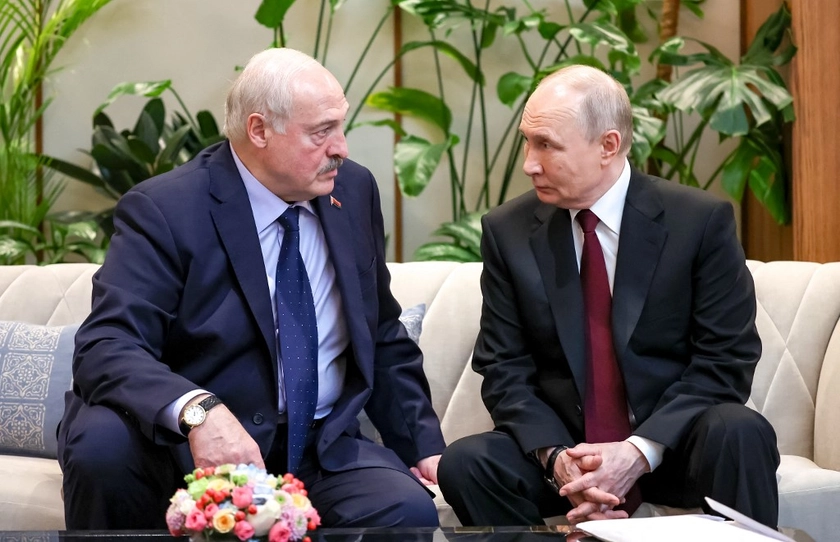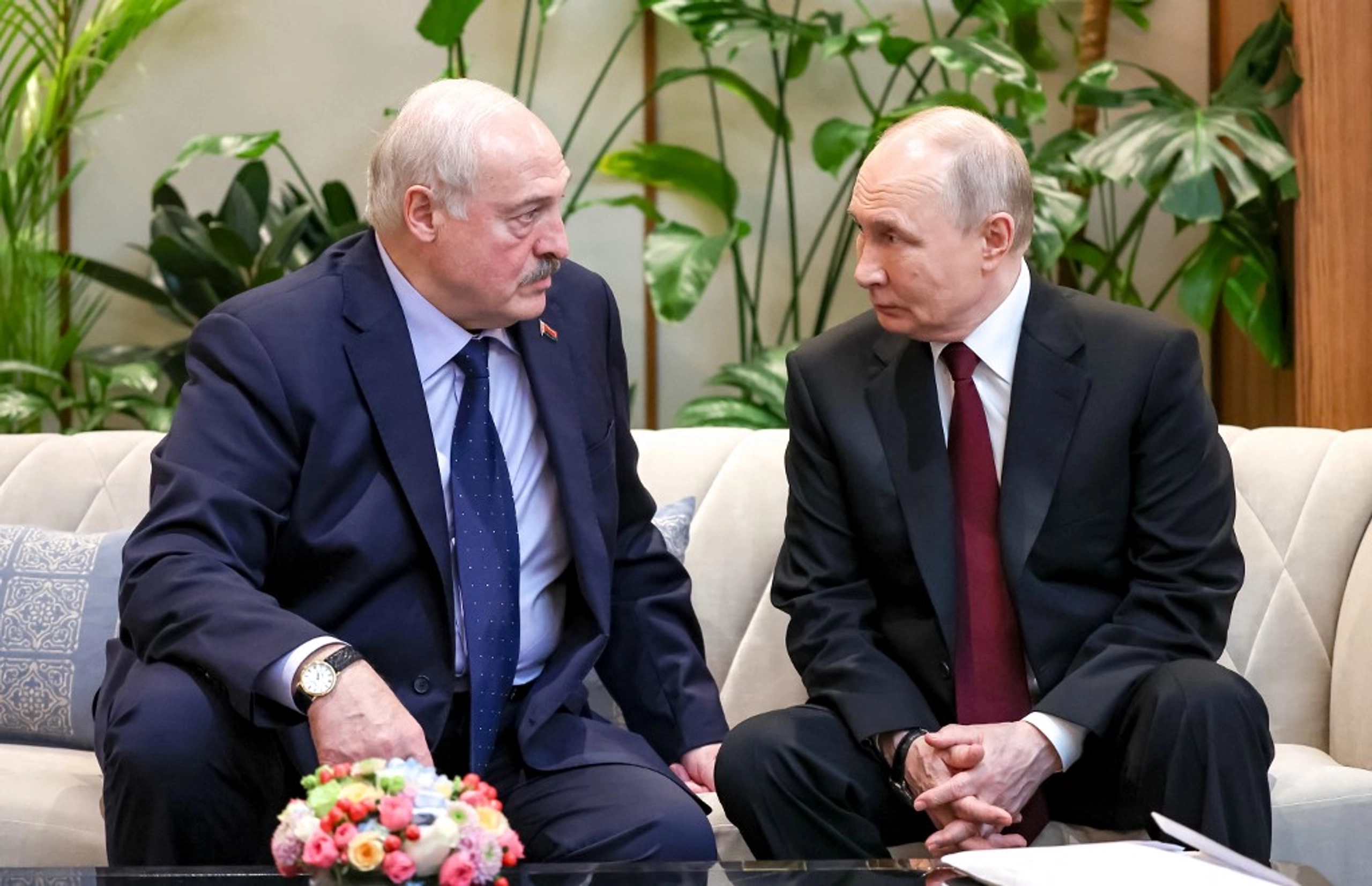
The United Transitional Cabinet of Belarus has submitted a report to Ukraine’s Foreign Ministry, warning that Belarusian leader Alexander Lukashenko may be preparing to join Russia’s war against Ukraine.
The 30-page document was delivered to Kyiv on Monday, June 22 to Foreign Minister Andrii Sybiha by Deputy Head of the United Transitional Cabinet Pavel Latushka.
JOIN US ON TELEGRAM
Follow our coverage of the war on the @Kyivpost_official.
The Cabinet, established in 2022 by opposition leader Sviatlana Tsikhanouskaya as the principal executive body of the Belarusian democratic movement, says it identified eight different areas that point to a deliberate shift in Belarus’s stance.
The data suggests that Belarus is “increasingly aligning itself with Russia’s military agenda,” according to United24Media.
Neutrality abandonment
On the legal side, constitutional amendments have removed Belarus’s neutral status, while a military doctrine adopted in 2024 now allows preemptive strikes in the event of what the government defines as a “direct threat” and permits the deployment of Belarusian troops outside the country’s borders.
Military expansion
The number of contract soldiers, according to the report, has grown by roughly 50% since the Russian full-scale invasion in 2022, and the mobilization reserve is estimated at 289,000 personnel.
Reportedly, a Southern Operational Command is being formed along the border with Ukraine with potential troop levels exceeding 80,000, alongside a so-called “people’s militia” that could reach up to 150,000 members.
Ukraine, Moldova to Join €1.1B EU Transport Infrastructure Initiative
The opposition says Belarus has expanded recruitment practices – including the enlistment of prisoners, as well as introducing new SMS draft notices.
Defense spending surges
Over the last four years, Belarus’s defense spending has risen fivefold, with the Belarusian arms industry being absorbed into Russia’s military production chain.
“More than 4,000 new pieces of military equipment were commissioned in 2024 alone,” the report states.
Closer integration with Moscow
The document underlines deepening military integration with Russia, including the presence of Russian troops on Belarusian territory and deployment of tactical nuclear weapons, as well as the Oreshnik missile system.
Belarusian forces are reportedly being trained by Wagner Group instructors, a Russian state-funded private military company that acts as an instrument of the Kremlin’s foreign and defense policies.
Preparing civilians for wartime conditions
The document mentions new guidelines for the healthcare system on wartime operations, inspections of around 5,000 bomb shelters in Minsk, and regular testing of public alert systems.
Compulsory military training in schools and expansion of patriotic programs for children are cited in the document as well.
Defensive fortifications are also growing along the borders with Ukraine, Poland and Lithuania, and, reportedly, body armor is also being procured for local militia units.
Building up reserves
The document cites accumulation of strategic reserves, including a doubling of mandatory fuel stockpiles.
Under a government decree dated May 15, 2026, authorizes the requisition of privately owned vehicles for use in military transport convoys.
Drills as a readiness tool
Reportedly, ongoing large-scale military exercises held throughout 2026, may be used to test mobilization systems and maintain security forces at a heightened level of preparedness.
Preventing escalation and deterring further militarization
The United Transitional Cabinet said that the report submitted to Ukraine did not only document the developments, but also includes recommendations aimed at preventing possible escalations and deterring further militarization by Lukashenko’s regime.
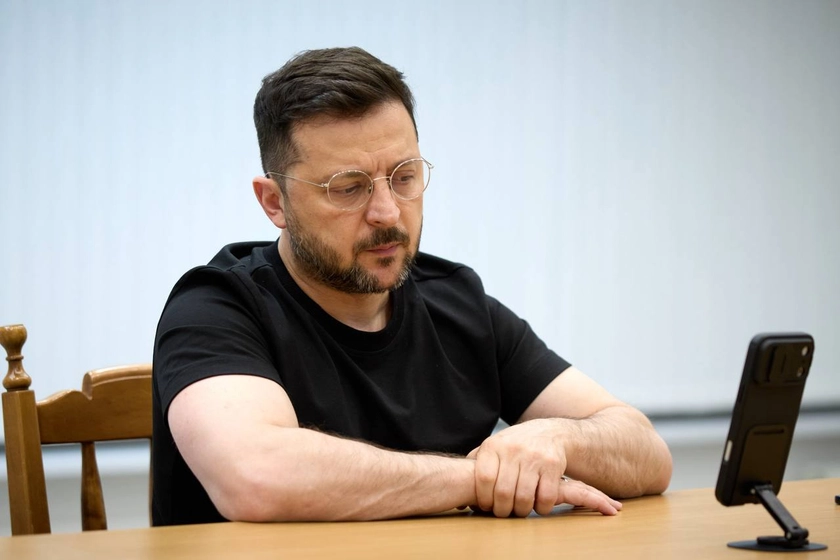
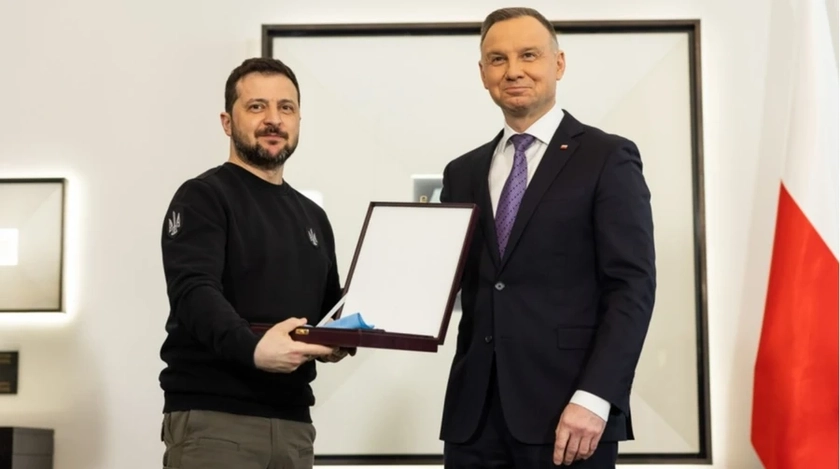
In May, Belarusian opposition leader Sviatlana Tsikhanouskaya met with President Volodymyr Zelensky in Kyiv on the sidelines of the IV International Summit of Cities and Regions to discuss keeping Belarus out of Russia’s war and reviewing shared border security.
Ukraine named its first ambassador-at-large for cooperation with Belarusian democratic forces and a new Belarusian democratic mission opened in Kyiv.
Tsikhanouskaya called for sustained sanctions and pressure on the Lukashenko regime, while Zelensky stressed that Ukraine has never threatened Belarus and hopes both countries will one day be free of Moscow’s influence.
Tensions rising between Ukraine and Belarus
Earlier in June, Lukashenko apologized to Zelensky, stating he had no intentions to join Russia’s war against Ukraine.
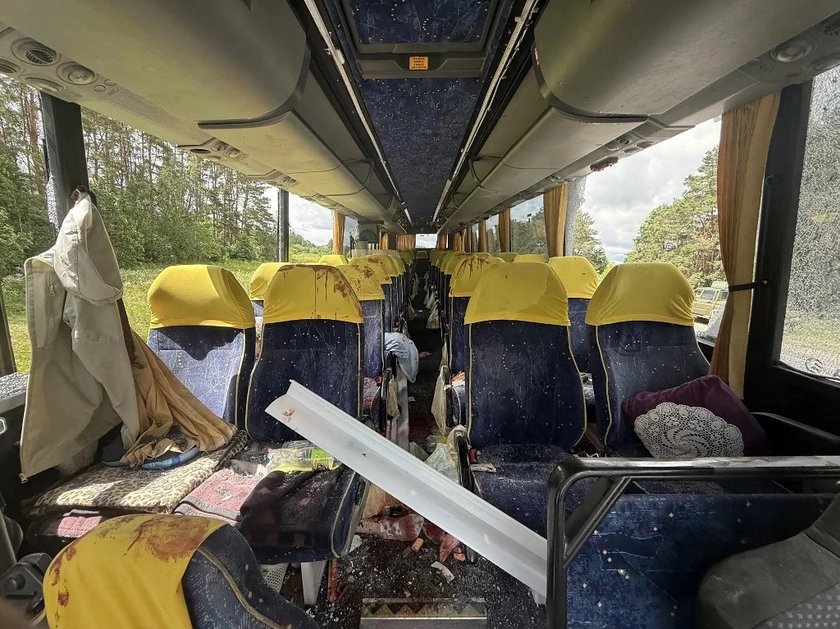
On June 17, a drone struck a bus carrying a Belarusian children’s football team in Russia’s Bryansk region, with Ukraine’s General Staff denying participation in the attack, and instead dismissing the accusation as a Kremlin-orchestrated provocation.
Since then, tensions have escalated, prompting Zelensky to give Lukashenko a one-week ultimatum to remove Russian signal relay equipment used to guide drone strikes on Ukrainian civilians on June 19, with the Kremlin dismissing the warning as “absolutely aggressive.”
You can also highlight the text and press Ctrl + Enter