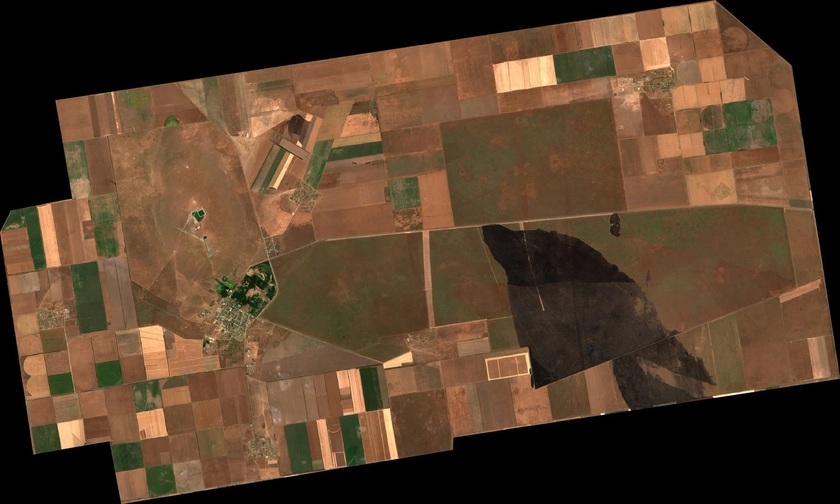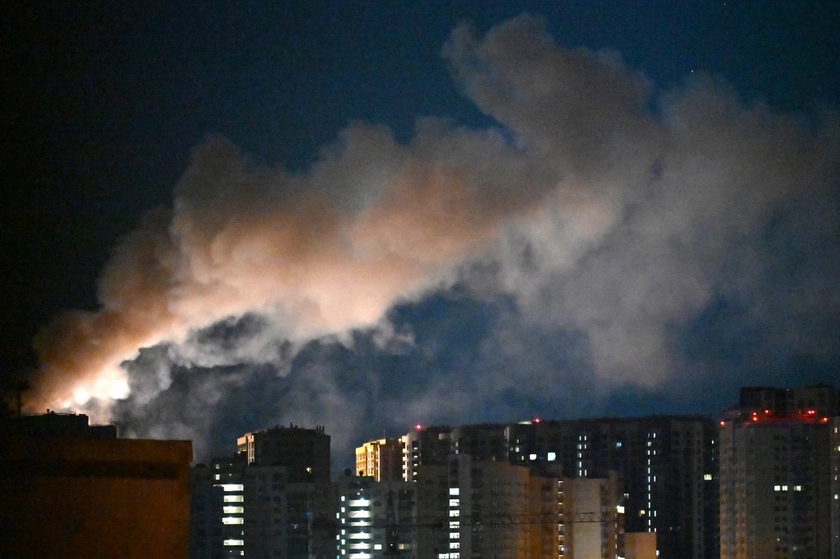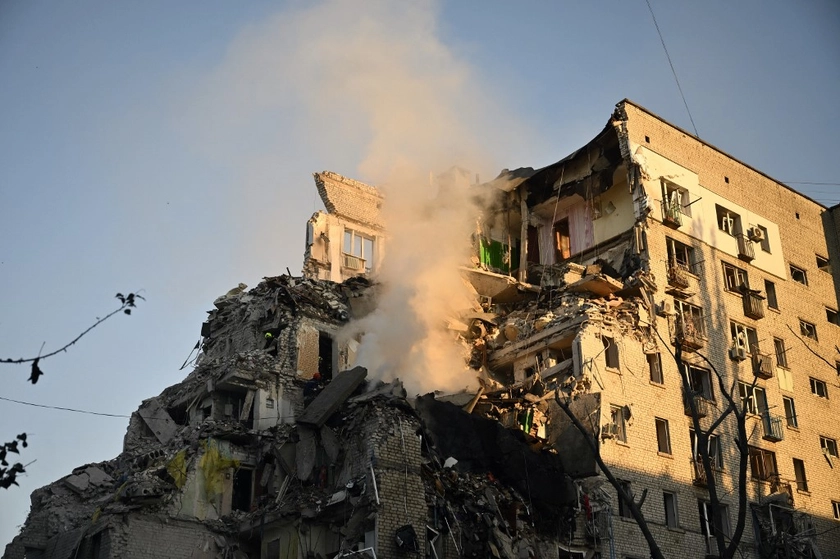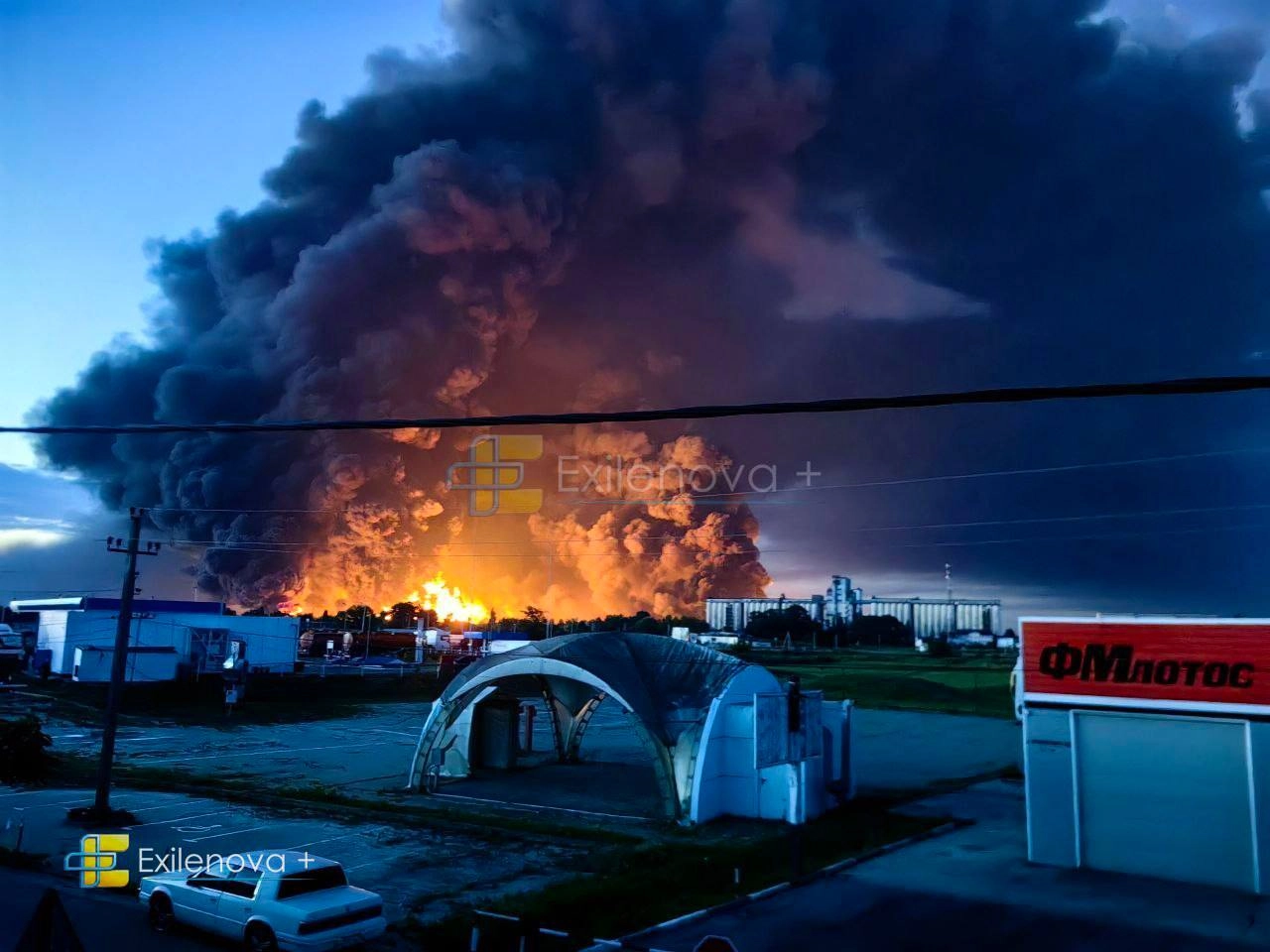
Since the start of 2026 Ukraine has conducted a highly successful campaign of strikes on Russian oil refining infrastructure, knocking offline about 700,000 barrels per day of Russian refining capacity, across 16 refineries. That is nearly double the disruption recorded over the same period last year.
What started as experimental, isolated attacks in the first year of war has transformed into thousands of strikes on Russian logistics, ammunition depots and defense industry assets four years later. During this time, Ukraine has boosted its drone production while introducing long-range systems capable of reaching virtually all of European Russia. I have visited the top-secret facilities where such drones were being produced.
JOIN US ON TELEGRAM
Follow our coverage of the war on the @Kyivpost_official.
Ukraine’s Ministry of Defense stated that May 2026 alone saw 40 confirmed strikes on Russian oil infrastructure. That resulted in roughly 25% of Russia’s oil refining capacity going fully or partially offline. According to reports, Russian oil production fell to around 10% below official targets. In financial terms, Russia by some estimates has suffered losses of $5-8 billion, which, compared to the Federal budget of $420 billion, according to IMF projections, is not an immeasurable sum. But when compared to Russia’s total defense budget – effectively the money it needs to fund the war on Ukraine – it amounts to a loss of around 3-6%.

Russian Troops Refuse Island Deployments on Dnipro River
If Ukraine continues its successful campaign of strikes at current pace, by the end of 2026 it could have disrupted operations at 25 to 35 refineries across Russia, resulting in financial losses of up to $10-20 billion. This figure includes repair costs, lost output and additional defense measures. In other words, Ukraine could potentially single-handedly, through its own ingenuity and innovation, take out around 10% of Russia’s annual war budget.
And these figures are projections based on drone strikes alone. Ukraine has long spoken about developing its own ballistic missiles. Earlier this month, Commander-in-Chief Gen. Oleksandr Syrsky announced that Ukraine intends to complete development and begin serial production of ballistic missiles capable of engaging targets up to 2,000 kilometers (1,243 miles) away, with the first test flights expected this summer.
A country struggling for its survival is not only redefining modern warfare, it is coming up with most ingenuous asymmetric responses to the adversary far more powerful than itself.
Ukraine has also recently announced partnership with a European company to co-produce the legendary Neptune cruise missiles – the weapon that sank the flagship Moskva in the Black Sea in 2022. If Ukraine succeeds in bringing domestic production of both ballistic and cruise missiles up to scale by the end of the year, the impact on Russia’s oil infrastructure could be doubled. Surely, Ukraine is unlikely to bankrupt Russia through attacks on energy infrastructure alone. But by repeatedly driving up the cost of producing refining and transporting oil – the sector that underpins much of Kremlin’s wartime finances – it is steadily making Russia’s war economy more expensive and less efficient, one refinery at a time.
Moreover, with its successful strikes on targets in Moscow and St. Petersburg, Ukraine has managed to bring the war home to ordinary Russians. Crimea – the jewel in Putin’s crown of conquest – has become increasingly difficult to live in, with long queues of residents reportedly trying to flee the peninsula.
In the fifth year of war, Ukraine is proving to the world once again that it is nowhere near ready to give up or concede. A country struggling for its survival is not only redefining modern warfare through proliferation and adaptation of autonomous systems on the battlefield, it is coming up with most ingenuous asymmetric responses to the adversary far more powerful than itself.
Four years ago, Ukraine was portrayed as David confronting a seemingly invincible Goliath. Today, that analogy no longer fits. Ukraine is demonstrating that military power is no longer measured by the size of its arsenal, but by its ability to innovate, adapt and impose disproportionate costs on a larger adversary. The defining lesson of this war may be that the future belongs not to the strongest, but to the smartest.
Lord Ashcroft KCMG PC is an international businessman, philanthropist, author and pollster. For more information on his work, visit lordashcroft.com. Follow him on X/Facebook @LordAshcroft.
The views expressed in this opinion article are the author’s and not necessarily those of Kyiv Post.
You can also highlight the text and press Ctrl + Enter