Ukraine has signed a Drone Deal cooperation agreement with Denmark, marking the ninth such agreement for Kyiv as it continues expanding its network of joint defense production partnerships with international allies.
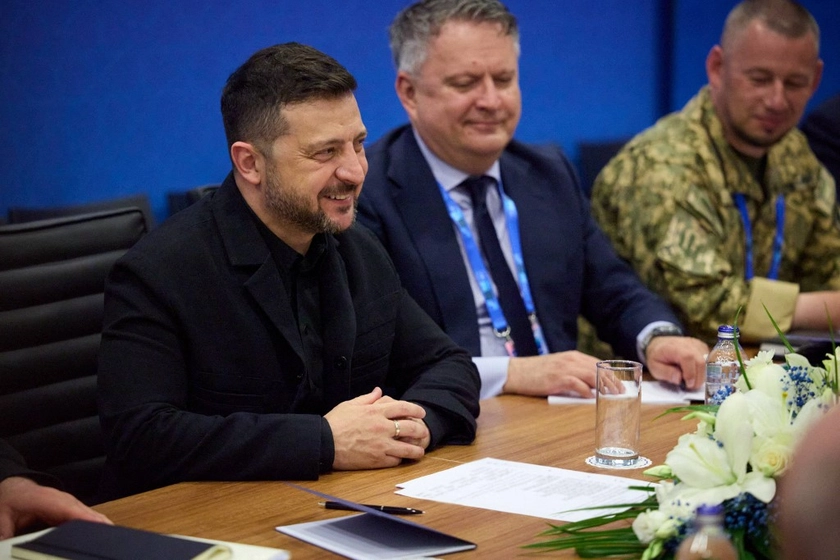
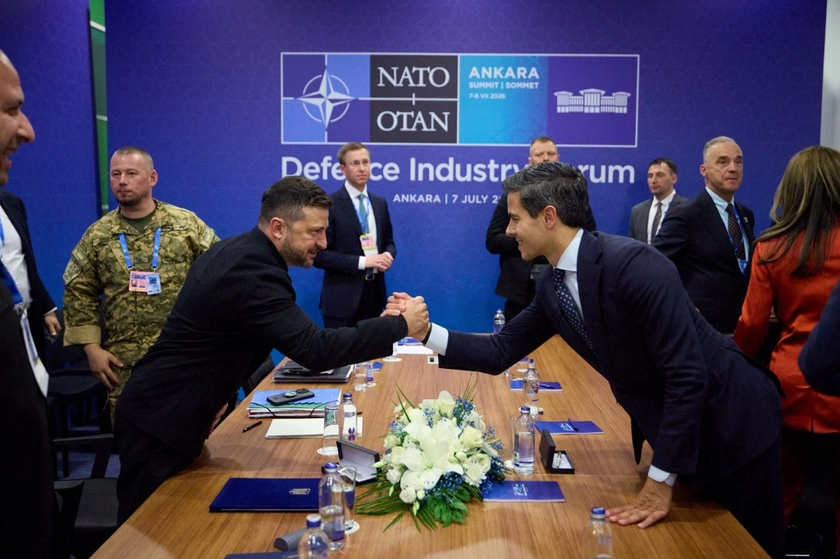
The agreement was reached following talks with Danish Prime Minister Mette Frederiksen on the sidelines of the NATO summit in Ankara, Turkey on July 7. According to President Volodymyr Zelensky, the deal covers joint defense production, expertise sharing, and greater transparency in arms exports.
JOIN US ON TELEGRAM
Follow our coverage of the war on the @Kyivpost_official.
“It was with Denmark that we began co-production in Ukraine under the Danish model, and it is entirely fitting that Denmark will now have access to Ukrainian arms exports, tested by war,” Zelensky said, adding that “together we are building a new security architecture.”
Denmark’s early role in joint production
Denmark was among the first countries to establish joint arms production inside Ukraine, under the arrangement known as the “Danish model,” which allowed foreign governments to fund weapons manufacturing directly on Ukrainian soil.
The new Drone Deal builds on the earlier cooperation, giving Denmark expanded access to Ukrainian-made weapons systems tested under active combat conditions.
Zelensky said the deal reflects the growing trend of partners joining the Drone Deal format, which Ukraine has used throughout 2026 to formalize defense cooperation with a widening circle of countries, including Estonia and the Netherlands in recent weeks.
Ukraine’s Operation ‘Auchan’ Halts Enemy Offensive for 6 Months
Air defense and European anti-ballistic push
During their meeting, Zelensky and Frederiksen also discussed strengthening Ukraine’s air defenses and advancing work on a European anti-ballistic missile capability.
“It is very important for us right now to receive Patriot missiles as quickly as possible and to jointly develop our own European capabilities to defend against ballistic threats,” Zelensky said, noting that securing additional PAC-3 interceptor missiles remains an urgent priority for Kyiv.
He thanked Denmark for what he described as sustained military and financial assistance to Ukraine, including contributions to NATO’s Prioritized Ukraine Requirements (PURL), through which allies purchase weapons for Kyiv.
Growing role of Danish and PURL funding
In May, Denmark was chosen on behalf of the EU to manage around €830 million ($925 million) in profits from frozen Russian assets, to channel funding into Ukraine’s domestic defense industry.
Around the same time, nearly $5.5 billion had already been mobilized for Ukraine in funding from 25 NATO allies through the PURL program, with authorities saying that deliveries of US-made weapons, particularly PAC-3 missiles, were continuing despite political debates in Washington.
Japan has added $14.7 million to NATO’s PURL initiative to fund non-lethal equipment for Ukraine, helping PURL contributions reach about $1.5 billion, with 28 countries participating so far.
Meanwhile, Norway announced an additional NOK 2.8 billion ($302 million) through the PURL initiative, bringing Oslo’s total support through the program to more than NOK 12.5 billion, or about $1.35 billion.
In June, Denmark announced it will transfer 15,000 long-range artillery rounds after Kyiv requested Copenhagen shift support away from short-range systems toward long-range solutions that Ukrainian authorities describe as vital as drone “kill zones” expand along the front.
The Netherlands pledged €500 million (about $580 million) in new military aid for Ukraine on June 17, covering drones from Dutch defense companies and US-sourced weapons, bringing the country’s total contribution to the American PURL initiative to €1 billion (about $1.2 billion).
Most recently, Italy confirmed it will not deliver any funds to the PURL program, highlighting Rome’s reluctance to boost defense spending through EU mechanisms despite public pledges to raise its military budget.
You can also highlight the text and press Ctrl + Enter