Russia has redeployed air defense systems from the Arctic Circle to elsewhere in the country amid intensified Ukrainian strikes.
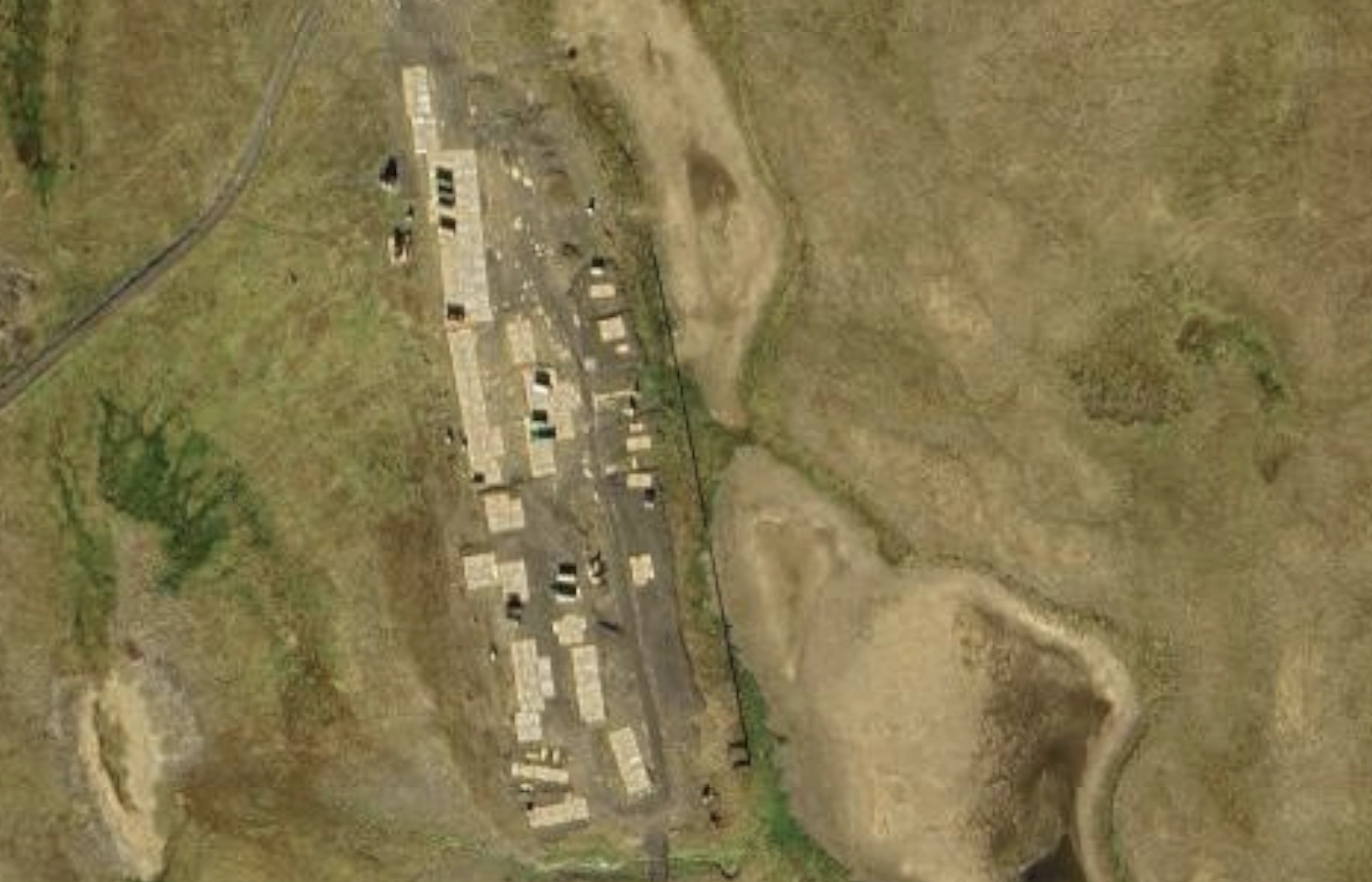
Radio Liberty, in its Tuesday report, noted that many of the air defense systems near strategic sites in Russia’s far north previously seen in satellite images are no longer visible, leaving empty patches of land.
JOIN US ON TELEGRAM
Follow our coverage of the war on the @Kyivpost_official.
Examples include the Rogachevo air base in the Novaya Zemlya archipelago of Russia’s Arctic region, where equipment seen in a 2015 satellite image is no longer seen in 2026.
Another comparison near the Saratov oil refinery showed an abundance of air defense systems in August 2025, where the same patch was largely empty in satellite images from May 2023.
In another instance, air defense equipment deployed in Severodvinsk, near the Arctic city of Arkhangelsk, was removed sometime after August 2024.
The outlet said at least one of the systems removed from Severodvinsk was traced via the death of Lt. Col. Vladimir Spiridonov, the commander of an S-400 missile system killed in occupied Crimea in April 2024, citing a report by The Barents Observer.
The publication added that most of the systems redeployed are S-300 and S-400 air defense missile batteries.
While the systems have been a mainstay of Russia’s air defense alongside more advanced systems such as the Pantsir, they also double as ground-to-ground missiles against Ukraine during massive air raids.

Zelensky Says Ukraine Plans to Double Drone Production to 20M Per Year
An open-source research cited by the outlet said the redeployment signals a “fundamental shift” in Russia’s air defense doctrine.
“Analysis revealed that of the S-300/400 units, which comprised approximately 116 battalions and 927 [transporter-erector launchers] TELs before the war, 580 TELs, equivalent to about 72 battalions, had been moved from their permanent posts,” the research says.
“Many of these moves originated from the Eastern, Central, and Leningrad Military Districts, which are far from Ukraine,” it continues.
“The movement of the S-300/400s is not merely a redeployment of forces. The multi-layered structure that Russia has built has been significantly undermined, the [Anti-Access/Area Denial] A2/AD bubble that has been responsible for strategic deterrence against NATO has shrunk, and surface-to-air air defense in the Bastion strategy has been weakened, forcing a transformation of the defense structure,” it adds.
Katarzyna Zysk, a professor with the Norwegian Institute for Defense Studies, told Radio Liberty that thinned-out defenses in the far north suggest Moscow does not anticipate imminent escalations in the region.
“It suggests that Russia does not anticipate an imminent large-scale attack in the [far north] region and judges that it can reduce protection there without incurring unacceptable risk,” Zysk said.
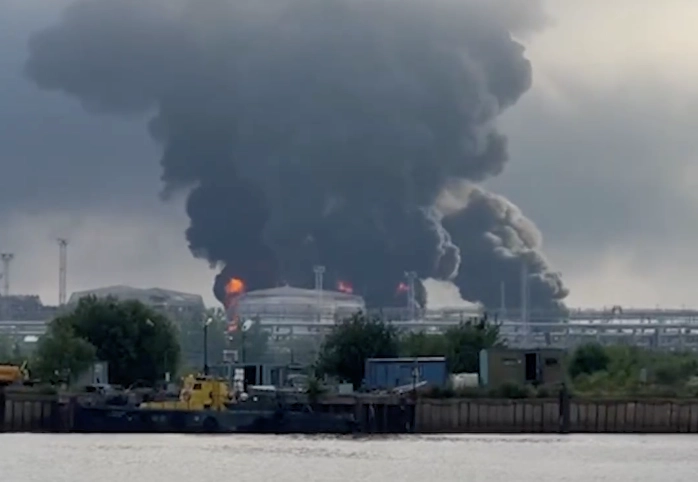
The discovery comes amid intensified Ukrainian strikes against Russian oil facilities that have led to a sprawling fuel crisis.
Bloomberg, in a Monday report, said Ukraine has likely struck at least 24 of Russia’s 34 large refineries in 50 attacks over the past 100 days.
Citing monitoring data from EA Analytics, the outlet said that Russia’s crude processing rate has slumped to 3.91 million barrels per day – the lowest since 2005.
You can also highlight the text and press Ctrl + Enter

OPINION: The Bill for Crimea Comes Due for Putin