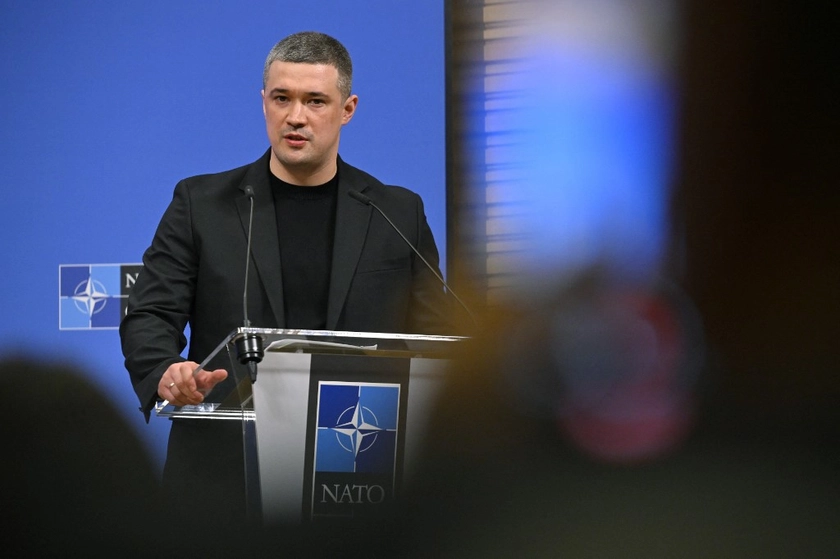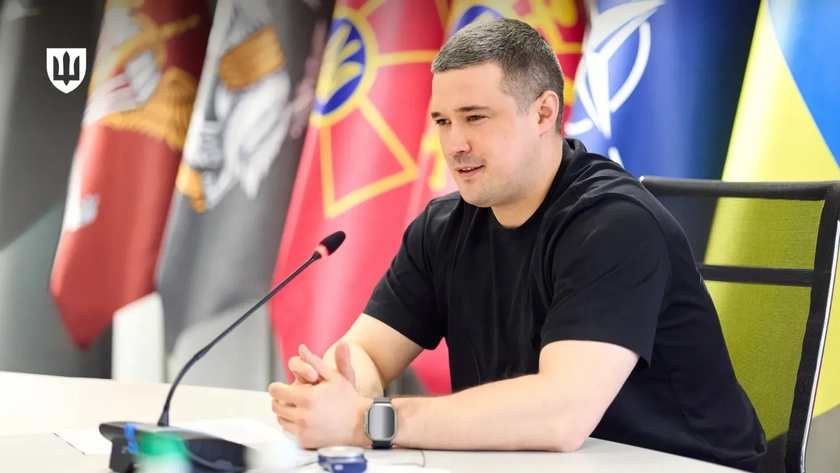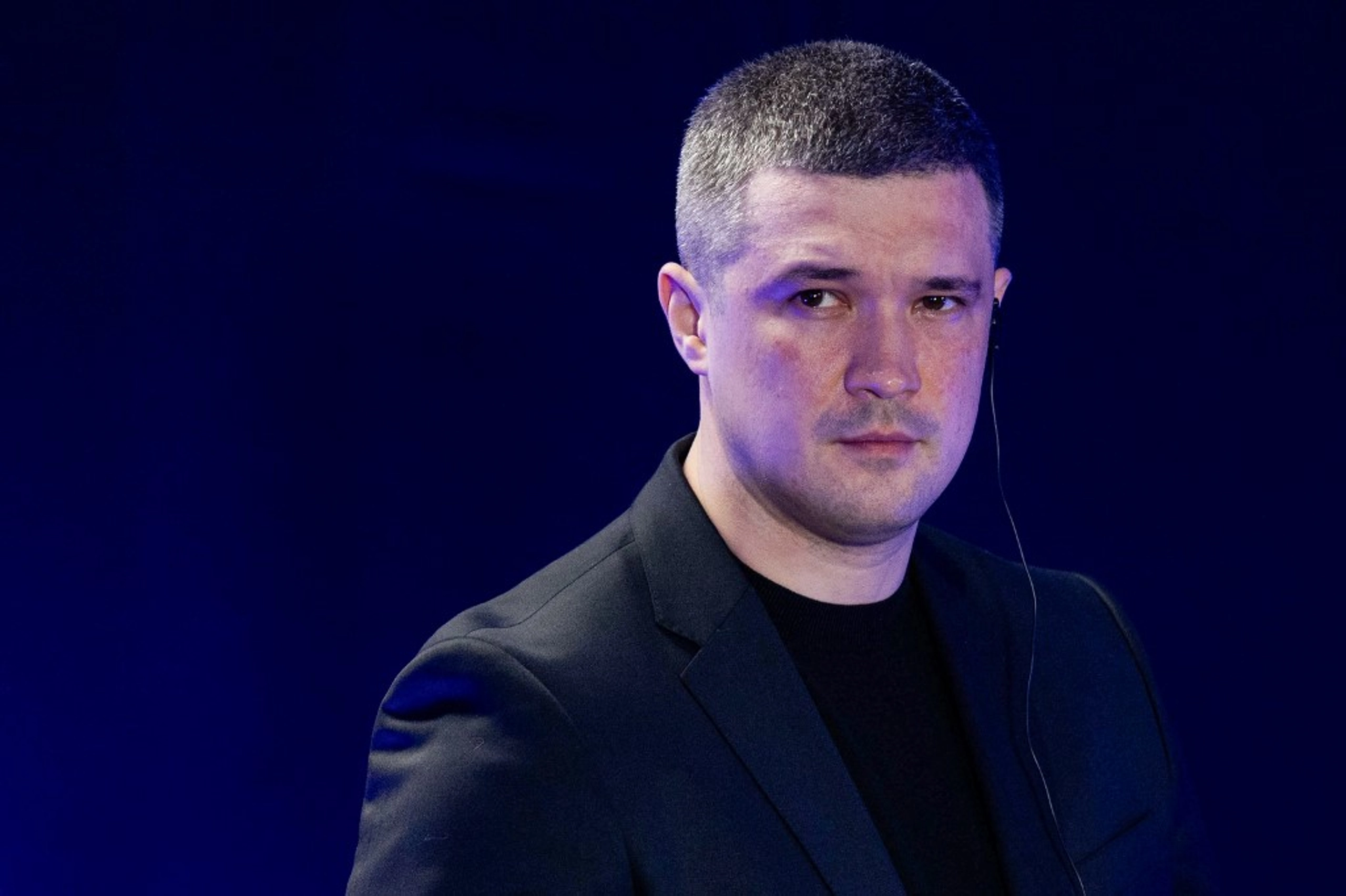
The departure of Ukraine’s 35-year-old defense chief, Mykhailo Fedorov, has raised questions about the future of critical wartime reforms.
Fedorov left office on Wednesday as part of President Volodymyr Zelensky’s sweeping government reshuffle following the resignation of Prime Minister Yulia Svyrydenko. Appointed on Jan. 14 with a clear mandate to modernize the Armed Forces, his exit after only six months marks the sudden end of one of Ukraine’s boldest experiments in wartime military management.
JOIN US ON TELEGRAM
Follow our coverage of the war on the @Kyivpost_official.
Volodymyr Fesenko, a political scientist and director of the Penta Center for Political Studies, warned that removing Fedorov from the defense portfolio could disrupt critical military reforms just as Ukraine is fighting to gain the upper hand against Russia, Reuters reported.
Immediately after his departure, Fedorov published a 22-point farewell statement detailing the battlefield, procurement and technological initiatives completed during his brief tenure.
The document presents an extensive record of asymmetric breakthroughs – from restricting Russian access to Starlink and rapidly expanding drone procurement to raising the reported interception rate for Russian drones to 91%.
It also offers an unusually direct assessment of what remained unfinished.
The precise reasons for Fedorov’s removal have not been publicly established. His departure came as part of the wider reshuffle, with lawmakers reporting that Zelensky intended to nominate Interior Minister Ihor Klymenko to take over the defense portfolio.
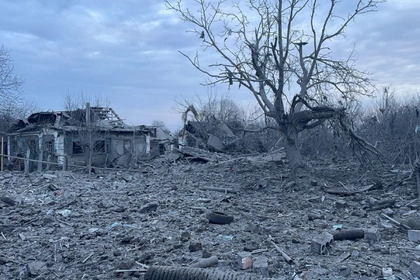
Russia Fires 6,001 Drones, 170 Bombs as Ukraine Repels 235 Clashes
Fedorov’s own statement therefore offers a perspective on both his achievements and the reforms his team was unable to complete.
Three reforms left unfinished
In his own assessment, Fedorov identified three major areas in which he said his ministry had fallen short.
First, he claimed that his team did not complete the organizational transformation of the Defense Ministry according to what he called “NATO standards and common sense.”
Fedorov wrote that although a new structure had been introduced, officials dismissed and numerous reform processes launched, the ministry should have acted more decisively against those obstructing change.
Second, he said the ministry had not managed to transfer all defense procurement to competitive tenders.
Third, according to Fedorov, it failed to establish a durable institutional culture in which officials are held responsible for the decisions they make.
Fedorov’s 22-point record, in his own words
According to Fedorov, his ministry’s most immediate battlefield gains came from restricting Russian access to Starlink and rapidly expanding Ukraine’s drone arsenal. He claimed Ukraine purchased more drones in four months than during the entire previous year, including fiber-optic FPVs, interceptor drones, reconnaissance systems, unmanned ground vehicles and deep-strike platforms.
The surge provided badly needed equipment to frontline units. He said the ministry used funds earmarked for military compensation later in the year to finance immediate drone purchases.
Fedorov also described a broad procurement overhaul. His team introduced competitive tenders for hundreds of thousands of drones, long-range artillery and thousands of pickup trucks, buggies and quad bikes. The ministry introduced 70% advance payments through Brave1 Market and began establishing predictable baseline drone supplies for every combat brigade and corps without manual intervention.
In air defense, Fedorov said the ministry introduced After Action Reviews following major Russian aerial attacks. He reported that drone interception rates increased from 83% to 91%, while cruise missile interception rose from 47% to 87%.
Fedorov also reported that Ukraine had contracted PAC-2 GEM-T missiles, requested PAC-3 interceptors through European financing and signed a major contract for cheaper missiles designed to destroy jet-powered Russian attack drones.
He further highlighted progress in Ukraine’s domestic missile and aviation programs. According to Fedorov, Ukraine successfully tested a ballistic missile on the day the government was dismissed after his team improved its accuracy and reduced its cost by 30%. His account also included an agreement to acquire Gripen fighter jets capable of challenging Russian aircraft used to launch guided aerial bombs.
On the battlefield, Fedorov pointed to the “Logistics Lockdown” program, continued financing for the Drone Line and support for technology-driven assault units. He claimed these initiatives helped disrupt Russian logistics and begin isolating occupied Crimea.
Fedorov credited Operation “Auchan,” planned jointly with the military, with halting a Russian mechanized offensive for six months.
Internationally, Fedorov said his team held three Ramstein-format meetings and helped secure approximately $40 billion in announced support for the year, excluding a separate European credit package. His ministry also created a mechanism for directing European financing toward Ukraine’s defense priorities and opened defense exports through the Drone Deal program.
Finally, Fedorov cited the creation of Trophy Lab, allowing partners to examine captured Russian technology, and the A1 Defense AI Center, intended to accelerate the military use of artificial intelligence.
The disrupted work
Taken together, Fedorov’s claims present a substantial record of activity during his six months in office.
These measures were designed to accelerate equipment deliveries, strengthen Ukraine’s air defenses and move new technologies from development to frontline use.
His departure, however, raises a question: Were the changes embedded deeply enough within the Ministry of Defense and Armed Forces to endure, or did too much of the transformation remain tied to Fedorov himself?
Serhii Kuzan, head of the Ukrainian Security and Cooperation Center, told Reuters that the progress made under Fedorov needed to be institutionalized so that it would not depend on a single individual.
Fedorov concluded his farewell statement by promising to continue pursuing the same objective: defeating Russia through asymmetry, the speed of innovation and the strength of organization.
“There will be more,” he wrote.
You can also highlight the text and press Ctrl + Enter
OPINION: The Bill for Crimea Comes Due for Putin