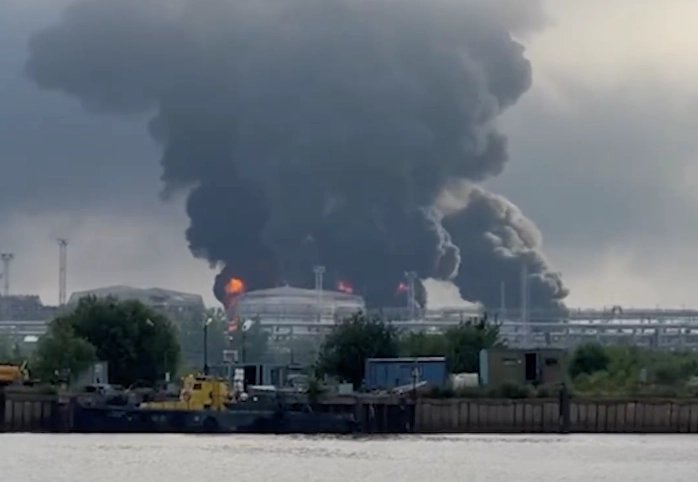
Ukraine has spent the past several weeks doing something the European Union still can’t manage: closing off the Kremlin’s oil money. While EU foreign ministers spent their July 13 meeting failing, once again, to agree on a 21st sanctions package, Ukrainian drones and special forces were quietly striking their way through nearly every major refinery Russia has left. Kyiv is proving that Russia’s oil industry can be hurt – badly. Europe just needs to stop getting in the way of finishing the job.
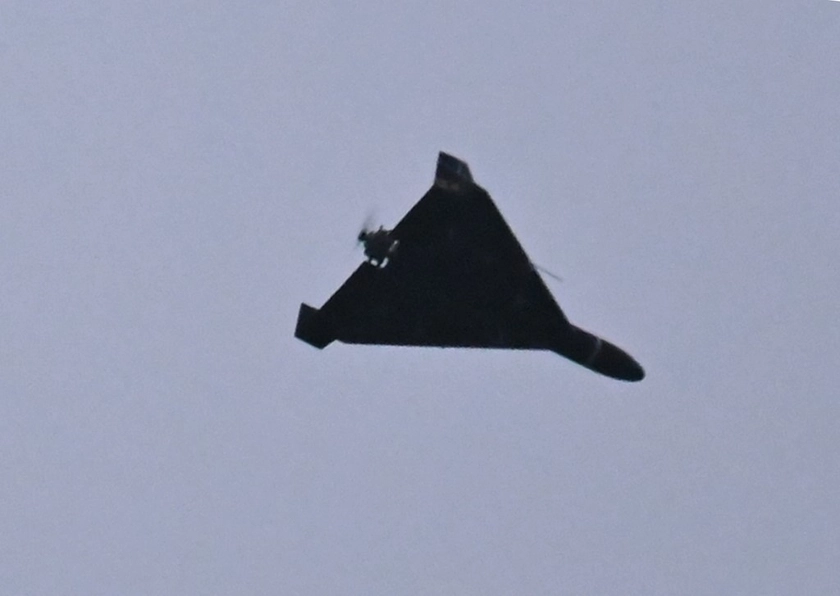
President Volodymyr Zelensky has called this campaign “long-range sanctions” – military strikes doing the work that economic sanctions were supposed to do. It’s an apt name, and it points to an uncomfortable truth: Ukraine’s drones are currently a more effective sanctions regime than the EU’s actual sanctions regime. That should change, and it can, if Europe treats Ukraine’s campaign as a floor to build on rather than a substitute for its own action.
JOIN US ON TELEGRAM
Follow our coverage of the war on the @Kyivpost_official.
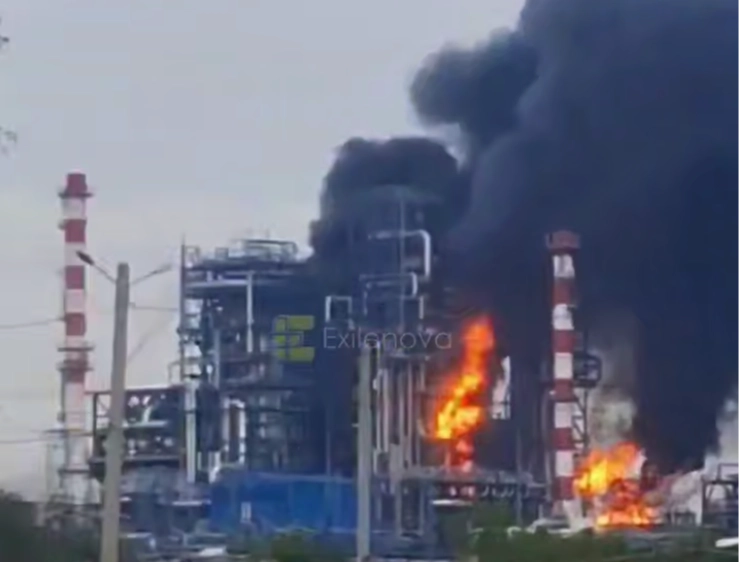
In June alone, Ukraine’s Ministry of Defense reported that its forces struck 11 Russian oil refineries and 8 defense-industrial enterprises, including the Moscow refinery, which is expected to stay offline into 2027 after losing the supply that once covered roughly 60 percent of the capital region’s fuel needs. Rather than focusing exclusively on military targets, Ukrainian forces have systematically struck oil refineries, export terminals, storage depots, fuel logistics, and maritime infrastructure across Russia.
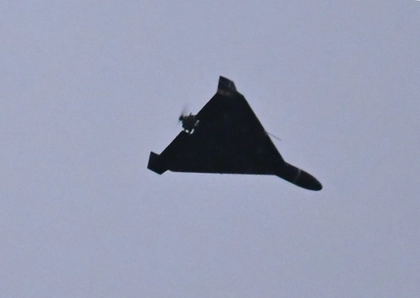
Russian Forces Shift to Low-Altitude, Manually Controlled Drone Strikes to Evade Air Defenses
Kyiv has framed the campaign as one leg of a three-part strategy – fighting Russia on the ground, in the air, and economically. The objective is straightforward – to reduce the Kremlin’s ability to finance and sustain its war by attacking the sector that generates a substantial share of Russia’s export earnings and federal budget revenues.
The campaign reached a new milestone on July 6 when Ukrainian drones struck the Omsk Oil Refinery, Russia’s largest refinery and, until then, the only major gasoline producer untouched since the start of the full-scale invasion. According to Ukraine’s General Staff, the refinery processes more than 21 million metric tons of crude oil annually and achieves one of Russia’s highest refining depths – roughly 99 percent – making it a key producer of high-value petroleum products used by both civilian consumers and the military. Russian authorities confirmed that refinery facilities had been damaged, while Putin’s presidential representative for the Siberian Federal District, Anatoly Seryshev, said repair work had begun following the attack.
Kyiv kept up the pressure. On July 10, drones hit the Ilsky refinery in Krasnodar Krai – a facility that processes roughly 6.6 million tons of crude a year and feeds Russia’s armed forces directly. It was at least the 17th reported strike on that plant since the war began, underscoring a deliberate Ukrainian strategy of returning to repaired targets rather than treating any single hit as final.
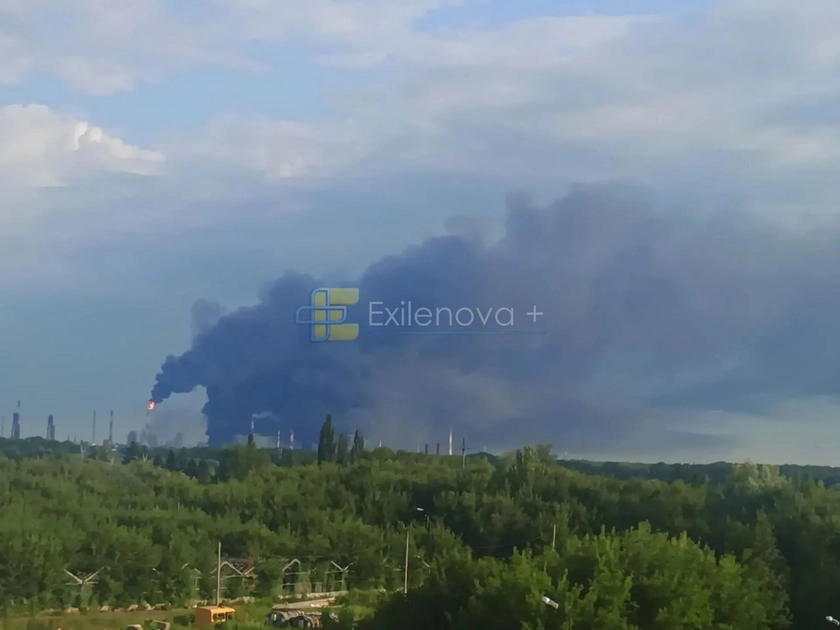
Two days later, on July 12, Ukrainian forces struck the Syzran refinery in Samara Oblast, a major source of gasoline, diesel, and aviation fuel, while also hitting tankers and ferries in the Sea of Azov that Kyiv says support Russian fuel transport and military logistics. That night, Ukrainian special operators reached even further, striking the Gazprom Neftekhim Salavat complex in Bashkortostan – a target roughly 1,500 kilometers from Ukrainian territory – and reportedly damaging its primary crude distillation unit. Salavat had been the last major Russian gasoline producer untouched this year; its loss means nearly every significant refinery in Russia now sits inside Kyiv’s strike envelope.
Kyiv isn’t waiting for permission to degrade Russia’s war economy, and it shouldn’t have to.
The following night, Ukrainian Special Operations Forces reached the deepest target yet, striking the Gazprom Neftekhim Salavat complex in Bashkortostan after drones flew roughly 1,500 kilometers (1,000 miles) from Ukrainian territory. The facility, among Russia’s largest integrated refining and petrochemical plants, sustained damage to its primary crude distillation unit, Ukrainian officials reported. The strike closed out a milestone: Salavat had been the last major Russian gasoline producer left untouched in 2026, meaning virtually every significant refinery in the country now sits inside Kyiv’s expanding strike envelope.
Every barrel of oil Ukraine’s drones keep off the market is worth more if Russia also can’t sell what survives. Every refinery taken offline matters more if the tankers moving what’s left face real restrictions on insurance, shipping, and buyers. Sanctions and strikes are supposed to work together: strikes destroy capacity, sanctions destroy the market for what capacity remains. Right now, Ukraine is doing its part and Europe is stalling on its own.
Following the July 13 meeting, EU High Representative Kaja Kallas acknowledged that member states remain divided, largely over proposed restrictions on maritime services and Russian LNG. Lithuania’s foreign minister, Kęstutis Budrys, put it plainly: Europe “cannot put economic interests above security interests.” He’s right, and the fact that this even needs saying, three and a half years into a full-scale invasion, is its own indictment. Every refinery Ukraine disables gives Russia an incentive to find workarounds – alternative buyers, shadow fleet tankers, LNG routes that skirt existing restrictions. Each month the 21st package sits unapproved is a month Moscow has to build those workarounds before Europe closes them off.
Kyiv isn’t waiting for permission to degrade Russia’s war economy, and it shouldn’t have to. But it shouldn’t have to do it alone, either. Ukraine has shown, refinery by refinery, exactly where Russia’s oil industry is vulnerable. It has done the hard, expensive, dangerous part – the reconnaissance, the strike planning, the 1,500-kilometer flights into Russian airspace. All Brussels has to do is stop letting internal disagreements over LNG and maritime services delay a package that should have passed months ago.
Zelensky’s “long-range sanctions” label is meant to describe missiles doing an economic minister’s job. It shouldn’t have to. Europe has the tools to make its own sanctions match the ambition of Ukraine’s drones – it just needs to use them before Russia finds a way around what’s left of its refineries, and around what’s left of Europe’s patience.
You can also highlight the text and press Ctrl + Enter

OPINION: The Bill for Crimea Comes Due for Putin
Ukraine Hits 2 Major Russian Oil Facilities, Including Petrochemical Giant 1,500 Km Away