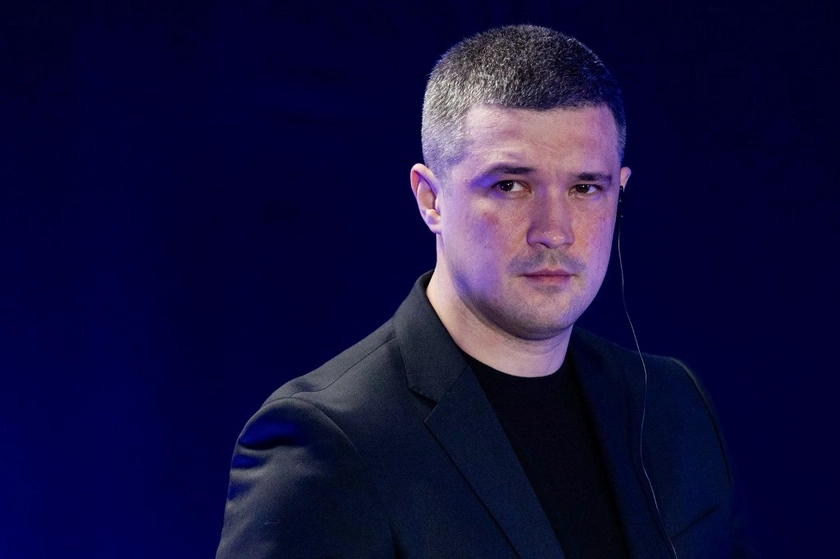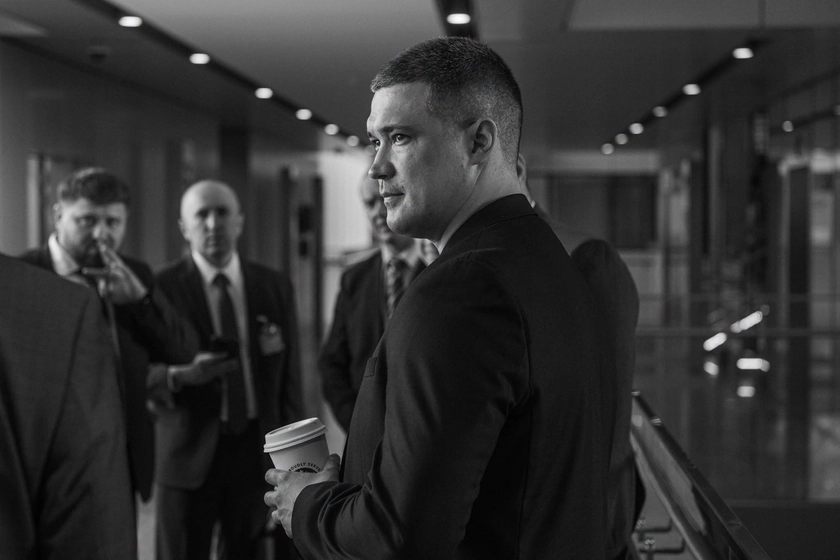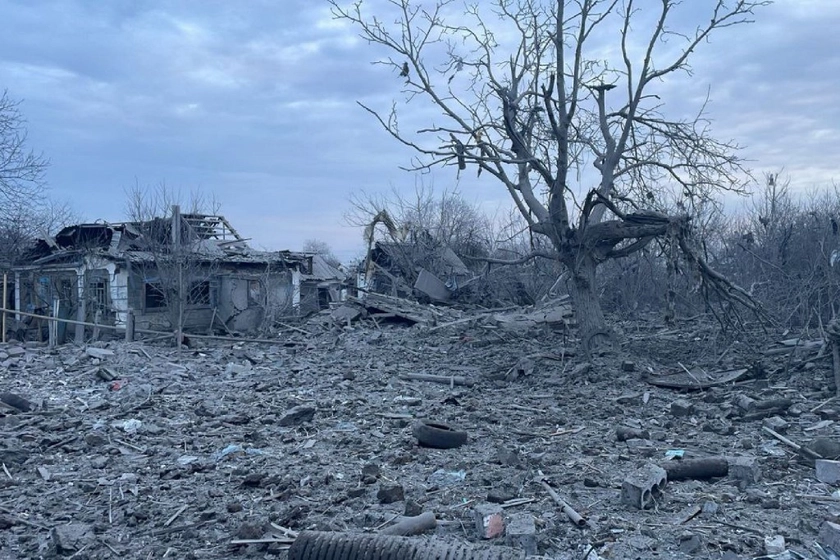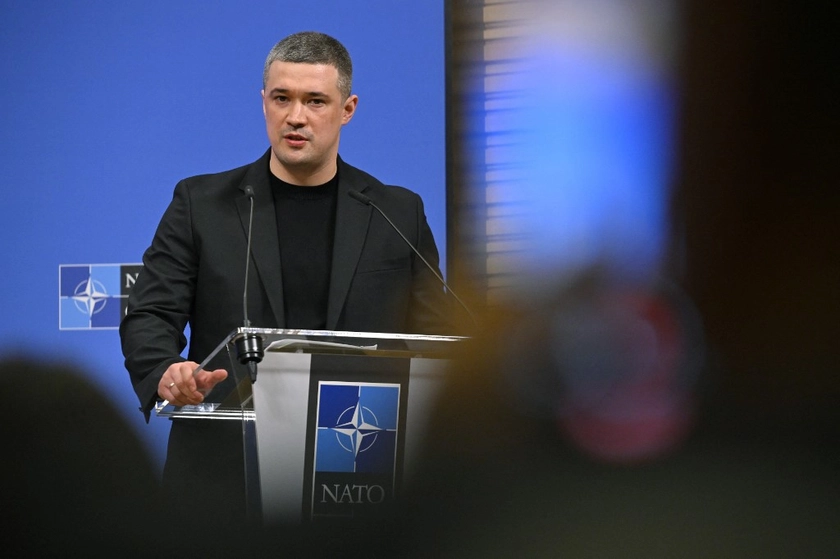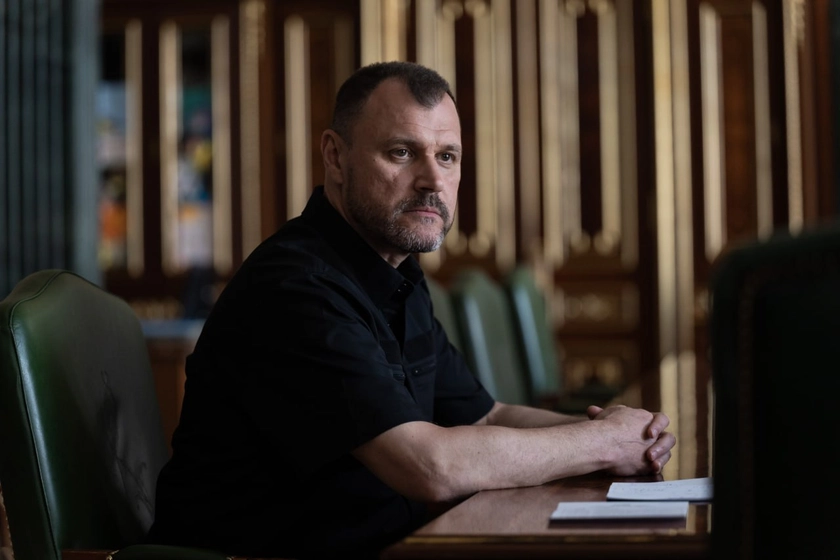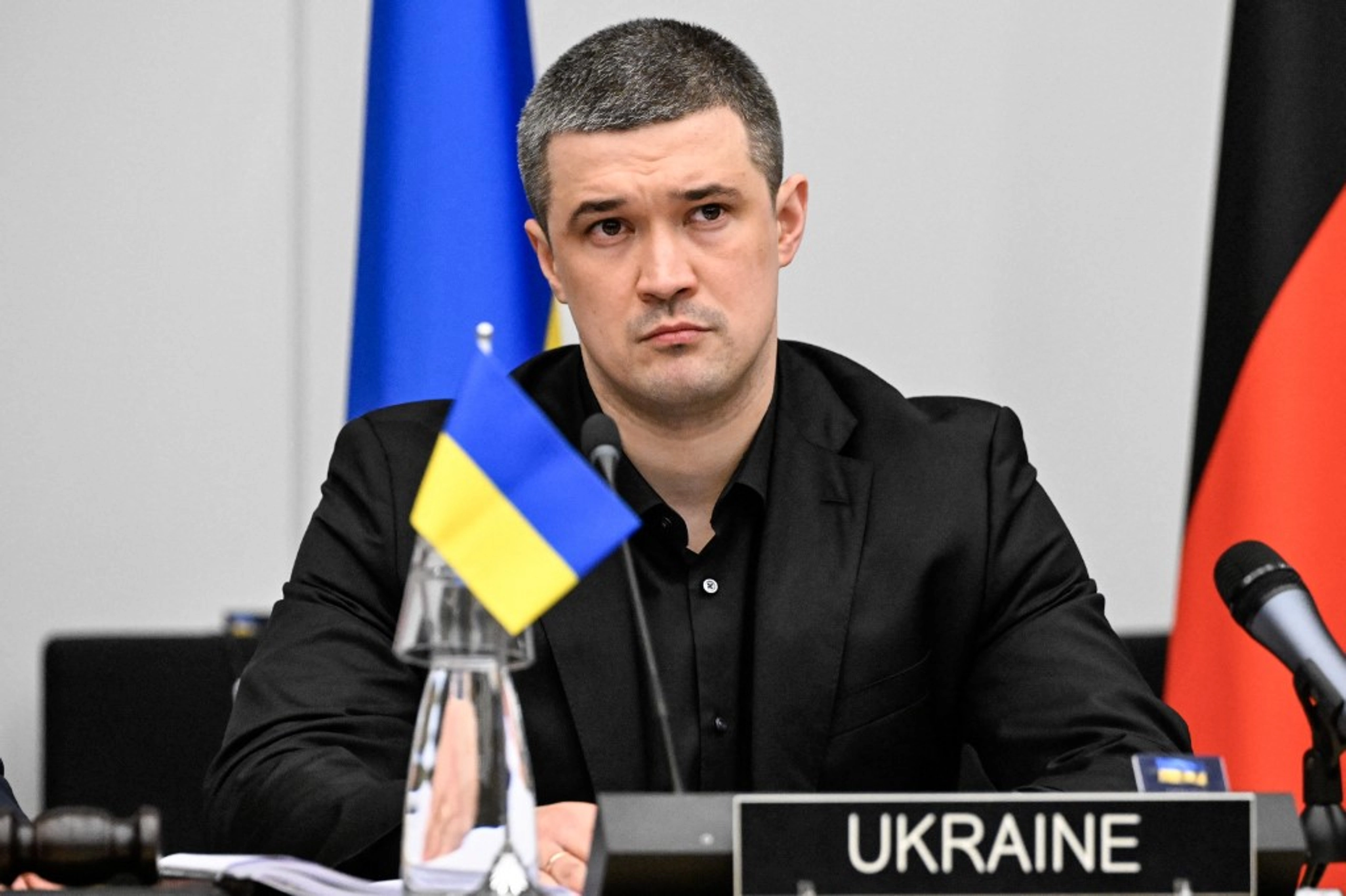
The removal of Defense Minister Mykhailo Fedorov, a key figure in Ukrainian politics, has exposed the most serious public conflict within the country’s wartime leadership in years – one that now involves the president, the commander-in-chief, parts of the military establishment and thousands of Ukrainians who have taken to the streets.
With one of Ukraine’s most important wartime positions now held on an acting basis, attention is increasingly shifting to the country’s military prospects as the power struggle in Kyiv intensifies to Moscow’s potential benefit.
JOIN US ON TELEGRAM
Follow our coverage of the war on the @Kyivpost_official.
From digital whiz kid to key wartime figure
Fedorov was one of the people who helped make Zelensky president, running the social media operation behind his 2019 campaign. He subsequently became Ukraine’s first minister of digital transformation, turning into one of the earliest and most persistent advocates of drone warfare, helped secure Starlink access and later worked to block Russian forces from using unauthorized Starlink terminals.
Widely regarded as one of Ukraine’s most effective managers, his continued service even drew support from Zelensky’s 2019 presidential rival Petro Poroshenko, whose European Solidarity party described Fedorov as the only minister in the outgoing government it supported, he became defense minister in January 2026.
In the position, he expanded drone procurement, promoted data-driven battlefield management and attempted to accelerate a military system that has often struggled to keep pace with technological change while promising overhaul of mobilization, though unsuccessfully.
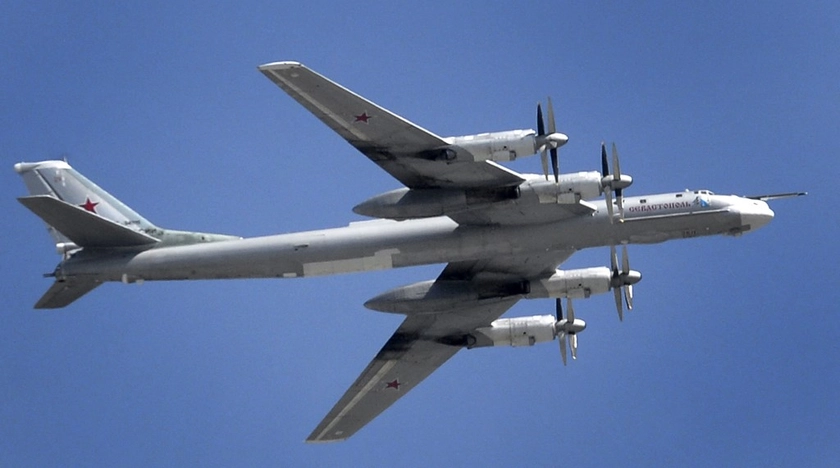
Ukraine Knocks Out Tu-95 Bomber Used to Rain Missiles on Ukrainian Cities
Following the government’s dismissal led by prime minister Yuliya Klymenko, now replaced by former Naftogaz CEO Serhiy Koretsky, Fedorov delivered what amounted to an indictment of Commander-in-Chief Oleksandr Syrsky and the military system surrounding him.
He confirmed that he had asked Zelensky to replace Syrsky with Chief of the General Staff Andriy Hnatov, arguing that Ukraine needed a different command structure if it wanted to defeat Russia “asymmetrically, with minimal losses.”
According to Fedorov, he accepted Zelensky’s refusal and initially agreed to continue working with Syrsky. The relationship deteriorated when, as Fedorov tells it, the commander-in-chief began blocking defense ministry initiatives and attempting to secure the minister’s removal through the president.
“Instead of figuring out how to defeat Russia, he figured out how to split the country,” Fedorov said, pinpointing 11 key problems, which he believes Ukraine is currently facing, including omnipresent lack of responsibility and tactical level warfare.
For months, the conflict had been discussed behind closed doors and presented as a difference of opinion between two officials working toward the same objective.
Fedorov now says the disagreement was fundamental: a struggle between a technology-driven model of warfare and a military command system that, in his view, remains too rigid, centralized and resistant to change.
Syrsky responded without addressing the substance of the allegations. He recalled his role in defending Kyiv in 2022, thanked Fedorov for his work and called on the country to concentrate on “an effective strategy” against Russia.
His reference to Kyiv as a city where briefings could now take place was widely interpreted as a swipe at Fedorov’s press conference.
Zelensky, meanwhile, acknowledged that the rupture was systemic.
“I would very much like unity,” he said. “The sides did not find it.”
He also admitted that the dispute had effectively left him with a choice between the two camps.
Acting head of the Security Service of Ukraine (SBU), Yevhen Khmara has since been appointed acting defense minister.
Syrsky’s dismissal comes into focus
Fedorov’s tenure coincided with a visible improvement in Ukraine’s battlefield situation.
Ukraine has regained momentum in several sectors and intensified attacks against Russian oil infrastructure and military logistics.
In June, Syrsky said Ukrainian forces had retaken more than 600 square kilometers since the beginning of 2026, although Reuters could not independently verify the figure. Independent battlefield monitors nevertheless reported that Russian gains had slowed or reversed in some areas.
For now, by removing Fedorov while retaining Syrsky, Zelensky has formally chosen the commander-in-chief.
At the same time, discussions are reportedly underway within the Office of the President over replacing Syrsky, according to sanctioned political commentator Borislav Bereza.
Syrsky remains a widely criticized figure. Ukrainian volunteer and public figure Serhiy Prytula described the question of his resignation as “long overdue.”
“His micromanagement approach in an era of technologically driven warfare is something Russia can afford because it treats manpower as virtually unlimited,” Prytula wrote.
He argued that Ukraine could not afford the same approach and that Syrsky would now be expected to produce significant military successes without Fedorov. If those successes failed to materialize – or came at an unacceptable cost – it would become increasingly difficult to blame Fedorov for the military’s problems.
Prytula concluded that Ukraine did not have to wait for such a scenario before replacing the commander-in-chief.
The dispute is not limited to military command. It also concerns procurement and corruption.
At his press conference, Fedorov described the introduction of transparent procurement procedures that he said generated significant savings. He cited an ammunition purchase in which open tenders had reduced the price by $1,000 per shell.
Fedorov also said his team had terminated contracts with companies operating at profit margins of 200% to 300% and exposed department heads who had acted in the interests of private businesses.
He linked those actions to large-scale media attacks against him, including through the popular Trukha Telegram channel.
The struggle has moved beyond Bankova
More than 1,000 demonstrators gathered near the Office of the President in Kyiv on Thursday, while further protests took place in Lviv, Kharkiv, Dnipro, Odesa and other cities.
Some demanded Fedorov’s return. Others called for Syrsky’s removal.
The protests recalled the “cardboard demonstrations” of 2025, when public pressure forced Zelensky to have the Verkhovna Rada reverse legislation that had weakened the independence of Ukraine’s main anti-corruption institutions, the National Anti-Corruption Bureau of Ukraine (NABU) and the Specialized Anti-Corruption Prosecutor’s Office (SAPO).
Fedorov openly embraced the political meaning of the new demonstrations.
“The Ukrainian people did not come out for one particular minister,” he said. “This is about a problem that needs to be resolved.”
The response from parts of the military made the situation more serious.
Joint Forces Commander Mykhailo Drapaty praised the Defense Ministry’s willingness under Fedorov to listen to battlefield commanders, make decisions more quickly and address issues the military system had previously preferred to leave untouched.
Pavlo Yelizarov, a deputy Air Force commander and prominent figure in Ukraine’s drone warfare effort, submitted his resignation in response to Fedorov’s removal, calling the decision a major blow to Ukraine’s defense capability.
Fedorov’s political ambitions come into focus
There is an unavoidable parallel with former Commander-in-Chief Valery Zaluzhny.
Zaluzhny led the Armed Forces during the defense of northern Ukraine and the successful 2022 counteroffensives in the Kharkiv and Kherson regions. He became one of the country’s most trusted public figures – and therefore one of the few people in Ukraine with political legitimacy independent of Zelensky.
He was removed in February 2024 after months of reported tensions with Zelensky and the failure of Ukraine’s widely publicized 2023 counteroffensive to produce a decisive breakthrough.
Zaluzhny has not publicly declared his presidential candidacy. However, Ukrainska Pravda reported on July 1 that he had privately confirmed his intention to run if presidential elections were held.
Despite the demonstrations supporting Fedorov, Zelensky has given no indication that he intends to reinstate him.
Fedorov has neither announced a presidential campaign nor formally joined the opposition. He also refused Zelensky’s offer to remain on his team as an adviser.
Interior Minister Ihor Klymenko initially emerged as the expected successor. Zelensky then said Klymenko was only one of several candidates. Several hours later, he appointed Khmara to lead the Ministry of Defense temporarily and said he would ask the Verkhovna Rada to approve him permanently.
Khmara is not simply a law-enforcement official. He previously led the SBU’s Alpha unit and has experience overseeing the technological operations behind Ukraine’s long-range strikes. That record may provide continuity with some of Fedorov’s priorities.
The political consequences will now depend heavily on what happens at the front.
If Ukrainian forces maintain their momentum, drone supplies remain stable and Khmara continues the technological reforms, Zelensky may contain the fallout.
Although public trust in Zelensky has remained relatively stable at around 60% over the past year, a poll by the Kyiv International Institute of Sociology (KIIS) shows that 67% of Ukrainians are willing to see a new president once the war ends.
Now, Zelensky’s political credibility is once again being tested.
Ukrainian journalist, blogger and service member Dmytro Vovnianko warned that if drone shortages re-emerged and the front began collapsing again, Zelensky would face the resurgence of allegations involving the “Oman conspiracy,” payments for Kvartal television broadcasts in Russia and “playing along with Moscow.”
“It is strange,” Vovnianko wrote. “Professional leaders simply do not survive around Zelensky. Only lackeys do.”
You can also highlight the text and press Ctrl + Enter

Trump Says US Will Let Ukraine Build Patriot Systems: ‘We’ll Show Them How to Make Them’